
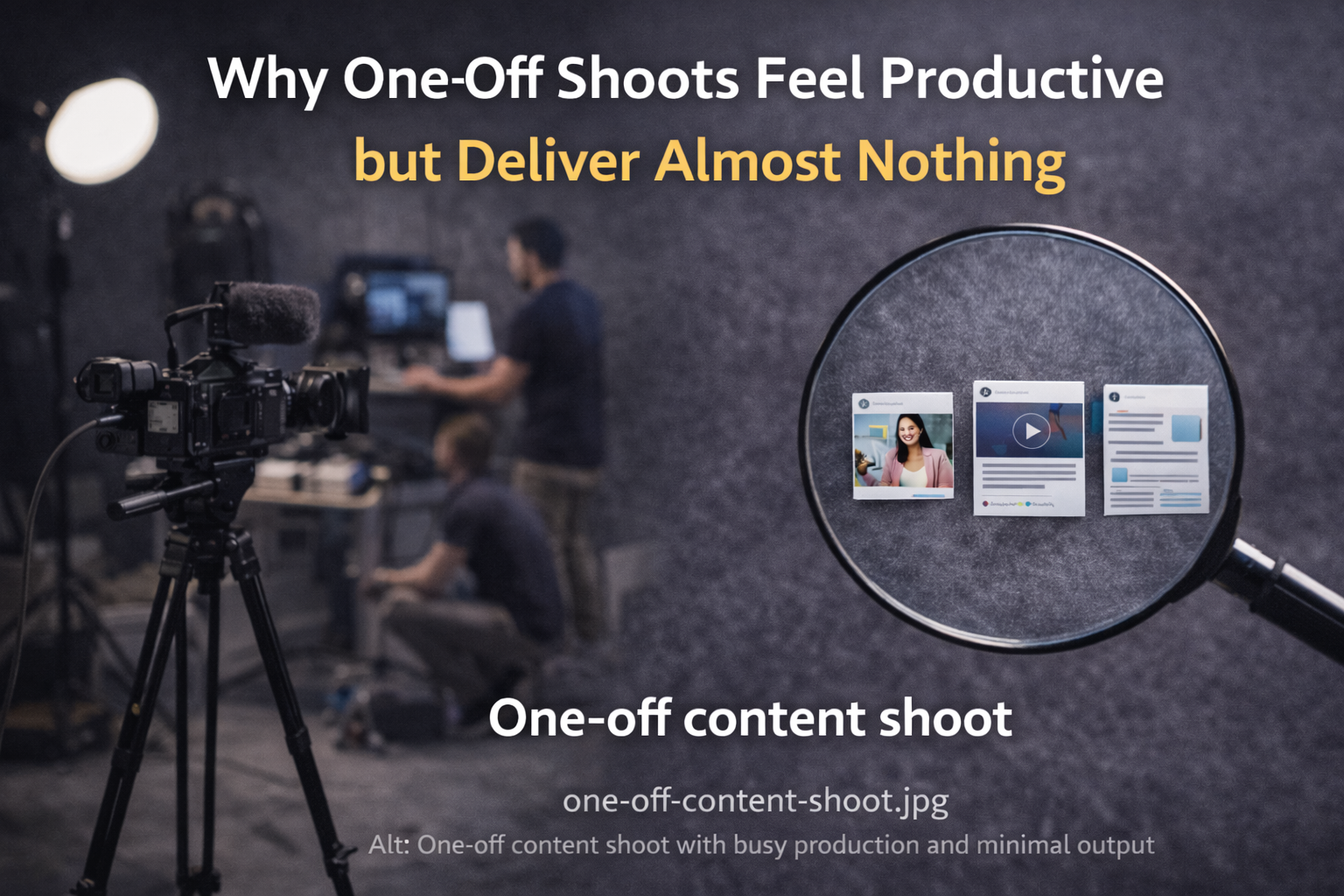
A one-off content shoot can feel like a major win: the calendar is booked, the crew is hired, and assets arrive in a neat folder. However, after the initial burst of activity, most teams realize the same thing—despite all the effort, the business impact is small. In fact, a one-off content shoot often produces weak content creation ROI once you measure what actually gets published and reused.
In other words, it looks productive. Yet it delivers almost nothing that lasts.
Why a One-Off Content Shoot Creates the Illusion of Progress
A one-off content shoot creates visible output fast. Therefore, it’s easy to mistake activity for effectiveness. The problem is that most assets are created for a single moment, not a repeatable system.
As a result, your team publishes a handful of pieces and then runs out of usable options. Consequently, the scramble starts again, and content creation costs rise with every restart.
Where Content Creation ROI Breaks Down

Content creation ROI drops when content isn’t designed for volume, variation, and distribution. Although the shoot may deliver “a lot of footage,” only a fraction typically makes it into campaigns.
Moreover, without a clear marketing content strategy, teams don’t know what formats they need, how often they need them, or where content should live. Therefore, editing becomes reactive, and performance suffers.
Read: How to measure content ROI →
Why One-Off Shoots Inflate Content Creation Costs
With a one-off content shoot, you pay the setup costs repeatedly: planning, logistics, crew, gear, and post-production. Although each line item looks reasonable, together they compound quickly.
Because the workflow resets every time, content creation costs stay high while output remains inconsistent. Over time, that imbalance erodes budgets and momentum.
Recurring Content Production Fixes the Output Problem
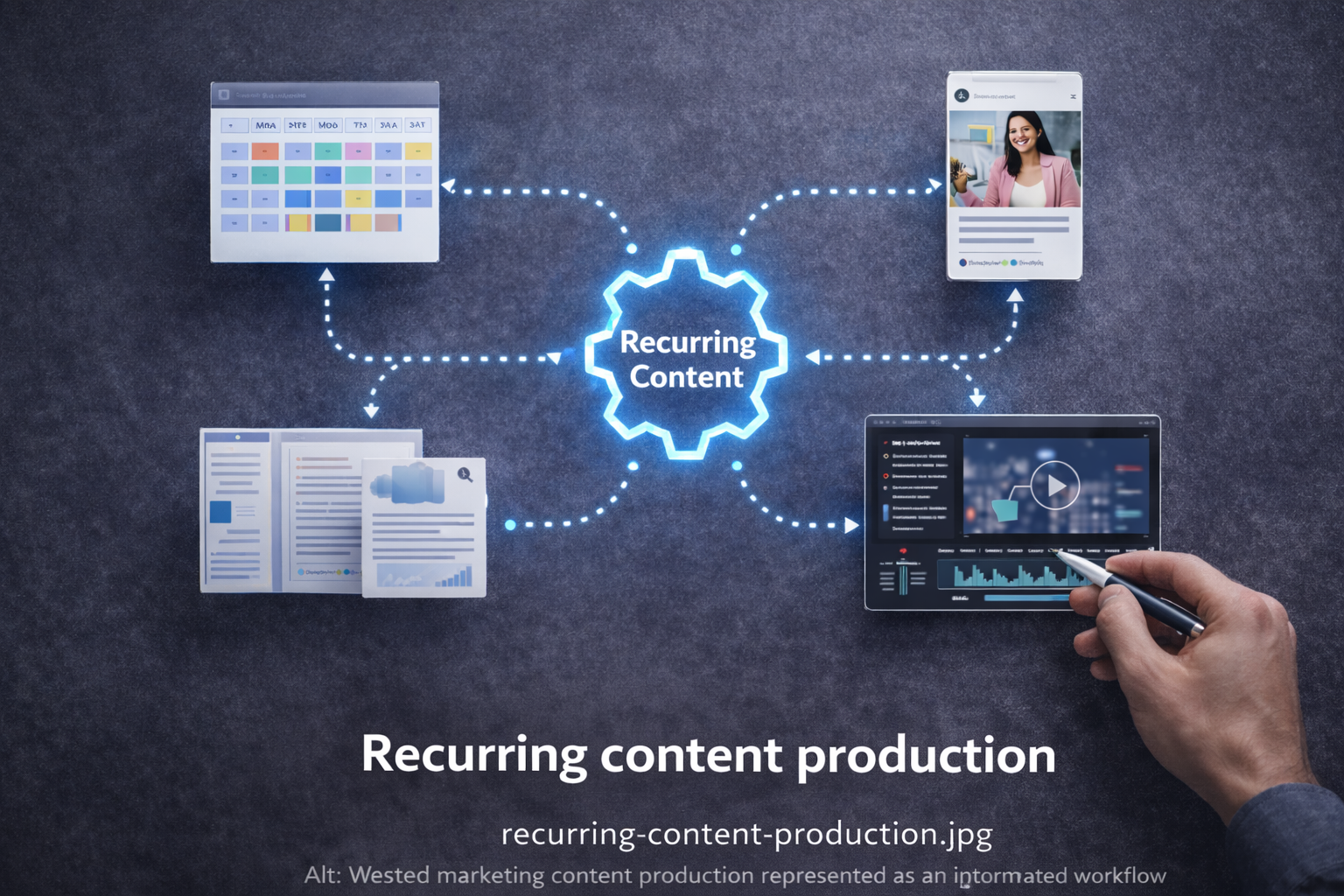
Recurring content production changes the equation by turning content into a predictable system. Instead of gambling on one big day, you plan smaller cycles that compound.
As a result, you capture content intentionally for multiple channels and formats. Consequently, content creation ROI improves because you publish more from the same effort.
Read: The recurring content production model →
Marketing Content Strategy Is the Missing Layer
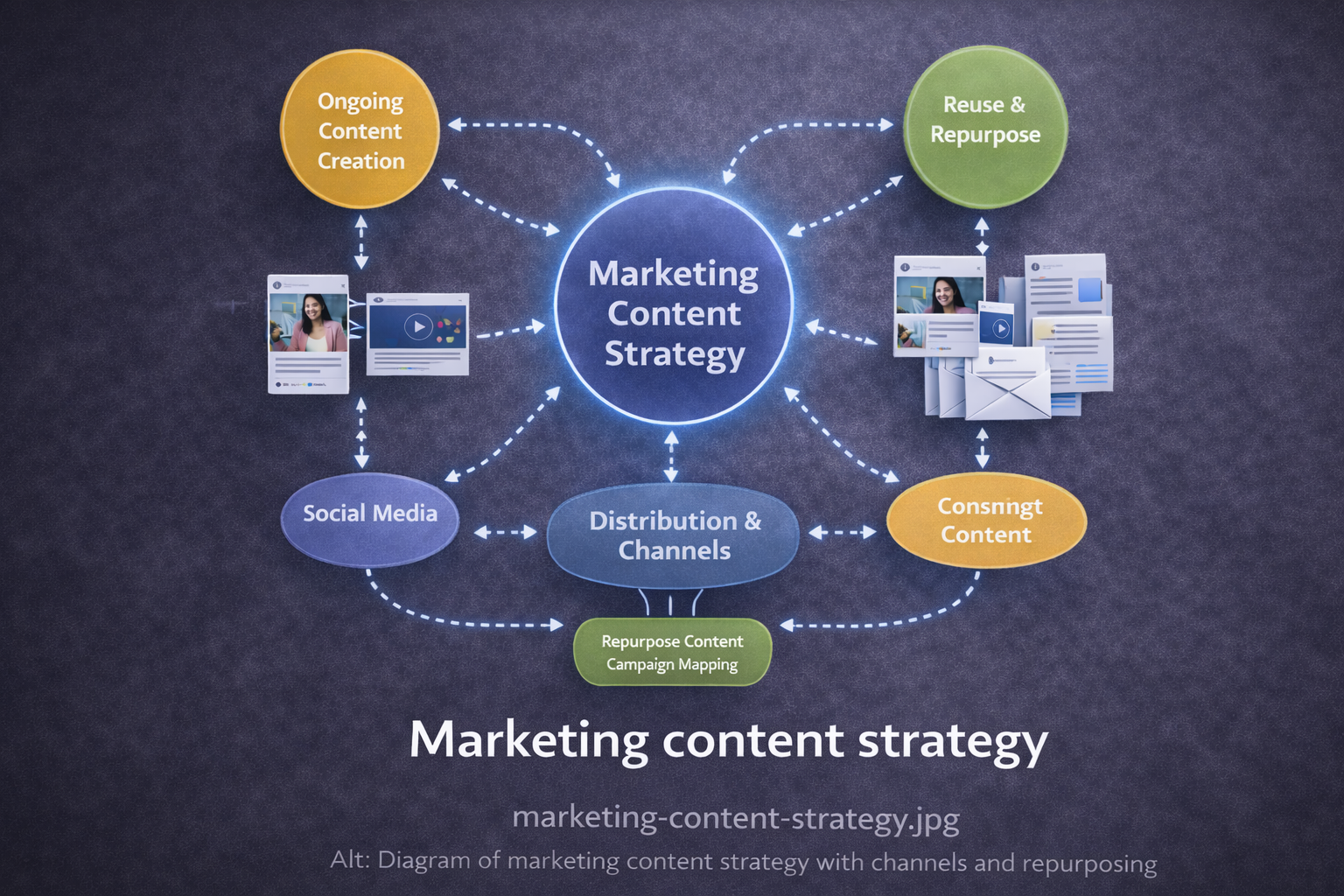
A strong marketing content strategy tells you what to shoot, how to repurpose it, and where it should be distributed. Without that strategy, even great visuals underperform.
However, when strategy leads production, teams plan content in batches, map assets to campaigns, and reuse consistently. Therefore, content creation costs become controlled instead of chaotic.
The Long-Term Cost of “Just One More Shoot”
Most teams don’t run a single one-off content shoot. They run several—because the content runs out, channels demand variety, and new campaigns appear.
Meanwhile, recurring content production prevents that cycle by building an always-on pipeline. As a result, your team stops starting over, and your content program becomes scalable.
Final Thoughts
If your shoots feel busy but results feel thin, the issue isn’t effort—it’s structure. A one-off content shoot can create temporary motion, but it rarely builds durable performance.
By pairing a clear marketing content strategy with recurring content production, brands reduce content creation costs and finally earn consistent content creation ROI.