To plan a fashion campaign shoot properly, brands need more than a moodboard and a production date. They need a system. While many fashion shoots are still approached as one-off creative events, the strongest brands plan campaigns as strategic content assets. As a result, the work does not just look better. It performs better across paid media, social channels, e-commerce, and long-term brand building.
Therefore, the real objective is not simply to get through production day. Instead, it is to build a campaign that creates useful, consistent, and scalable content. When you plan a fashion campaign shoot with that level of clarity, every decision becomes sharper.
Moreover, your fashion brand visuals become more aligned, your fashion campaign photography becomes more effective, and your fashion content production becomes far more efficient.
Take a look at Fashion Marketing Strategy: How Great Brands Plan Campaigns That Sell
What Will You Learn About Planning A Fashion Campaign Shoot?
Topics Covered
- What is a fashion campaign shoot?
- How do fashion campaign shoots work?
- What should a fashion campaign include?
- How much does a fashion campaign shoot cost?
- How long does campaign planning take?
- What assets should be created?
- How many images should a campaign deliver?
- How can campaign content support paid advertising?
- What mistakes should brands avoid?
- How can brands maximize campaign ROI?
Use the campaign asset planner template.
Why Planning A Fashion Campaign Shoot Matters
Many brands assume campaign success depends on production quality. However, most campaign problems occur before the shoot begins.
Poor planning often leads to:
- content shortages
- inconsistent branding
- weak advertising assets
- rushed launches
- expensive reshoots
Consequently, planning becomes one of the highest-ROI activities in the entire campaign process.
Signs Your Fashion Campaign Needs Better Planning
- You’re Constantly Running Out Of Content
- Every Launch Requires A New Shoot
- Paid Ads Fatigue Quickly
- Website And Social Content Feel Disconnected
- Marketing Teams Keep Requesting New Assets
- Campaigns Look Good But Underperform
What Assets Should A Fashion Campaign Produce?
Most brands underestimate how many assets are needed.
- Website Assets
- E-Commerce Assets
- Paid Advertising Assets
- Social Media Assets
- Email Marketing Assets
- PR Assets
- Retail Assets
- Video Assets
Fashion Campaign Planning Checklist
Before The Shoot
- define goals
- define audience
- define campaign offer
- define channels
Creative Planning
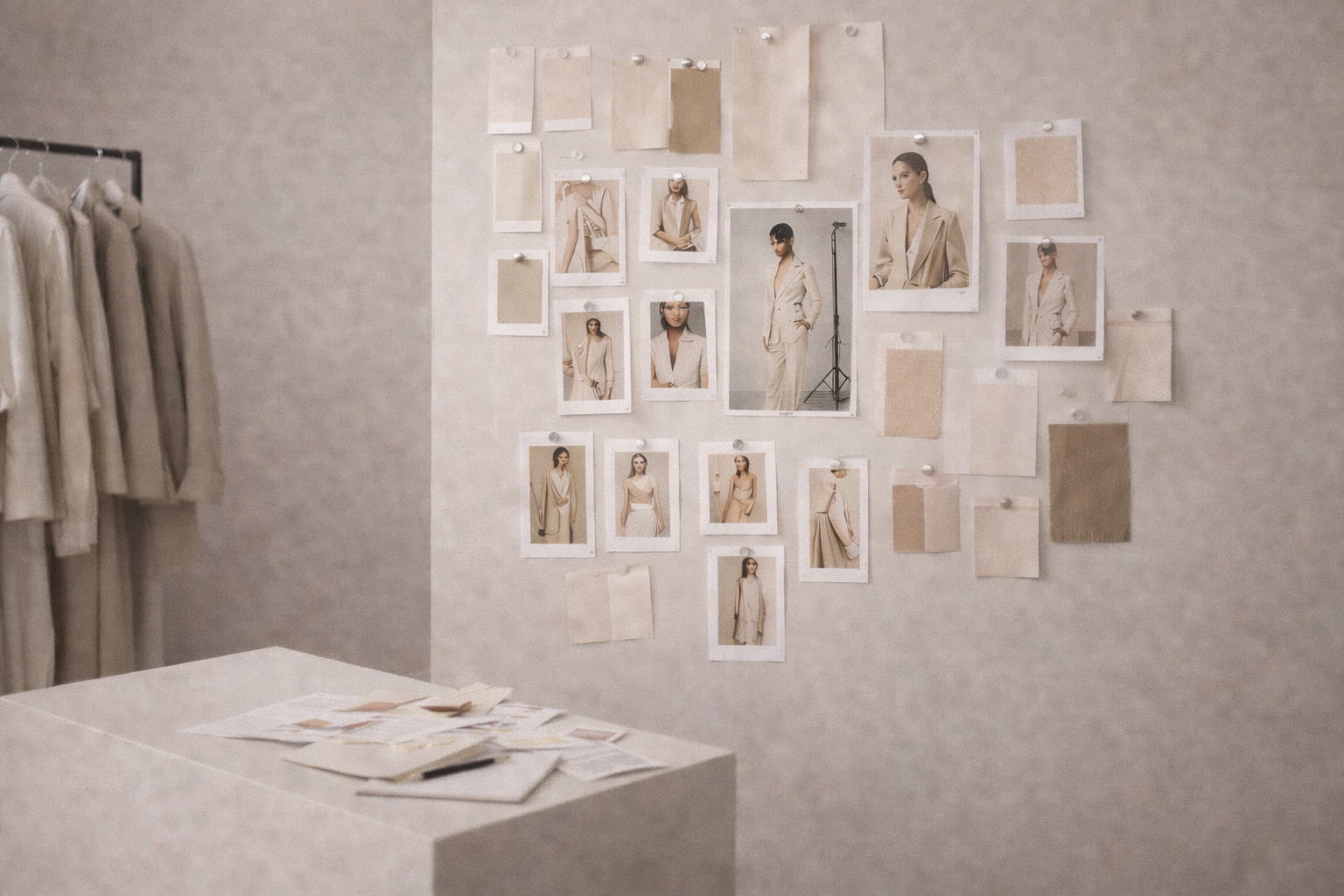
- moodboards
- creative direction
- locations
- talent
Production Planning
- shot list
- call sheet
- schedule
Post-Production Planning
- image delivery
- cropping requirements
- licensing
Fashion Campaign Timeline: When Should You Start Planning?
8–12 Weeks Before Launch
Strategy
6–8 Weeks Before Launch
Creative Direction
4–6 Weeks Before Launch
Production Planning
2–4 Weeks Before Launch
Shoot Execution
1–2 Weeks Before Launch
Asset Delivery
Launch Week
Distribution
Fashion Campaign Budget Breakdown
| Item | Typical Allocation |
|---|---|
| Photographer | 25 – 40% |
| Models | 10 – 25% |
| Styling | 5 – 15% |
| Hair & Makeup | 5 – 15% |
| Production | 10 – 20% |
| Retouching | 5 – 10% |
| Licensing | 10 – 30% |
How Much Does A Fashion Campaign Shoot Cost?
Common Fashion Campaign Planning Mistakes
- Planning The Shoot Before The Marketing Strategy
- Creating Content Without Distribution Plans
- Forgetting Paid Advertising Assets
- Ignoring Licensing
- Creating Too Few Variations
- Not Planning Vertical Content
- Focusing Only On Hero Images
Fashion Campaign Shoot ROI Calculator
Example:
Campaign Investment: €8,000
Average Order Value: €150
Gross Margin: 60%
Required Revenue To Break Even: €13,333
Required Customers: 89
Fashion Campaign Shoot vs Content Retainer
| Campaign Shoot | Content Retainer |
|---|---|
| Launch-focused | Ongoing content |
| One-time project | Long-term system |
| Fixed deliverables | Continuous production |
| Reactive | Proactive |
When Should You Invest In A Content Retainer?
Fashion Campaign Planning Process
Step 1: Define Goals
Step 2: Define Audience
Step 3: Develop Campaign Concept
Step 4: Create Shot List
Step 5: Production Planning
Step 6: Shoot Execution
Step 7: Asset Delivery
Step 8: Distribution & Optimization
Why Brands Need to Plan a Fashion Campaign Shoot More Strategically
Many brands still treat campaign production as a creative task that starts with styling and ends with retouching. However, that approach usually creates gaps. The visuals may be attractive, yet the output often lacks structure. Consequently, the campaign produces too few usable assets, weak variation for testing, and inconsistent messaging across channels.
When brands plan a fashion campaign shoot strategically, they shift the focus from isolated images to a broader content system. In other words, they do not ask only, “What should this campaign look like?” They also ask, “How will this content be used, adapted, tested, and extended over time?” As a result, the entire production process becomes more commercially intelligent.
This is especially important because modern fashion campaign photography must do more than create hero visuals. It also needs to support ad formats, organic social content, e-commerce updates, press use, and future brand storytelling. Therefore, planning is not an optional layer. It is the foundation of the campaign.
What Campaign Shoot Planning Actually Means
Strong campaign shoot planning is the process of aligning creative direction with business goals, deliverables, timelines, and channel requirements before production begins. While that sounds straightforward, many teams skip the strategic detail and move too quickly into visual inspiration. As a result, production becomes reactive rather than structured.
To plan a fashion campaign shoot effectively, brands should define five things early: the campaign objective, the visual direction, the content categories, the distribution plan, and the production workflow. Moreover, each of these should connect directly to the brand’s wider marketing strategy.
For example, if the campaign is meant to drive awareness, the visual language may lean more editorial. However, if the campaign also needs to support conversion, then the shot list must include more practical product and crop variations. Therefore, the planning stage is where creative ambition and commercial clarity must meet.
Start With the Objective Before the Moodboard
The first step to plan a fashion campaign shoot successfully is to define the campaign objective. Although this sounds obvious, it is often skipped or treated too vaguely. Teams might say they want “strong visuals” or “premium content,” but that is not enough to guide production.
Instead, the objective should answer clear questions. Is the campaign focused on launching a new collection? Supporting a paid media push? Building stronger fashion brand visuals for the website? Refreshing creative for ongoing fashion content production? Each answer changes what the shoot must deliver.
Therefore, before references are selected, the campaign should define its primary job. Once that is clear, the visual direction becomes more strategic. Likewise, the shot list becomes more focused, and the production day becomes more efficient.
Define the Creative Direction With Restraint and Clarity
Once the objective is clear, the next step is to define the visual direction. This is where many campaigns either become too vague or too crowded. Brands often gather references they like, yet those references do not always translate into one coherent visual system. Consequently, the final output can feel inconsistent.
Strong creative direction should clarify, not confuse. Therefore, when you plan a fashion campaign shoot, the reference phase should establish a clear point of view around lighting, casting, styling, color palette, set design, and composition. Moreover, those decisions should support both the campaign idea and the brand identity.
This matters because fashion campaign photography is rarely judged image by image. Instead, it is judged as a sequence. Customers encounter multiple assets across multiple touchpoints. As a result, strong fashion brand visuals need to feel connected rather than accidental.
Related editorial: Brand Photography for Fashion Brands
Build the Shot List Around Content Categories, Not Just Looks
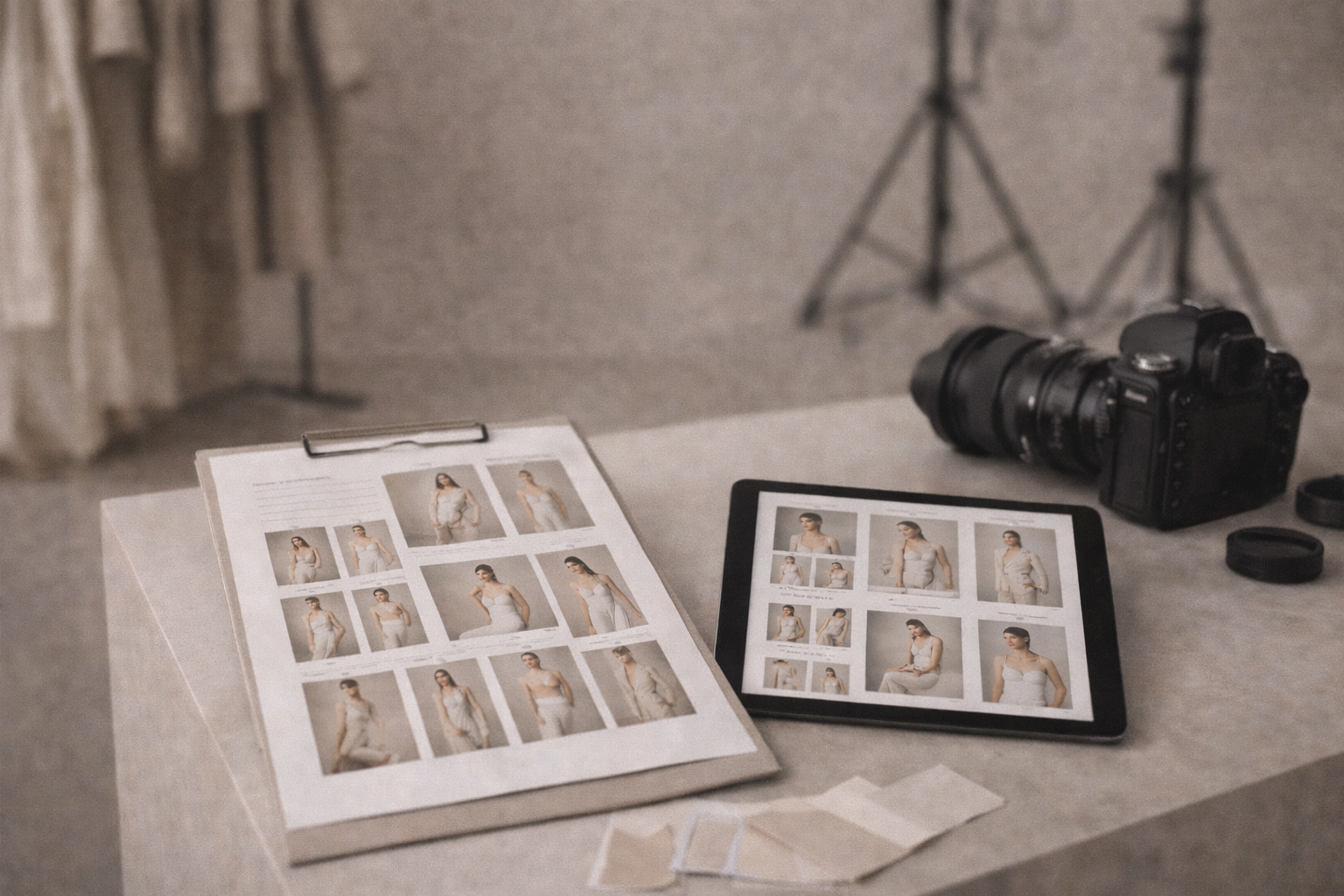
One of the biggest mistakes brands make is building a shot list around outfits alone. While looks matter, they are only one part of effective campaign shoot planning. A useful shot list should be built around content categories.
For example, a smart production structure may include hero images, product-focused frames, social-first vertical content, movement-based shots, close crops for ads, and cleaner visuals for e-commerce or landing pages. As a result, the shoot produces a broader set of assets without feeling random.
This is where fashion content production becomes more scalable. Instead of leaving the team with a small selection of polished images, the campaign generates layered outputs for multiple uses. Therefore, when you plan a fashion campaign shoot, the shot list should reflect not only what the brand wants to show, but also how the brand intends to publish and distribute that content later.
Map the Campaign to Channels Before Production Starts
Modern campaigns do not live in one place. They move across websites, ads, social platforms, email, PR, and retail touchpoints. Therefore, one of the most important parts of campaign shoot planning is deciding where the content will actually be used.
If this step is ignored, teams often end up trying to force the same few assets into every format. However, different channels require different creative shapes and levels of clarity. Paid ads often need fast visual impact. Social content may need more vertical framing and sequence logic. Website assets may require more negative space or cropping flexibility. Consequently, the production day should be built with those needs in mind.
When you plan a fashion campaign shoot with channel mapping in place, fashion campaign photography becomes more adaptable. In turn, fashion content production becomes more efficient because the same shoot can support more of the brand’s marketing ecosystem.
Align Styling, Casting, and Set Design With the Brand System
Even strong campaign ideas can fail if the execution feels disconnected from the brand. Therefore, styling, casting, hair, makeup, and set direction should all reinforce the brand system rather than compete with it.
This is where long-term fashion brand visuals matter. If the brand’s identity is minimal, sharp, and premium, then every visual choice should reinforce that. However, if the campaign suddenly introduces a conflicting tone, the overall brand consistency weakens. As a result, the campaign may look interesting in isolation, yet it will not strengthen recognition over time.
To plan a fashion campaign shoot properly, brands should treat every styling and casting decision as part of the positioning strategy. Moreover, the team should be aligned on what must remain consistent and where the campaign can introduce variation.
Fashion Campaign Photography Should Be Planned for Variation
Variation is one of the most commercially valuable outputs of a well-planned shoot. Yet it is also one of the most overlooked. Many teams focus heavily on hero execution, but they fail to create enough creative diversity for testing and long-term use. Consequently, the campaign looks strong at launch but becomes exhausted too quickly.
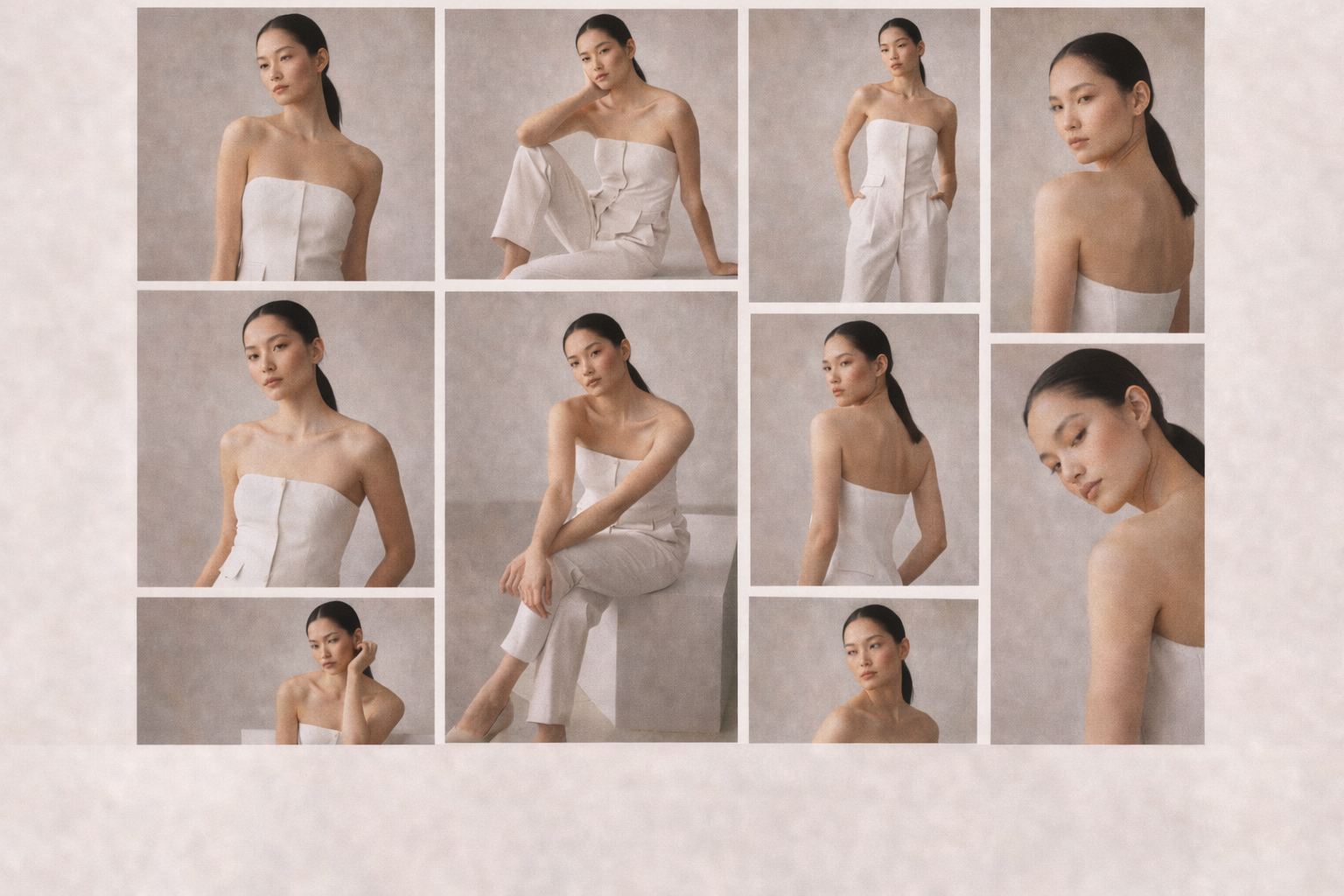
Strong fashion campaign photography should include multiple levels of variation: pose variation, crop variation, framing variation, distance variation, and format variation. Likewise, the production should leave room for both polished hero content and faster supporting assets.
This matters because fashion content production is no longer measured only by aesthetics. It is measured by usability. Therefore, if the campaign is expected to support ads, organic content, and ongoing updates, variation must be built into the planning process from the beginning.
Create a Production Flow That Protects the Best Work
Another critical part of campaign shoot planning is production sequencing. Even when the idea, team, and styling are strong, a poorly structured day can dilute the result. Therefore, the schedule should protect the most important output.
In practice, that often means shooting hero content first, while energy is high and the set is freshest. Afterwards, the team can move into supporting content, variations, and more functional deliverables. As a result, the campaign’s strongest imagery is protected rather than compromised by time pressure.
Likewise, production flow should account for styling changes, set changes, lighting adjustments, and review points. When you plan a fashion campaign shoot with this level of sequence control, the team works with more clarity. Consequently, the final fashion campaign photography feels more intentional and the day becomes less chaotic.
How to Make Fashion Content Production More Scalable After the Shoot
Planning does not stop when production ends. In fact, one of the strongest indicators of a well-run campaign is how useful the content remains after the shoot. Therefore, brands should think beyond the hero edit and consider how the material can support future fashion content production.
This includes selection logic, retouching priorities, crop strategy, asset naming, and content grouping. For example, if paid media requires multiple testing options, those assets should be identified early. If social content needs sequence-based storytelling, the outputs should be grouped accordingly. As a result, the campaign becomes easier to activate across teams and platforms.
When brands plan a fashion campaign shoot with post-production use in mind, they create more long-term value from the same budget. Moreover, their fashion brand visuals remain more organized, consistent, and ready for reuse.
Common Mistakes Brands Make When They Plan a Fashion Campaign Shoot
Several mistakes appear repeatedly in campaign planning. First, brands often move into inspiration before defining the objective. Second, they prioritize hero aesthetics over channel usability. Third, they underestimate the amount of variation required for modern publishing. Finally, they treat the shoot as an event rather than part of a larger fashion content production system.
As a result, even expensive productions can underperform. The visuals may look good, yet the output lacks structure, flexibility, or consistency. Therefore, the most important improvement is often not “better photography,” but better planning.
Related editorial: Fashion Campaign Photography
What a Well-Planned Shoot Creates for the Brand
When brands truly plan a fashion campaign shoot well, the results go beyond a successful production day. They create stronger fashion brand visuals, more usable fashion campaign photography, and a more scalable system for future fashion content production.
Moreover, the marketing team gains better assets, the brand gains stronger consistency, and the creative team gains a clearer system to build on. As a result, the campaign continues delivering value well after launch.
Frequently Asked Questions
How Many Images Should A Fashion Campaign Deliver?
Most fashion campaigns should deliver between 30 and 100+ final assets depending on campaign objectives, marketing channels, and production scope.
For example:
- Small campaigns: 30 – 50 assets
- Growth campaigns: 50 – 100 assets
- Multi-channel campaigns: 100+ assets
Rather than focusing solely on image quantity, brands should focus on asset usability. A successful campaign should provide content for websites, paid advertising, social media, email marketing, PR, and future launches.
How Long Does A Fashion Campaign Shoot Take?
Most fashion campaign shoots require significantly more time than the actual production day.
Typical timeline:
- Strategy and planning: 2 – 4 weeks
- Creative development: 1 – 2 weeks
- Production planning: 1 – 2 weeks
- Shoot day: half-day to multiple days
- Post-production: 1 – 3 weeks
Most successful campaigns begin planning 6 – 12 weeks before launch.
How Much Does A Fashion Campaign Shoot Cost?
Fashion campaign shoot costs typically range from:
- €2,000 – €5,000 for emerging brands
- €5,000 – €15,000 for growing brands
- €15,000 – €50,000+ for established brands
Pricing depends on:
- models
- locations
- production complexity
- licensing
- deliverables
- video requirements
The most important consideration is not cost alone but how much value the campaign creates across marketing channels.
What Is Included In A Fashion Campaign?
A fashion campaign typically includes:
- campaign planning
- creative direction
- moodboards
- shot lists
- model selection
- production management
- photography
- retouching
- final asset delivery
Some campaigns may also include video production, paid advertising assets, retailer content, and licensing agreements.
What Assets Should A Fashion Campaign Create?
A high-performing fashion campaign should create assets for multiple channels.
These often include:
- website banners
- homepage imagery
- product page content
- social media content
- paid advertising creatives
- email marketing assets
- PR imagery
- retailer marketing materials
- short-form video content
The more channels supported, the greater the campaign ROI. Make sure you use The Content Planning Framework Before Every Shoot.
How Often Should Fashion Brands Run Campaign Shoots?
The answer depends on launch frequency and marketing activity.
Typical guidelines:
- Startup brands: 2 – 4 campaigns annually
- Emerging brands: 4 – 6 campaigns annually
- Growth brands: 6 – 12 campaigns annually
- Established brands: monthly or ongoing production
Brands running paid advertising generally require more frequent content creation.
What Is The Difference Between A Campaign Shoot And A Lookbook Shoot?
A lookbook shoot primarily showcases products. A campaign shoot is designed to support marketing and sales objectives.
Lookbooks focus on presentation.
Campaigns focus on:
- customer acquisition
- advertising
- product launches
- brand positioning
- conversion support
Most growing fashion brands eventually require both.
Should Campaign Content Be Designed For Paid Advertising?
Yes. Many brands make the mistake of creating campaign imagery first and thinking about advertising later.
However, paid advertising often requires:
- multiple crops
- vertical formats
- product-focused visuals
- testing variations
Planning advertising assets during production significantly improves campaign performance and reduces future content costs.
What Makes A Fashion Campaign Successful?
Successful fashion campaigns share several characteristics:
- clear business objectives
- strong creative direction
- customer-focused messaging
- consistent branding
- multi-channel asset creation
- effective distribution planning
The strongest campaigns are planned around how content will be used, not simply how it will look.
Is A Fashion Campaign Shoot Worth The Investment?
For brands actively investing in marketing, advertising, and growth, a fashion campaign shoot can become one of the most valuable marketing assets they create.
A well-planned campaign often supports:
- product launches
- customer acquisition
- social media
- email marketing
- PR
- advertising
for months after production.
The question is rarely whether a campaign costs money. The better question is how much value the campaign can create over time.
Final Thoughts
To plan a fashion campaign shoot properly is to treat production as strategy, not just execution. While creative direction is essential, the real advantage comes from clarity, structure, and alignment. Therefore, the brands that plan better usually publish better, scale better, and perform better.
In other words, stronger campaigns are rarely the result of better ideas alone. More often, they are the result of better planning.
Next Recommended Reads
Before the System vs After the System – A Content Transformation
Why a Fashion Content Retainer Is the Smartest Investment for Scalable Brand Growth
Fashion Campaign Photography: The Foundation of High-Performing Fashion Brands