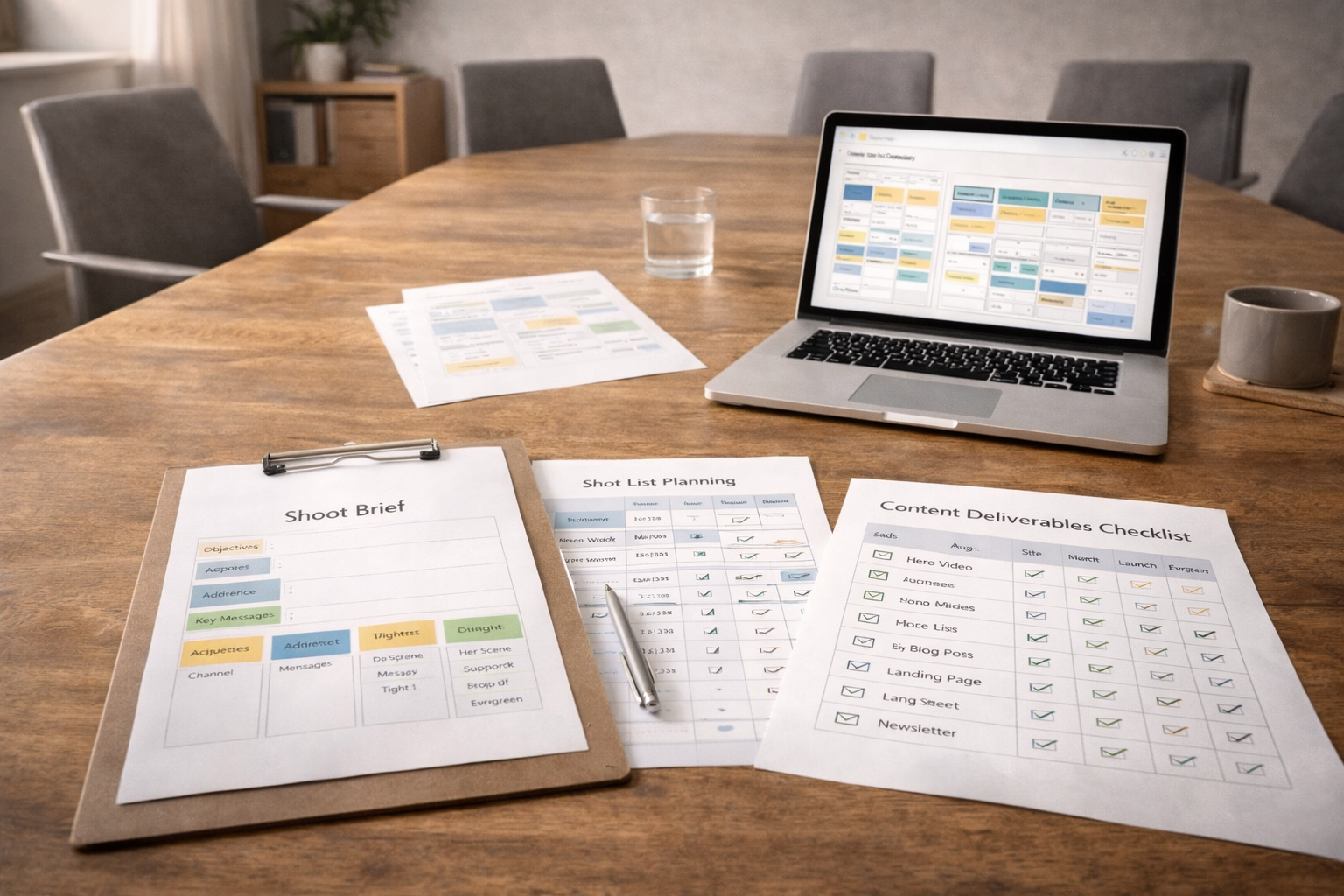
Pre-production content planning is where content ROI is decided. Execution gets all the attention; however, planning determines whether a shoot creates usable assets or expensive leftovers.
As a result, teams that plan upfront ship faster, approve faster, and reuse more — because they define outcomes before the camera turns on.
When teams treat pre-production as optional, execution becomes improvisation. Although the shoot may look productive, the final assets often don’t match channel needs.
Consequently, edits multiply, stakeholders disagree, and timelines slip.
Most of these problems aren’t caused by cameras or crews. Instead, they’re caused by missing planning artifacts: a shoot brief template, disciplined shot list planning, and a clear content deliverables checklist.
Therefore, skipping planning creates chaos later.
The best teams treat pre-production like the main event. First, they decide what success looks like. Next, they define outputs. Then, they plan execution to match those outputs. As a result, execution becomes straightforward.
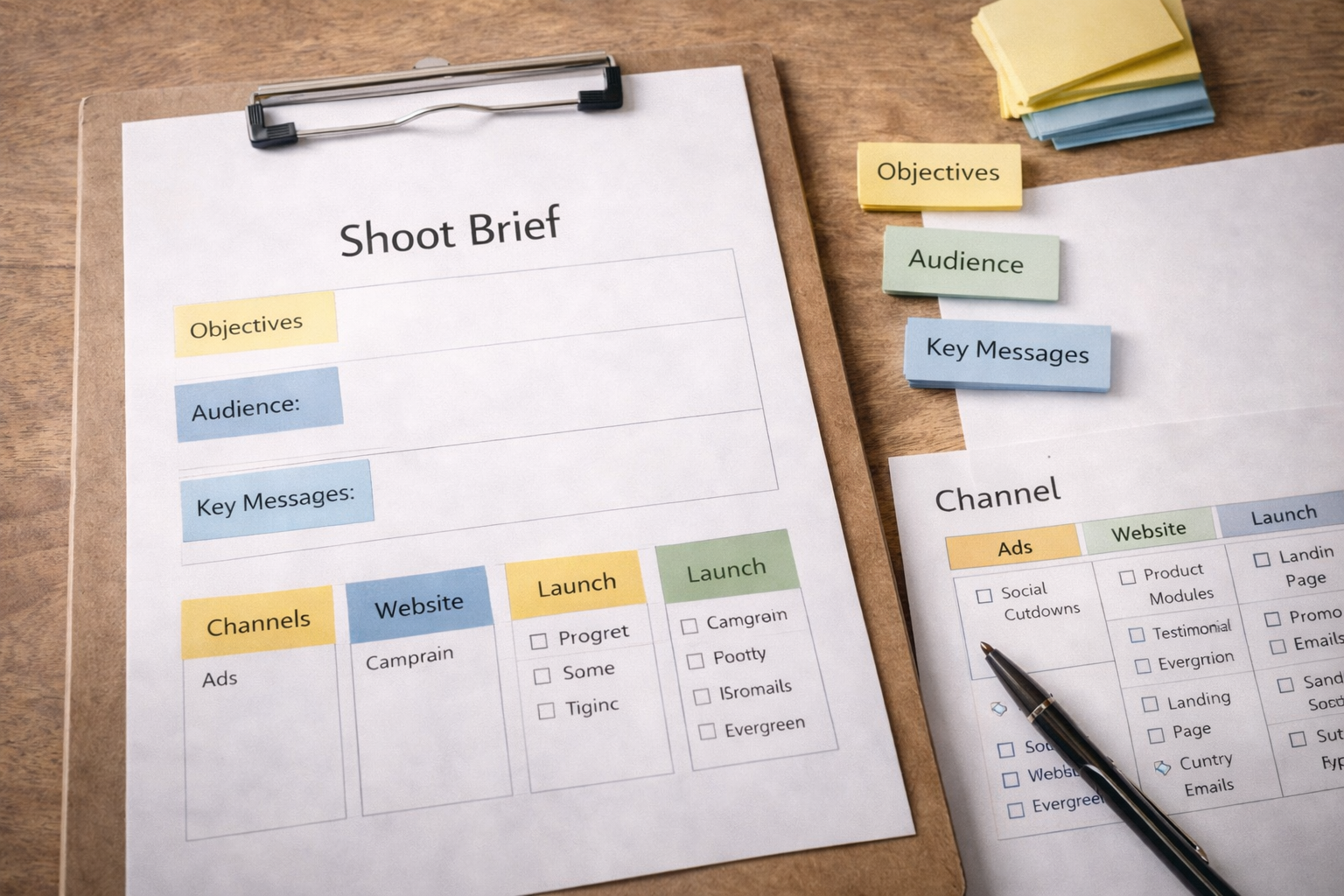
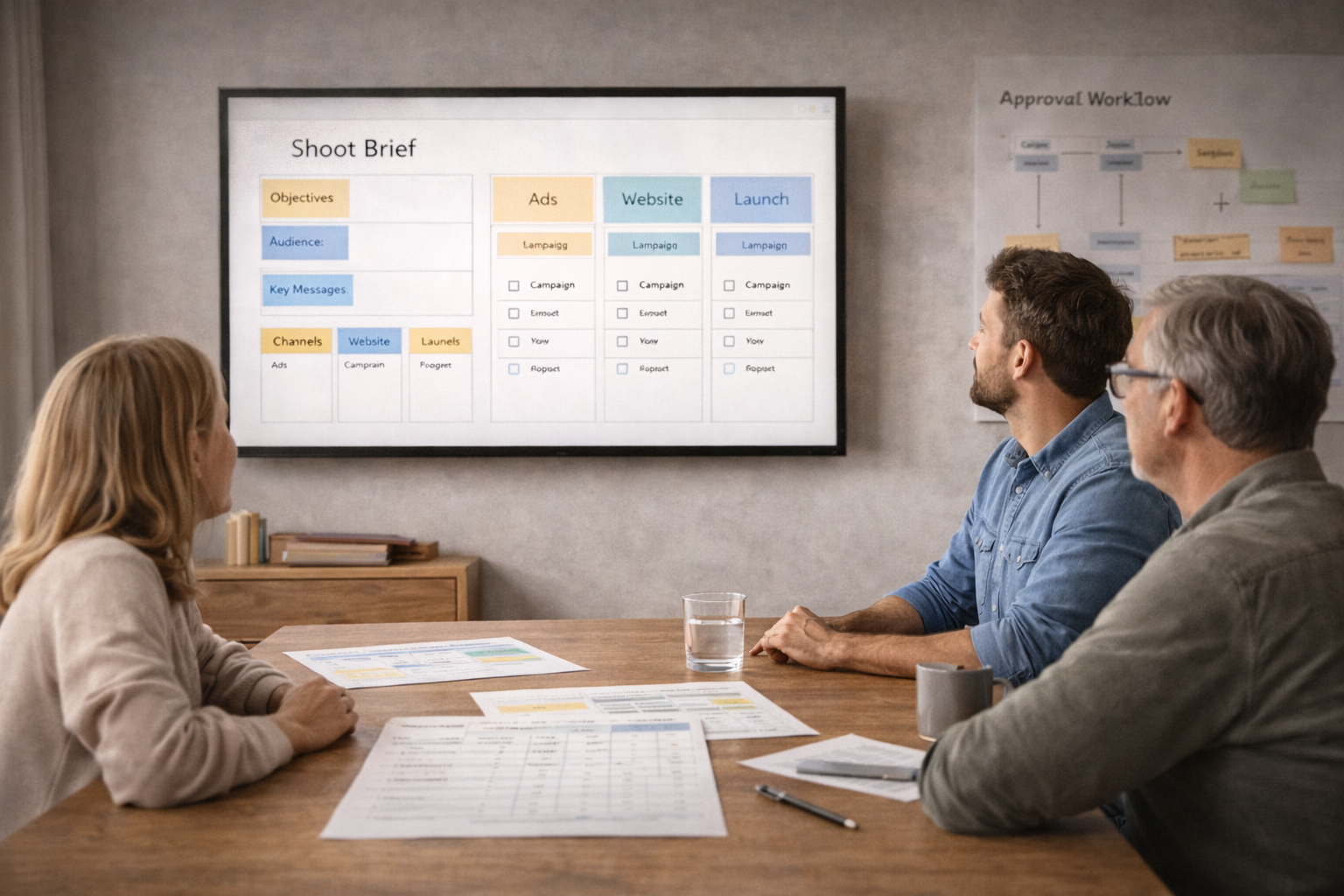
A simple shoot brief template aligns the basics: objective, audience, messages, and channels. Moreover, it prevents late-stage strategy debates.
Because everyone agrees upfront, the shoot becomes easier to direct and easier to review. Consequently, creative workflow alignment improves immediately.
Additionally, the brief should specify usage: ads, website modules, product pages, email headers, and social cutdowns.
Therefore, planning is connected directly to distribution, not just aesthetics.
Even with a strong brief, teams still waste content if they don’t translate goals into capture requirements.
That’s why shot list planning matters.
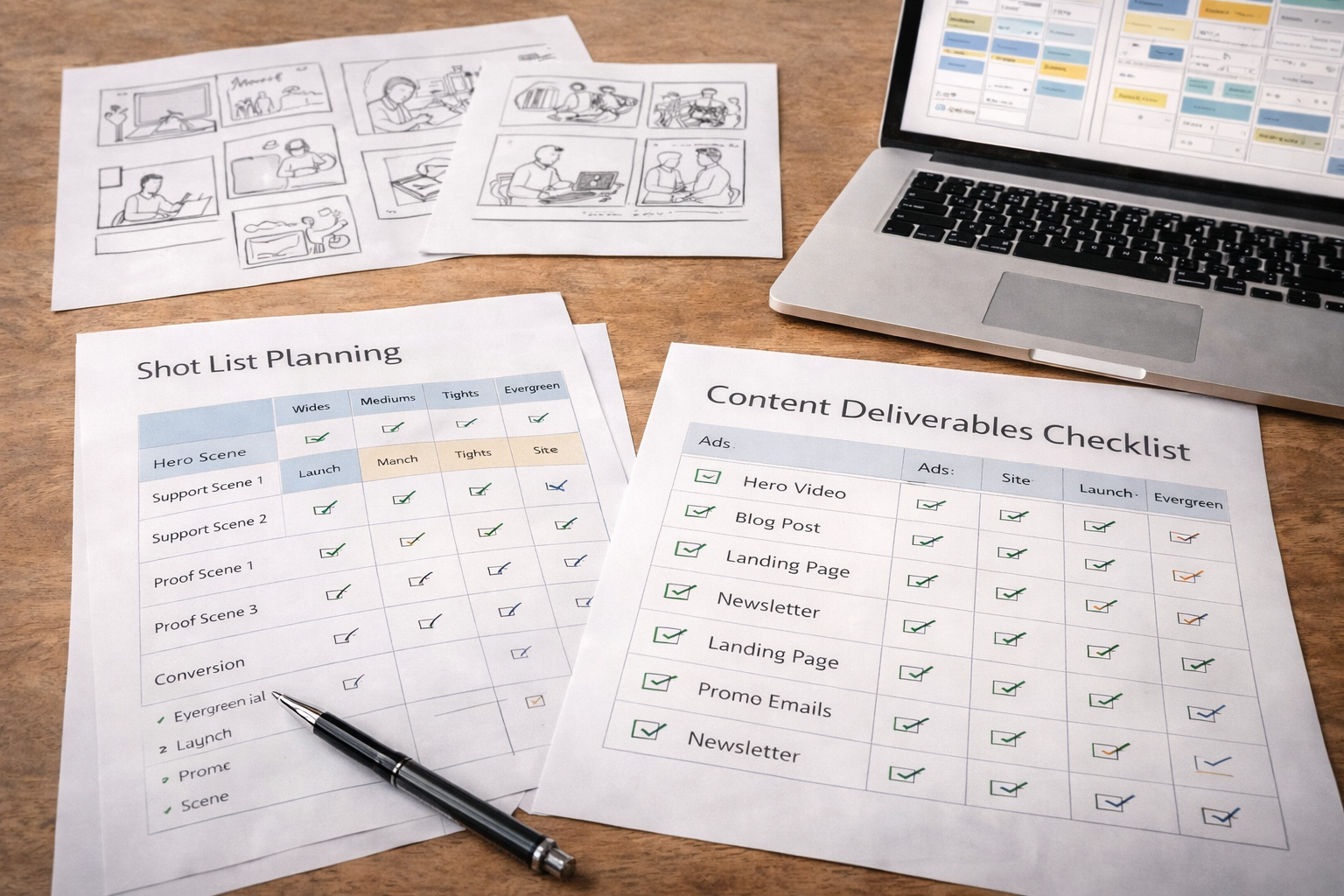
Instead of “getting a few options,” teams plan scenes, variations, and crops that match placements. Consequently, the shoot produces assets that ship without friction.
When shot list planning is paired with a content deliverables checklist, the team stops relying on memory. As a result, nothing critical is missed, and rework drops.
Moreover, it becomes easier to hand off edits and approvals because outputs are already defined.
Ironically, pre-production creates creative freedom. Because decisions are made early, the team can focus during the shoot instead of negotiating on set. Therefore, execution moves faster and feels calmer.
This is where creative workflow alignment becomes measurable. When stakeholders align through a shoot brief template and a content deliverables checklist, approvals speed up.
Additionally, because shot list planning matches distribution needs, edits become lighter. As a result, teams launch sooner with fewer surprises.
The payoff of pre-production content planning is leverage. Instead of producing “a shoot,” teams produce inventory: modular assets that can be reused across moments and channels. Consequently, the same production day supports multiple initiatives.
In addition, planning improves learning. Because each asset is tied to a purpose, performance feedback can be applied to the next cycle. Therefore, every shoot gets smarter over time.
If your shoots feel expensive and unpredictable, the fix usually isn’t execution. Instead, it’s planning. Therefore, your next step is to standardize the pre-production layer: a shoot brief template, disciplined shot list planning, and a repeatable content deliverables checklist that drives creative workflow alignment.
Want help building this? Share your next shoot date and channels (ads, site, launch), and we’ll map a pre-production plan that makes execution easier — and results more reusable.