
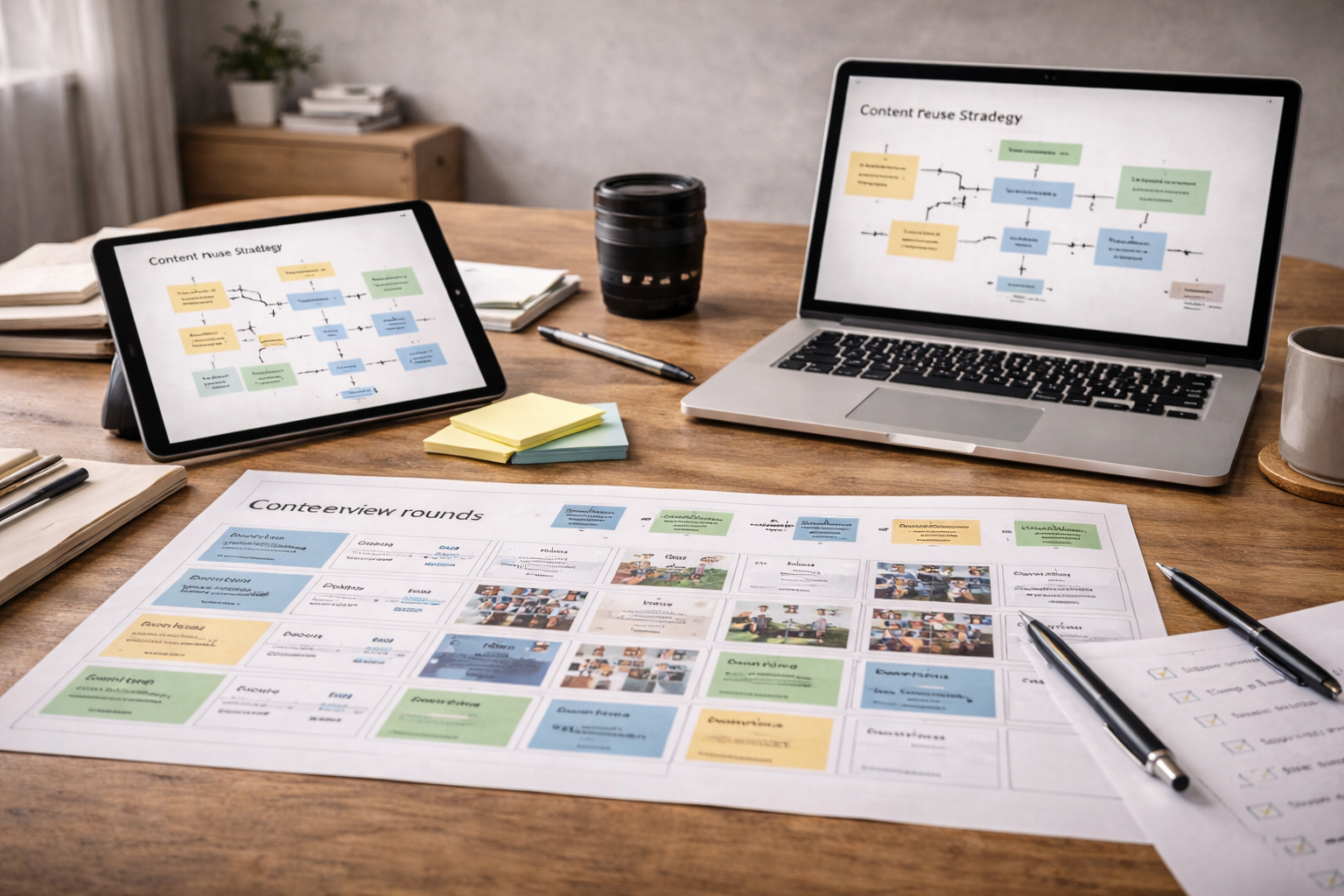
This case study shows how a same budget more usable content outcome was achieved by changing planning — not spend. Instead of increasing production, the team focused on structure.
As a result, the same budget delivered more usable assets, stronger reuse, and higher long-term value across channels.
The client was an established brand producing regular campaigns. Although budgets were consistent year over year, content impact was not.
Each campaign required new assets, new briefs, and new production cycles. Consequently, content rarely carried over beyond its initial use.
While spend remained flat, expectations increased. Therefore, the pressure was clear: achieve same budget more usable content without sacrificing quality.
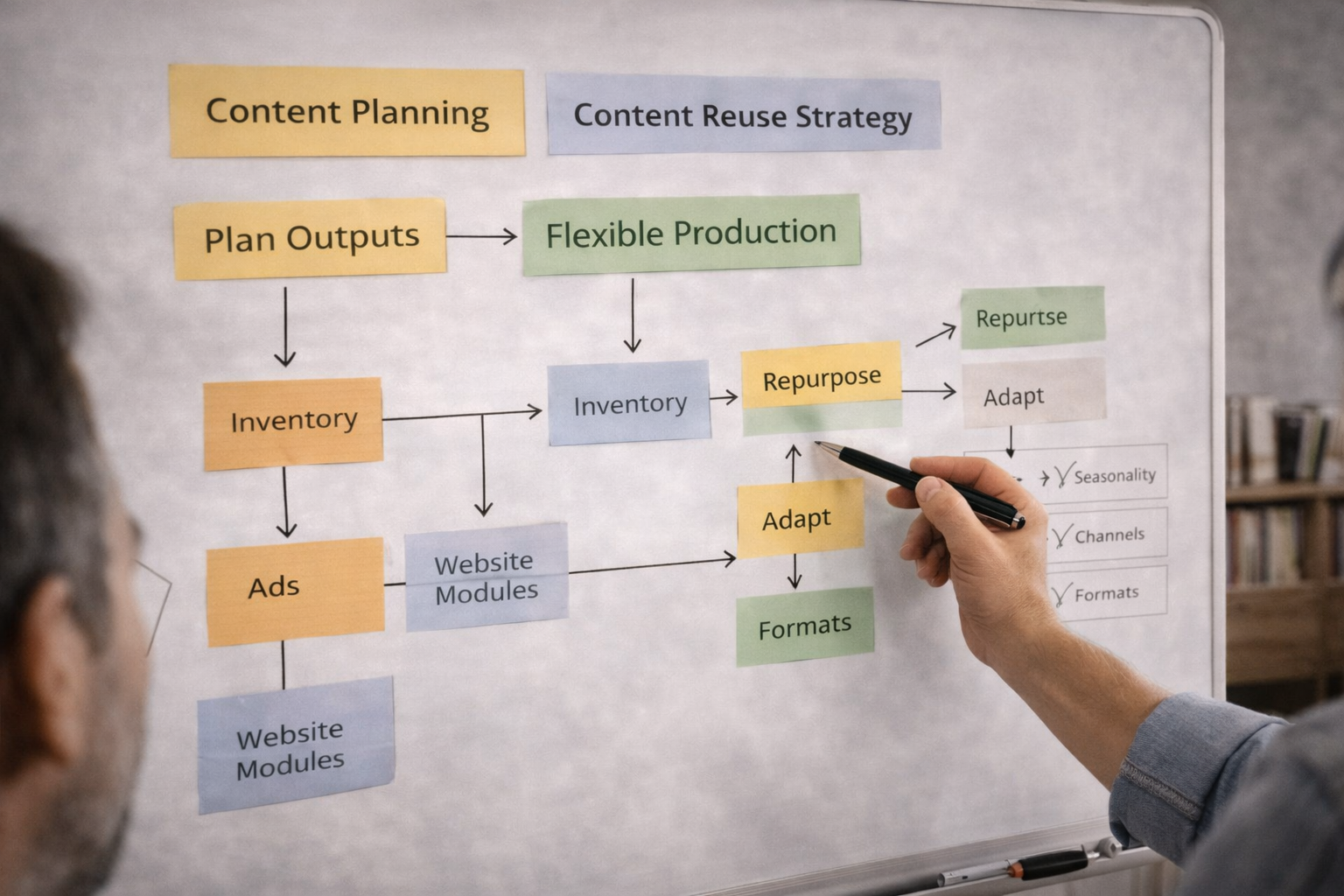
The core issue was not creative quality — it was utilization. Assets were designed for single moments, not systems. As a result, marketing asset utilization stayed low, and teams repeatedly rebuilt similar content from scratch.
Although the team worked hard, content production efficiency suffered because planning focused on campaigns instead of outputs.
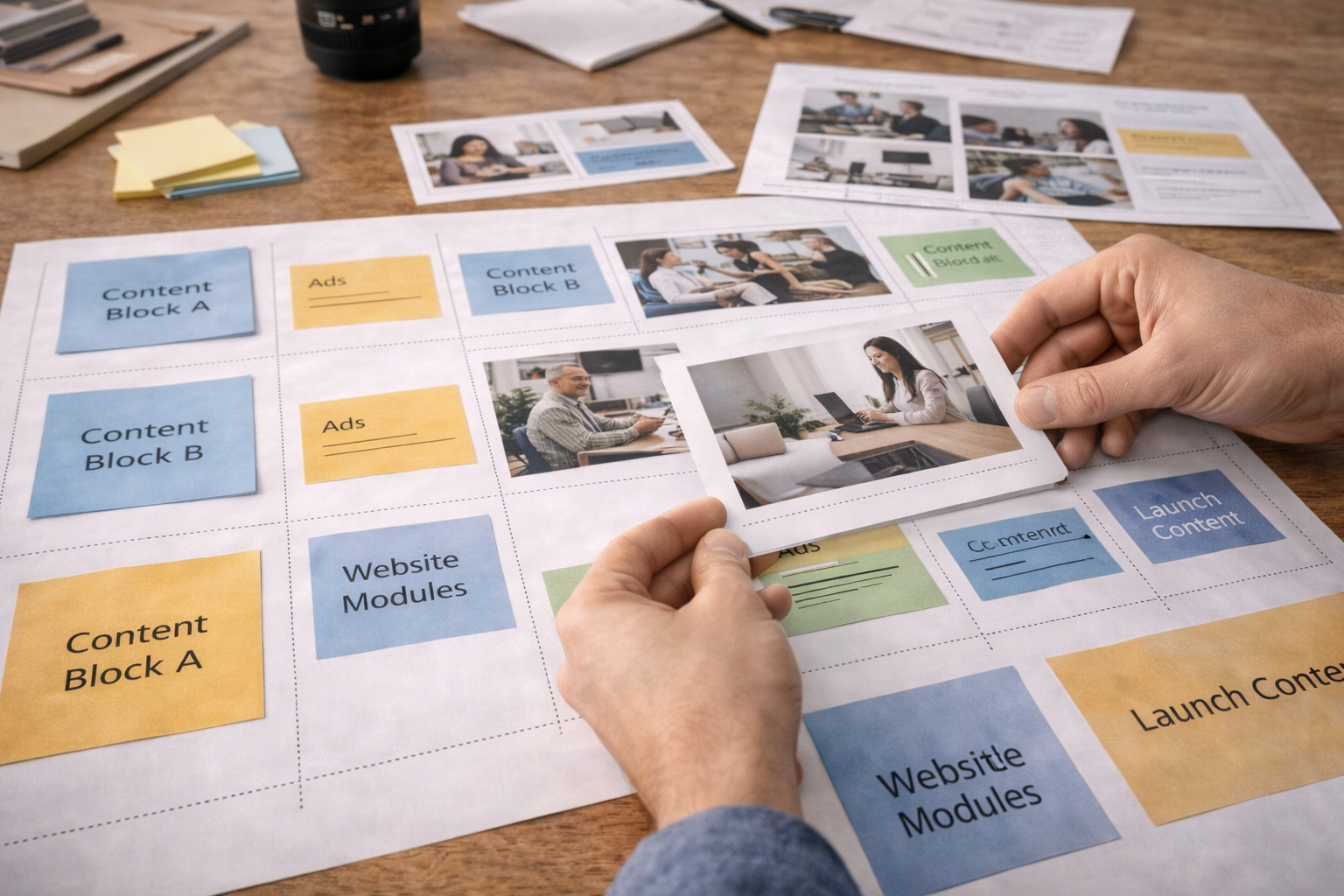
The solution was not more shoots — it was better planning. First, the team introduced a content planning system.
Then, they defined content outputs before production. Consequently, the goal shifted from “make assets” to “build inventory.”
A clear content reuse strategy was established: every shoot had to support multiple placements and future moments.
Therefore, planning centered on adaptability, not perfection.
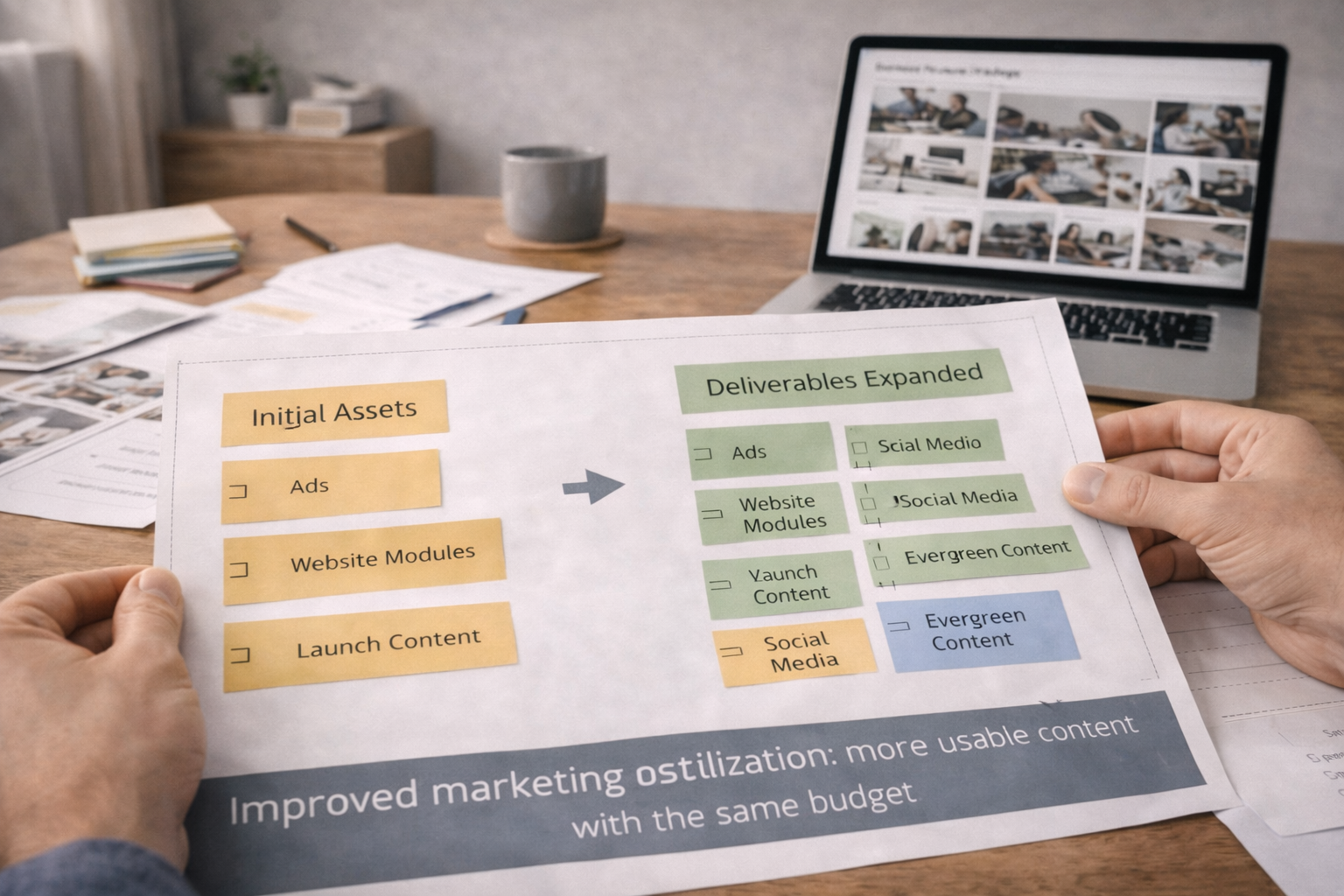
Execution followed the plan. Assets were captured modularly with flexible framing. As a result, the same footage and imagery could be used across ads, website modules, launches, and evergreen content.
Because expectations were defined upfront, content production efficiency improved. Editing became assembly, not discovery.
The outcome was clear. With the same budget, the team produced significantly more usable content. Moreover, marketing asset utilization increased because assets were designed for reuse from day one.
Ultimately, same budget more usable content became repeatable, not a one-off win.
This case study reinforces a simple truth: efficiency comes from planning, not pressure.
When teams adopt a content reuse strategy supported by a content planning system, the same budget can produce far more value. Content stops expiring after one campaign and starts compounding over time.
If your team needs more output but budgets are fixed, the answer isn’t more production. Instead, it’s smarter planning.
Want to see how this would work for your next shoot? Share your channels and objectives, and we’ll map how to get same budget more usable content — by design.