

A one content system multiple departments model solves a common problem: everyone needs content, yet no one shares the same plan.
When teams adopt a shared operating layer, content becomes infrastructure. As a result, cross-functional alignment improves, a shared content calendar prevents collisions, a centralized asset library increases reuse and content governance makes decisions easier instead of slower.
The client was a multi-department organization where marketing, product, employer brand, and sales all requested content. Each department had legitimate needs. However, each department also ran its own workflow.
Consequently, planning was fragmented and reuse was inconsistent.
Leadership wanted a system that could scale. Therefore, the goal became clear: build a one content system multiple departments approach without adding bureaucracy.
The challenge wasn’t content demand—it was coordination. Teams often requested similar assets at different times.
As a result, work duplicated, priorities conflicted, and timelines slipped. Meanwhile, disagreements about “what matters” emerged late.
Consequently, cross-functional alignment remained fragile.
In other words, the organization had content activity but not content infrastructure. Therefore, the system — not effort — had to change.

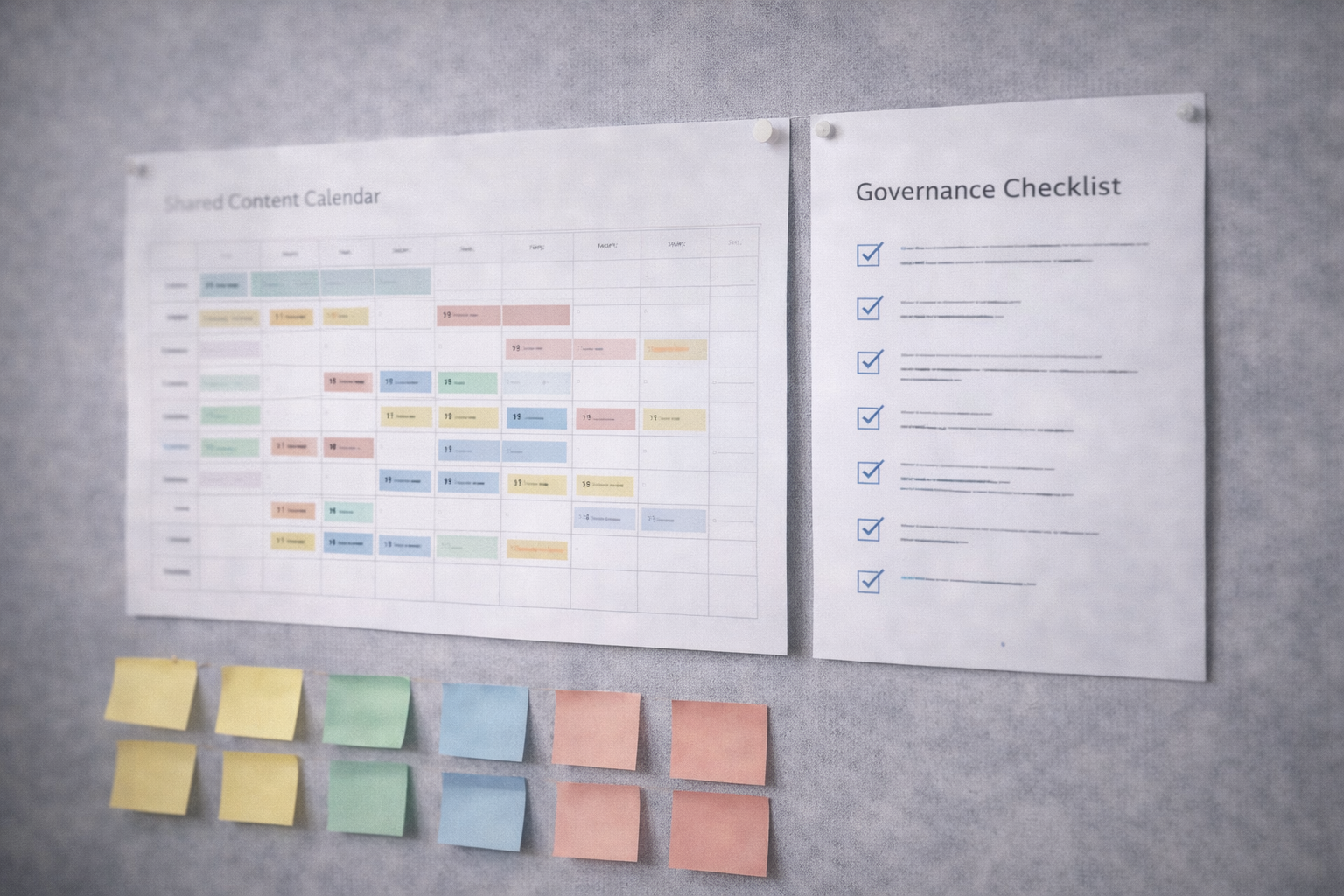
The strategy created a shared operating layer while preserving department autonomy. First, the organization introduced a lightweight intake process. Next, they implemented a shared content calendar visible to all departments.
Then, they centralized storage and created standards. As a result, the one content system multiple departments approach improved collaboration without slowing teams down.
Content governance didn’t mean more approvals. Instead, it clarified three things: ownership, standards, and escalation. Therefore, teams knew what “done” looked like. Moreover, decisions became faster because roles were explicit.
Consequently, cross-functional alignment improved naturally.

Execution focused on making the system usable. The team built a centralized structure and trained departments on how to request, reuse, and publish. Additionally, the shared content calendar became the weekly reference point.
Therefore, teams could spot overlap early and coordinate before production began. A centralized asset library supported reuse. Assets were tagged by department, channel, and use case.
As a result, teams searched before producing. Consequently, the one content system multiple departments model reduced redundancy.
Results showed up as clarity and reuse. Because teams operated from a shared calendar and library, duplication dropped. Moreover, because governance clarified standards, review cycles became smoother. Consequently, cross-functional alignment became stable instead of situational.
Additionally, departments stayed independent where needed. However, they shared infrastructure where it mattered. Therefore, the system scaled without becoming heavy.
Content becomes expensive when every department rebuilds the same wheel. However, when teams share the operating layer, content becomes leverage.
A one content system multiple departments approach works because it creates visibility, reuse, and decision clarity. Moreover, it improves cross-functional alignment through shared planning, not forced consensus.
If your teams are constantly requesting content in parallel, you don’t need more production — you need shared infrastructure. Therefore, the fastest way to implement a one content system multiple departments model is:
Want to see what this would look like for your organization? Share your departments, top channels, and next business moment, and we’ll map a shared calendar, library structure, and governance layer.