
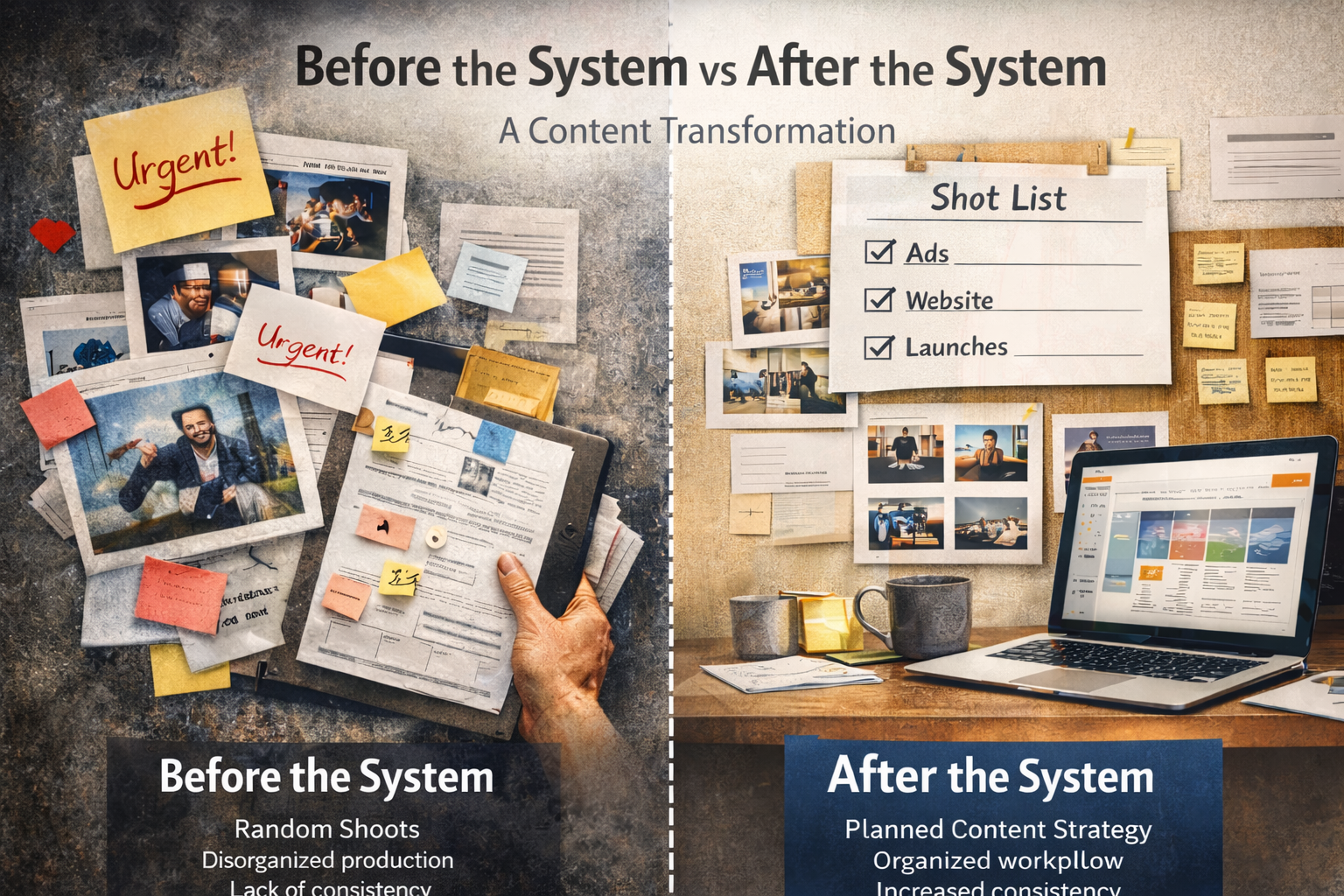
Before this content system transformation, Style Conditioning had talent, ambition, and a steady stream of “new content” requests — but no unified approach to creating or deploying visuals. The result was a cycle of one-off production that looked busy, yet rarely compounded.
The organization was stuck in a pattern of content system vs random shoots — and random shoots were winning by default. Each new campaign or stakeholder request triggered a new brief, a new shoot, and a new set of assets that didn’t match what came before.
Content existed—but it didn’t compound. Effort stayed flat while demand for “fresh visuals” kept rising.
Because the content production workflow was mostly reactive, teams repeated decisions they had already made:
style, framing, formats, usage rights, file organization, approval steps. That repetition created delays and friction — especially when performance, brand, and web teams needed different variations of the same story.
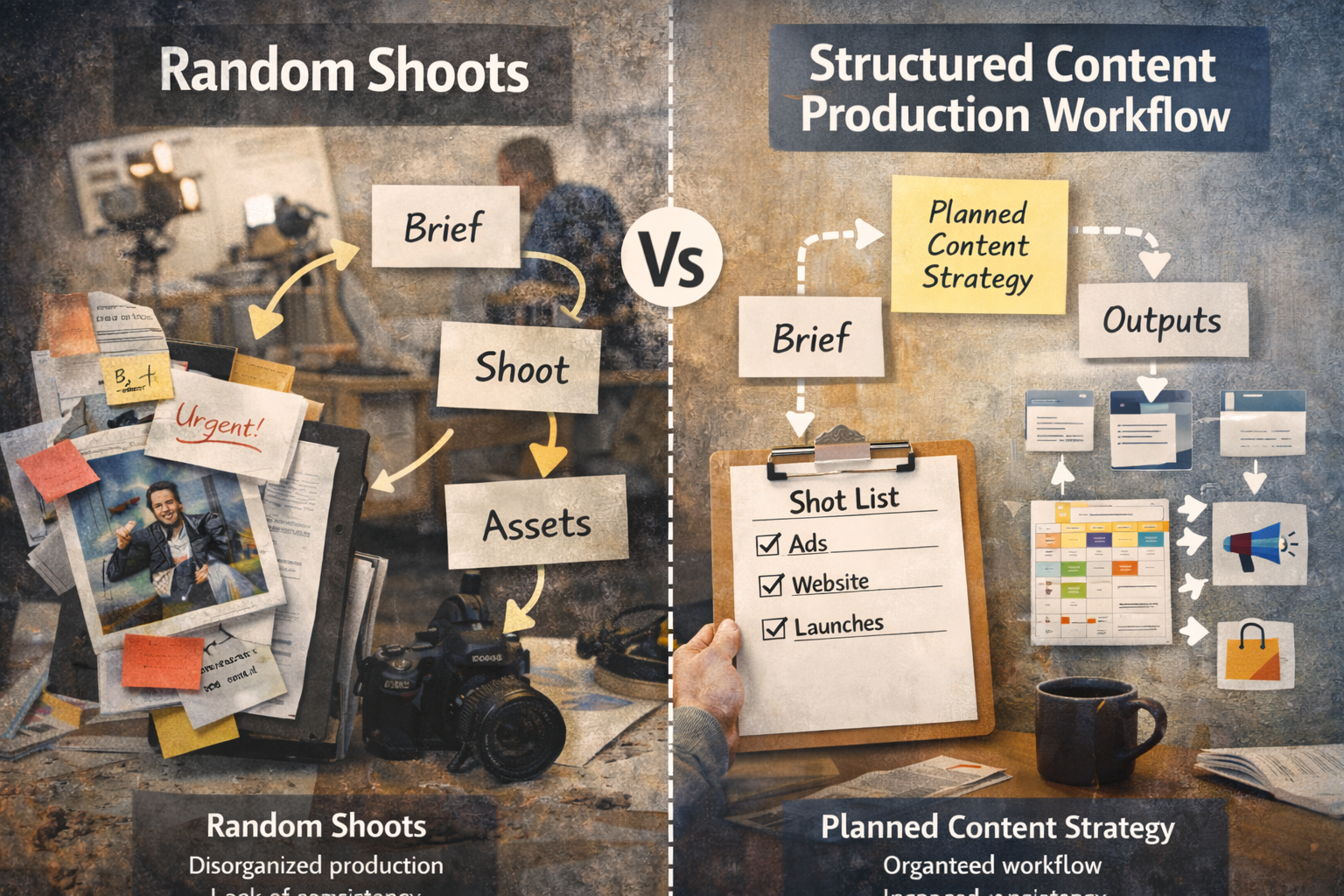
The turning point was choosing a planned content strategy over reactive production. This content system transformation started by defining what content needed to do for the business — then designing production around those use cases.
Instead of producing assets first and figuring out distribution later, the process flipped: the team mapped priorities across ads, the website, and launches, then built a system to deliver predictable variations.
In practice, it meant replacing content system vs random shoots with an intentional planning cycle.
By documenting the content production workflow and aligning teams around shared use cases, they stopped treating photography as a one-time deliverable. It became a repeatable input into an always-on content engine — designed for reuse and built for speed.
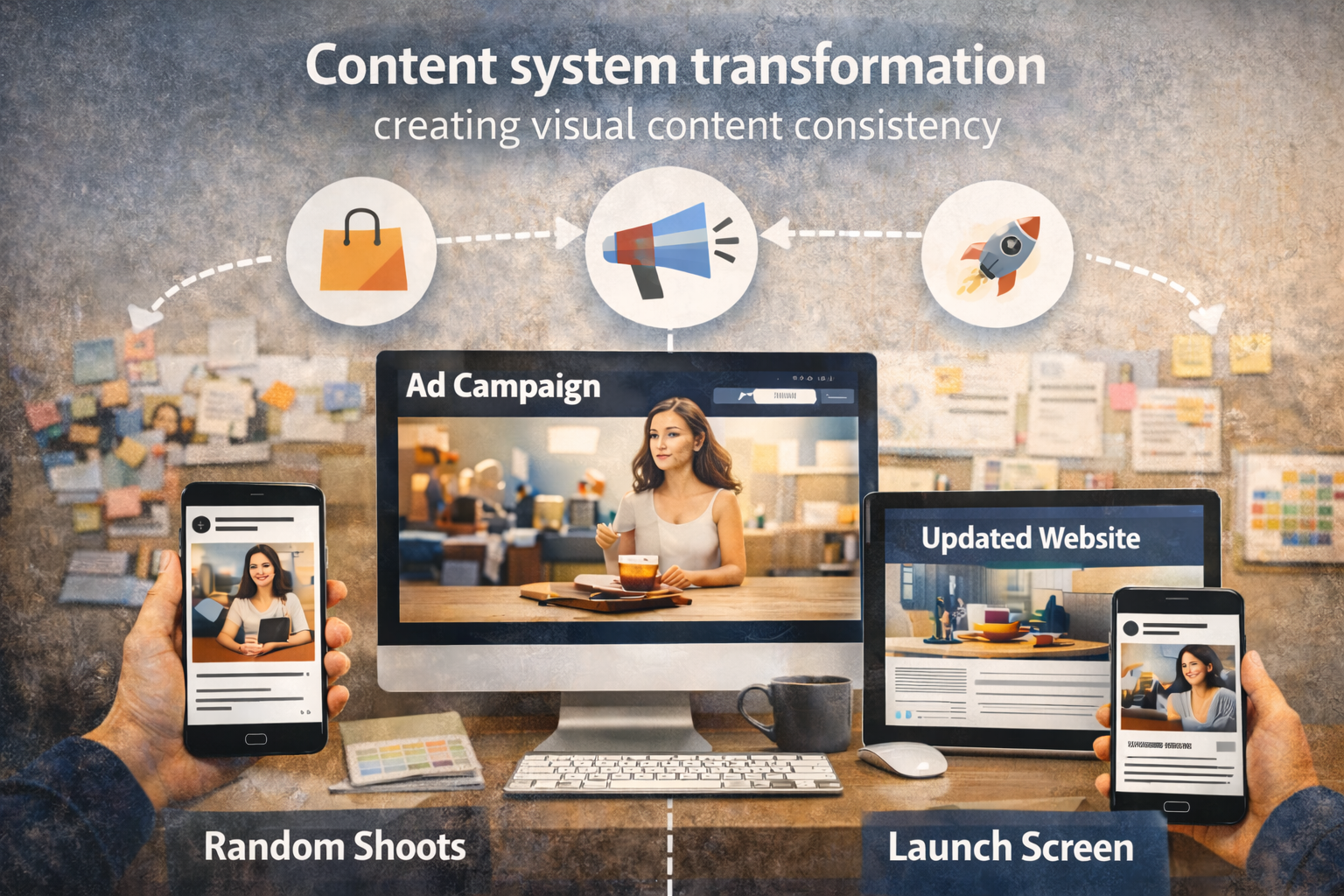
After the content system transformation, the biggest change wasn’t “more content”. It was better coordination.
With a clearer planned content strategy and an improved content production workflow, the same assets supported
multiple initiatives without constant re-briefing.
Visual content consistency became operational, not aspirational. The system made it easier to stay on-brand than to drift.
The team also resolved the core tension of content system vs random shoots by creating a library designed to serve
performance, brand, and web simultaneously — without restarting production every time priorities shifted.

This wasn’t a story about a single successful project. It was a content system transformation — a shift from reactive execution to infrastructure. Once the planned content strategy and content production workflow were in place, every shoot worked harder because outputs were designed for reuse.
If you’re debating content system vs random shoots, the answer isn’t “shoot less” or “post more.” The answer is a content system transformation — so the work you already do actually compounds.