

Business moment content planning is the difference between posting “when we have time” and publishing with purpose.
Instead of treating content as a constant scramble, teams plan around the moments the business actually cares about.
As a result, content supports launches, seasonal peaks, and sales cycles—while also feeding an always-on content system.
Many teams try to fix inconsistency by publishing more. However, volume doesn’t create clarity. Instead, business moment content planning starts with the calendar the business already runs on: launches, seasonal spikes, retail moments, PR beats, hiring pushes, and revenue targets.
Consequently, content stops being random and starts being aligned.
Moreover, this approach improves content calendar strategy because the editorial schedule is anchored to real events. Therefore, content planning becomes easier to prioritize, easier to approve, and easier to reuse.
Over time, this builds an always-on content system that doesn’t collapse between campaigns.
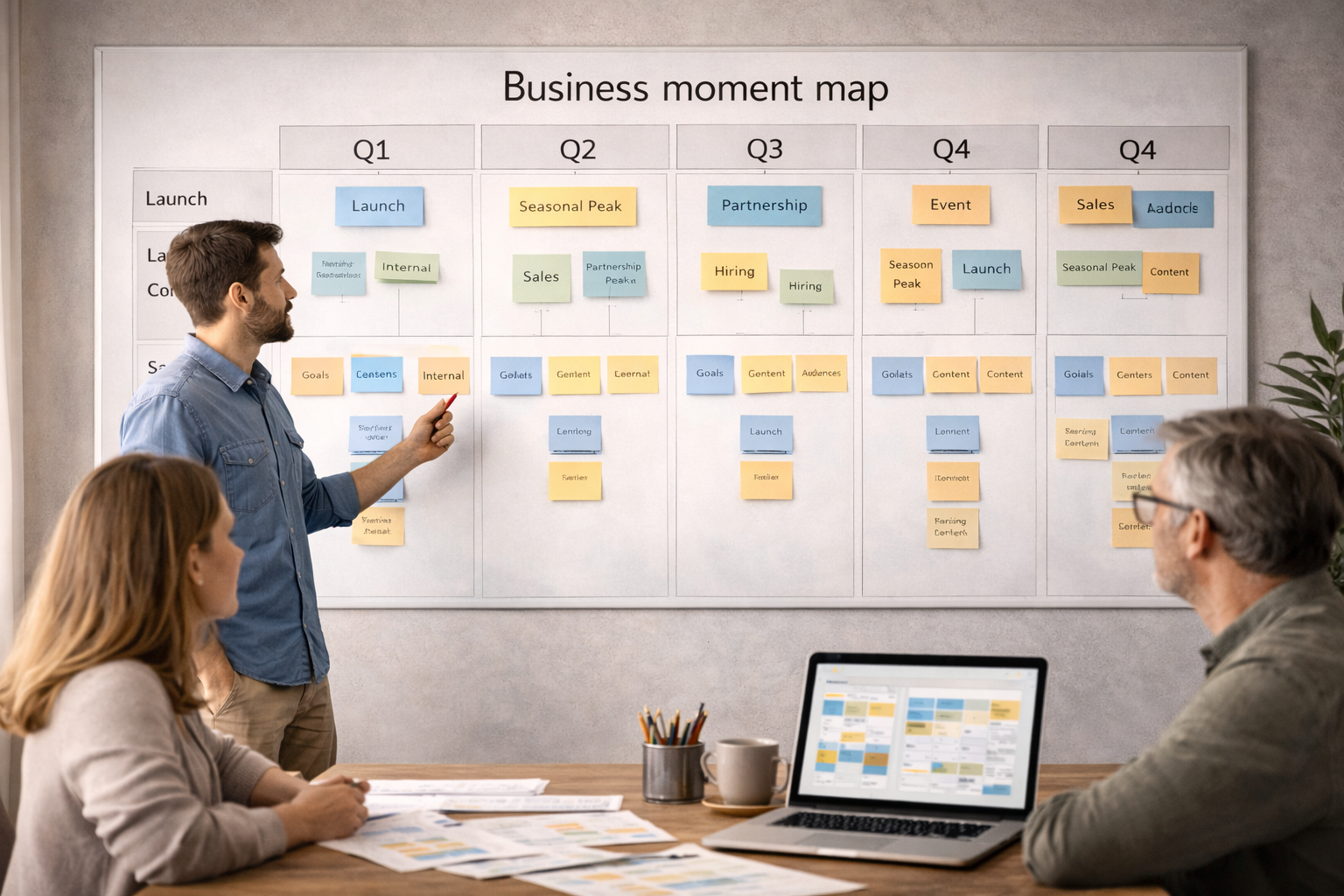
The team had strong marketing ideas. Yet, content was still reactive. Although campaigns were mapped at a high level, the supporting content wasn’t planned early enough. As a result, execution depended on last-minute production and rushed approvals.
In addition, seasonal campaign planning created predictable stress: the same scramble every quarter. Meanwhile, launches suffered because there was no repeatable launch content plan. Consequently, the team was “busy” but not building momentum.
The shift started by reframing planning. Instead of asking, “What should we post on LinkedIn?” the team asked, “What business moment are we supporting”?
Therefore, business moment content planning became the organizing principle.
First, we listed the business moments that matter: launches, seasonal spikes, partnerships, events, hiring, and revenue pushes. Next, we mapped each moment to goals, audiences, and proof points.
As a result, content calendar strategy became anchored to outcomes, not opinions.
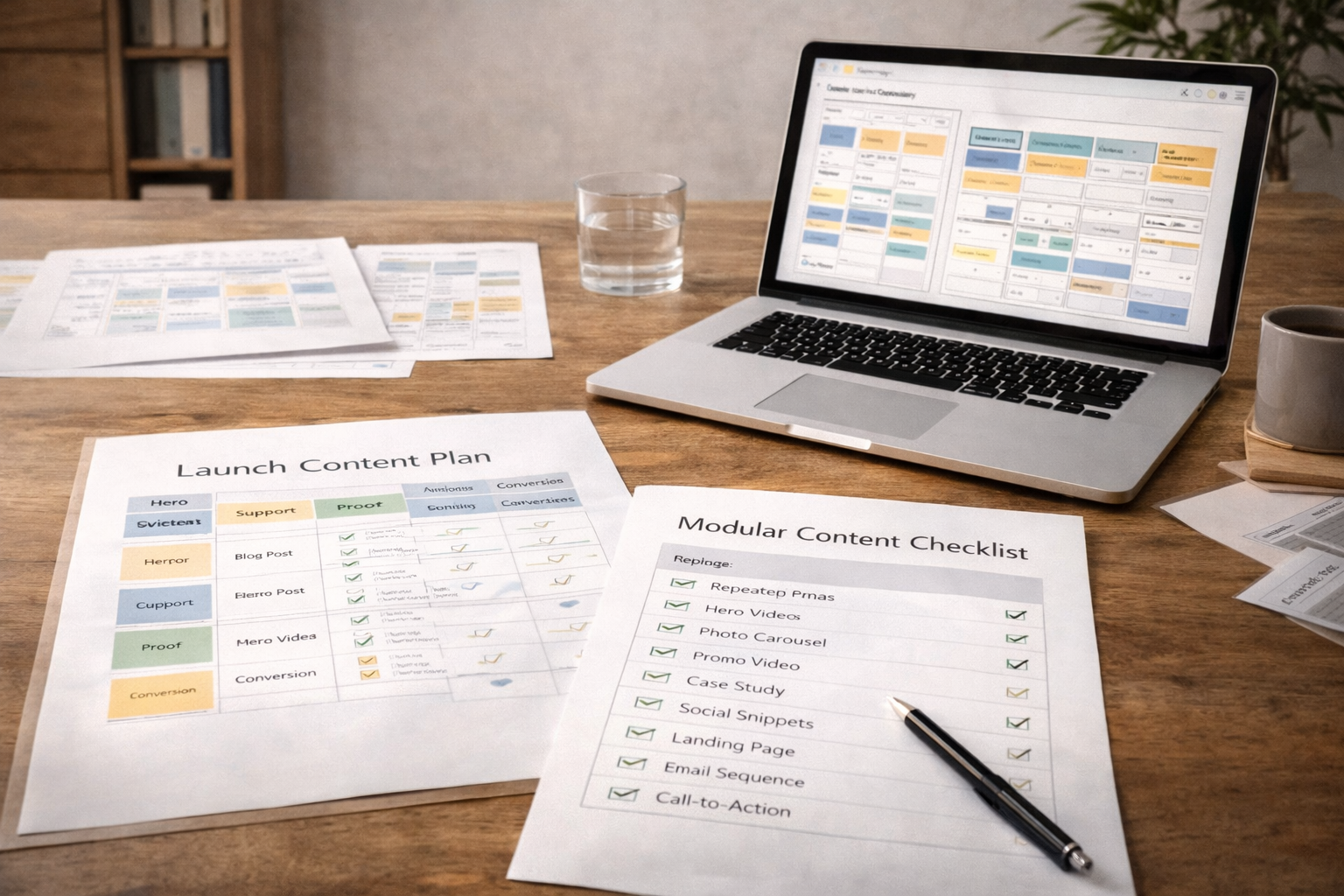
Then, we defined a repeatable set of assets for each moment: hero story, supporting angles, proof assets, and conversion pages. Consequently, the team could build a reliable launch content plan without reinventing it every time.
Moreover, this structure made seasonal campaign planning calmer because deliverables were predictable.
Finally, we connected campaigns into an always-on content system. In other words, each moment fed the next: launch assets became evergreen education, seasonal campaigns became proof, and performance learnings became future creative.
Therefore, the system compounded instead of resetting.

Execution improved because planning happened earlier. Although the team still moved fast, they moved with structure. As a result, approvals were smoother, and output became predictable.
Additionally, teams stopped creating isolated assets. Instead, they built modular content that could be repurposed across moments. Consequently, each project produced more usable inventory over time.
The impact was not just more content—it was more alignment. Because business moment content planning clarified priorities, stakeholders could approve faster and teams could ship earlier. As a result, the marketing calendar became a lever, not a source of anxiety.
Moreover, the team improved campaign performance over time because learnings carried forward. Therefore, seasonal campaign planning became iterative instead of repetitive. And because every launch followed the same launch content plan structure, execution got faster with every cycle.
Planning around business moments is not restrictive—it’s freeing. Because the team knows what matters and when it matters, creative energy goes into quality and reuse, not constant resetting.
Consequently, business moment content planning creates leverage across channels and time. If you want more context, read:
If your team is still operating in last-minute mode, you don’t need “more content”. Instead, you need a planning system that turns business moments into reusable content inventory. Therefore, the next step is simple:
Want help implementing this? Reply with your next business moment (launch, event, seasonal push), and we’ll map a content calendar strategy that ships on time — and compounds afterward.