
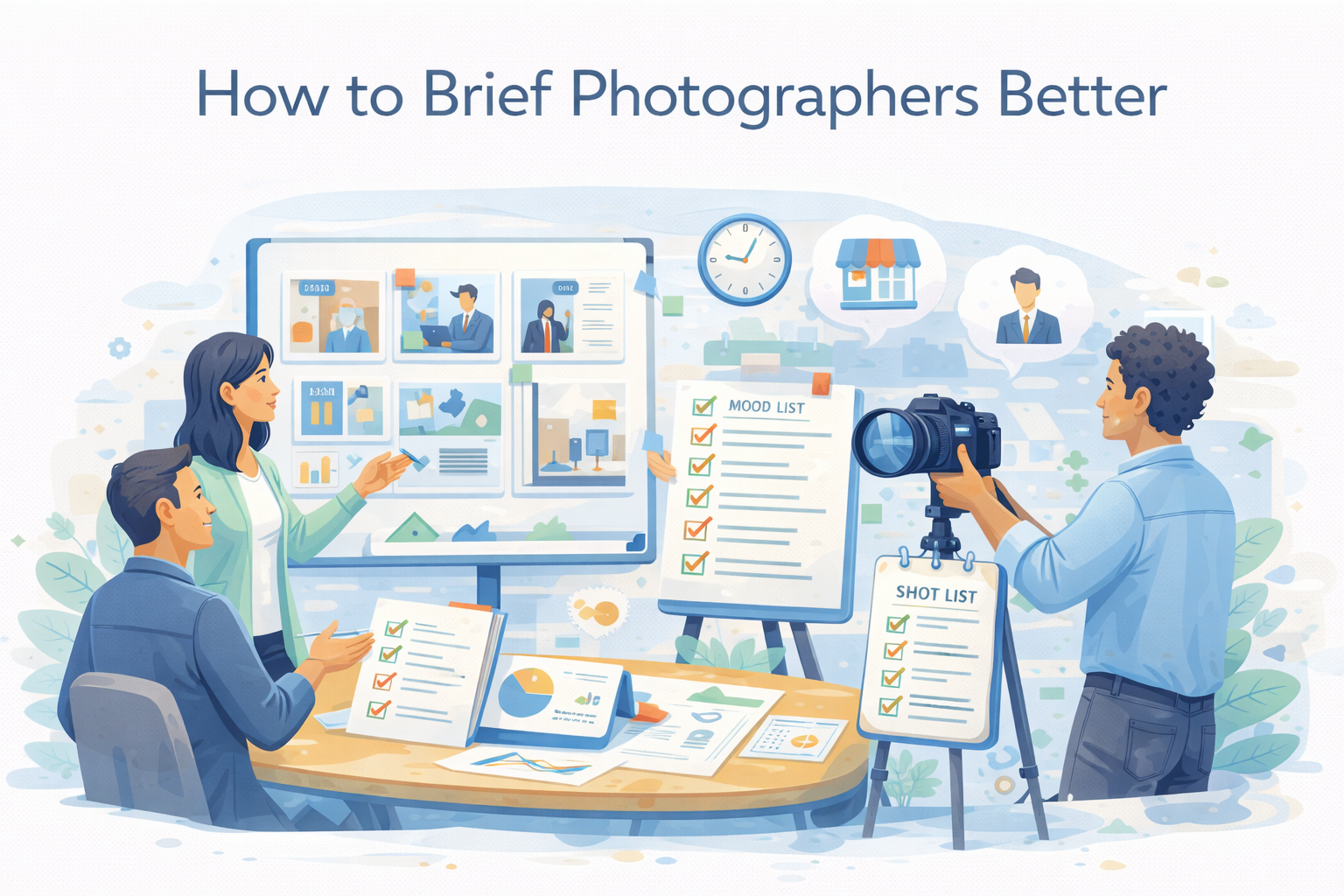
How to Brief Photographers Better: A Practical Guide for Marketing Teams
Knowing how to brief photographers better is one of the most overlooked skills in marketing. While brands often invest heavily in photography, unclear briefs frequently lead to misaligned visuals, unnecessary revisions, and frustrated creative partners.
Therefore, this guide explains how to brief photographers better in a practical, respectful, and repeatable way. Rather than focusing on artistic theory, it shows how structured communication builds trust, saves time, and delivers consistently stronger imagery.
Why Better Photography Briefs Matter
A photography brief is not just a list of shots. Instead, it is a shared understanding of purpose, context, and expectations. Consequently, learning how to brief photographers better directly impacts brand consistency and campaign performance.
When briefs are weak:
Photographers guess instead of execute
Visuals miss the brand tone
Usage rights and formats are unclear
Timelines stretch due to revisions
However, when briefs are strong, creative briefing for photographers becomes a collaborative advantage rather than a bottleneck. Start With Purpose, Not Pictures, Before writing a single line, clarify the “why.” Otherwise, even the most detailed photography brief template will fall short.
Ask:
What is this photography for?
Where will it be used (web, ads, social, print)?
What action should the audience take?
By answering these first, marketing photo shoot planning becomes focused and intentional. As a result, photographers can make better creative decisions on set.
Define the Brand Context Clearly
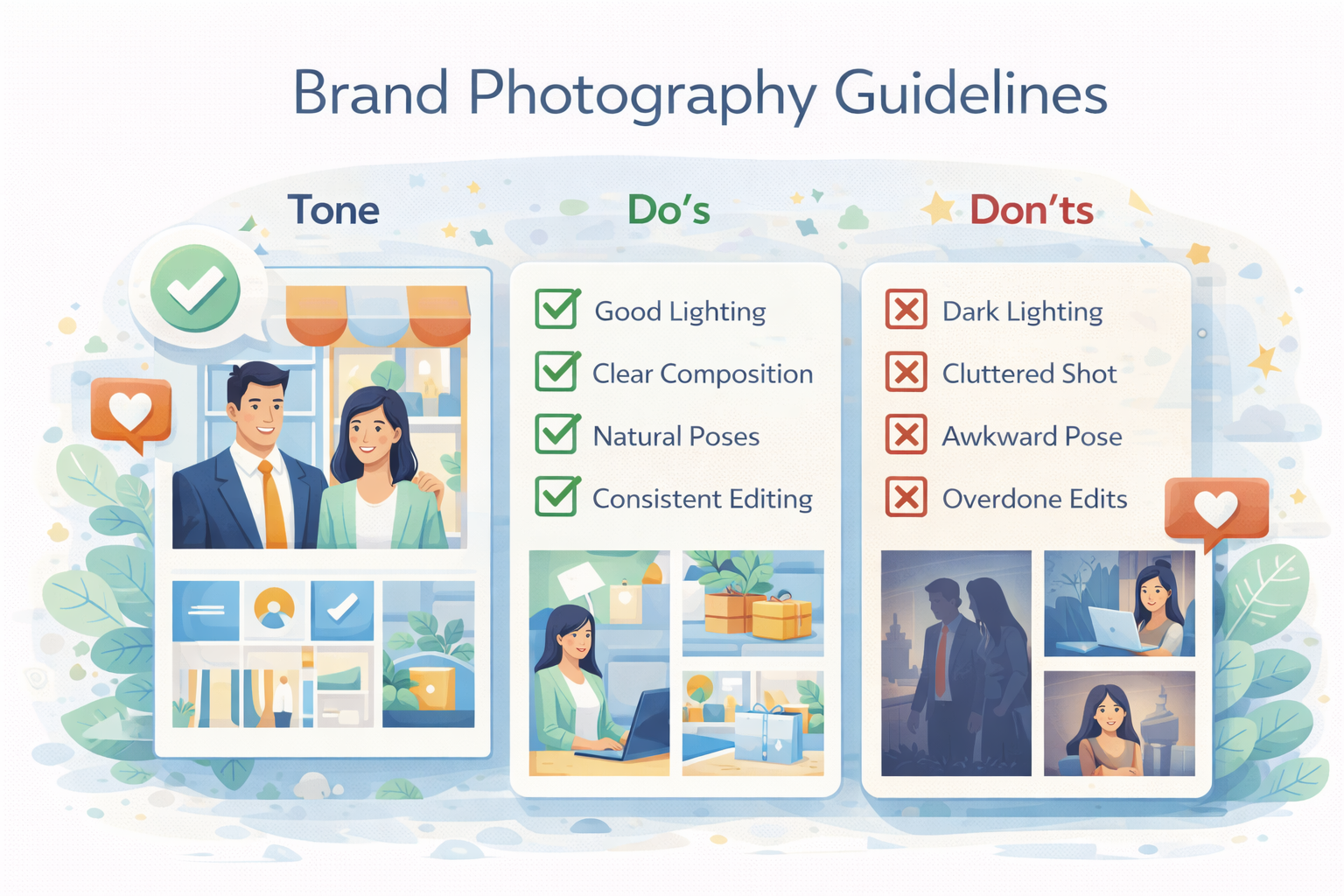
Photographers do not live inside your brand every day. Therefore, brand photography guidelines must be communicated clearly—even to long-term collaborators.
Include:
Brand values and personality
Do’s and don’ts (lighting, composition, mood)
Reference imagery (what to emulate and what to avoid)
Level of polish vs. realism
When brand photography guidelines are shared early, photographers can align their creative approach without constant correction. Consequently, learning how to brief photographers better reduces friction and builds confidence on both sides.
Use a Photography Brief Template (But Keep It Human)
A consistent photography brief template helps teams avoid omissions. However, templates should guide—not restrict—creative thinking.
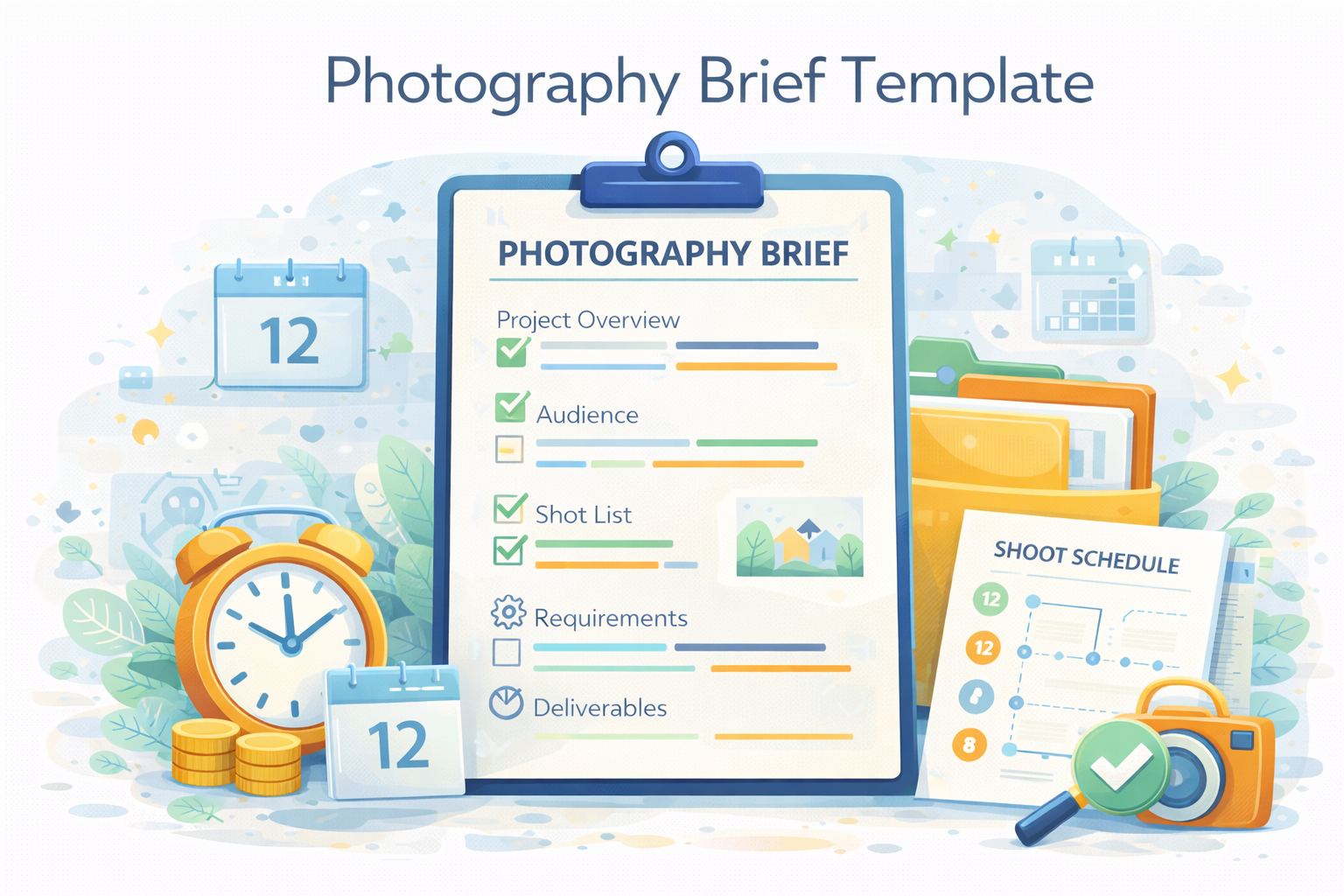
A strong photography brief template typically includes:
Project overview and objectives
Audience and usage context
Shot list (prioritized, not exhaustive)
Technical requirements (formats, orientation, resolution)
Deliverables and deadlines
Additionally, include space for interpretation. After all, creative briefing for photographers works best when structure and trust coexist.
Plan the Shoot Like a Marketing Project
Photography shoots are production projects. Therefore, marketing photo shoot planning should be treated with the same discipline as a campaign launch.
Consider:
Location logistics and timing
Talent, props, and styling responsibilities
On-set decision-making authority
Contingency plans:
By approaching shoots strategically, marketing photo shoot planning minimizes last-minute surprises. As a result, photographers can focus on quality rather than problem-solving.
Be Explicit About Usage and Deliverables, Many creative frustrations come from unclear expectations around usage. Therefore, this step is critical when learning how to brief photographers better.
Clarify:
Where images will be used (channels and regions)
Duration of usage
Cropping and adaptation needs
File delivery format and naming
When usage is clear, creative briefing for photographers protects both parties and avoids awkward renegotiations later.
How Better Briefs Build Stronger Creative Partnerships
Clear briefs are a trust signal. They show respect for the photographer’s time, expertise, and process.
When brands consistently apply how to brief photographers better, they:
Receive more usable imagery
Reduce revision cycles
Strengthen long-term relationships
Attract higher-caliber creative partners
Ultimately, better briefs lead to better work—and better working relationships.
Common Briefing Mistakes to Avoid
Even experienced teams make these mistakes:
Overloading the brief with vague adjectives
Sharing references without explaining why
Changing direction mid-shoot
Skipping brand photography guidelines
Therefore, reviewing your photography brief template regularly helps teams improve with every project.

Final Thoughts:
Briefing Is a Skill, Not a Form, Ultimately, how to brief photographers better is about clarity, empathy, and intention. Strong briefs align creative vision with business goals—without stifling creativity.
When photographers understand the purpose, brand context, and constraints, they can deliver work that truly supports your marketing strategy.