
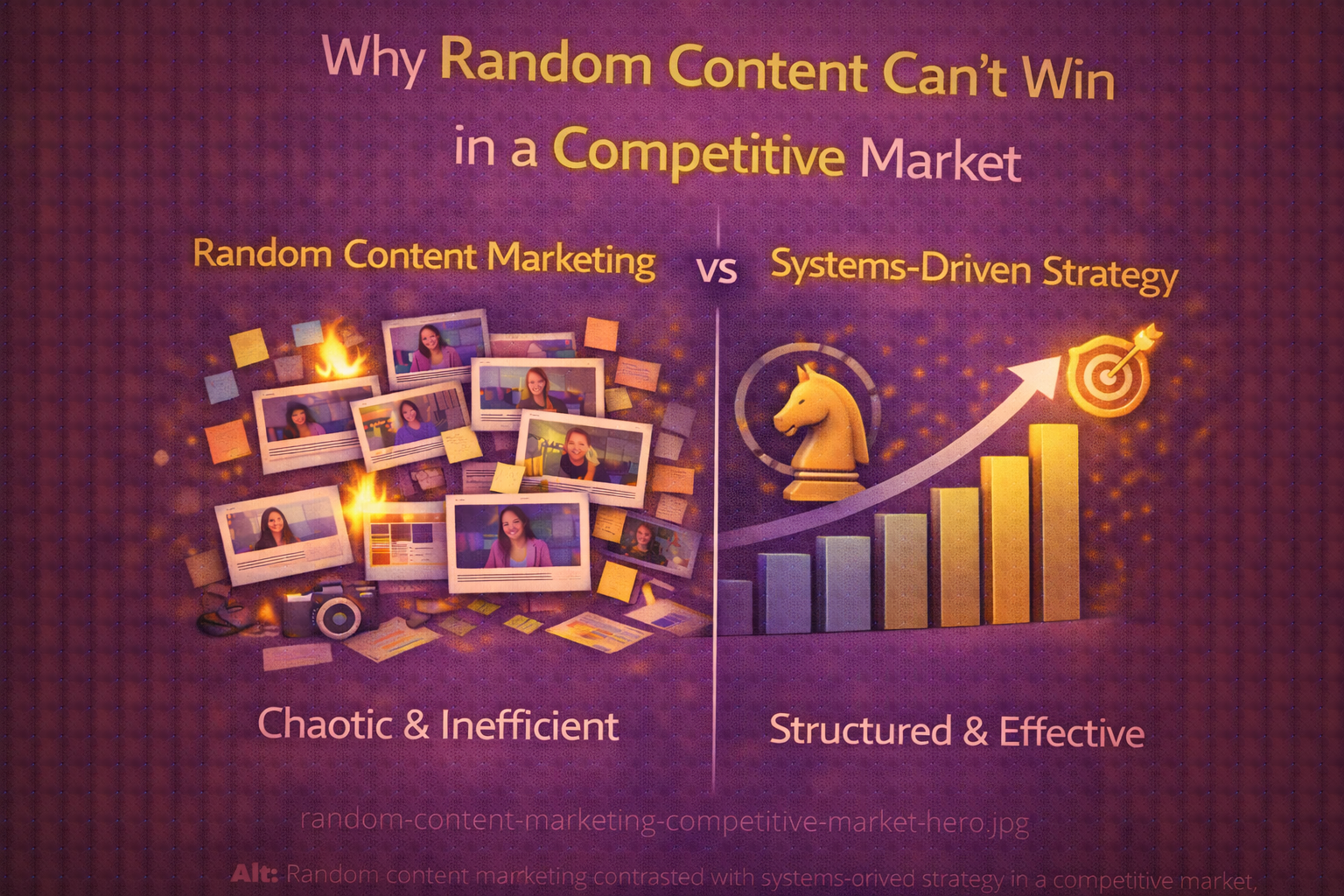
Random content marketing may feel flexible, but it consistently fails in competitive environments. While ad-hoc content can fill channels, it rarely builds momentum. In crowded markets, brands don’t win by publishing more—they win by executing better, repeatedly.
In other words, randomness cannot compete with systems.
Why Random Content Marketing Breaks Down Under Competition
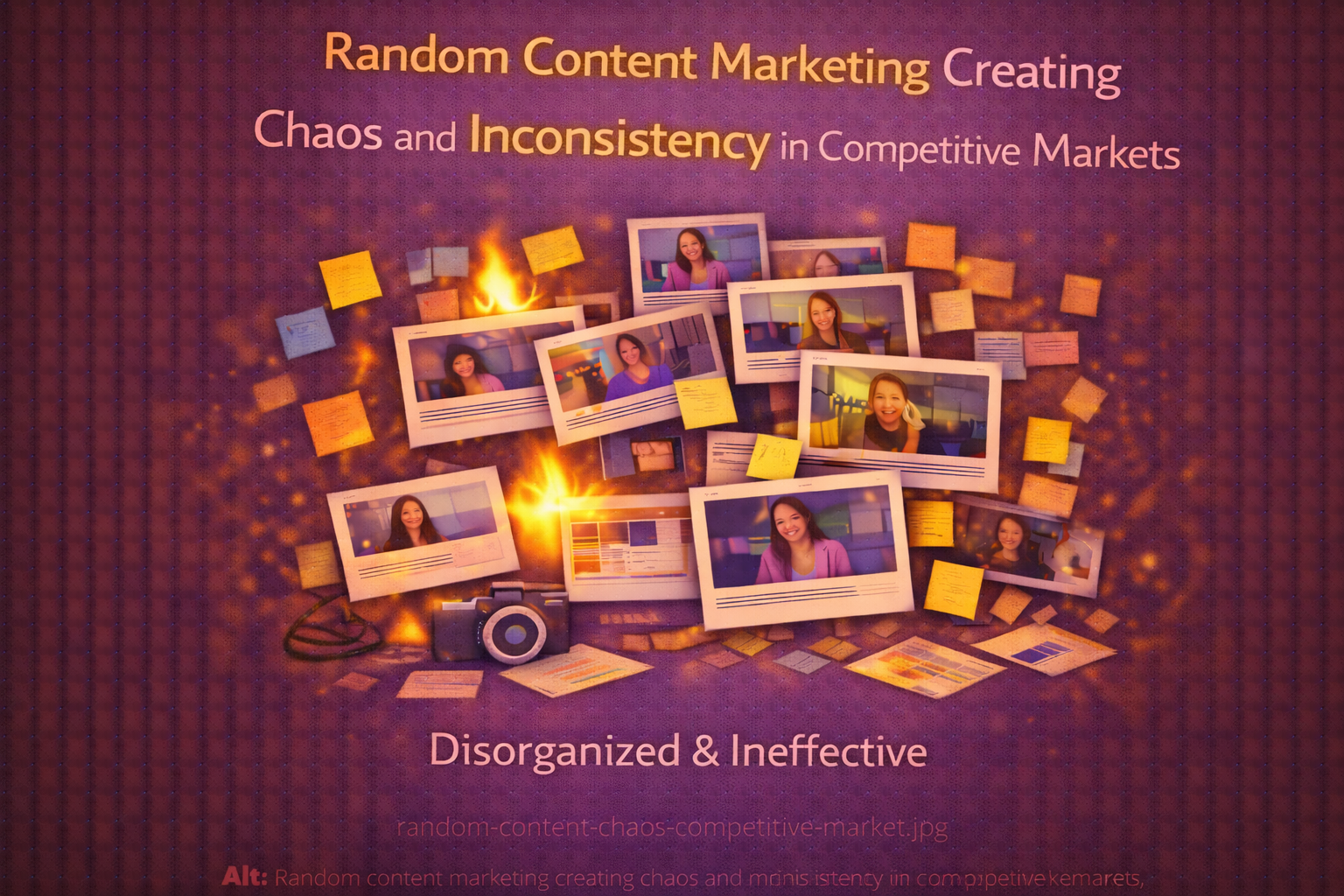
In low-pressure environments, random content can survive. However, once competition increases, random content marketing quickly shows its limits.
Without structure, brands struggle to differentiate, repeat success, or improve performance over time.
Competitive Markets Reward Systems, Not Spontaneity
A competitive content strategy depends on consistency, clarity, and execution speed. Random output lacks all three.
As a result, brands relying on ad-hoc content are outpaced by competitors using content systems thinking.
Why Content Systems Thinking Wins
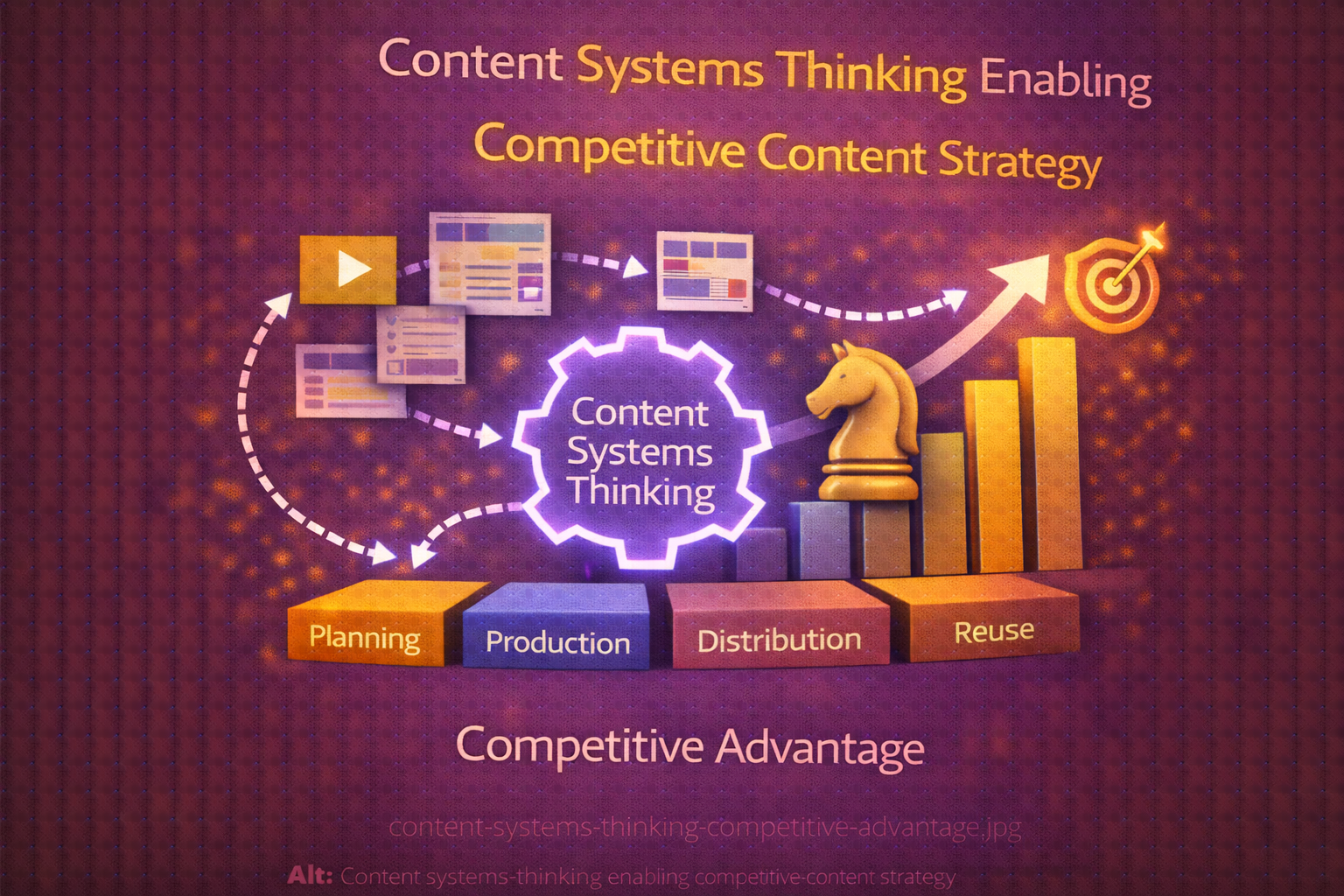
Content systems thinking replaces guesswork with repeatability. Instead of reacting to demand, teams plan, produce, and distribute content intentionally.
Consequently, performance improves with each cycle—something random approaches cannot replicate.
Read: Creating content vs building a content system →
Scalable Content Strategy Requires Structure
A scalable content strategy cannot depend on inspiration alone. It requires defined workflows, formats, and standards.
Therefore, brands using systems consistently outperform those relying on sporadic output.
Random Content Undermines Long-Term Marketing Performance
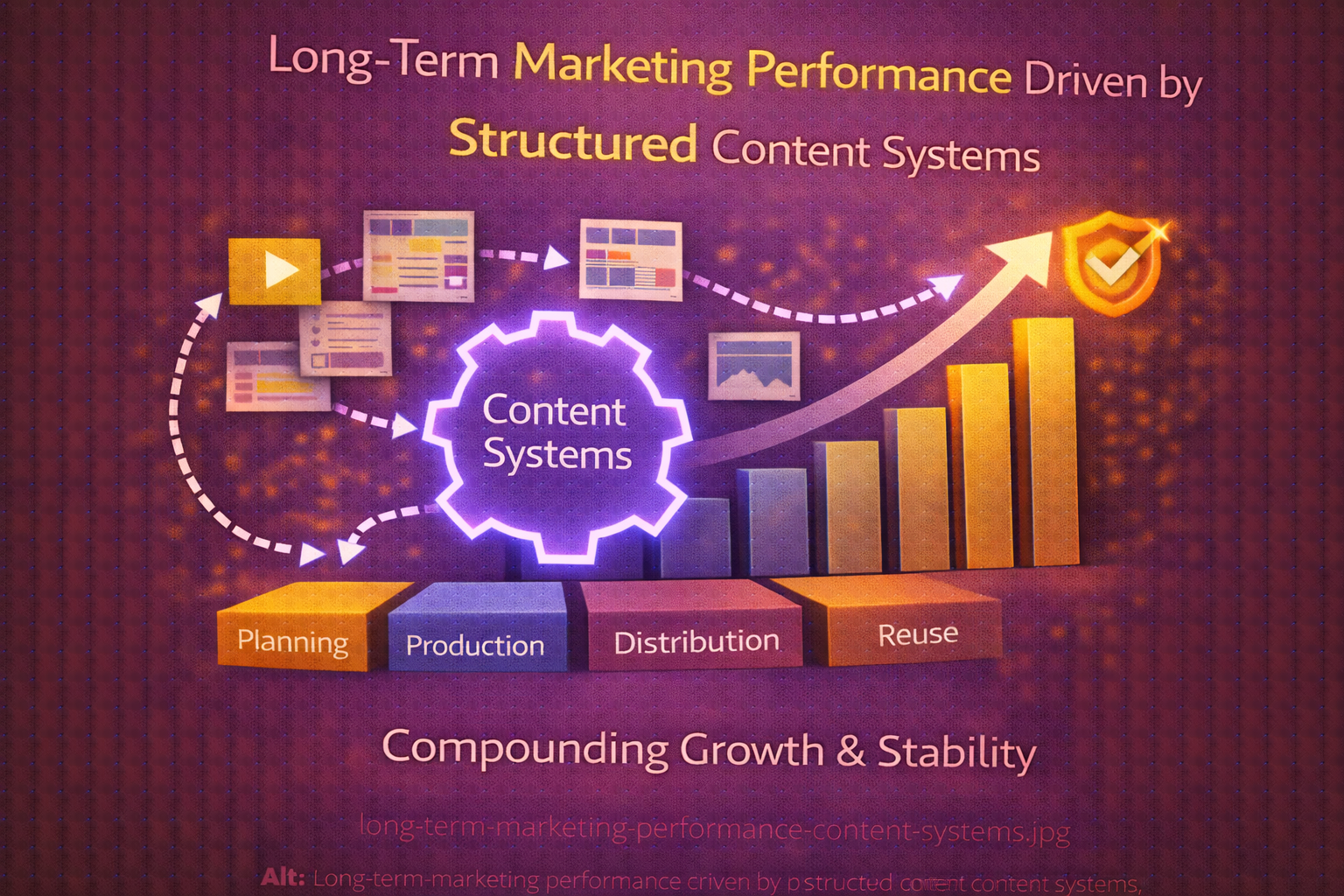
Long-term marketing performance depends on accumulation. Each asset should reinforce previous efforts.
Random content resets momentum instead of building it, making sustained growth nearly impossible.
Why Competitive Brands Eliminate Randomness
Winning brands reduce variability wherever possible. Through content systems thinking, they create reliable execution pipelines.
This reliability is what allows them to move faster, adapt better, and protect performance.
From Publishing Activity to Market Advantage
Random publishing keeps teams busy. Systems create advantage.
By replacing random content marketing with a competitive content strategy, brands unlock repeatability, efficiency, and scale.
Read: Content systems vs random shoots →
Final Thoughts
In competitive markets, effort alone is not enough.
Random content marketing cannot keep up with structured execution. Brands that invest in systems achieve stronger differentiation, faster iteration, and sustainable long-term marketing performance.