
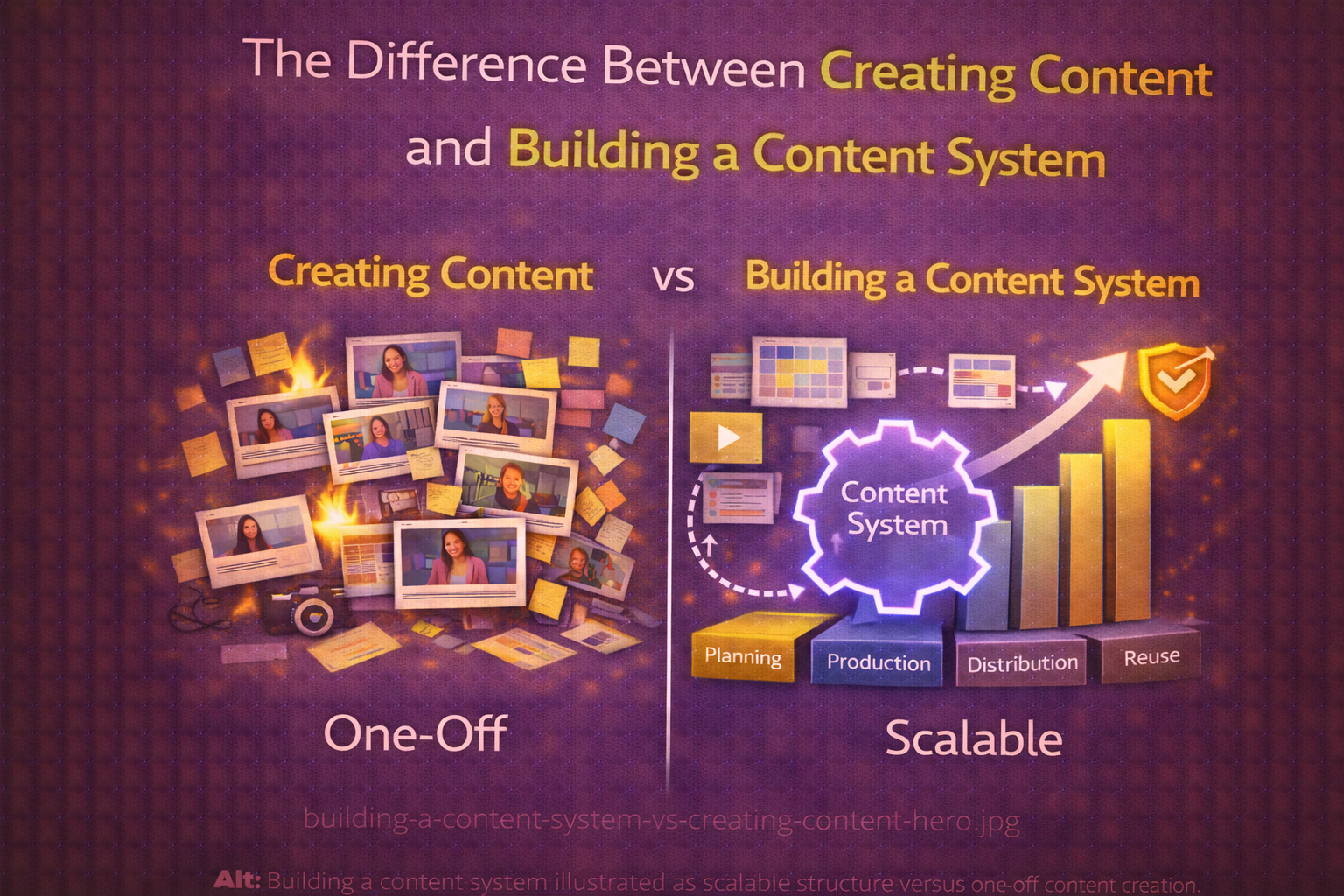
Most brands are busy creating content. Far fewer are focused on building a content system. While both approaches produce assets, only one scales. The difference isn’t creative quality — it’s structure, repeatability, and intent.
In short, content fills feeds. Systems build momentum.
Creating Content Solves Today’s Problem
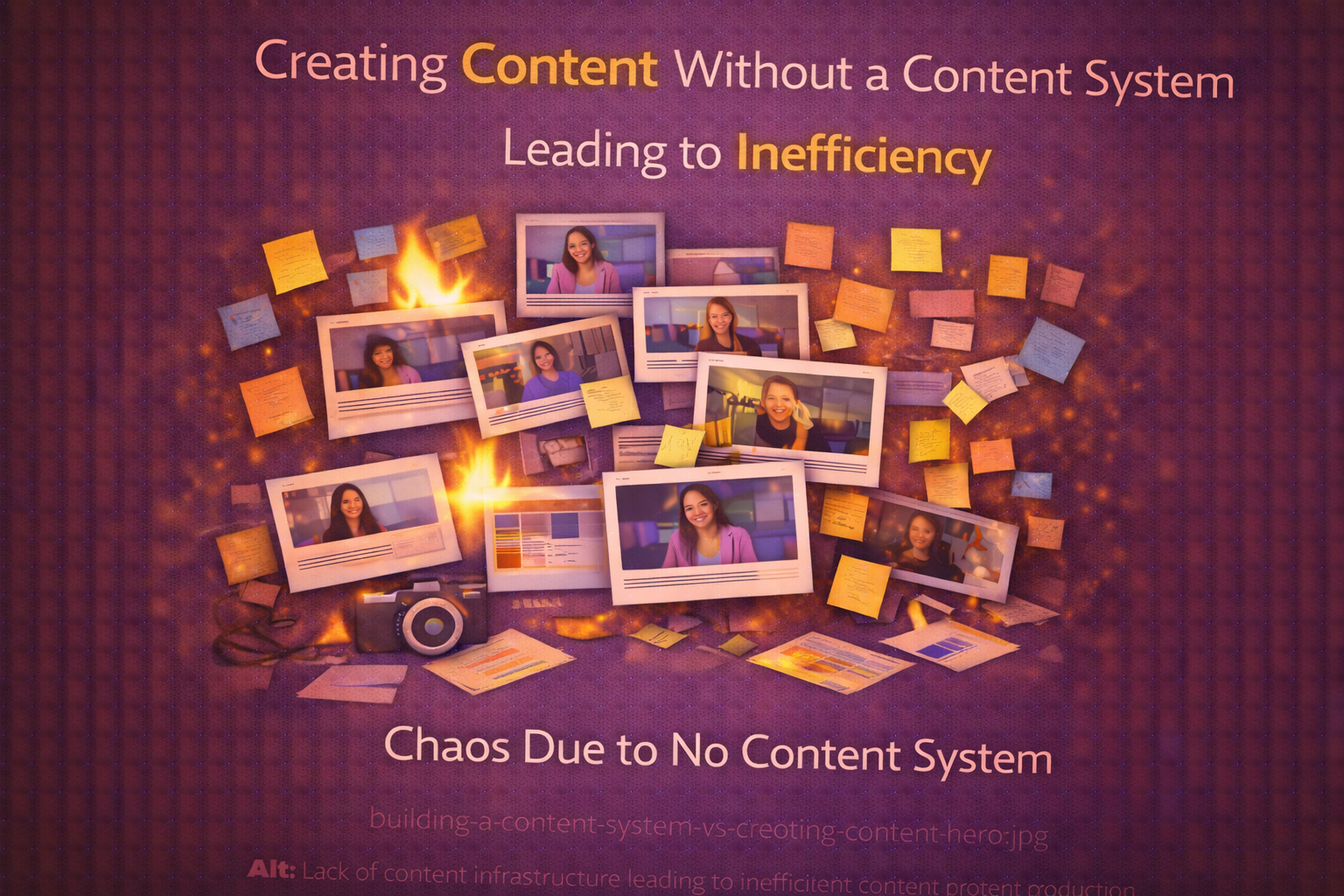
Creating content is often reactive. A campaign needs assets, so content gets produced. However, without a system, each effort stands alone.
As a result, teams repeat planning, production, and alignment work. Over time, this drives inefficiency and limits long-term content ROI.
Building A Content System Solves Tomorrow’s Problem
Building a content system means designing how content is planned, produced, distributed, and reused. Instead of starting over, teams build on what already exists.
Consequently, output becomes predictable and performance compounds.
Content Creation vs Content Systems Is A Scaling Decision
The distinction between content creation vs content systems becomes obvious as brands grow. One approach relies on effort. The other relies on structure.
While effort plateaus, systems support a scalable content strategy that improves with repetition.
Read: Content systems vs random shoots →
Why Content Production Systems Matter
Content production systems reduce friction across teams. By standardizing workflows and formats, brands stop reinventing the process.
As a result, teams move faster, collaboration improves, and output increases without proportional cost.
Scalable Content Strategy Requires Systems Thinking
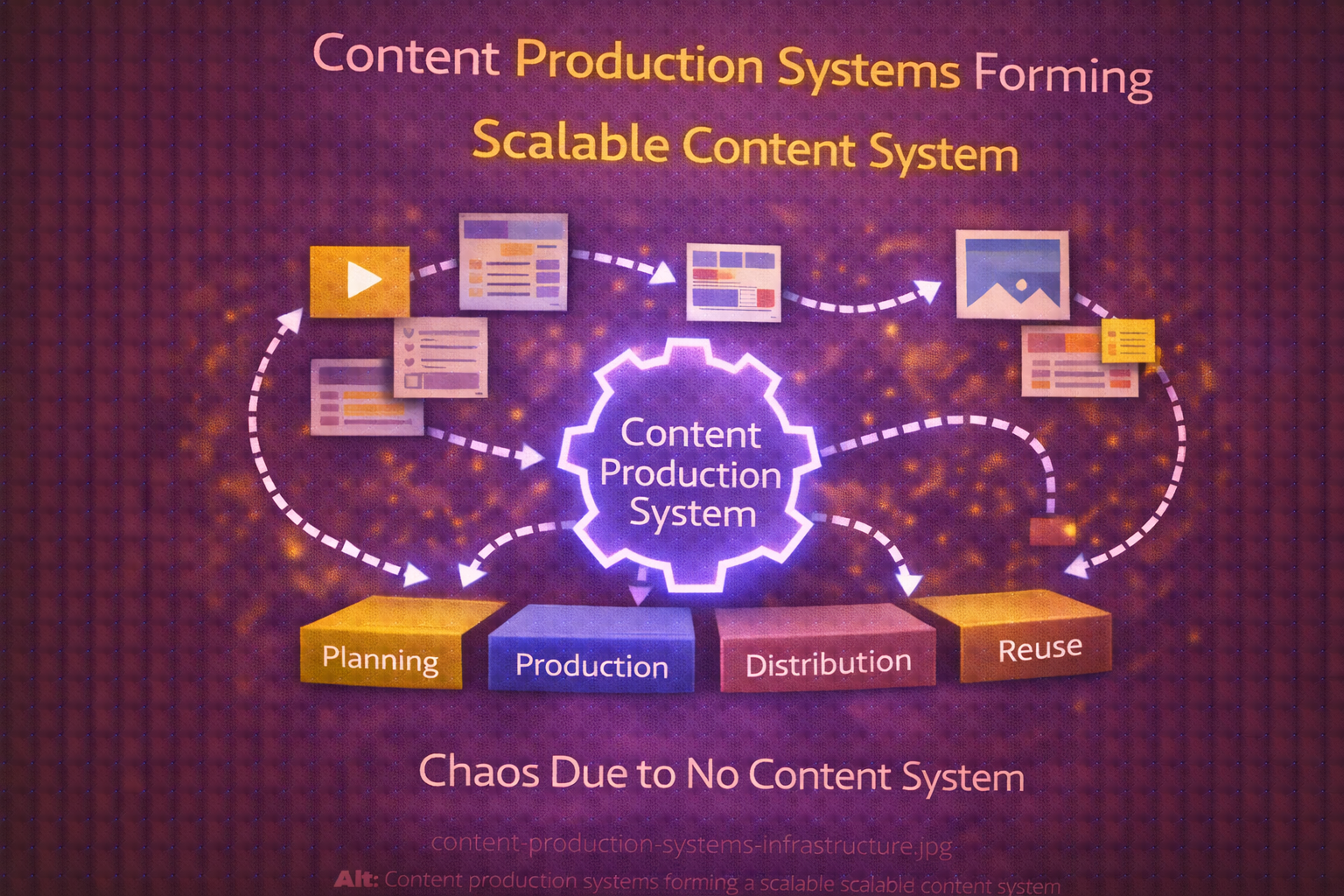
A scalable content strategy cannot depend on individual hero projects. It requires consistent execution supported by infrastructure.
This is why building a content system becomes a competitive advantage rather than an operational detail.
Long-Term Content ROI Comes From Reuse And Consistency
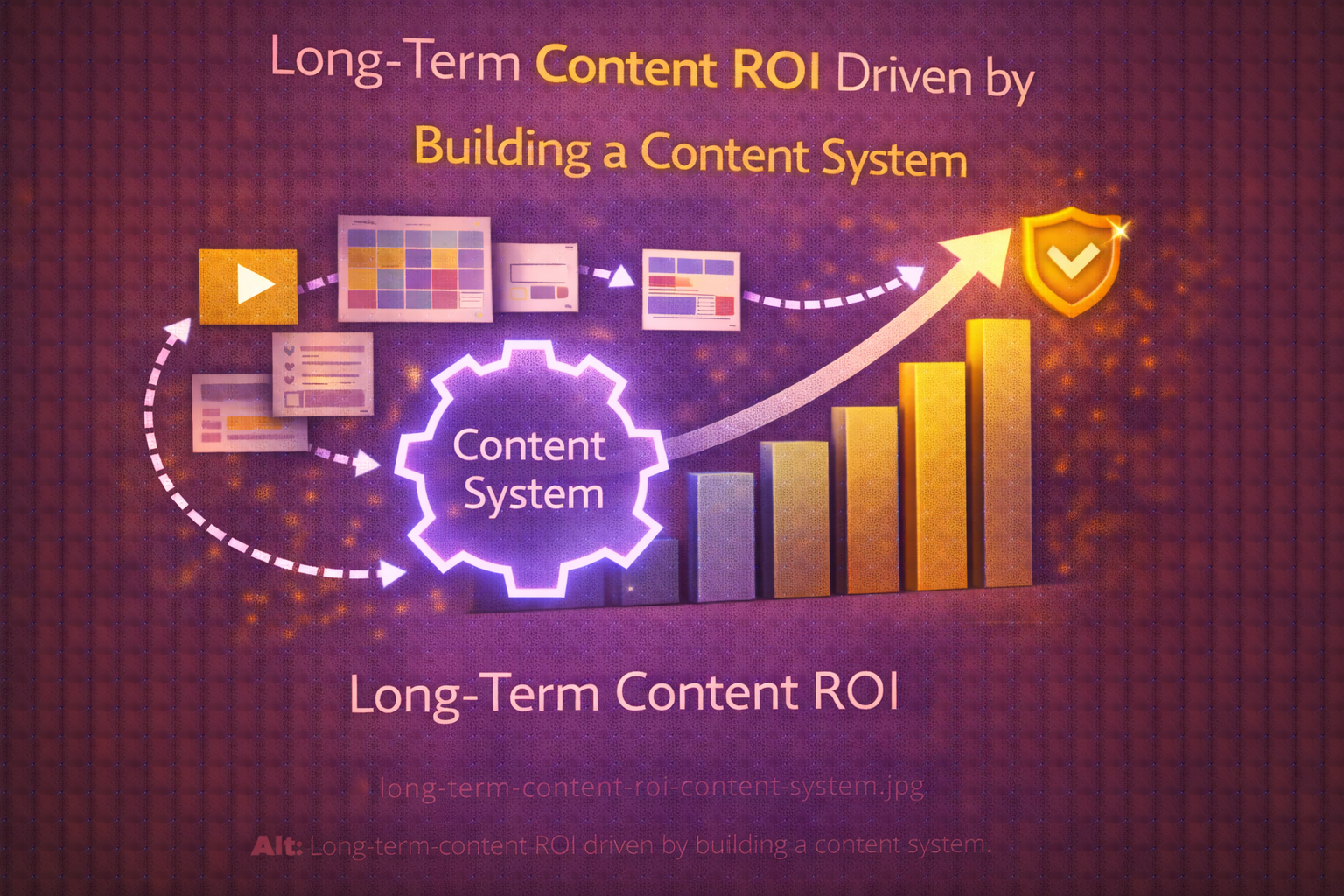
Long-term content ROI is driven by accumulation. Each asset should reinforce previous work instead of replacing it.
Systems enable reuse, adaptation, and distribution at scale — while one-off content expires quickly.
From Output To Infrastructure
When brands move from creating content to building a content system, content becomes infrastructure rather than a recurring expense.
Over time, this shift supports content production systems that deliver compounding value.
Read: The compounding ROI of planned content systems →
Final Thoughts
Creating content keeps you busy. Building a content system makes you effective.
Brands that understand the difference stop chasing output and start investing in systems that scale, stabilize, and improve long-term content ROI.
Next Recommended Reads
Fashion Campaign Photography: The Foundation of High-Performing Fashion Brands
From Chaos to Content System – How Prestige Artists Rebuilt Their Visual Strategy