Trunk Flexion Test

Chapter 4 · Fitness Assessment · 4.07

Assess lower-back flexibility by comparing the shoulder and hip positions during a seated reach between the legs.

How to Perform the Test

  1. Sit upright on a chair or bench with hips and knees bent about 90°, thighs parallel to the floor, and the legs apart in a 45° V stance.
  2. Flex the trunk and reach down and backward between the legs as far as possible. Rounding the back is permitted; do not bounce.
  3. At the furthest comfortable reach, compare the midpoint of the shoulder joint with the hip joint. Measure their vertical separation if the shoulder remains above the hip.

Use the same chair and leg position when retesting to make the comparison meaningful.

Photographic Examples

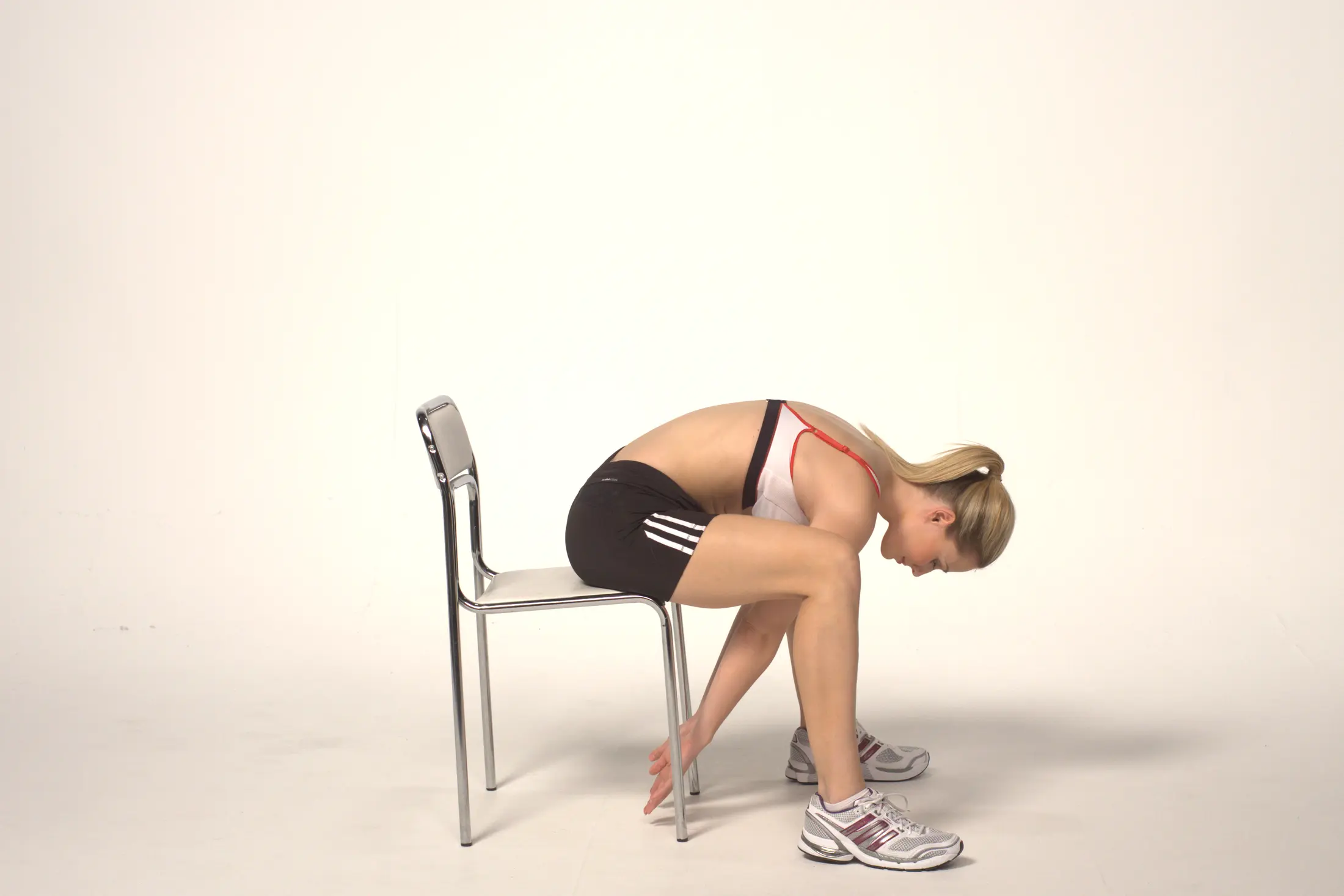
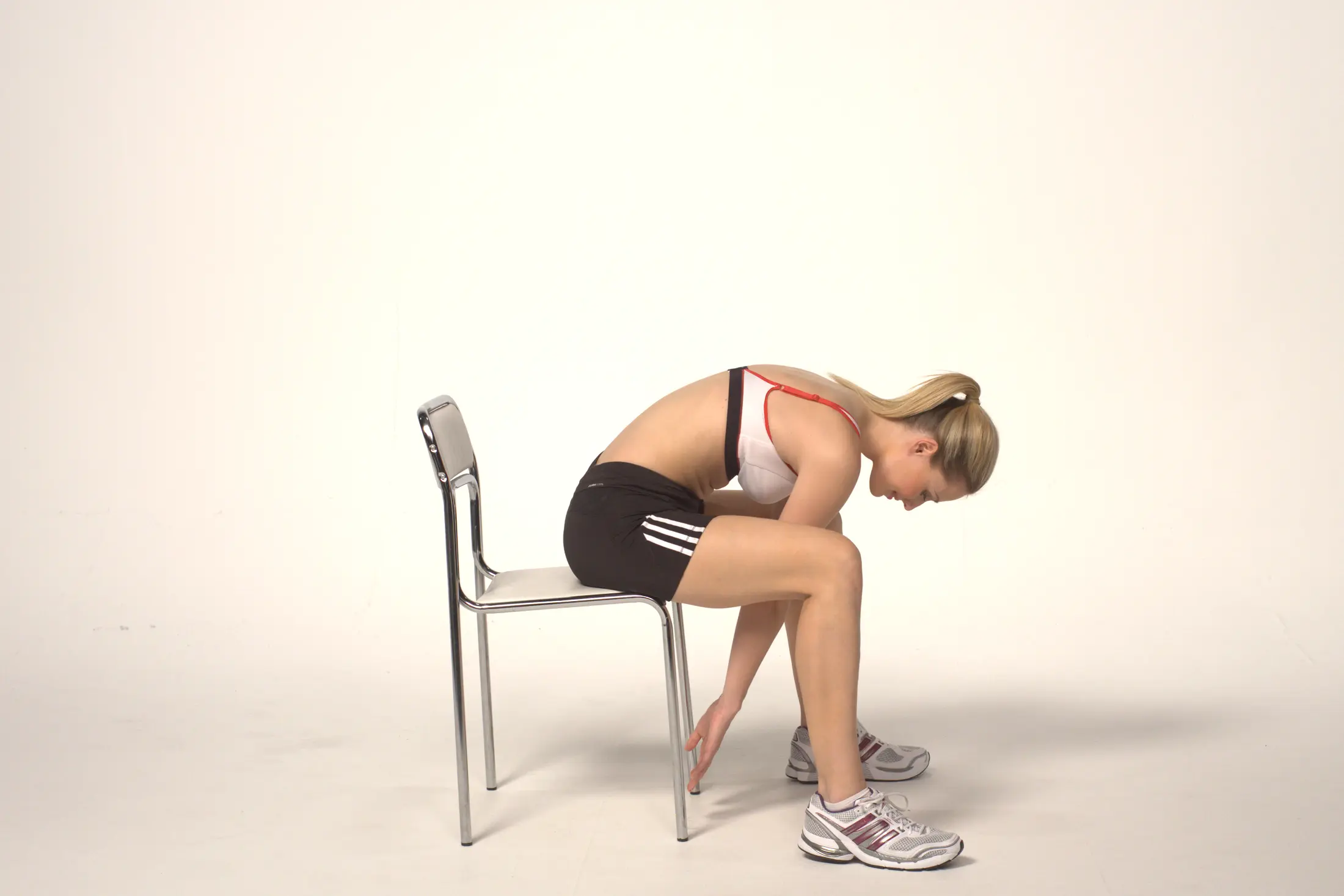
The sequence illustrates the start and the book’s Good, Fair and Poor positions. The score depends on the shoulder-to-hip landmark relationship at the athlete’s actual maximum reach, not how close the fingertips look to the floor.

Upright seated starting position with the feet planted and hands resting on the thighs.
Start: sit upright before reaching between the legs.
Deep seated trunk flexion with the torso folded over the thighs and hands reaching backward between the legs.
Good example: the shoulder approaches the level of the hip joint.
Intermediate seated trunk flexion with the hands reaching toward the floor.
Fair example: the shoulder remains above the hip at full reach.
Limited seated trunk flexion with the hands stopping higher above the floor.
Poor example: a larger shoulder-to-hip height difference.

Scoring from the Tennis Book

  • Good: shoulder and hip joints are in line at full trunk flexion.
  • Fair: shoulder joint midpoint is 1–2 inches above the hip joint.
  • Poor: shoulder joint midpoint is more than 2 inches above the hip joint.

The test assesses flexibility of the erector spinae and thoracolumbar fascia. The book’s Poor wording is “greater than 1–2 inches”; use a consistent landmark measurement at the end position rather than estimating from fingertip reach.

If Trunk Flexion Is Limited

The book recommends Supine Erector Spinae, Squat & Overhead Reach, and Duck Walk to improve range of motion. Choose the appropriate level, work within a comfortable range, and retest with the same setup.

Book Reference

4.07 Trunk Flexion Test, Chapter 4 of Advanced Concepts of Strength & Conditioning for Tennis. Return to Fitness Assessment.