
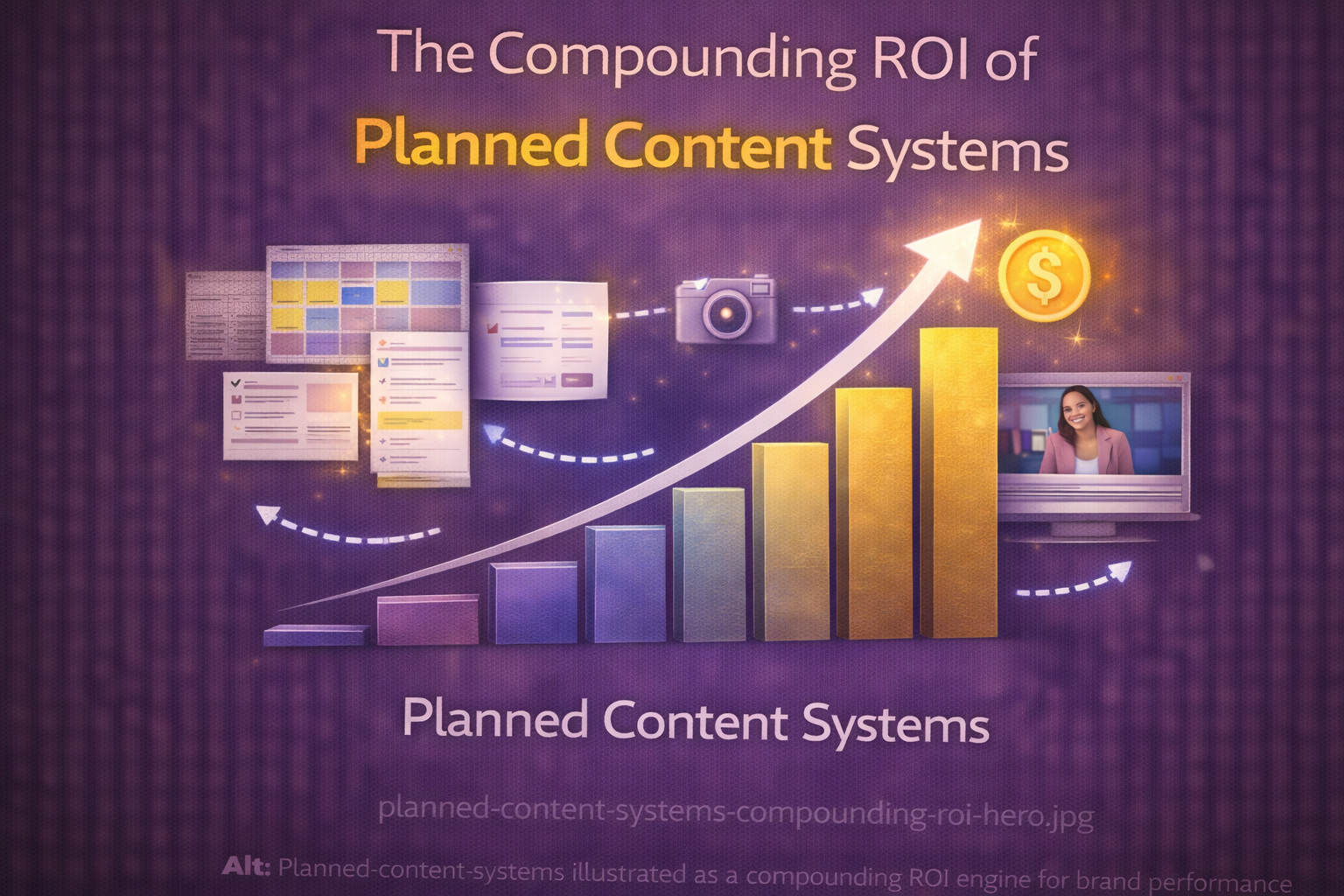
Planned content systems are the difference between marketing that spikes and marketing that compounds. While individual campaigns may deliver short-term wins, systems-driven content creates momentum that builds over time. As a result, brands unlock compounding content ROI and sustainable performance gains.
In other words, systems turn effort into equity.
Why Planned Content Systems Outperform Campaign-Only Marketing
Campaigns are finite by nature. Once they end, momentum often disappears. However, planned content systems are designed to persist.
Because content is created, distributed, and refined continuously, performance improves with each cycle. Consequently, long-term marketing returns become predictable instead of volatile.
Compounding Content ROI Is A Systems Outcome
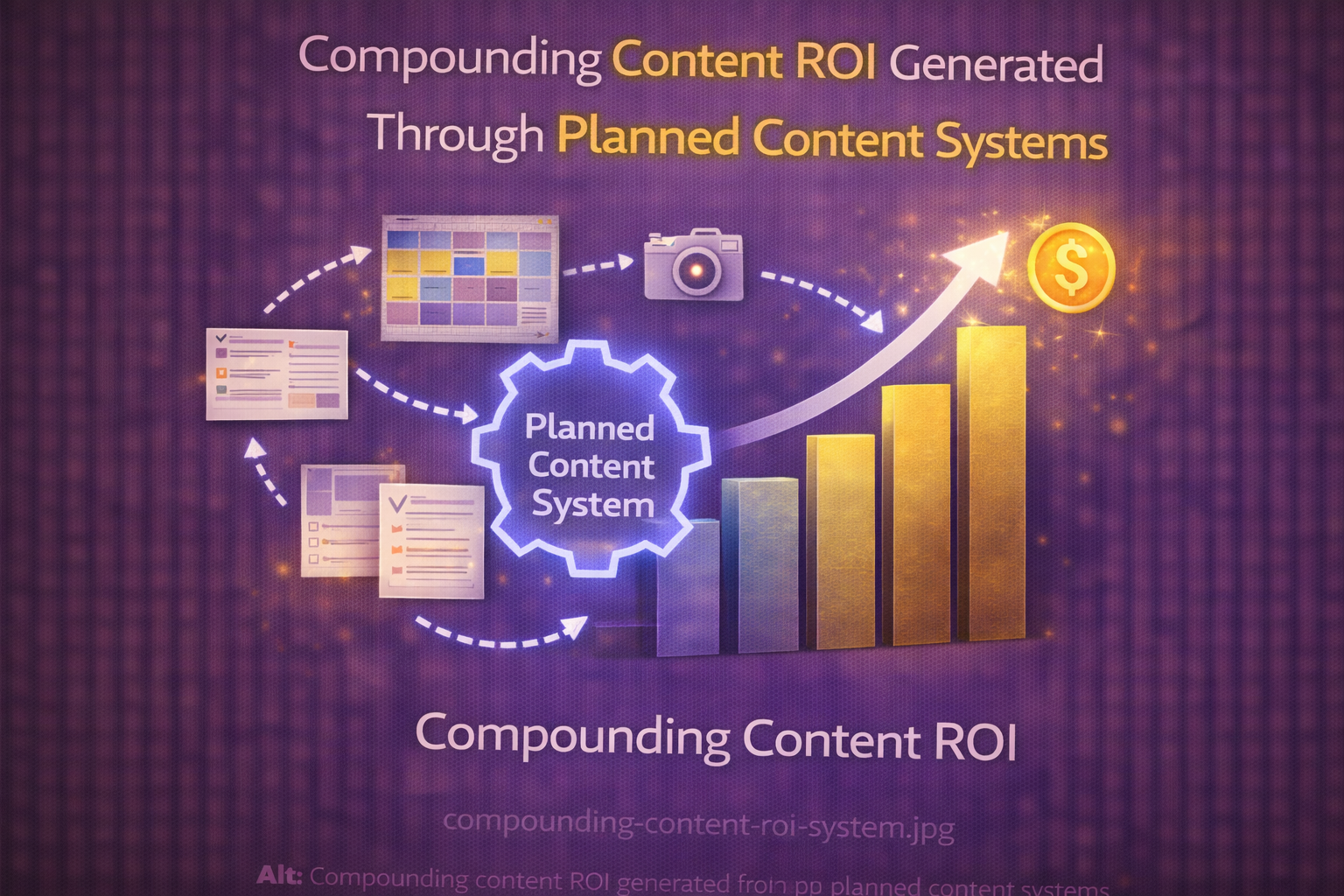
Compounding content ROI doesn’t come from isolated wins. Instead, it emerges when each piece of content reinforces what came before.
Therefore, systemized execution allows brands to benefit from cumulative exposure, familiarity, and trust — key drivers of sustained results.
How Content Production Systems Create Leverage
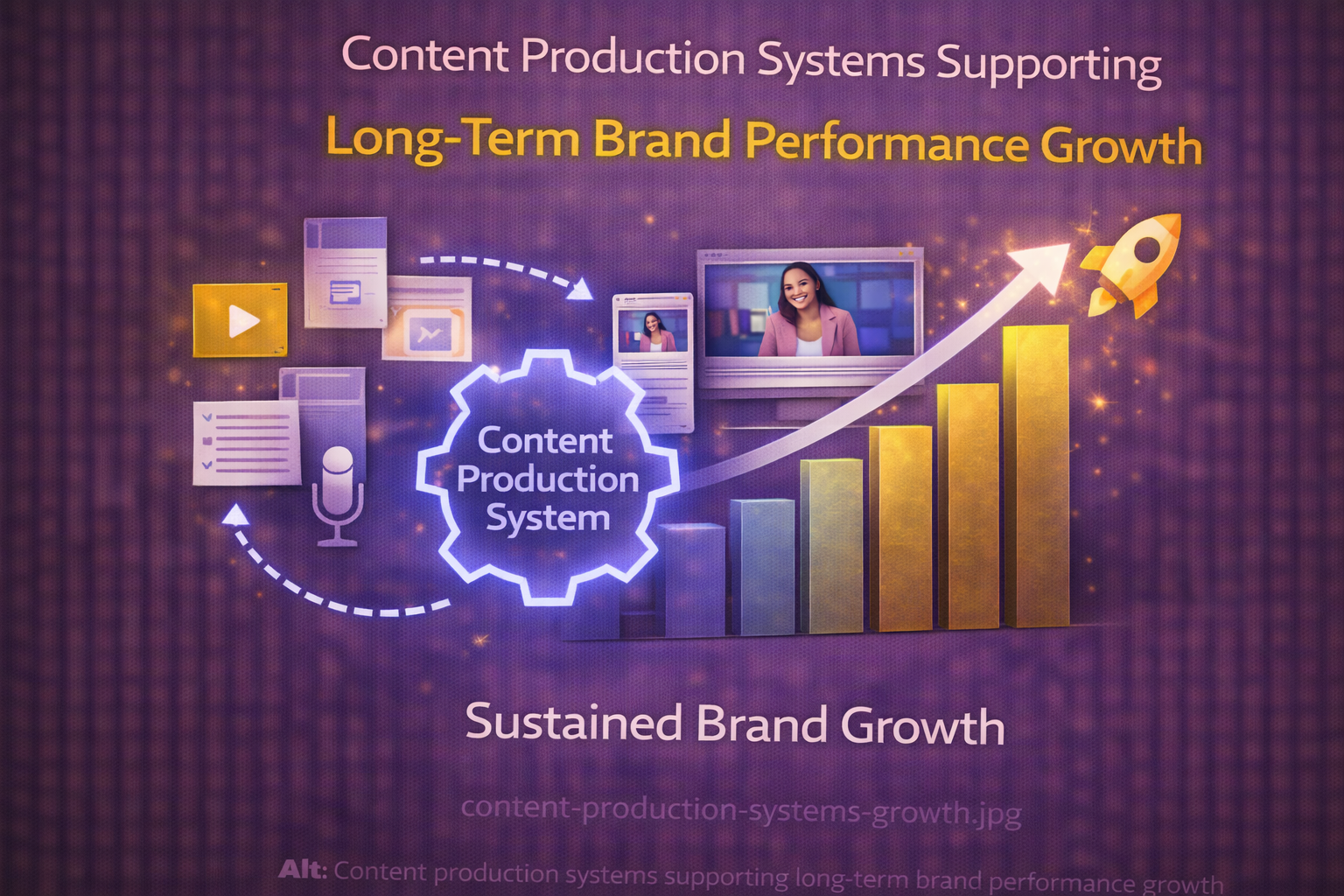
Content production systems reduce friction while increasing output. Rather than reinventing processes, teams reuse workflows, formats, and creative frameworks.
As a result, brands produce more content with less effort, accelerating brand performance growth without proportional cost increases.
Read: Why consistent content outperforms better content →
Planned Content Systems Support Brand Performance Growth
Strong brands are built through repetition, not reinvention. Planned content systems ensure messaging, visuals, and narratives appear consistently across channels.
Consequently, brand performance growth compounds as recognition and trust increase with each exposure.
Why Long-Term Marketing Returns Depend on Structure
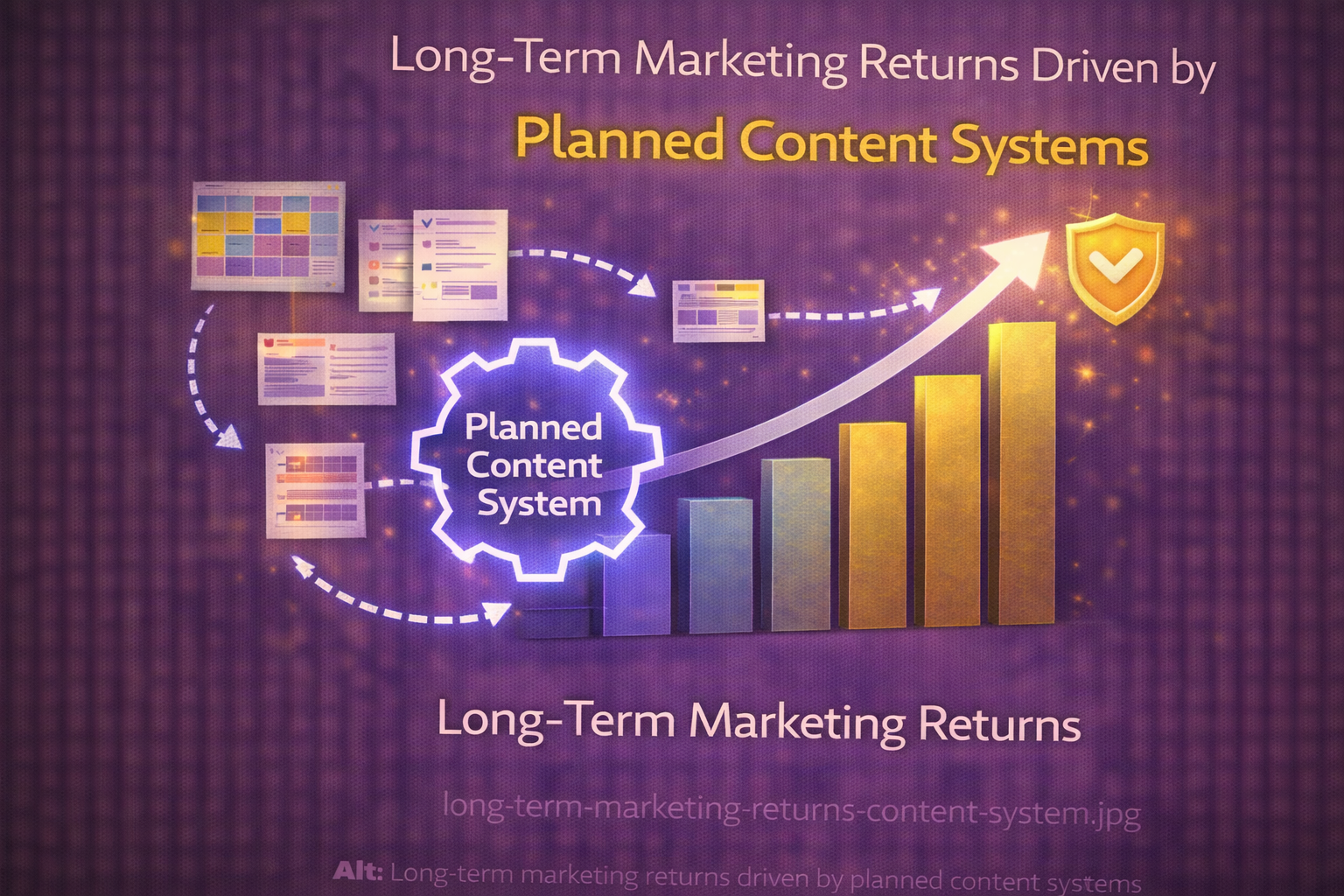
Without structure, even strong creative struggles to scale. In contrast, systems provide guardrails that enable teams to execute reliably.
This reliability is what drives long-term marketing returns, allowing brands to improve performance without starting over.
From Content Creation to Content Infrastructure
When brands invest in content production systems, content stops being a recurring expense and starts becoming infrastructure.
Over time, this infrastructure fuels compounding content ROI as each asset continues to deliver value beyond its launch window.
Read: Consistency as a growth lever →
Why Planned Content Systems Scale Better Than Talent Alone
Talent matters, but systems scale. Planned content systems allow teams to onboard faster, execute more consistently, and adapt without disruption.
As a result, brand performance growth becomes resilient rather than fragile.
Final Thoughts
Marketing performance rarely improves through isolated effort. It improves through accumulation.
By investing in planned content systems, brands unlock compounding content ROI, stronger brand performance growth, and reliable long-term marketing returns that outperform one-off tactics every time.