
Understanding paid ads usage explained is essential for brands investing in modern marketing. Today, paid advertising drives growth across search, social, display, and video. However, without a clear framework, teams risk wasted spend, inconsistent messaging, and preventable compliance issues. Therefore, this guide breaks down
paid ads usage explained in practical, marketing-friendly terms—so you can build trust, improve performance, and scale paid programs with confidence.
What paid ads usage really means
Paid advertising is the practice of paying platforms to distribute your messages to defined audiences. Still, paid ads usage explained is not just “launching ads.” It also includes how creatives are approved, how targeting is defined, how tracking is managed, and how budgets are controlled. Consequently, teams that document
their approach make better decisions under pressure.
Paid ads typically include:
- Search engine ads (intent-based keyword targeting)
- Paid social placements (audience-based distribution)
- Display and programmatic ads (reach and retargeting)
- Video and native advertising (attention and storytelling)
Therefore, a clear paid advertising strategy helps you standardize execution, protect the brand experience, and maintain predictable performance over time. In addition, it keeps teams aligned when multiple channels run at once.
Why a paid advertising strategy builds trust
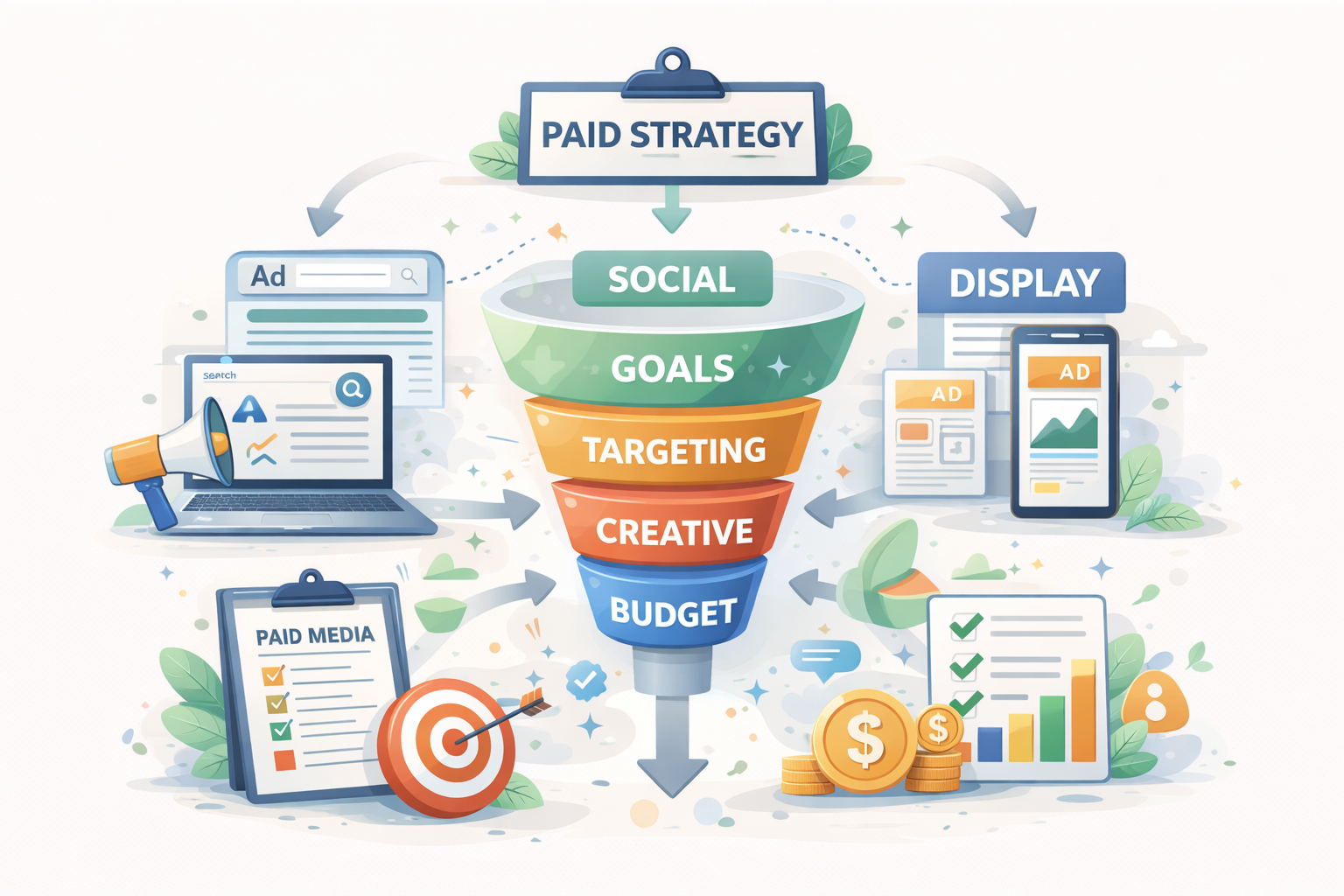
A strong paid advertising strategy aligns objectives, audiences, messaging, and budgets. Moreover, it helps stakeholders understand what success looks like before spend ramps up. As a result, reporting becomes clearer and trust increases—both internally and externally.
Brands that document their paid advertising strategy typically benefit from:
- Defined KPIs and benchmarks for each channel
- More consistent creative and messaging standards
- Better budget control and reduced waste
- Clear roles across in-house teams and partners
In other words, paid ads usage explained becomes a repeatable system instead of isolated campaigns. Consequently, scaling paid becomes less risky and more predictable.
Paid media campaigns: execution with intent
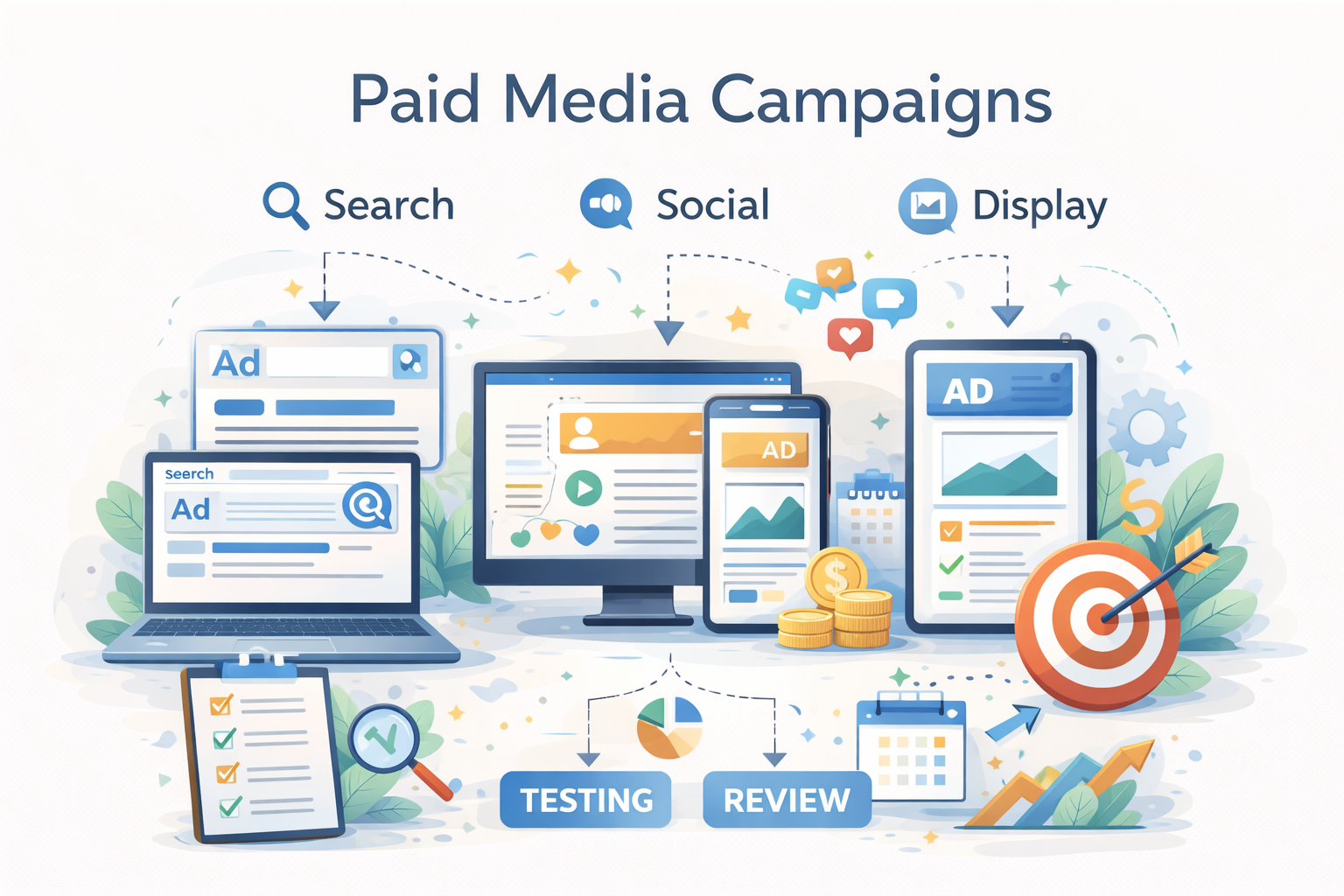
Effective paid media campaigns are intentional—not rushed. While speed matters, alignment matters more. Therefore, high-performing programs plan channel roles, creative formats, and measurement before launching.
Strong paid media campaigns typically include:
- Clear objectives (awareness, demand, conversion, retention)
- Platform-specific creative and landing page alignment
- Defined testing plans (what changes, why, and how you’ll measure)
- Budget guardrails (caps, pacing rules, and escalation criteria)
Additionally, paid media campaigns should be reviewed through both performance and brand lenses. As a result, you optimize not only ROAS and CPA, but also message consistency and audience experience. This is where paid ads usage explained turns into a practical operating model.
Digital advertising compliance: what brands must consider
Paid advertising is governed by platform policies, privacy expectations, and regional regulations. Consequently, digital advertising compliance must be built into planning—not treated as a last-minute checklist. When compliance is proactive, approvals become easier and account risk decreases.
Key digital advertising compliance considerations include:
- Data usage, consent, and privacy-friendly tracking
- Platform rules (restricted categories, claims, targeting limitations)
- Disclosure requirements (affiliate, sponsored, material claims)
- Regional requirements based on where your ads run
However, compliance is also about perception. Even when ads are technically allowed, messaging can still erode trust if it feels misleading. Therefore, combining digital advertising compliance with brand standards reduces both legal exposure and reputational risk.
Paid ads best practices for sustainable growth
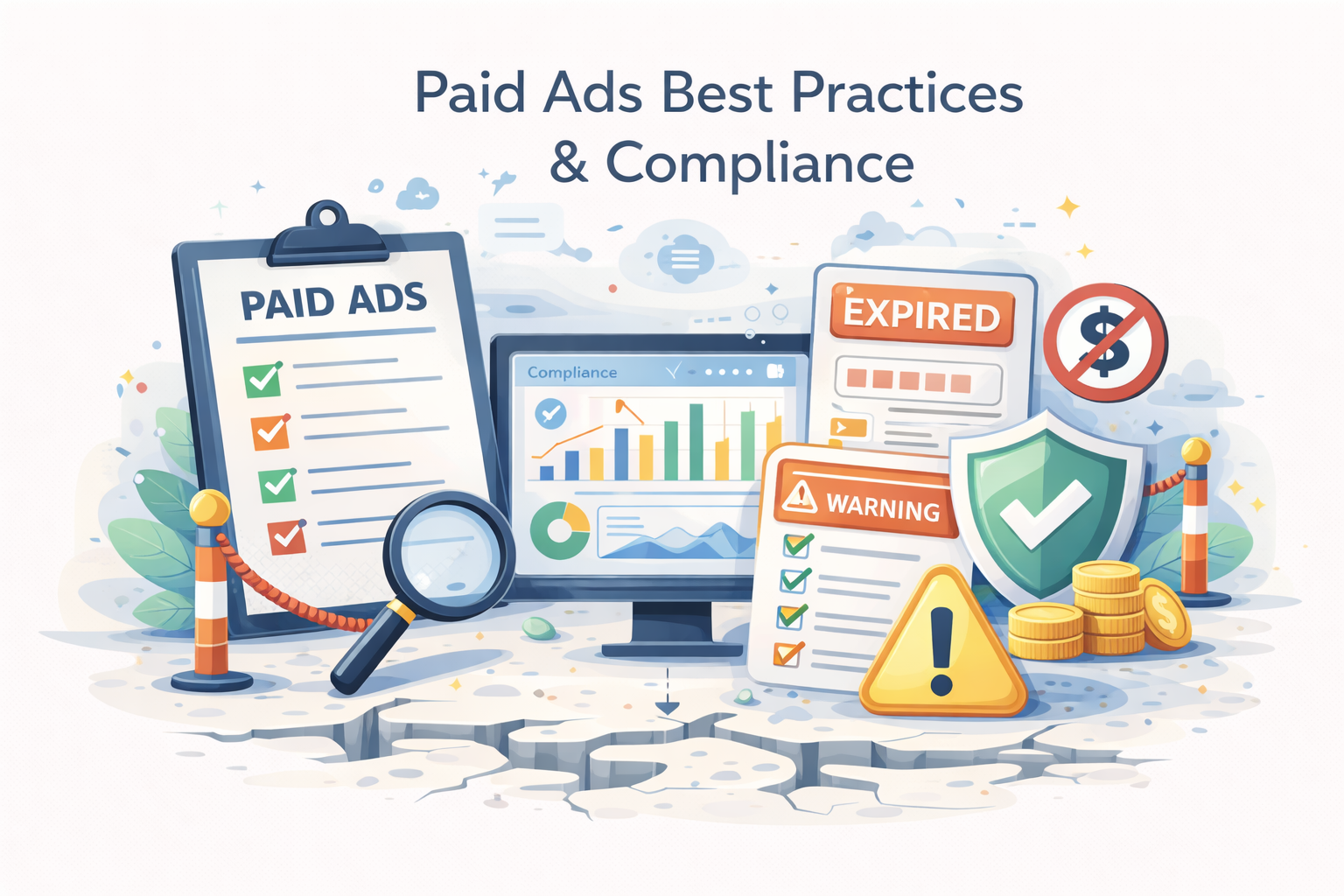
Following paid ads best practices helps brands scale without losing control. Moreover, it improves performance because teams spend less time troubleshooting and more time optimizing. As a result, campaigns become more stable and easier to forecast.
Core paid ads best practices include:
- Centralize creative approvals: ensure brand, legal, and performance stakeholders are aligned.
- Standardize targeting rules: document inclusions, exclusions, and sensitive categories.
- Use clear testing frameworks: change one variable at a time, then scale winners.
- Review pacing frequently: avoid end-of-month panic or overspend.
- Report transparently: share both wins and risks to improve decision-making.
Additionally, treat documentation as a performance tool. When your playbooks are clear, new campaigns launch faster and teams stay aligned. Therefore, paid ads usage explained becomes part of operational excellence.
Common paid ads risks and how to avoid them
Without structure, paid ads can introduce hidden risks. For example, teams may scale spend without reliable measurement or run inconsistent messaging across channels. Consequently, performance drops and trust erodes.
Common risks include:
- Overspending without clear performance attribution
- Creative fatigue due to limited refresh cycles
- Inconsistent positioning across paid media campaigns
- Policy violations caused by missing digital advertising compliance checks
- Relying on “best guess” execution instead of paid ads best practices
Therefore, the best prevention is a documented process: align on a paid advertising strategy, run paid media campaigns with intentional testing, enforce digital advertising compliance, and standardize paid ads best practices. As a result, you protect both performance and brand equity while scaling.
Final thoughts: paid ads work best with clarity
Ultimately, paid ads usage explained is about clarity, accountability, and confidence. Brands that treat paid advertising as a system—not a shortcut—build sustainable growth and long-term trust. Moreover, clear standards make it easier to collaborate with agencies, creators, and internal teams without losing control.
If your goal is to scale paid responsibly, start with a clear paid advertising strategy, execute measurable paid media campaigns, prioritize digital advertising compliance, and operationalize paid ads best practices. When those pieces work together, paid becomes a durable advantage instead of a recurring cost.