
A $20,000 shoot that delivers three usable posts is a textbook example of marketing content budget waste. While the production quality may be high, the return almost never justifies the spend. Unfortunately, this scenario is far more common than most teams want to admit.
In reality, the issue isn’t execution, it’s structure.
What You Will Learn About Marketing Content Budget Waste?
- What we mean by marketing content budget waste
- The $20k shoot and the 3-post problem
- How the same budget can produce more content
- Why retainers reduce marketing content budget waste
- How to eliminate marketing content budget waste
What We Mean By Marketing Content Budget Waste

Many brands assume content budget waste happens when a production goes over budget. Others assume it happens when a campaign underperforms.
While both situations can contribute to inefficiency, they are rarely the biggest source of the problem. In reality, marketing content budget waste often occurs when brands fail to maximize the value of the content they have already paid to create.
A company may invest thousands of dollars into a photoshoot, campaign production, creative team, talent, styling, locations, and post-production.
The content looks great, the campaign launches then only a small percentage of the assets are ever used and the remaining content sits unused.
This is one of the most common forms of marketing content budget waste. The issue is not necessarily the production cost but that the value generated from the investment falls far below its potential.
Marketing Content Budget Waste Definition
At its core, marketing content budget waste is the gap between the value a content investment could create and the value it actually creates. It occurs when brands invest in content production but fail to fully utilize the assets they produce.
Examples include:
- Unused Campaign Assets
- Limited Content Deployment
- Poor Asset Utilization
- Repeated Content Production
- Inefficient Planning
- Content Shortages Despite Previous Investments
Many brands do not have a production problem.
They have a utilization problem, create content and simply do not extract enough value from it. This is the foundation of marketing content budget waste.
Underutilized Assets Are One Of The Biggest Causes Of Marketing Content Budget Waste
Every content production generates assets.
- Photography
- Advertising creative
- Website imagery
- Email marketing visuals
- Social media content
The question is not whether assets are created but whether those assets are fully utilized.
Many brands deploy content in only a few locations. A campaign may appear on Instagram, perhaps a few images are used on the website then the majority of the content remains untouched.
This is a textbook example of marketing content budget waste.
When assets are not reused, repurposed, or deployed across multiple channels, the return generated from the production investment remains limited. The brand pays for the entire production but benefits from only a fraction of its potential value.
Poor Planning Creates Marketing Content Budget Waste Before Production Begins
Many brands assume content waste occurs after the shoot. In reality, it often starts long before production begins. Poor planning is one of the leading causes of marketing content budget waste.
When teams fail to identify how content will be used, assets are often created without a clear deployment strategy. Important questions may never be addressed:
- Which Marketing Channels Need Content?
- How Many Assets Are Required?
- What Campaigns Will The Content Support?
- How Long Should The Assets Remain Valuable?
- How Can Asset Lifespans Be Extended?
Without answers to these questions, content production often becomes disconnected from marketing objectives. The result is more content than necessary in some areas and not enough content in others.
This imbalance creates waste that could have been avoided through strategic planning.
Limited Content Deployment Reduces Content ROI
One of the most common examples of marketing content budget waste occurs when brands create content for a single purpose. A production may be designed solely for a:
- Product Launch
- Social Media Campaign
- Seasonal Promotion
- Website Update
Once that initiative concludes, the content is rarely used again.
This dramatically limits ROI. Strong content strategies focus on deployment rather than production alone.
A single asset may support:
- Advertising Campaigns
- Email Marketing
- Website Updates
- Social Media Content
- E-Commerce Platforms
- Public Relations
- Future Campaigns
The more deployment opportunities an asset supports, the more valuable it becomes. Limited deployment is often one of the fastest ways to create marketing content budget waste.
Inefficient Production Creates Hidden Marketing Content Budget Waste
Not all waste is visible on an invoice. Some of the largest costs are hidden within inefficient production processes. These inefficiencies may include repeated:
- Planning Cycles
- Brief Development
- Scheduling
- Content Gaps
- Emergency Productions
When content creation is treated as a series of isolated projects, these inefficiencies accumulate over time.
Brands repeatedly spend resources solving the same problems. This creates a cycle where content costs remain high while asset value remains relatively low.
As a result, marketing content budget waste continues growing despite ongoing investment.
Marketing Content Budget Waste Is Usually A System Problem
Many brands assume content waste is caused by poor creative work. In reality, it is usually a system problem. Strong brands rarely focus only on content creation.
They focus on:
- Planning
- Asset Utilization
- Content Libraries
- Deployment Strategies
- Long-Term Value Creation
When these systems are missing, waste becomes inevitable.
Assets remain underutilized, content shortages continue, new productions become necessary and marketing content budget waste increases.
The issue is not the content itself but the lack of infrastructure surrounding the content.
What We Mean By Marketing Content Budget Waste
Ultimately, marketing content budget waste is not about spending too much money. It is about generating too little value from the money already being spent.
It is often caused by:
- Underutilized Assets
- Poor Planning
- Limited Content Deployment
- Inefficient Production
- Weak Content Systems
The strongest brands do not necessarily spend less on content. They simply generate more value from every asset they create.
That is the difference between content production and content strategy and it is often the difference between marketing content budget waste and marketing content ROI.
The $20k Shoot And The 3-Post Problem
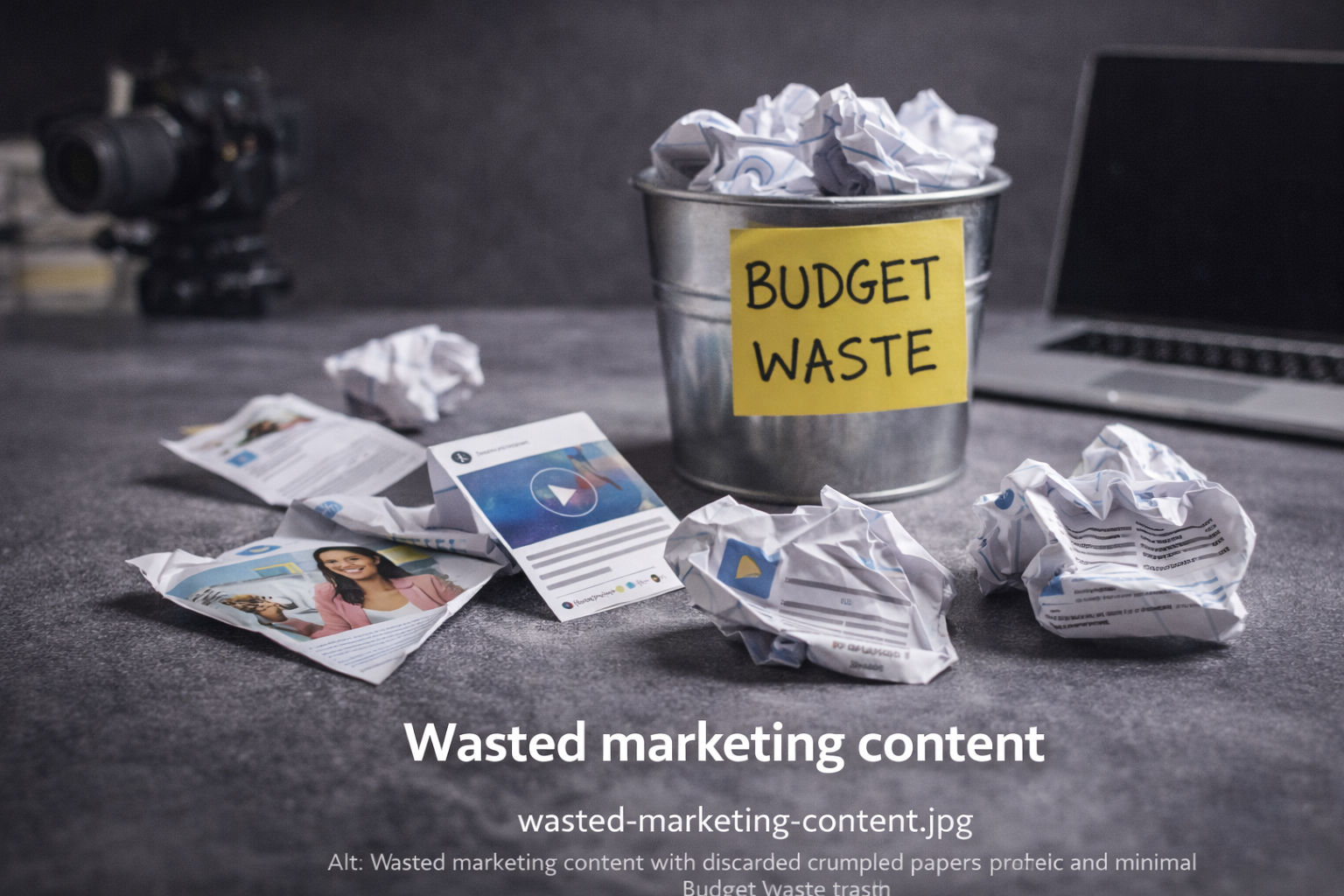
One of the most common examples of marketing content budget waste is what we call the $20k Shoot And The 3-Post Problem.
The scenario is surprisingly common. A brand invests heavily in content production. The budget covers:
- Photography
- Creative Direction
- Models
- Hair And Makeup
- Styling
- Locations
- Production Management
- Retouching
The final production may cost $20,000 or more.
The assets look great, the campaign launches then something unexpected happens.
The brand publishes three social media posts, a few website images are updated and the campaign ends. Most of the content is never used again.
This is the $20k Shoot And The 3-Post Problem. The issue is not the production quality but that the majority of the investment never reaches its full potential.
Content Underutilization Is The Real Cost
Many brands focus on production costs when evaluating content investments. However, production cost is only one side of the equation. The other side is utilization.
A $20,000 production that generates hundreds of assets can be highly profitable if those assets support marketing activities for months.
Conversely, the same production can become extremely expensive if only a handful of assets are deployed. This is where marketing content budget waste begins.
When content remains unused, the effective cost per asset rises dramatically. The production may have generated significant value.
The brand simply failed to capture it. The problem is not that the content was created but that it was not fully utilized.
Asset Waste Happens When Content Is Treated As A Campaign Deliverable
Many brands plan content around a single campaign. The objective is often to create enough assets for launch day. Once the campaign is complete, attention shifts elsewhere.
The remaining assets are rarely considered. This approach creates substantial asset waste.
Images that could support future marketing efforts remain untouched, content that could be repurposed sits unused, advertising variations are never created, email marketing assets are never deployed and future campaigns start from scratch.
This is one of the most expensive consequences of marketing content budget waste. The investment has already been made, the value simply goes unrealized.
Limited Deployment Creates Artificial Content Shortages
One of the biggest contradictions in marketing is that brands often complain about content shortages while simultaneously underutilizing existing assets.
The problem is not always a lack of content but it is often a lack of deployment. A single production may contain assets suitable for:
- Paid Advertising
- Email Marketing
- Social Media
- Website Updates
- E-Commerce Platforms
- Retail Marketing
- Public Relations
Yet many brands deploy content in only one or two places.
The remaining opportunities are ignored. As a result, teams believe they need more content when they actually need better utilization. This creates a cycle where content production increases while content value remains relatively low.
The Biggest Cost Is Often Missed Opportunities
The most expensive part of the $20k Shoot And The 3-Post Problem is not the unused content. It is the opportunities that unused content could have supported.
Every unused asset represents a missed chance to:
- Reach New Customers
- Support Advertising Campaigns
- Increase Website Engagement
- Improve Product Visibility
- Strengthen Brand Recognition
- Generate Additional Revenue
When content remains unused, brands lose more than assets.
They lose potential business outcomes. This is why marketing content budget waste is often much larger than the production budget itself. The hidden cost is the value that was never created.
The $20k Shoot Problem Is Usually A Planning Problem
Most brands assume the solution is creating more content. In reality, the solution is usually better planning. Before production begins, teams should identify:
- All Marketing Channels Requiring Assets
- Future Campaign Requirements
- Advertising Variations
- Email Marketing Needs
- Content Repurposing Opportunities
- Asset Deployment Strategies
When these considerations are built into the production process, content becomes significantly more valuable.
The same budget supports more initiatives, the same assets generate more output and the same production creates greater ROI. This is how brands reduce marketing content budget waste without necessarily increasing their budgets.
The $20k Shoot And The 3-Post Problem
The lesson behind the $20k Shoot And The 3-Post Problem is simple. Content creation is only part of the equation, value comes from utilization.
Brands create marketing content budget waste when they invest heavily in production but fail to maximize the use of the assets they create.
The result is:
- Content Underutilization
- Asset Waste
- Limited Deployment
- Missed Opportunities
- Lower ROI
The strongest brands do not necessarily spend more on content. They simply extract more value from every asset they produce because a $20,000 shoot is only expensive when most of the content never gets used.
How The Same Budget Can Produce More Content

One of the biggest misconceptions in content production is that creating more content always requires a larger budget. In reality, many brands do not have a budget problem. They have a planning problem.
A brand can invest $20,000 into a production and receive limited value. Another brand can invest the exact same amount and generate months of usable marketing assets.
The difference is rarely the budget but how the production is planned, structured, and deployed. This is one of the most effective ways to reduce marketing content budget waste.
Instead of spending more money creating additional content, brands maximize the value generated from the content they are already producing. For a deeper exploration of this concept, see Same Budget, More Usable Content.
Planning Determines Content Output More Than Budget
Many productions begin with discussions about creative concepts. Mood boards are created, locations are selected and styling decisions are made. These elements are important.
However, they do not necessarily determine how much usable content a production will generate. The biggest driver of content output is planning. Before production begins, brands should identify:
- Marketing Objectives
- Campaign Requirements
- Channel Requirements
- Asset Requirements
- Future Content Opportunities
When planning is aligned with marketing objectives, the same production can generate significantly more usable assets. This reduces marketing content budget waste while increasing content ROI.
Asset Mapping Helps The Same Budget Produce More Content
One of the most effective ways to increase content output is through asset mapping. Asset mapping identifies every place content may be used before production begins. Instead of asking: What Content Are We Creating?
brands begin asking:
- What Assets Do We Need?
- Where Will They Be Used?
- How Long Should They Remain Valuable?
A single production may need assets for:
- Paid Advertising
- Website Content
- Email Marketing
- Social Media
- E-Commerce Platforms
- Retail Marketing
- Public Relations
When these requirements are identified in advance, content creation becomes significantly more efficient. The same production budget begins supporting multiple marketing functions instead of a single campaign.
Content Systems Generate More Value From The Same Investment
The difference between isolated productions and content systems is often dramatic. One-off productions focus on immediate deliverables. Content systems focus on long-term value creation.
Every production becomes part of a larger framework, assets accumulate, content libraries grow, marketing efficiency improves and future campaigns become easier to support.
This is why content systems are one of the most effective solutions to marketing content budget waste.
Rather than creating content that disappears after a campaign, brands create assets that continue supporting future marketing activity. The result is significantly more output without increasing production budgets.
Deployment Strategies Unlock More Value From Existing Content
Many brands focus heavily on production. Far fewer focus on deployment yet deployment is often where the greatest value is created.
A single asset can support multiple marketing activities when deployed strategically. Examples include:
- Advertising Campaigns
- Email Marketing
- Website Updates
- Social Media Publishing
- E-Commerce Platforms
- PR Initiatives
- Future Campaign Extensions
Without deployment strategies, assets frequently remain underutilized. With deployment strategies, the same content continues generating value long after production concludes. This dramatically improves ROI while reducing the need for additional production.
The Same Budget Can Support Multiple Campaigns
One of the biggest opportunities for brands is extending the lifespan of their content. Many productions are planned for a single launch. Once the launch concludes, the assets are largely abandoned.
This is a major source of marketing content budget waste. When content is planned strategically, the same production may support:
- Launch Campaigns
- Advertising Campaigns
- Seasonal Promotions
- Email Campaigns
- Website Refreshes
- Future Product Releases
Every additional use increases the return generated from the original investment. The budget remains the same but the value generated increases.
Production Spending Is Not The Problem
Many brands assume they need larger budgets to compete. Often the opposite is true. The issue is not how much content is being produced but how effectively that content is being utilized.
Brands can reduce marketing content budget waste by focusing on:
- Better Planning
- Asset Mapping
- Content Systems
- Deployment Strategies
- Asset Utilization
These improvements frequently generate more value than increasing production budgets.
How The Same Budget Can Produce More Content
The goal is not necessarily to spend more but to create more value from the same investment. Brands accomplish this through:
- Strategic Planning
- Asset Mapping
- Content Systems
- Deployment Strategies
- Better Asset Utilization
When these elements work
Why Retainers Reduce Marketing Content Budget Waste
One of the biggest causes of marketing content budget waste is treating content production as a series of isolated projects.
A campaign launches, a shoot is commissioned, assets are created and the content is used. Then the cycle starts again.
This approach often creates inefficiencies that increase costs while reducing long-term value. Retainers solve this problem by creating a structured content system rather than a collection of disconnected productions.
Instead of constantly reacting to content shortages, brands establish an ongoing framework for planning, production, deployment, and campaign support.
This significantly reduces marketing content budget waste while increasing the value generated from every content investment.
For a deeper look at this approach, see Fashion Content Production Retainer: How Fashion Brands Build Consistent Content That Actually Scales.
Retainers Create Ongoing Production Instead Of Reactive Production
One of the primary reasons retainers reduce marketing content budget waste is that they create ongoing production. Most brands do not need content once.
They need content continuously, advertising campaigns require creative assets, email marketing requires visuals, social media requires consistent publishing, e-commerce platforms require updates and product launches require support.
One-off productions often struggle to meet these ongoing demands. As assets become exhausted, new productions become necessary.
This creates repeated planning cycles and repeated production costs. Retainers replace this reactive model with a predictable production schedule.
Content is created consistently and marketing teams gain access to a steady supply of assets. The result is fewer content shortages and significantly better resource allocation.
Retainers Improve Planning And Reduce Waste
Many forms of marketing content budget waste originate long before production begins. Poor planning often leads to:
- Missing Deliverables
- Unused Assets
- Content Gaps
- Inefficient Productions
Retainers create the opportunity for long-term planning. Instead of focusing exclusively on the next campaign, brands can plan:
- Quarterly Marketing Objectives
- Campaign Calendars
- Collection Launches
- Advertising Requirements
- Content Needs Across Channels
This proactive approach helps ensure content is created with clear business objectives and deployment opportunities in mind.
Better planning leads to better asset utilization and better asset utilization leads to less waste.
Retainers Build Content Libraries That Increase Asset Value
One of the most powerful advantages of retainers is the creation of content libraries. Every production contributes to a growing collection of assets.
Over time, brands accumulate:
- Campaign Photography
- Advertising Creative
- Website Assets
- Email Marketing Content
- Social Media Libraries
- E-Commerce Photography
These libraries become valuable marketing resources.
Future campaigns no longer depend entirely on new production and existing assets can be reused, repurposed, and redeployed.
This dramatically reduces marketing content budget waste because the value generated from each production continues increasing over time. Instead of assets expiring after a single campaign, they continue supporting future initiatives.
Retainers Provide Stronger Campaign Support
Many campaigns fail to maximize their potential because content supply runs out too quickly. A launch may begin with strong assets. However, successful campaigns often require:
- Advertising Variations
- Email Marketing Assets
- Retargeting Creative
- Social Media Content
- Campaign Extensions
One-off productions frequently struggle to support these evolving requirements.
Retainers create a more flexible environment because production continues throughout the partnership, brands can adapt to changing marketing needs.
Campaigns receive ongoing support rather than being limited to the assets created on a single production day. This increases campaign effectiveness while reducing the need for repeated emergency productions.
Retainers Improve Asset Utilization Across Marketing Channels
A common source of marketing content budget waste is limited deployment. Brands invest in content production but use assets in only a few locations. Retainers encourage a broader utilization strategy.
Assets can support:
- Paid Advertising
- Email Marketing
- Websites
- Social Media
- E-Commerce Platforms
- Retail Marketing
- Public Relations
The more deployment opportunities an asset supports, the more valuable that asset becomes.
Retainers naturally encourage this mindset because content creation is connected to long-term marketing objectives rather than individual campaigns.
One-Off Production vs Retainer Content System
| One-Off Production | Retainer Content System |
|---|---|
| Reactive Production | Ongoing Production |
| Short-Term Planning | Strategic Planning |
| Campaign-Specific Assets | Growing Content Libraries |
| Limited Campaign Support | Continuous Campaign Support |
| Content Shortages | Consistent Content Availability |
| Asset Waste | Higher Asset Utilization |
| Linear ROI | Compounding ROI |
Why Retainers Reduce Marketing Content Budget Waste
The reason retainers reduce marketing content budget waste is simple. They align content production with how marketing actually operates. Strong brands need:
- Ongoing Production
- Strategic Planning
- Content Libraries
- Continuous Campaign Support
- Better Asset Utilization
These advantages are difficult to achieve through isolated productions alone. Retainers create a system that allows brands to generate more value from every production investment.
Instead of repeatedly solving content shortages, brands build infrastructure that continuously supports growth. That is why retainers are one of the most effective ways to reduce marketing content budget waste and improve long-term content ROI.
How To Eliminate Marketing Content Budget Waste
Most brands assume the solution to marketing content budget waste is producing more content. In reality, the solution is often producing content more strategically.
The problem is rarely a lack of content but usually a lack of planning, utilization, and infrastructure. Many brands invest heavily in content production but fail to maximize the value of the assets they create.
As a result, budgets increase while content performance remains relatively unchanged. Eliminating marketing content budget waste requires a shift in thinking.
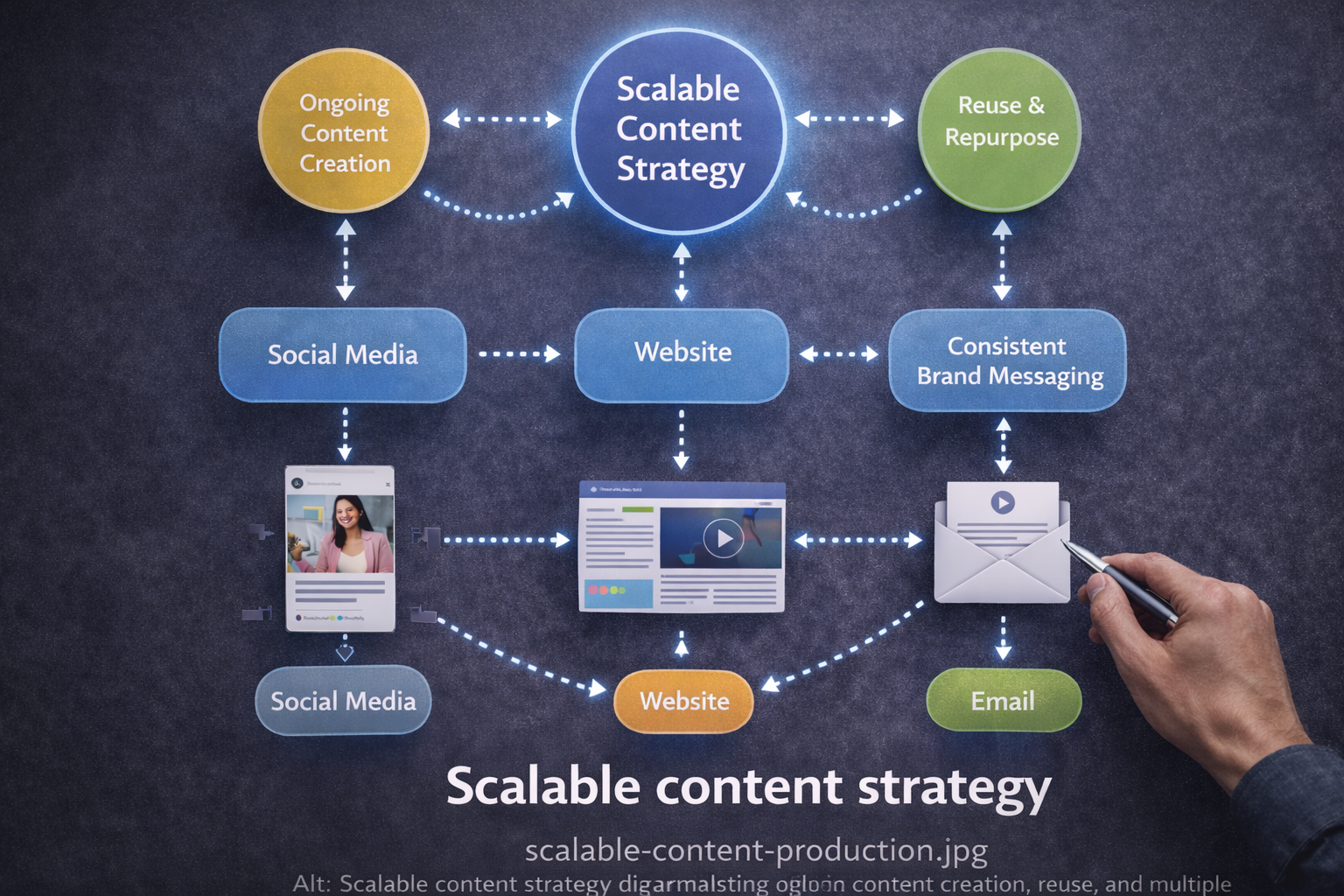
The goal is no longer simply creating content but creating systems that allow content to generate value long after production ends.
Planning Is The First Step To Eliminating Marketing Content Budget Waste
Most content waste begins before production starts. When content is created without a clear strategy, assets often lack a defined purpose.
Brands may produce beautiful imagery but still struggle to generate meaningful business results. Effective planning helps prevent this problem. Before production begins, brands should identify:
- Marketing Objectives
- Campaign Requirements
- Content Requirements By Channel
- Future Deployment Opportunities
- Asset Lifespan Expectations
This planning process ensures every asset has a clear role within the broader marketing strategy. Instead of creating content for a single campaign, brands create assets capable of supporting multiple marketing activities.
This significantly reduces marketing content budget waste while improving ROI.
Content Systems Reduce Marketing Content Budget Waste
One of the most effective ways to eliminate marketing content budget waste is through content systems. Content systems replace reactive production with repeatable processes. Rather than constantly solving content shortages, brands create a framework for:
- Content Planning
- Production Scheduling
- Asset Management
- Content Distribution
- Campaign Support
Every production contributes to a larger system.
Assets accumulate, libraries grow and marketing operations become more efficient. Instead of repeatedly rebuilding content resources, brands continuously strengthen them.
This system-based approach dramatically reduces waste while increasing content value.
Asset Libraries Turn Content Into Long-Term Marketing Assets
Many brands focus on creating assets. Fewer brands focus on preserving and utilizing them. Asset libraries solve this problem.
They transform content from temporary deliverables into long-term business resources. Strong asset libraries may contain:
- Campaign Photography
- Advertising Creative
- Website Assets
- Email Marketing Content
- Social Media Libraries
- E-Commerce Photography
These assets remain available long after the original campaign ends. Future marketing initiatives can draw from existing resources instead of relying exclusively on new production.
This increases asset value while reducing marketing content budget waste.
Utilization Strategies Maximize Content ROI
One of the biggest causes of marketing content budget waste is poor asset utilization. Brands create content then they use only a fraction of it. Effective utilization strategies help solve this problem.
Every asset should be evaluated for potential deployment across:
- Paid Advertising
- Email Marketing
- Social Media
- Website Content
- E-Commerce Platforms
- Retail Marketing
- Public Relations
The more opportunities an asset supports, the more valuable it becomes. Strong utilization strategies ensure content continues generating value instead of becoming dormant after a single campaign.
This is one of the most effective ways to improve content ROI without increasing production budgets.
Long-Term Thinking Eliminates Marketing Content Budget Waste
Many brands evaluate content based on immediate campaign performance. They ask:
- Did The Campaign Launch Successfully?
- Did The Content Look Good?
- Did We Get The Deliverables?
These questions matter.
However, they often encourage short-term thinking. Long-term thinking asks different questions:
- How Long Will These Assets Remain Valuable?
- How Many Campaigns Can They Support?
- How Can We Extend Their Lifespan?
- How Can We Improve Asset Utilization?
Brands that think long-term consistently generate more value from their content investments. Every production becomes part of a larger growth strategy rather than a temporary solution.
This mindset dramatically reduces marketing content budget waste while improving scalability.
Marketing Content Budget Waste Is Usually A Utilization Problem
Many organizations assume content waste comes from spending too much. In reality, waste often comes from using too little.
Brands frequently create enough content. They simply fail to maximize its value.
By improving:
- Planning
- Content Systems
- Asset Libraries
- Utilization Strategies
- Long-Term Thinking
brands can often generate significantly more output without increasing production budgets.
The objective is not necessarily creating more content but extracting more value from the content that already exists.
How To Eliminate Marketing Content Budget Waste
Ultimately, eliminating marketing content budget waste is not about spending less money. It is about creating more value from every investment. Brands achieve this through:
- Better Planning
- Stronger Content Systems
- Organized Asset Libraries
- Smarter Utilization Strategies
- Long-Term Thinking
When these elements work together, content becomes more than a campaign deliverable. It becomes a long-term marketing asset and when assets continue generating value long after production ends, marketing content budget waste begins to disappear.
Final Thoughts
If a $20k shoot only gave you three posts, the issue wasn’t the budget — it was the approach.
By eliminating marketing content budget waste and moving away from one-off content shoots, brands regain control, lower content creation costs, and finally unlock a truly scalable content strategy.
Recommended Next Reads
How Much Does a Fashion Campaign Shoot Cost? A Strategic Pricing Guide for Brands