One of the most common questions fashion brands ask is: “How much does a fashion campaign shoot cost?”
Unfortunately, the answer isn’t always straightforward. Some brands receive quotes for €2,000. Others receive proposals for €20,000. Luxury brands may invest €50,000 or more.
As a buyer, that can feel confusing. After all, aren’t they all just photos? Not exactly. The biggest mistake brands make is assuming they are paying for photography.
In reality, they are paying for a marketing asset system that may support:
- paid advertising
- website content
- e-commerce
- social media
- email marketing
- PR
- retail distribution
- future campaigns
Understanding that difference is the first step toward understanding campaign pricing.
What Will You Learn About Fashion Campaign Shoot Costs?
This guide answers the questions most brands ask before investing.
Topics Covered
- How much does a fashion campaign shoot cost?
- Why are campaign shoots expensive?
- What affects campaign pricing?
- What is included in campaign photography pricing?
- How much do models cost?
- How much does styling cost?
- What does licensing cost?
- How much should a startup spend?
- How much should an established brand spend?
- How can brands reduce campaign costs?
- What are the hidden costs of campaign production?
- What should be included in a quote?
- How can brands maximize campaign ROI?
Why Fashion Campaign Shoot Costs Are Higher Than Most Brands Expect
Many brands think they are hiring a photographer. However, campaign photography involves much more.
Typical campaign budgets may include:
- photographer
- creative director
- producer
- models
- hairstylist
- makeup artist
- wardrobe stylist
- studio rental
- locations
- permits
- assistants
- retouching
- licensing
Consequently, campaign pricing reflects the entire production ecosystem. The larger the campaign, the more resources are required.
How Do Fashion Campaign Shoot Costs Accumulate?
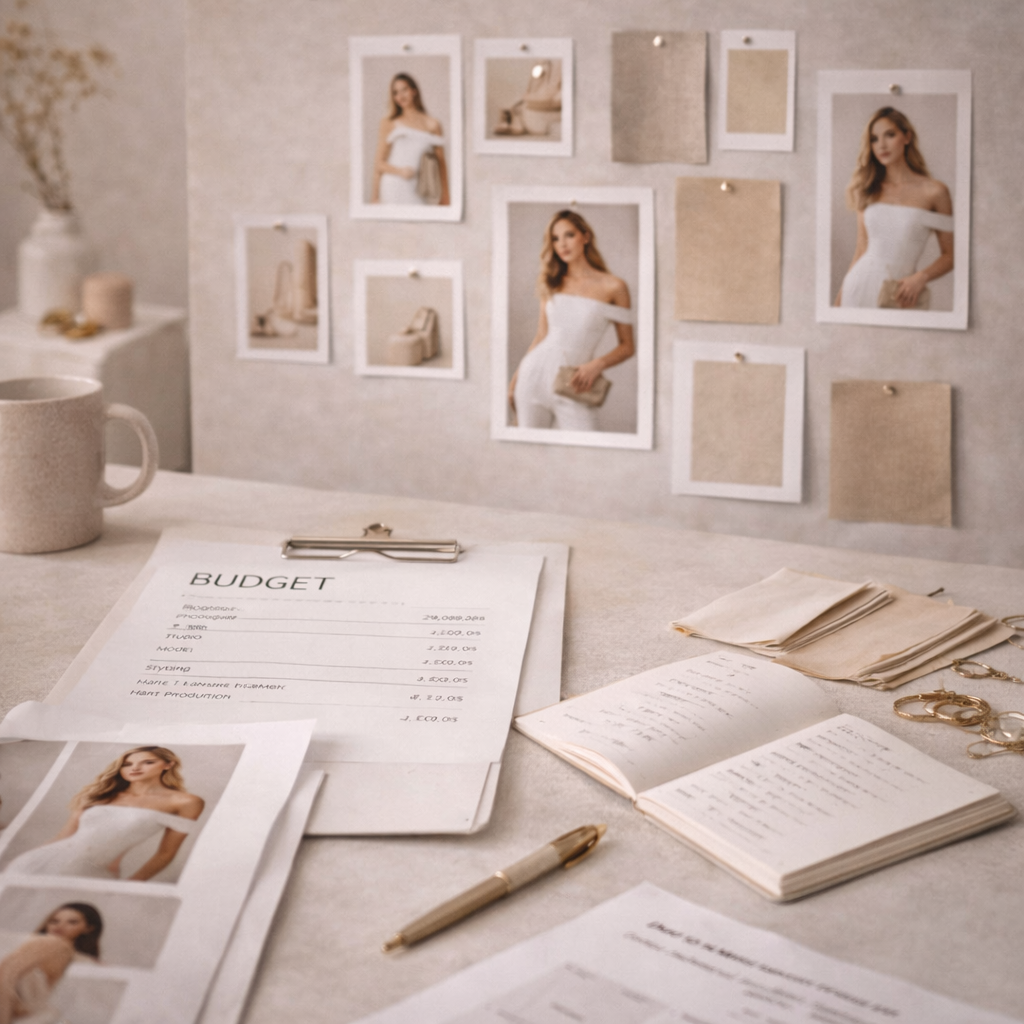
Campaign budgets typically grow through several stages.
Strategy & Planning
Before the camera comes out, brands often invest in:
- campaign planning
- creative direction
- shot list development
- content strategy
Production
Production may include:
- photographer
- creative team
- talent
- locations
- logistics
Post-Production
After the shoot:
- image selection
- retouching
- asset preparation
- exports for multiple platforms
Licensing
Usage rights frequently become one of the largest cost variables. Especially when content is used for:
- paid advertising
- print campaigns
- international campaigns
- retail displays
Typical Fashion Campaign Shoot Pricing
Emerging Fashion Brands
Budget Range
€2,000 – €5,000
Typically Includes:
- one-day shoot
- limited production crew
- website imagery
- social media assets
Best for:
- startups
- independent designers
- early-stage brands
Growing Fashion Brands
Budget Range
€5,000 – €15,000
Typically Includes:
- campaign planning
- multiple looks
- creative direction
- paid advertising assets
- expanded image library
Best for:
- e-commerce brands
- growing fashion labels
- brands running paid advertising
Established Fashion Brands
Budget Range
€15,000 – €50,000+
Typically Includes:
- multiple production days
- larger creative teams
- advanced retouching
- international licensing
- campaign video assets
Best for:
- national campaigns
- luxury brands
- global launches
Fashion Campaign Cost Breakdown Example
| Item | Typical Allocation |
|---|---|
| Photographer | 25–40% |
| Models | 10–25% |
| Hair & Makeup | 5–15% |
| Styling | 5–15% |
| Production | 10–20% |
| Retouching | 5–10% |
| Licensing | 10–30% |
The exact percentages vary depending on campaign objectives.
What Are The Benefits Of Fashion Campaign Shoot Costs?
At first glance, spending more on a campaign may seem like a disadvantage. However, the real question is whether the campaign generates more value than it costs.
Advantages
Better Content ROI
Assets can support multiple marketing channels.
More Advertising Assets
Campaign shoots often generate content for:
- Meta Ads
- Google Ads
- TikTok Ads
- email marketing
Higher Perceived Brand Value
Professional campaigns elevate positioning.
Better Customer Experience
Consistent visuals build trust.
Stronger Campaign Performance
Strategic content typically outperforms random content.
Reduced Future Production Costs
One campaign can replace several smaller shoots.
Disadvantages
Higher Upfront Investment
Campaigns require planning and resources.
More Complexity
More people are involved.
Longer Lead Times
Campaigns often require advance scheduling.
Poor Planning Can Be Expensive
A weak brief often leads to weak results.
The Hidden Cost Of Choosing The Cheapest Option
One of the most expensive mistakes brands make is selecting the lowest quote. Cheap campaigns often result in:
- weaker planning
- fewer usable assets
- limited licensing
- inconsistent branding
- more reshoots
Consequently, many brands spend less initially but significantly more over time.
Fashion Campaign Shoot Cost Comparison
| Production Type | Typical Investment |
| Product Photography | €500 – €2,500 |
| E-Commerce Shoot | €1,000 – €5,000 |
| Lookbook Shoot | €1,500 – €7,500 |
| Fashion Campaign Shoot | €3,000 – €50,000+ |
| Advertising Campaign | €10,000 – €100,000+ |
Many brands accidentally compare campaign photography to e-commerce photography. These are completely different services.
How Much Does Licensing Cost?
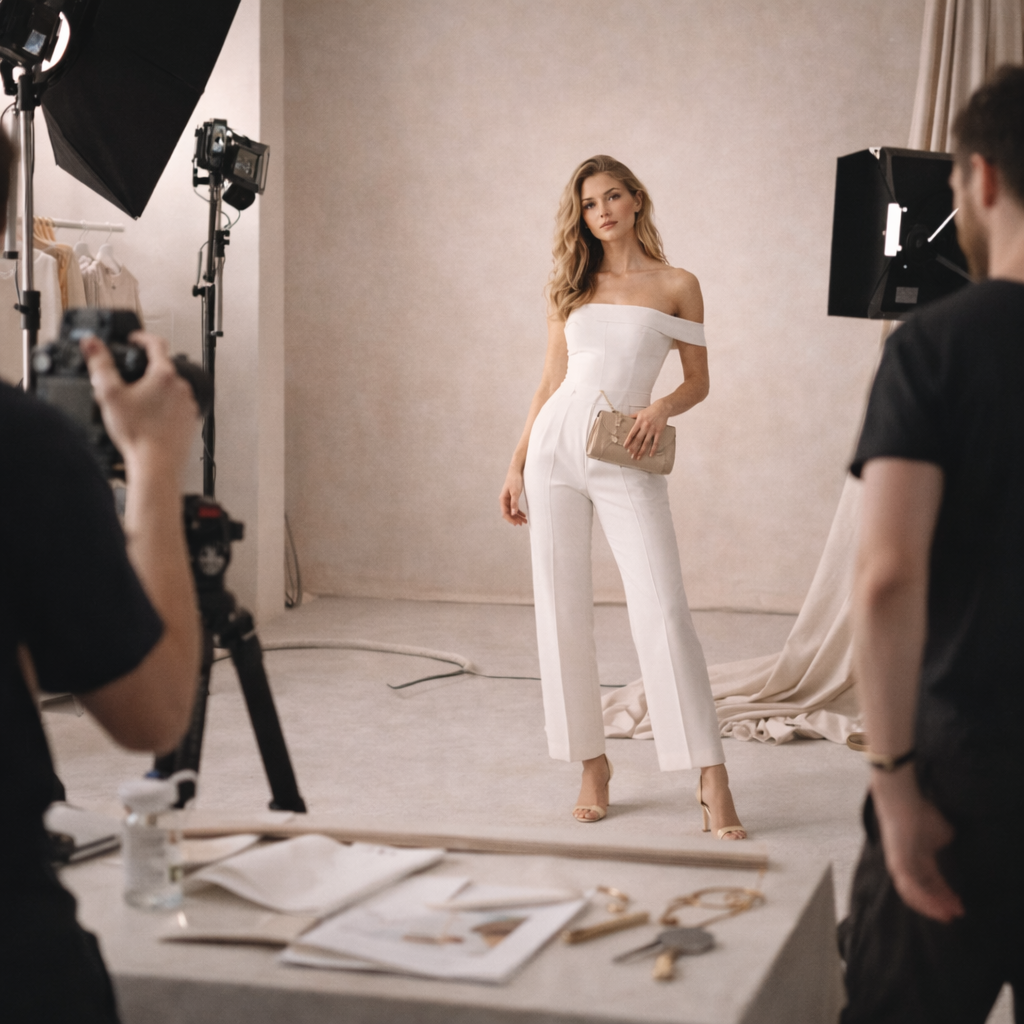
One of the most misunderstood campaign expenses is licensing. Usage rights often vary based on:
Organic Social Media
Often included.
Website Usage
Often included.
Paid Advertising
Typically licensed separately.
Print Advertising
Usually requires additional licensing.
International Campaigns
Higher commercial value typically means higher licensing fees.
Read: Why Do I Need Usage Rights? The Expensive Mistake Brands Discover After the Shoot
How To Reduce Fashion Campaign Shoot Costs Without Reducing Quality
Brands can often improve efficiency by:
Planning Multiple Campaigns At Once
Create content for multiple launches.
Producing Multiple Formats
Generate:
- website assets
- social assets
- advertising assets
during the same shoot.
Creating Evergreen Content
Build assets that remain useful for years.
Working With Retainers
Ongoing content partnerships are often more efficient than repeated one-off productions.
Read: When Should You Invest in a Content Retainer? (And the Signs You’re Already Too Late)
Questions To Ask Before Approving A Campaign Budget
Most brands should evaluate campaign costs using an 8-step framework.
Step 1
What business objective are we trying to achieve?
Step 2
Who is the target audience?
Step 3
What channels will use the content?
Step 4
What assets do we need?
Step 5
How long should the content remain useful?
Step 6
What licensing will be required?
Step 7
How much content can be repurposed?
Step 8
What ROI should the campaign generate?
Fashion Campaign Shoot Cost Calculator
One of the biggest frustrations brands face is trying to estimate campaign budgets before requesting proposals. While every campaign is different, the following framework can help establish realistic expectations.
| Campaign Requirement | Typical Budget Impact |
|---|---|
| One Model | €300 – €1,500+ |
| Additional Models | +€300 – €2,000+ each |
| Hair & Makeup | €300 – €1,000+ |
| Wardrobe Stylist | €500 – €2,500+ |
| Studio Rental | €200 – €2,000+ |
| Premium Location | €500 – €5,000+ |
| Advanced Retouching | €15 – €150+ per image |
| Paid Advertising License | +50% – 300% of production fee |
| Print Advertising License | +25% – 200% of production fee |
| International Usage | +100% – 500%+ |
| Campaign Video Assets | +€1,000 – €10,000+ |
Quick Budget Estimator
Basic Campaign
- Photographer
- One model
- Hair & makeup
- One location
Typical Investment: €2,000 – €5,000
Growth Campaign
- Multiple looks
- Advertising assets
- Creative direction
- Expanded licensing
Typical Investment: €5,000 – €15,000
Premium Campaign
- Multiple models
- Video production
- Paid advertising
- International usage
Typical Investment: €15,000 – €50,000+
Fashion Campaign Shoot Cost By Brand Size
One reason brands become confused by campaign pricing is that different businesses require completely different asset libraries.
Startup Fashion Brand
Typical Annual Revenue: €0 – €250,000
Typical Campaign Budget: €2,000 – €5,000
Primary Focus:
- website
- social media
- launch assets
Emerging Fashion Brand
Typical Annual Revenue: €250,000 – €1M
Typical Campaign Budget: €5,000 – €10,000
Primary Focus:
- e-commerce
- advertising
- product launches
Growth Fashion Brand
Typical Annual Revenue: €1M – €10M
Typical Campaign Budget: €10,000 – €25,000
Primary Focus:
- paid media
- customer acquisition
- content systems
Established Fashion Brand
Typical Annual Revenue: €10M+
Typical Campaign Budget: €25,000 – €100,000+
Primary Focus:
- global campaigns
- multi-channel marketing
- retail expansion
Fashion Campaign Pricing By Deliverable
Campaign budgets often increase based on the type of content required.
Photography Only
Includes:
- campaign images
- website assets
- social media assets
Typical Range: €2,000 – €10,000
Photography + Short-Form Video
Includes:
- photography
- social video
- reels
- advertising clips
Typical Range: €5,000 – €20,000
Photography + Video + Paid Advertising Assets
Includes:
- photography
- video
- ad creative variations
- multiple formats
Typical Range: €10,000 – €30,000
Full Campaign Package
Includes:
- strategy
- creative direction
- photography
- video
- advertising assets
- licensing planning
Typical Range: €15,000 – €50,000+
Campaign Shoot vs Content Retainer Cost Comparison
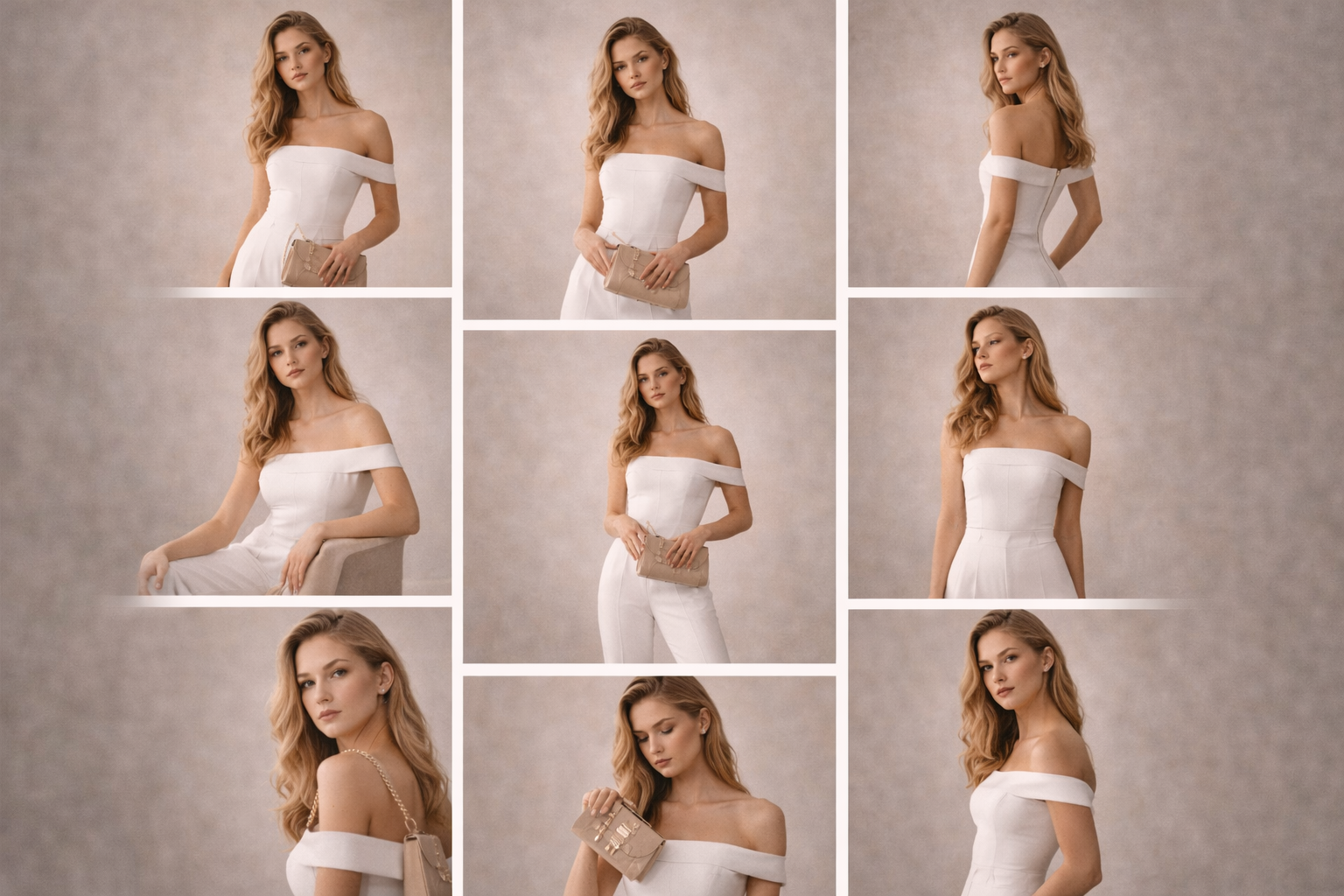
Many brands repeatedly invest in campaign shoots when a retainer would be more efficient.
Option 1: Individual Campaign Shoots
Example:
4 Campaign Shoots Per Year
€6,000 per campaign
Annual Investment: €24,000
Advantages:
- flexibility
- project-based commitment
Disadvantages:
- repeated planning
- inconsistent production
- fragmented content library
Option 2: Content Retainer
Example:
€3,000 – €5,000/month
Annual Investment: €36,000 – €60,000
Advantages:
- ongoing content creation
- campaign planning
- priority scheduling
- stronger consistency
- content system development
Disadvantages:
- ongoing commitment
However, many brands discover they spend similar amounts annually while receiving significantly less content from isolated projects. This is why content retainers often create stronger long-term ROI.
What Makes A Fashion Campaign Expensive?
Many brands assume photographers arbitrarily set prices. However, campaign costs are typically driven by several key variables.
Locations
Studio productions are often less expensive than destination campaigns.
Factors include:
- permits
- travel
- logistics
- rentals
Models
Agency talent often represents a significant portion of campaign budgets.
Pricing depends on:
- experience
- usage
- market
- exclusivity
Licensing
Licensing frequently becomes one of the largest variables. Especially when campaigns include:
- paid advertising
- print advertising
- international usage
- retail distribution
Read: 👉 Why Your Photographer Asks About Usage Rights (And Why It Becomes a Problem Later)
Video Production
Many brands now require:
- campaign films
- reels
- TikTok content
- paid ad video
Video production typically increases budgets substantially.
Creative Direction
Brands often underestimate the value of planning. However, creative direction influences:
- shot selection
- campaign consistency
- asset usability
- content ROI
Poor planning often costs more than production itself.
Content Volume
A campaign delivering: 20 images
requires very different resources than a campaign delivering:
100+ images
plus video
plus advertising assets.
How Much Revenue Should A Campaign Generate To Justify The Investment?
This is ultimately the question most founders care about.
Instead of asking: “How much does the campaign cost?”
Ask: “What return should the campaign generate?”
For example:
Campaign Investment: €10,000
Average Order Value: €200
Gross Margin: 60%
Required Revenue To Break Even: Approximately €16,700
Required Additional Customers: Approximately 84
Suddenly the conversation changes. The campaign is no longer a creative expense. It becomes a customer acquisition asset. This is exactly how media buyers evaluate advertising investments.
The most successful brands evaluate campaign photography the same way.
Read:
👉 Why Campaign Photography Planning Should Be Executed Like Paid Media
👉 How We Design Long-Term Content ROI
Frequently Asked Questions
Why Is Fashion Campaign Photography So Expensive?
Because brands are paying for production, planning, creative direction, talent, post-production, and licensing.
How Many Images Should A Campaign Deliver?
Most campaigns deliver between: 30 – 100+ final assets depending on scope.
How Long Does A Fashion Campaign Shoot Take?
Most productions range from:
- half-day shoots
- full-day shoots
- multi-day productions
What Is The Difference Between A Campaign Shoot And A Lookbook Shoot?
A lookbook primarily showcases products. A campaign shoot is designed to support marketing, advertising, and brand growth.
Is A Campaign Shoot Worth It?
For brands actively investing in marketing, advertising, and growth, campaign photography often creates significantly more long-term value than isolated content shoots.
The real question isn’t: “How much does a fashion campaign shoot cost?”
The better question is: “How much value can this campaign create across every marketing channel we use?”
Next Recommended Reads
Fashion Campaign Photography: The Foundation of High-Performing Fashion Brands
Why a Fashion Content Retainer Is the Smartest Investment for Scalable Brand Growth