
Planned content systems are the difference between marketing that spikes and marketing that compounds. While individual campaigns may deliver short-term wins, systems-driven content creates momentum that builds over time. As a result, brands unlock compounding content ROI and sustainable performance gains.
In other words, systems turn effort into equity.
What You Will Learn About Planned Content Systems?
- What we mean by planned content systems
- Why planned content systems create compounding ROI
- Planned content systems vs random content creation
- How planned content systems extend asset lifespans
- Planned content systems create marketing momentum
- Real-world example: random content vs planned content systems
- Why planned content systems create long-term competitive advantage
What We Mean By Planned Content Systems
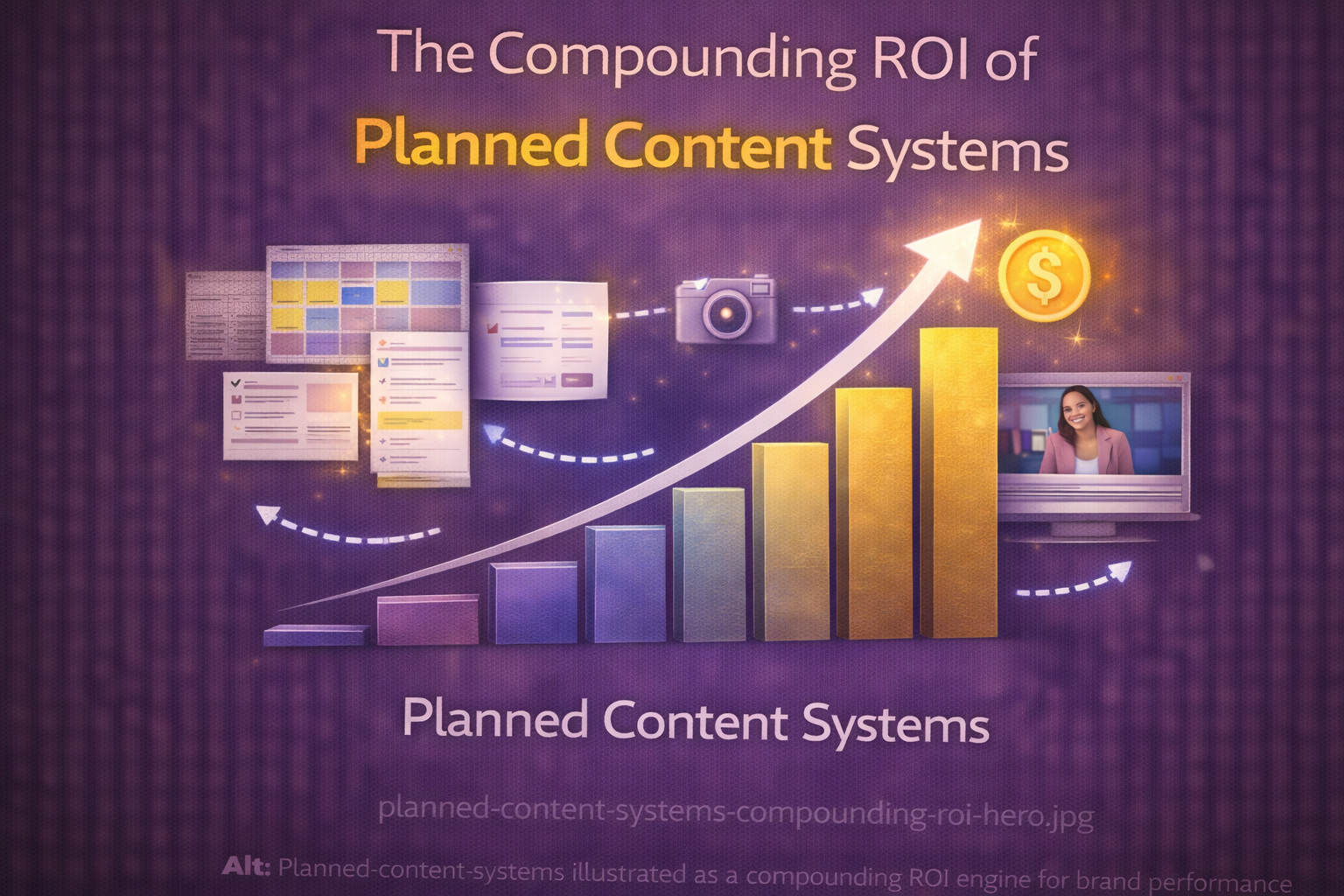
Many brands create content when they need it. A campaign is approaching. Advertising requires new creative. Social media content is running low. A product launch needs assets. As a result, production becomes reactive.
Content is created to solve immediate marketing problems rather than support long-term business objectives.
This approach often leads to:
- Content Shortages
- Asset Waste
- Inconsistent Marketing
- Repeated Production Costs
- Lower Content ROI
Planned content systems solve these challenges by replacing reactive content creation with a structured framework designed to support ongoing marketing activity.
Rather than treating content as a series of isolated projects, brands build systems that connect planning, production, asset management, distribution, and performance measurement.
The goal is not simply to create content but to create a repeatable process that allows content to support growth over time.
Planned Content Systems Definition
At their core, planned content systems are structured marketing frameworks designed to ensure content is created intentionally, organized effectively, and deployed strategically.
Instead of asking: What Content Do We Need Today?
brands operating with planned content systems ask: What Content Will We Need To Support Marketing Objectives Over The Next Quarter, Six Months, Or Year?
This shift fundamentally changes how content is approached. Rather than creating assets only when a need appears, brands proactively plan for:
- Campaigns
- Product Launches
- Advertising
- Customer Acquisition
- Brand Awareness
- Customer Retention
- Future Marketing Initiatives
The result is a content ecosystem built around long-term value rather than short-term requirements.
Planned Content Systems Begin With Strategic Content Planning
The foundation of all planned content systems is strategic planning. Content creation should never begin with production. It should begin with business objectives.
Strategic content planning helps answer questions such as:
- What Are Our Marketing Goals?
- Which Campaigns Are Coming?
- What Content Will Support Those Campaigns?
- Which Channels Require Assets?
- How Will Performance Be Measured?
By answering these questions before production begins, brands can create assets that support multiple objectives simultaneously.
This reduces waste and improves marketing efficiency. More importantly, it ensures content creation aligns with broader business goals rather than reacting to immediate needs.
Read more about Why Our Work Focuses on Consistency, Not Virality.
Planned Content Systems Require Content Infrastructure
Many brands focus heavily on content creation but invest very little in the infrastructure surrounding content. However, planned content systems rely on content infrastructure to function effectively.
Examples include:
- Asset Libraries
- Campaign Calendars
- Production Workflows
- Distribution Processes
- Content Management Systems
- Performance Tracking Frameworks
Without infrastructure, content often becomes difficult to organize, difficult to access, and difficult to reuse. With infrastructure, content becomes a long-term business asset.
Every production contributes to a larger marketing ecosystem rather than existing as an isolated project.
Read more about We Use The Content Planning Framework Before Every Shoot.
Planned Content Systems Use Campaign-Driven Production
One of the defining characteristics of planned content systems is campaign-driven production. Instead of creating content randomly throughout the year, production is aligned with marketing priorities.
Examples include:
- Product Launch Campaigns
- Seasonal Promotions
- Advertising Initiatives
- Customer Acquisition Campaigns
- Brand Awareness Campaigns
- E-Commerce Requirements
This approach allows a single production to generate assets that support multiple marketing activities simultaneously.
A campaign shoot may produce content for:
- Advertising
- Social Media
- Email Marketing
- Product Pages
- Website Content
- Public Relations
- Future Campaign Extensions
As a result, every production investment generates significantly more value.
Planned Content Systems Support Long-Term Marketing
One of the biggest differences between random content creation and planned content systems is the time horizon. Reactive content creation focuses on today’s needs.
Planned content systems focus on ongoing marketing support. The objective is to ensure brands consistently have the assets required to support:
- Customer Acquisition
- Brand Building
- Product Launches
- Advertising Campaigns
- Retention Initiatives
- Market Expansion
- Future Opportunities
This long-term perspective helps eliminate the cycle of constant content shortages and emergency productions. Marketing becomes more predictable and more scalable.
Read more about Why We Treat Photography As An Owned Channel.
Why Planned Content Systems Create Better Results
When brands adopt planned content systems, several important improvements typically occur. Content becomes more:
- Strategic
- Organized
- Accessible
- Reusable
- Effective
Marketing teams benefit from better:
- Campaign Support
- Asset Availability
- Resource Allocation
- Performance Measurement
- ROI
Most importantly, content begins functioning as an asset that supports long-term growth rather than a deliverable that expires after a single campaign.
Planned Content Systems Create Marketing Infrastructure
Ultimately, planned content systems are not simply about creating more content. They are about creating marketing infrastructure. The strongest brands build systems that support:
- Strategic Content Planning
- Content Infrastructure
- Campaign-Driven Production
- Asset Libraries
- Long-Term Marketing Support
These systems help transform content from a recurring expense into a long-term business asset. Because while individual campaigns come and go, planned content systems continue creating value long after a shoot is finished.
That is why the brands that scale most effectively are rarely the brands producing the most content. They are often the brands building the strongest planned content systems around the content they create.
Why Planned Content Systems Create Compounding ROI
Most brands evaluate content ROI too narrowly. They look at a single campaign, photoshoot, launch and a single advertising initiative. Then they ask: Did This Production Generate Results?
While this question is important, it often overlooks the biggest advantage of planned content systems. The real value of planned content systems is not created by a single campaign.
It is created by the cumulative effect of assets, campaigns, and marketing activities working together over time. This is what creates compounding ROI.
Every asset contributes to future opportunities, every campaign supports future campaigns and every production investment continues generating value long after the original project is complete.
As a result, planned content systems often deliver significantly greater long-term returns than reactive content creation.
Planned Content Systems Create Cumulative Asset Value
Traditional content production often treats assets as temporary deliverables. A campaign launches, the assets are used, the campaign ends and the content is largely forgotten.
Planned content systems take a different approach. Assets are viewed as long-term marketing resources. A single production may generate:
- Campaign Photography
- Product Photography
- Advertising Assets
- Website Content
- Email Marketing Assets
- Social Media Content
- Future Campaign Resources
Each asset contributes to a growing library of marketing resources. Over time, the value of that library increases. Instead of evaluating assets individually, brands benefit from the cumulative value of an expanding content ecosystem.
The larger the asset library becomes, the greater its ability to support future marketing initiatives.
Planned Content Systems Improve Content Reuse
One of the biggest drivers of ROI is content reuse. Unfortunately, many brands use content only once. Campaign assets are published. Advertising creative is retired. Photography is archived.
The production investment generates only a fraction of its potential value. Planned content systems are specifically designed to encourage reuse.
Assets can support:
- Advertising
- Product Launches
- Email Campaigns
- Social Media
- Websites
- Public Relations
- Future Campaigns
The more frequently an asset is reused, the greater the return generated from the original investment. This is one of the reasons why planned content systems create stronger ROI over time.
The content continues working long after it is created.
Planned Content Systems Enable Campaign Layering
Many brands treat campaigns as isolated events. One campaign ends before the next begins. The process resets repeatedly.
Planned content systems allow campaigns to build upon one another. This creates campaign layering.
Examples include:
- Brand Awareness Campaigns Supporting Customer Acquisition Campaigns
- Product Launch Assets Supporting Retargeting Campaigns
- Seasonal Campaigns Supporting Future Promotions
- Campaign Photography Supporting Multiple Marketing Channels
Each campaign strengthens future campaigns. Instead of creating value once, assets continue generating value across multiple initiatives.
The result is a marketing ecosystem where every production investment contributes to future performance.
Planned Content Systems Improve Long-Term Performance
Reactive content creation often produces short-term results. A campaign launches. Performance increases. The campaign ends. Visibility declines. The cycle begins again.
Planned content systems improve long-term performance because content remains available to support ongoing marketing activity. Assets continue supporting:
- Advertising
- Brand Awareness
- Customer Acquisition
- Product Launches
- Customer Retention
- Website Optimization
- Future Marketing Initiatives
Rather than relying on isolated performance spikes, brands create a more stable and predictable growth model. Over time, these gains accumulate. The result is stronger marketing performance year after year.
Planned Content Systems Improve Marketing Efficiency
Efficiency is one of the most overlooked contributors to ROI. Many brands lose resources through:
- Repeated Production
- Asset Waste
- Duplicate Work
- Content Shortages
- Emergency Shoots
- Workflow Bottlenecks
These inefficiencies increase costs without increasing results. Planned content systems help eliminate these challenges through:
- Strategic Planning
- Asset Libraries
- Campaign Calendars
- Distribution Systems
- Performance Tracking
Marketing teams spend less time solving operational problems and more time executing growth initiatives. The result is higher output from the same resources. Higher efficiency naturally improves ROI.
Why Compounding ROI Matters
The most valuable marketing investments often generate returns long after the original expense. This is true for:
- Brand Recognition
- Customer Trust
- Content Libraries
- Marketing Infrastructure
- Campaign Assets
- Customer Relationships
The same principle applies to planned content systems. Every asset, every campaign, every production investment and every customer interaction contributes to future opportunities.
Over time, these contributions compound. This creates a significant competitive advantage.
Planned Content Systems Turn Content Into Assets
One of the biggest differences between reactive content creation and planned content systems is how content is viewed. Reactive content creation often sees content as:
- Deliverables
- Campaign Requirements
- Temporary Marketing Resources
Planned content systems view content as:
- Business Assets
- Owned Media
- Marketing Infrastructure
- Long-Term Investments
This shift changes how ROI is generated. Assets continue creating value long after the production budget has been spent.
Why Planned Content Systems Create Compounding ROI
The true power of planned content systems comes from their ability to compound value over time. Brands benefit from:
- Cumulative Asset Value
- Content Reuse
- Campaign Layering
- Stronger Long-Term Performance
- Greater Marketing Efficiency
Each benefit strengthens the next. Assets support campaigns. Campaigns support visibility. Visibility supports customer acquisition. Customer acquisition supports growth. Growth creates additional opportunities for leverage.
Ultimately, this is why planned content systems often outperform reactive content creation. They do not simply create content.
They create a system where every content investment continues generating value, making future marketing efforts more effective and increasing ROI long after the original production is complete.
Planned Content Systems vs Random Content Creation
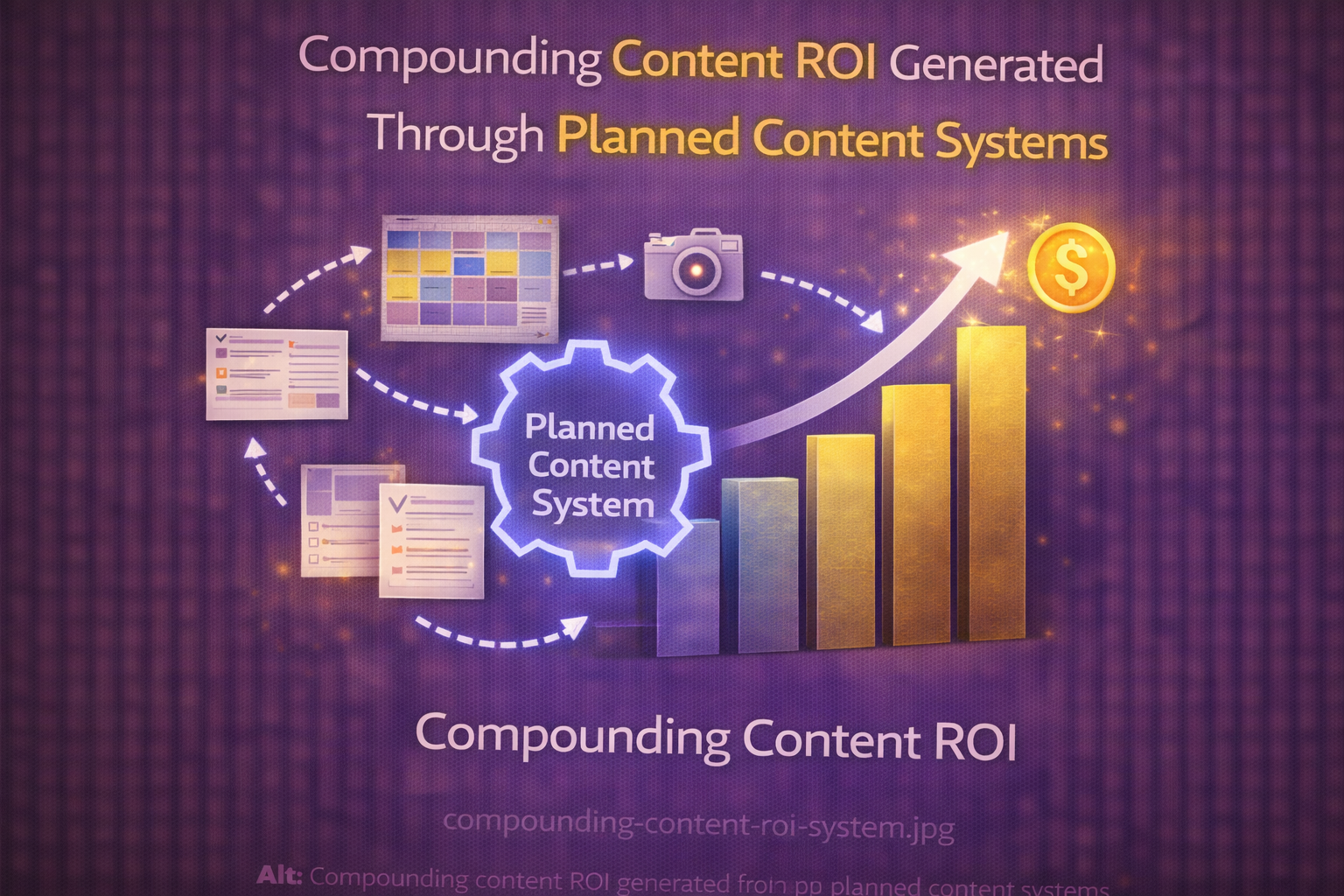
Many brands believe they have a content problem. In reality, they often have a planning problem. Content shortages, inconsistent campaigns, rushed productions, and disappointing ROI are frequently symptoms of a larger issue: content is being created reactively rather than strategically.
This is where the difference between planned content systems and random content creation becomes clear. Random content creation focuses on solving immediate needs.
Planned content systems focus on supporting long-term marketing objectives. While both approaches produce content, the results are dramatically different over time.
For a deeper exploration of this concept, see Why Brands Need Content Infrastructure, Not More Shoots and Content Systems vs Random Shoots: Which Actually Scales?
Random Content Creation Relies On Reactive Marketing
Most random content creation begins with urgency. Examples include:
- We Need Content For Social Media
- We Need New Advertising Creative
- We Have A Product Launch Next Week
- We Are Running Out Of Content
- The Marketing Team Needs Assets
As a result, production becomes reactive. Instead of supporting a larger strategy, content is created to solve immediate problems. This often leads to:
- Short-Term Thinking
- Last-Minute Decisions
- Production Bottlenecks
- Inconsistent Marketing
- Lower Content ROI
By contrast, planned content systems anticipate future needs before they become urgent. Content is produced proactively rather than reactively.
Planned Content Systems Replace Random Shoots
Random shoots are one of the most common symptoms of reactive marketing. A campaign requires assets, a shoot is scheduled, the assets are delivered then the process repeats.
This cycle often creates:
- Unpredictable Production Costs
- Content Gaps
- Asset Shortages
- Repeated Planning Effort
- Marketing Inefficiencies
Planned content systems replace random shoots with structured production planning. Instead of creating content only when a need arises, brands align production with:
- Campaign Calendars
- Product Launches
- Advertising Initiatives
- Seasonal Marketing
- Customer Acquisition Goals
This allows a single production to support multiple marketing objectives simultaneously.
Planned Content Systems Eliminate Content Shortages
One of the most common frustrations marketing teams experience is running out of content. The cycle often looks like this:
- Launch Campaign
- Publish Content
- Use Available Assets
- Run Out Of Content
- Schedule Another Shoot
This pattern repeats throughout the year. Random content creation solves shortages temporarily. Planned content systems are designed to prevent shortages from occurring in the first place.
Through strategic planning, brands create:
- Content Pipelines
- Asset Libraries
- Campaign Resources
- Advertising Inventories
- Future Marketing Assets
The result is greater content availability and fewer emergency production requests.
Planned Content Systems Reduce Asset Waste
Asset waste is one of the largest hidden costs in marketing. Many brands invest heavily in content creation only to use a small percentage of the assets produced. Examples include:
- Campaign Assets Used Once
- Product Photography Left Unused
- Advertising Creative Retired Prematurely
- Content Forgotten After Launch
Random content creation often contributes to this problem because assets are produced without a long-term deployment strategy. Planned content systems reduce waste by designing content for multiple uses from the beginning.
Assets can support:
- Advertising
- Social Media
- Websites
- Email Marketing
- Product Launches
- Future Campaigns
As a result, every production investment generates significantly more value.
Planned Content Systems Improve Operational Efficiency
Random content creation creates operational friction. Marketing teams often spend time:
- Searching For Assets
- Scheduling Emergency Productions
- Coordinating Last-Minute Requests
- Rebuilding Workflows
- Solving Content Shortages
These activities consume resources without directly contributing to growth. Planned content systems improve operational efficiency through:
- Strategic Planning
- Asset Libraries
- Campaign Calendars
- Production Workflows
- Distribution Systems
- Performance Tracking
Instead of constantly solving content problems, teams can focus on campaign execution and business growth.
Planned Content Systems Create Predictable Marketing Operations
One of the biggest advantages of planned content systems is predictability. Marketing becomes easier to forecast because teams understand:
- Upcoming Campaigns
- Future Asset Requirements
- Production Schedules
- Distribution Plans
- Performance Objectives
Random content creation often creates uncertainty. Planned content systems create structure. Structure improves efficiency, reduces waste, and strengthens marketing performance.
Side-By-Side Comparison
| Random Content Creation | Planned Content Systems |
|---|---|
| Reactive Marketing | Strategic Marketing |
| Random Shoots | Planned Production |
| Content Shortages | Content Pipelines |
| Asset Waste | Asset Utilization |
| Operational Friction | Operational Efficiency |
| Short-Term Thinking | Long-Term Planning |
| Campaign Gaps | Campaign Support |
| Repeated Production Costs | Production Leverage |
| Inconsistent Execution | Predictable Execution |
| Lower ROI Potential | Compounding ROI Potential |
Why Planned Content Systems Scale Better
The difference between random content creation and planned content systems is not simply organization. It is scalability. Random content creation requires constant intervention.
Every new campaign creates new production demands, every content shortage creates new problems and every launch requires new assets. Planned content systems create infrastructure that supports ongoing growth.
Brands benefit from:
- Less Reactive Marketing
- Fewer Random Shoots
- Fewer Content Shortages
- Reduced Asset Waste
- Greater Operational Efficiency
Ultimately, random content creation solves today’s problem. Planned content systems create the foundation that supports marketing performance tomorrow, next quarter, and years into the future.
How Planned Content Systems Extend Asset Lifespans
One of the biggest reasons planned content systems generate stronger ROI is that they extend the lifespan of marketing assets.
Many brands create content with a single objective in mind. A campaign launches, assets are published, the campaign ends and the content is retired.
This approach significantly limits the value of the original production investment. By contrast, planned content systems are designed to maximize the usefulness of every asset created.
Content is planned not only for immediate needs but also for future campaigns, future channels, and future marketing initiatives.
As a result, assets continue generating value long after the original production is complete. The longer an asset remains useful, the greater the return on the investment used to create it.
Planned Content Systems Enable Content Repurposing
Content repurposing is one of the most effective ways to increase content ROI. A single asset can often be adapted into multiple formats and deployed across multiple marketing channels.
For example, a campaign shoot may generate:
- Website Content
- Social Media Assets
- Advertising Creative
- Email Marketing Assets
- Product Launch Materials
- PR Resources
- Sales Collateral
Without planned content systems, many of these opportunities are overlooked. Assets are used once and then forgotten. With planned content systems, content repurposing becomes part of the production strategy from the beginning.
The objective is not simply to create content but to create assets that can continue supporting marketing activities over time.
Planned Content Systems Improve Asset Reuse
Many brands dramatically underestimate how often marketing assets can be reused. Campaign photography created today may remain valuable months or even years later when properly managed.
Examples include:
- Seasonal Promotions
- Retargeting Campaigns
- Product Relaunches
- Website Updates
- Email Campaigns
- Brand Awareness Initiatives
- Recruitment Marketing
Asset reuse becomes much easier when content is organized within planned content systems. Rather than constantly creating new content, brands can leverage existing assets that continue aligning with their objectives.
This increases the return generated from every production investment.
Planned Content Systems Support Campaign Extensions
Traditional content production often assumes a campaign has a fixed lifespan. A campaign launches, assets are deployed and the campaign concludes.
However, many campaigns contain significantly more value than brands realize. Planned content systems support campaign extensions by allowing assets to continue contributing to future initiatives.
Examples include:
- Launch Campaigns Extending Into Retargeting Campaigns
- Seasonal Campaigns Supporting Future Promotions
- Product Campaigns Supporting Evergreen Marketing
- Awareness Campaigns Supporting Customer Acquisition
Instead of ending when the original campaign concludes, content continues creating value through additional marketing activities. This extends both campaign lifespan and asset lifespan simultaneously.
Planned Content Systems Enable Multi-Channel Deployment
One of the biggest advantages of modern marketing is the number of channels available to brands. Customers interact with content through:
- Websites
- Social Media
- Paid Advertising
- Email Marketing
- E-Commerce Platforms
- Public Relations
- Retail Marketing
Unfortunately, many brands create content for only one channel at a time. This limits asset value.
Planned content systems encourage multi-channel deployment from the beginning. Assets are intentionally created to support multiple environments.
A single production may generate content that performs across:
- TikTok
- Google Ads
- Landing Pages
- Product Pages
- Email Campaigns
The more channels an asset supports, the greater its overall value.
Planned Content Systems Rely On Content Libraries
Content cannot be reused if it cannot be found. This is one of the primary reasons asset lifespans remain shorter than they should. Many brands have large volumes of valuable content stored across:
- Shared Drives
- Cloud Folders
- Hard Drives
- Agency Archives
- Team Devices
Unfortunately, much of this content becomes difficult to locate and deploy. Planned content systems solve this problem through content libraries. Content libraries help organize:
- Campaign Photography
- Product Assets
- Advertising Creative
- Video Content
- Website Resources
- Marketing Materials
- Brand Assets
When assets are organized and accessible, their useful lifespan increases dramatically. Teams spend less time searching and more time deploying content effectively.
Longer Asset Lifespans Create Better ROI
The relationship between asset lifespan and ROI is straightforward. If an asset is used once, its value is limited. If the same asset supports multiple campaigns, multiple channels, and multiple initiatives, its value increases substantially.
This is why planned content systems often outperform reactive content creation. Every additional use increases the return generated from the original production investment.
Over time, brands benefit from:
- Lower Content Costs Per Campaign
- Higher Asset Utilization
- Better Marketing Efficiency
- Greater Content Availability
- Stronger Campaign Support
- Better Long-Term ROI
Why Planned Content Systems Extend Asset Lifespans
The most successful brands do not simply create more content. They create more value from the content they already own. That is exactly what planned content systems are designed to achieve.
Through:
- Content Repurposing
- Asset Reuse
- Campaign Extensions
- Multi-Channel Deployment
- Content Libraries
brands transform content from a short-term deliverable into a long-term business asset. Ultimately, the longer an asset remains useful, the more value it creates. And the more value each asset creates, the stronger the overall ROI of the content system becomes.
Planned Content Systems Create Marketing Momentum
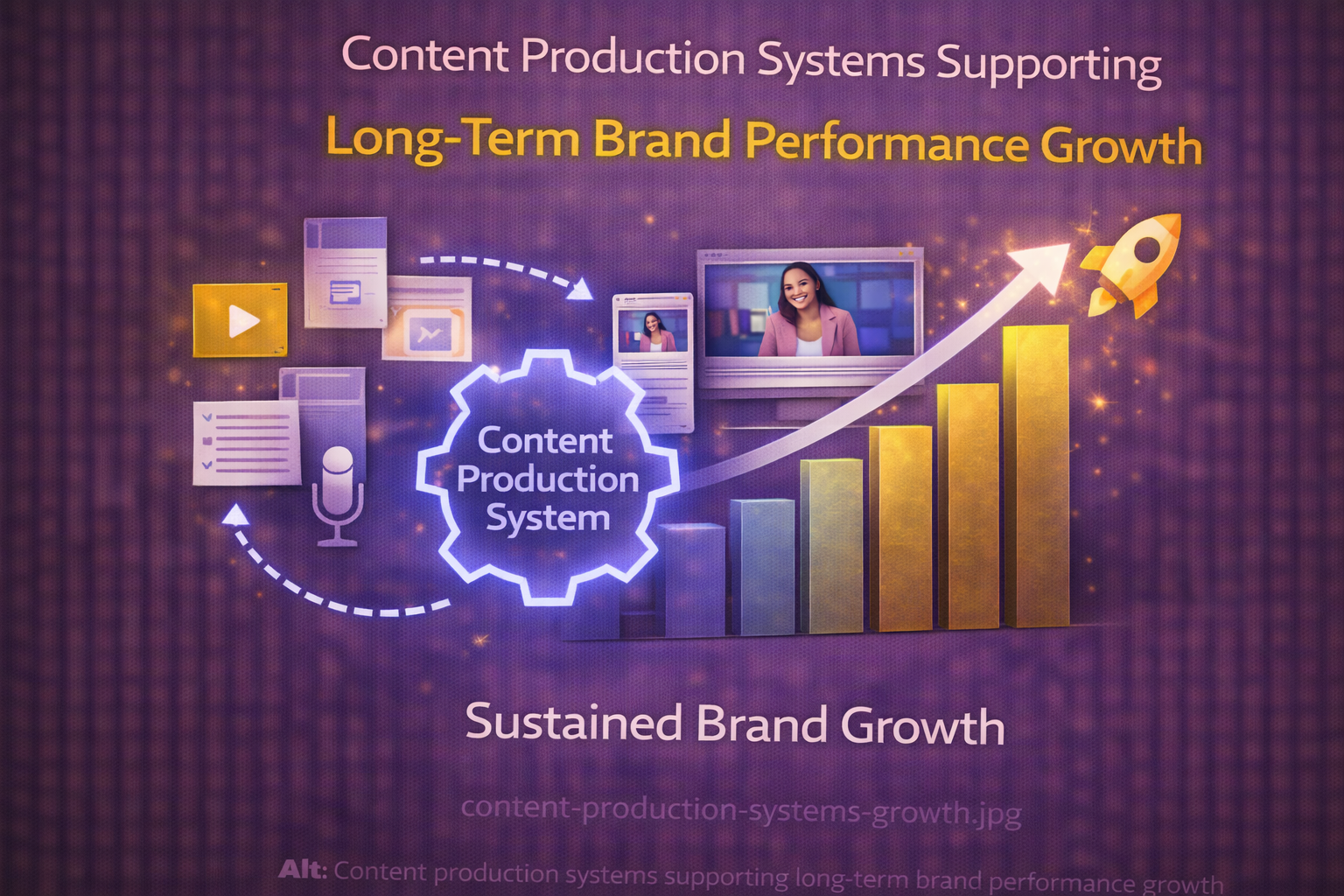
One of the most valuable benefits of planned content systems is marketing momentum. Most brands evaluate content as individual projects. A campaign launches, content is published, results are measured and the campaign ends.
Then the process starts again. The problem with this approach is that it treats every marketing effort as an isolated event.
In reality, the strongest brands build momentum through consistency. Every campaign, every asset, every customer interaction and every marketing touchpoint contributes to future performance.
This is why planned content systems create a significant advantage over reactive marketing. Instead of repeatedly starting from zero, brands build a marketing engine that becomes stronger over time.
For a deeper exploration of this idea, see Consistent Brand Marketing Is The Only Real Growth Hack.
Planned Content Systems Create Cumulative Visibility
Visibility is one of the most important drivers of growth. Customers cannot engage with brands they rarely see. Many companies experience visibility in short bursts.
Examples include:
- Product Launches
- Seasonal Campaigns
- Promotional Events
- Advertising Pushes
Visibility increases temporarily and then fades. This creates a stop-and-start marketing cycle. Planned content systems create cumulative visibility instead.
Assets are strategically deployed across:
- Social Media
- Paid Advertising
- Websites
- Email Marketing
- Product Launches
- Public Relations
- Retail Marketing
Each activity reinforces the previous one. The brand remains consistently visible rather than appearing only during major campaigns. Over time, this visibility accumulates and strengthens market presence.
Planned Content Systems Increase Repeated Exposure
Customers rarely make purchasing decisions after a single interaction. Most buying journeys involve multiple touchpoints. A customer may:
- See An Advertisement
- Visit A Website
- Follow A Social Account
- Open An Email
- View A Product Launch
- Return Later To Purchase
Each interaction contributes to the decision-making process. Planned content systems help ensure those interactions occur consistently. Rather than disappearing between campaigns, the brand remains active and visible.
This repeated exposure helps create:
- Familiarity
- Recognition
- Trust
- Preference
- Purchase Intent
The more consistently customers encounter the brand, the stronger these effects become.
Planned Content Systems Strengthen Recognition
Recognition is built through repetition. Customers rarely remember brands after a single exposure. Instead, recognition develops gradually through consistent interactions.
Examples include consistent:
- Photography
- Visual Identity
- Messaging
- Campaign Execution
- Brand Presence
When these elements appear repeatedly, customers begin recognizing the brand more quickly. Over time, recognition becomes a competitive advantage. Customers no longer need to be introduced to the brand repeatedly.
The brand already occupies space in their memory. This is one reason why planned content systems contribute so strongly to long-term marketing success.
Planned Content Systems Build Trust Over Time
Trust is rarely created overnight. It develops through repeated positive experiences. When customers consistently encounter a brand that appears:
- Professional
- Organized
- Visible
- Reliable
- Established
their confidence increases. Planned content systems help create these experiences by ensuring the brand maintains a stable and recognizable presence.
Instead of disappearing between campaigns, the brand remains active across multiple channels and multiple customer touchpoints.
This consistency signals reliability, reliability helps build trust, trust influences purchasing decisions and the process compounds over time.
Planned Content Systems Support Long-Term Growth
Short-term marketing activity can generate short-term results. Long-term growth requires something more sustainable. Growth depends on:
- Recognition
- Trust
- Visibility
- Customer Relationships
- Consistent Market Presence
These assets cannot be built through isolated campaigns alone. They require ongoing execution. This is why planned content systems are so effective.
Every campaign contributes to future opportunities, every asset supports future initiatives, every marketing effort builds upon previous efforts and growth becomes cumulative rather than episodic.
Why Marketing Momentum Matters
Momentum creates leverage. Brands with momentum benefit from:
- Stronger Visibility
- Better Recognition
- Greater Trust
- Larger Asset Libraries
- More Effective Campaigns
- Better Marketing Efficiency
Future campaigns become easier to execute because previous campaigns have already created awareness and familiarity. The brand is no longer introducing itself from scratch. Instead, it is building upon an existing foundation.
Planned Content Systems Create Sustainable Advantage
The most successful brands rarely rely on a single campaign, a single launch, or a single viral moment. They build systems that support continuous marketing activity. That is exactly what planned content systems are designed to do.
Through:
- Cumulative Visibility
- Repeated Exposure
- Stronger Recognition
- Greater Trust
- Long-Term Growth
brands create momentum that compounds over time. Ultimately, marketing momentum is one of the most valuable assets a company can build and momentum is not created through isolated content production.
It is created through planned content systems that consistently support visibility, customer relationships, and business growth year after year.
Real-World Example: Random Content vs Planned Content Systems
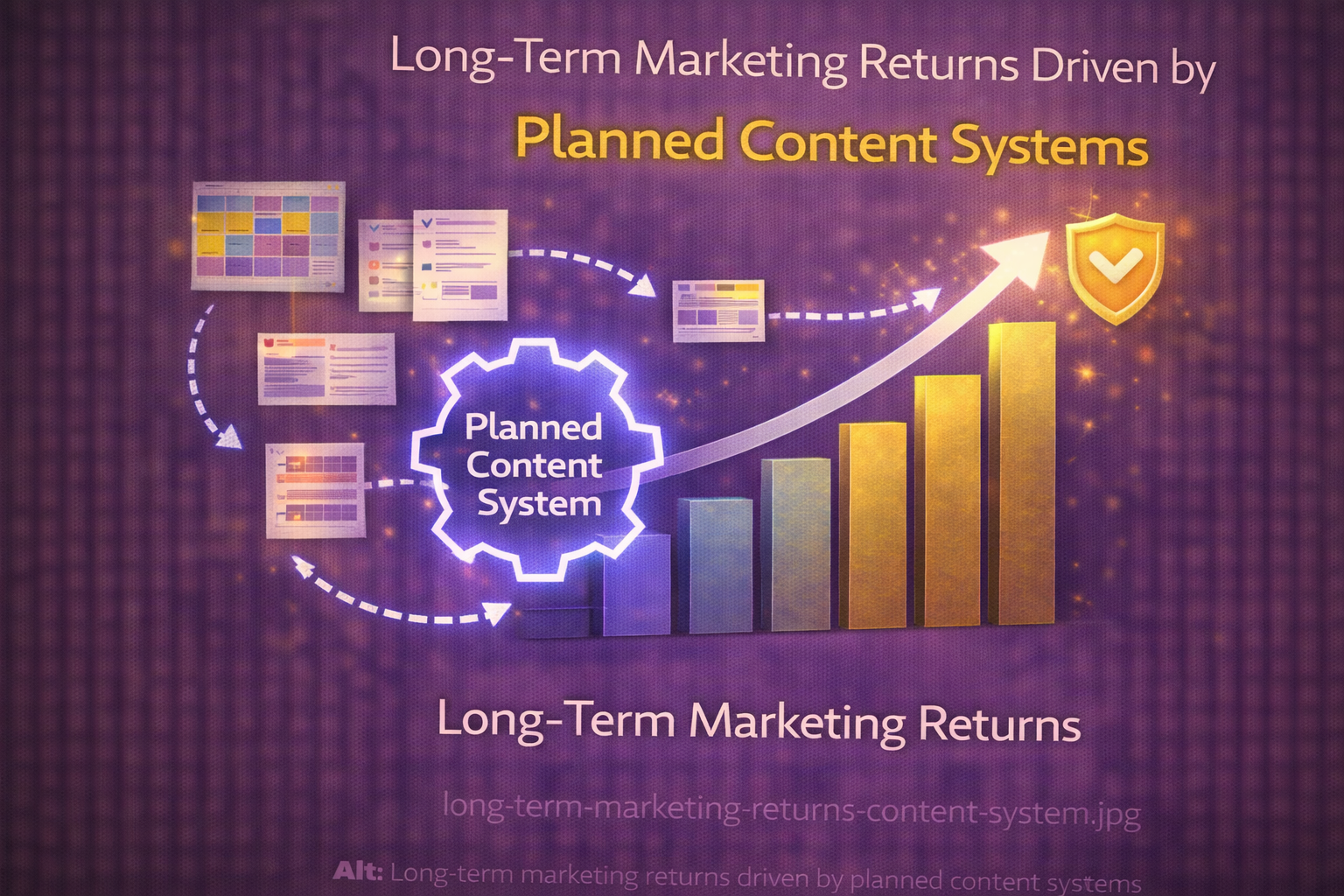
The difference between random content creation and planned content systems is often easier to understand when viewed through a practical example.
Consider two fashion brands operating within the same market. Both have similar products, both invest in marketing and both want growth.
The difference is how they approach content production.
Brand A
Relies on random content creation.
Brand B
Operates with planned content systems.
Initially, the differences may appear small. Over time, however, the gap becomes significant.
The way each brand manages content directly influences asset lifespan, campaign performance, customer acquisition, and overall ROI.
Brand A: Random Content Creation
Brand A creates content reactively. Content production is typically triggered by immediate needs such as:
- Running Out Of Social Content
- Upcoming Product Launches
- Advertising Asset Shortages
- Seasonal Promotions
- Campaign Deadlines
The workflow often looks like:
- Need Content
- Schedule Shoot
- Create Assets
- Launch Campaign
- Run Out Of Content
- Repeat
While this approach solves short-term problems, it creates long-term inefficiencies.
Brand B: Planned Content Systems
Brand B takes a different approach. Instead of producing content only when required, the company operates through planned content systems.
Content production is aligned with:
- Campaign Calendars
- Product Launches
- Advertising Requirements
- Customer Acquisition Goals
- Quarterly Marketing Objectives
Assets are created with future usage in mind. Every production contributes to a growing content ecosystem. Rather than reacting to content shortages, Brand B continuously builds marketing resources that support future initiatives.
Asset Lifespan
Brand A: Random Content Creation
Assets are often created for a single purpose.
Examples include one:
- Campaign
- Promotion
- Product Launch
- Social Media Initiative
After use, many assets are archived and rarely revisited. Typical asset lifespan: Days Or Weeks
The content generates value briefly before being replaced.
Brand B: Planned Content Systems
Assets are intentionally designed for multiple uses. Examples include:
- Advertising
- Social Media
- Websites
- Email Marketing
- Product Pages
- Retargeting Campaigns
- Future Campaign Extensions
Typical asset lifespan: Months Or Years
The same production investment continues generating value long after the original campaign ends.
Advantage: Brand B
Campaign Support
Brand A: Random Content Creation
Campaign support often becomes inconsistent. Marketing teams regularly encounter:
- Asset Shortages
- Missing Creative
- Last-Minute Production Requests
- Limited Creative Options
Campaign performance is frequently constrained by content availability.
Brand B: Planned Content Systems
Campaigns are supported by a structured content ecosystem. Teams have access to:
- Campaign Photography
- Advertising Assets
- Product Content
- Email Marketing Resources
- Multi-Channel Creative Variations
Campaign execution becomes faster and more effective because content is already available.
Advantage: Brand B
Asset Utilization
Brand A: Random Content Creation
Many assets are used only once. Examples include:
- Campaign Images
- Product Photography
- Advertising Creative
- Video Assets
As a result, the full value of the production investment is rarely realized. Asset utilization remains relatively low.
Brand B: Planned Content Systems
Assets are continuously reused and repurposed. A single production may support multiple:
- Campaigns
- Channels
- Customer Segments
- Marketing Objectives
This significantly increases the value generated from every asset created.
Advantage: Brand B
Customer Acquisition
Brand A: Random Content Creation
Customer acquisition often fluctuates. Growth is closely tied to campaign launches and production cycles. Common challenges include:
- Visibility Gaps
- Content Shortages
- Advertising Fatigue
- Inconsistent Market Presence
Customer acquisition becomes difficult to predict.
Brand B: Planned Content Systems
Customer acquisition becomes more consistent because marketing activity remains continuous. Assets support:
- Paid Advertising
- Brand Awareness
- Product Launches
- Retargeting
- Email Marketing
- Content Marketing
The brand remains visible throughout the customer journey.
Advantage: Brand B
ROI
Brand A: Random Content Creation
ROI is often limited by:
- Short Asset Lifespans
- Asset Waste
- Repeated Production Costs
- Operational Inefficiencies
- Low Asset Utilization
Every new marketing initiative frequently requires new content production.
Brand B: Planned Content Systems
ROI improves because content continues generating value over time. Benefits include:
- Extended Asset Lifespans
- Better Asset Utilization
- Campaign Layering
- Greater Marketing Efficiency
- Reduced Production Waste
- Stronger Customer Acquisition
Every asset contributes to future opportunities. ROI compounds rather than resetting.
Advantage: Brand B
Side-By-Side Comparison
| Category | Brand A: Random Content Creation | Brand B: Planned Content Systems |
|---|---|---|
| Asset Lifespan | Short | Extended |
| Campaign Support | Reactive | Strategic |
| Asset Utilization | Low To Moderate | High |
| Customer Acquisition | Inconsistent | Predictable |
| Content Availability | Frequently Limited | Consistently Available |
| Production Efficiency | Lower | Higher |
| Asset Reuse | Limited | Extensive |
| Marketing Visibility | Episodic | Continuous |
| Operational Efficiency | Lower | Higher |
| ROI Potential | Limited | Compounding |
Why Planned Content Systems Win Long-Term
The lesson is not that random content creation never works. Many brands achieve short-term success through reactive production. The challenge is sustainability.
As marketing demands increase, random content creation becomes increasingly difficult to manage. Planned content systems create a different outcome.
They provide:
- Longer Asset Lifespans
- Better Campaign Support
- Higher Asset Utilization
- Stronger Customer Acquisition
- Greater ROI
Most importantly, they transform content from a recurring expense into a long-term business asset. Ultimately, random content creation solves immediate needs.
Planned content systems create the infrastructure that allows brands to grow more efficiently, market more consistently, and generate stronger returns from every content investment.
Why Planned Content Systems Create Long-Term Competitive Advantage
Most brands view content as a marketing activity. The strongest brands view content as a competitive advantage. The difference is significant.
Marketing activities can be copied, campaigns can be imitated and creative concepts can be replicated.
However, the systems that consistently support visibility, recognition, trust, and growth are much harder to duplicate. This is one of the biggest reasons planned content systems create long-term competitive advantage.
They do not simply improve content production. They strengthen the underlying marketing infrastructure that supports growth. Over time, these advantages compound and become increasingly difficult for competitors to overcome.
Planned Content Systems Strengthen Recognition
Recognition is one of the most valuable assets a brand can build. Customers are more likely to engage with, trust, and purchase from brands they recognize.
The challenge is that recognition rarely develops from a single campaign. It is created through repeated exposure over time. Planned content systems support recognition by ensuring brands maintain a consistent presence across:
- Social Media
- Paid Advertising
- Websites
- Email Marketing
- Product Launches
- Public Relations
- Retail Marketing
Every campaign reinforces previous campaigns and every asset contributes to future visibility. Over time, customers begin recognizing the brand more quickly and remembering it more easily.
This recognition becomes a competitive asset that competitors cannot easily replicate.
Content Systems Create Consistency At Scale
Many brands achieve consistency temporarily. Maintaining consistency over months and years is far more difficult. This is where planned content systems create a significant advantage.
Instead of relying on individual effort or occasional campaigns, brands build repeatable processes that support:
- Content Planning
- Production
- Asset Management
- Distribution
- Performance Tracking
The result is consistent execution across marketing channels and customer touchpoints. Customers experience consistent:
- Visual Identity
- Messaging
- Campaign Quality
- Brand Presence
As competitors struggle with content shortages and reactive production, brands operating with planned content systems continue executing predictably. Consistency itself becomes a competitive advantage.
Planned Content Systems Build Trust Over Time
Trust is one of the most important drivers of business growth. Customers rarely trust brands after a single interaction. Trust develops gradually through repeated positive experiences.
Planned content systems help create those experiences by ensuring the brand remains:
- Visible
- Professional
- Reliable
- Organized
- Consistent
Every campaign strengthens credibility, every customer interaction reinforces confidence and every asset contributes to a stronger perception of the brand. As trust accumulates, customers become more likely to:
- Engage
- Purchase
- Return
- Recommend
- Remain Loyal
This trust becomes increasingly valuable as competition intensifies.
Content Systems Improve Marketing Efficiency
Competitive advantage is not only about visibility. It is also about efficiency. Many brands waste resources through:
- Repeated Production
- Content Shortages
- Asset Waste
- Operational Bottlenecks
- Last-Minute Campaign Preparation
These inefficiencies increase costs and reduce effectiveness. Planned content systems improve marketing efficiency through:
- Asset Libraries
- Campaign Calendars
- Production Planning
- Content Reuse
- Distribution Workflows
Marketing teams spend less time solving problems and more time executing strategy. The result is greater output from the same resources. Over time, this efficiency creates a significant advantage over competitors operating reactively.
Content Systems Create Compounding Growth
One of the most powerful characteristics of planned content systems is that they compound. Every campaign contributes to future campaigns, every asset supports future marketing initiatives and every customer interaction strengthens future opportunities.
This creates a growth model based on accumulation rather than repetition. Benefits include:
- Growing Asset Libraries
- Increasing Recognition
- Increasing Trust
- Better Campaign Performance
- Greater Marketing Efficiency
- Stronger Customer Acquisition
As these advantages accumulate, growth becomes easier to sustain. The brand is no longer relying on isolated marketing successes. It is benefiting from years of accumulated marketing value.
Why Competitors Struggle To Catch Up
Many competitive advantages can be copied. Products can be copied, campaigns can be copied and creative concepts can be copied.
The effects of planned content systems are much harder to replicate because they are built over time. A competitor cannot instantly create:
- Years Of Asset Libraries
- Years Of Recognition
- Years Of Customer Trust
- Years Of Campaign Performance Data
- Years Of Marketing Momentum
These advantages are earned through consistent execution. The longer a brand operates with planned content systems, the larger the gap becomes.
Planned Content Systems Turn Marketing Into An Asset
Many businesses treat marketing as a recurring expense. Each campaign requires new investment, each launch requires new production and each initiative starts from the beginning.
Planned content systems create a different outcome. Marketing becomes an asset that grows stronger over time. Assets, recognition, trust and performance insights accumulate. The result is a marketing operation that continuously increases in value.
Why Planned Content Systems Create Long-Term Competitive Advantage
The true value of planned content systems is not found in any single campaign. It is found in the advantages they create over years of execution. Brands benefit from:
- Stronger Recognition
- Greater Consistency
- Higher Customer Trust
- Better Marketing Efficiency
- Compounding Growth
Together, these advantages create a foundation that becomes increasingly difficult for competitors to challenge. Ultimately, the brands that win long-term are rarely the brands producing the most content.
They are often the brands building the strongest systems around the content they create. And that is exactly why planned content systems create lasting competitive advantage.
Final Thoughts
Marketing performance rarely improves through isolated effort. It improves through accumulation.
By investing in planned content systems, brands unlock compounding content ROI, stronger brand performance growth, and reliable long-term marketing returns that outperform one-off tactics every time.
Next Recommended Reads
How to Plan a Fashion Campaign Shoot That Delivers Better Content and Better Results