
StyleConditioning’s fashion content system transformation began with a practical problem: the brand had product images for its online shop, but those images were being asked to represent the entire brand. Although the original photography made the clothing visible, it could not fully communicate the confidence, athletic identity, or editorial positioning behind the collection.
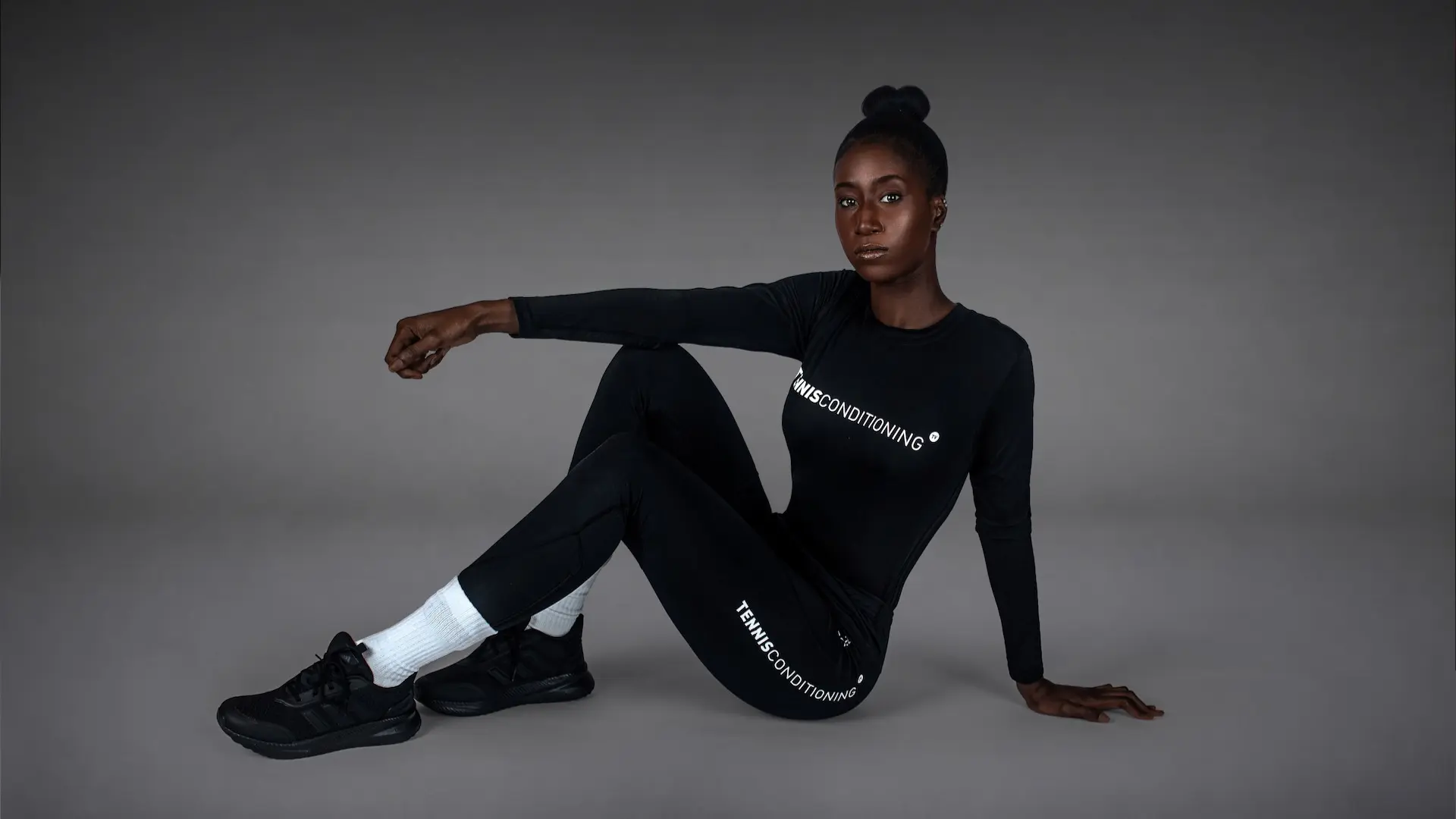
Through strategic planning and campaign photography, Phil Halfmann and the creative team added a second visual layer. The result was not a replacement for ecommerce photography. Instead, it was a more complete system in which shop images provided product clarity while editorial images created identity, aspiration, and greater format flexibility.
Fashion Content System Transformation at a Glance
| Brand | StyleConditioning |
|---|---|
| Industry | Sportswear, tennis apparel, and athletic fashion |
| Starting library | 33 men’s and women’s shop photographs |
| Original catalog coverage | Approximately 16 product styles and 28 product/color variations |
| Campaign production | 31 editorial photographs across approximately six styled looks |
| Campaign formats | 25 vertical and six horizontal images |
| Phil Halfmann’s role | Strategic planning and photography |
| Primary transformation | From a shop-first image archive to a two-layer visual content system |
Before, StyleConditioning had a product-image system. After, it had the beginning of a brand content system.
Before the Fashion Content System Transformation
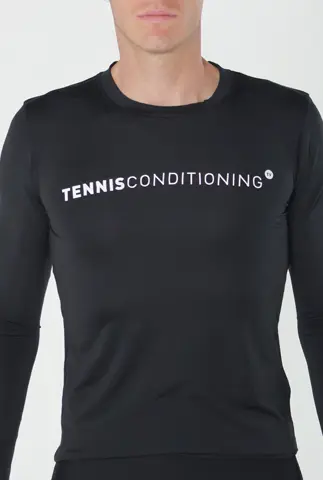
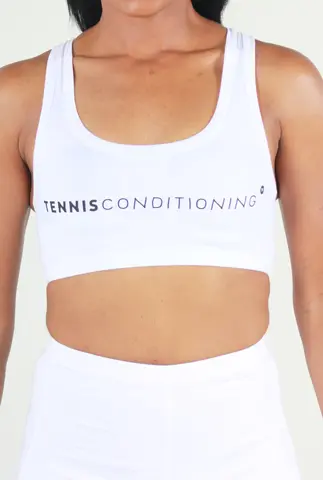
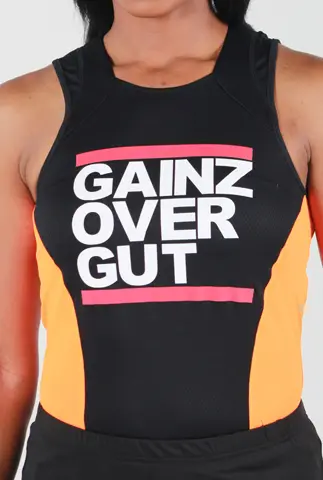
StyleConditioning did not begin without content. The original archive contained 19 men’s shop images and 14 women’s shop images. Together, the 33 photographs documented approximately 28 product and color variations, including T-shirts, long-sleeve performance tops, polos, sports bras, tanks, skorts, running pants, training shorts and other athletic garments.
These images performed an essential ecommerce function. Customers could see colors, logos, printed graphics, garment shapes, and selected front, back, or side views. In addition, the largely neutral backgrounds kept attention on the merchandise.
The following images represent three examples from the original 33-image shop archive.
The original images solved a real problem
- They documented the available products.
- They made color variations easier to compare.
- They showed prominent logos and graphic details.
- They provided straightforward imagery for shop listings.
- They created an initial visual inventory for the collection.
However, the archive had strategic limitations
The images had been created primarily one product at a time. Consequently, backgrounds, crop positions, model coverage, image dimensions, and available viewing angles were not completely standardized. Some products had front and back views, while others had only one photograph. Similarly, some images isolated the torso, whereas others included legs, shoes or more of the complete outfit.
More importantly, the shop images rarely connected individual products to a larger brand story. Faces were frequently excluded, poses remained largely static, and the garments appeared without a strong athletic or editorial narrative. The photographs showed what StyleConditioning sold but they did not consistently express how the brand wanted customers to feel about the collection.
Therefore, the challenge was not simply a shortage of photographs but an incomplete content architecture. One narrow category of shop imagery was carrying almost the entire visual identity.
The Strategic Decision: Add a Campaign Layer
Producing more images without defining their role would have created additional files without necessarily creating a stronger system. Therefore, the new photoshoot began with a strategic distinction: ecommerce images and campaign images should support different customer decisions.
Ecommerce photography primarily answers, “What does this product look like?” Campaign photography answers, “What does this collection represent and why should the audience care?” StyleConditioning needed both answers.
The production was consequently planned to combine selected garments into complete looks and photograph them with greater variation. The team considered model expression, styling, lighting, pose, framing, orientation and the relationship between individual images. Instead of treating every frame as a separate product record, the photographs were developed as a connected editorial series.
This reflects the broader principle discussed in Content Systems vs Random Shoots: a shoot becomes more valuable when the intended uses shape production before the first image is created.
Direct Evidence: The Same Products Before and After
The transformation can be evaluated directly because several garments appear in both the original shop archive and the editorial production. The difference does not depend on comparing unrelated products or inventing performance claims.
White sports bra: from isolated product to athletic identity
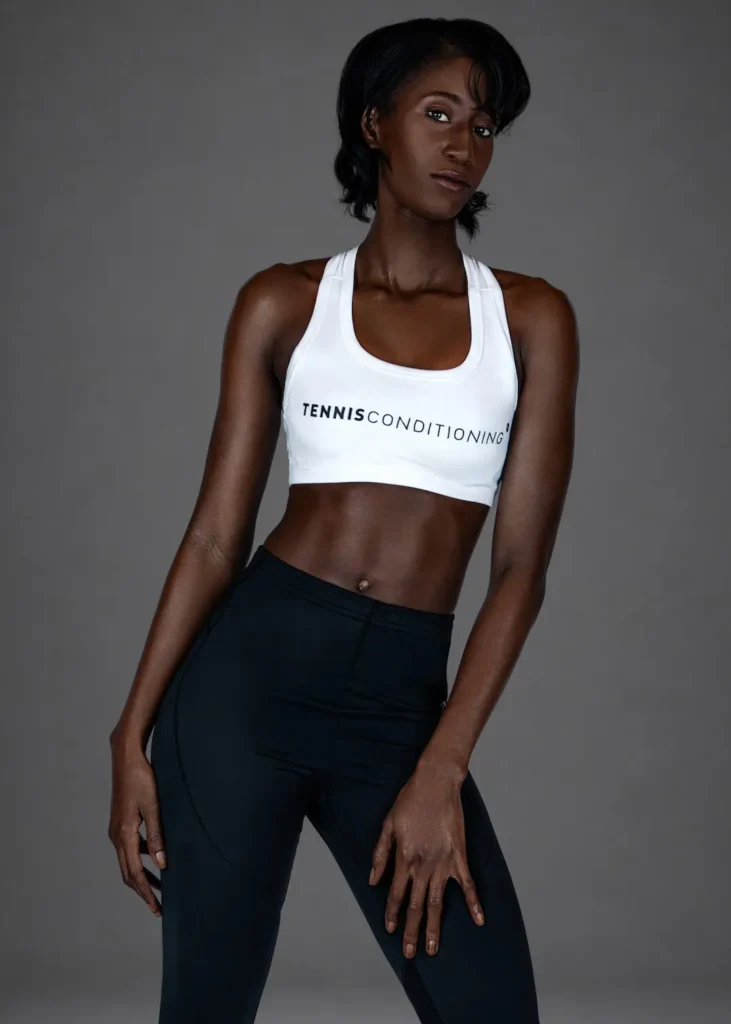
The original image made the product understandable. The campaign image retained logo visibility while adding expression, posture, styling and a stronger sense of the customer the brand wanted to represent.
Gainz tank: from catalog record to campaign asset
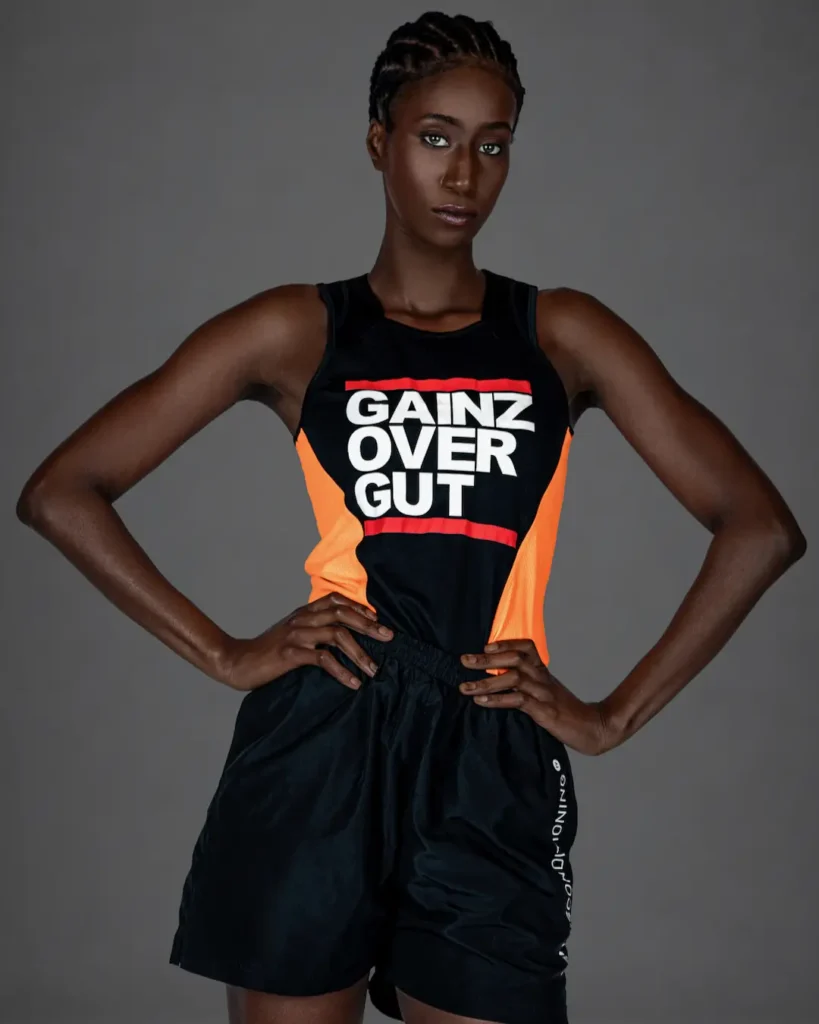
Black performance top: from garment view to complete look
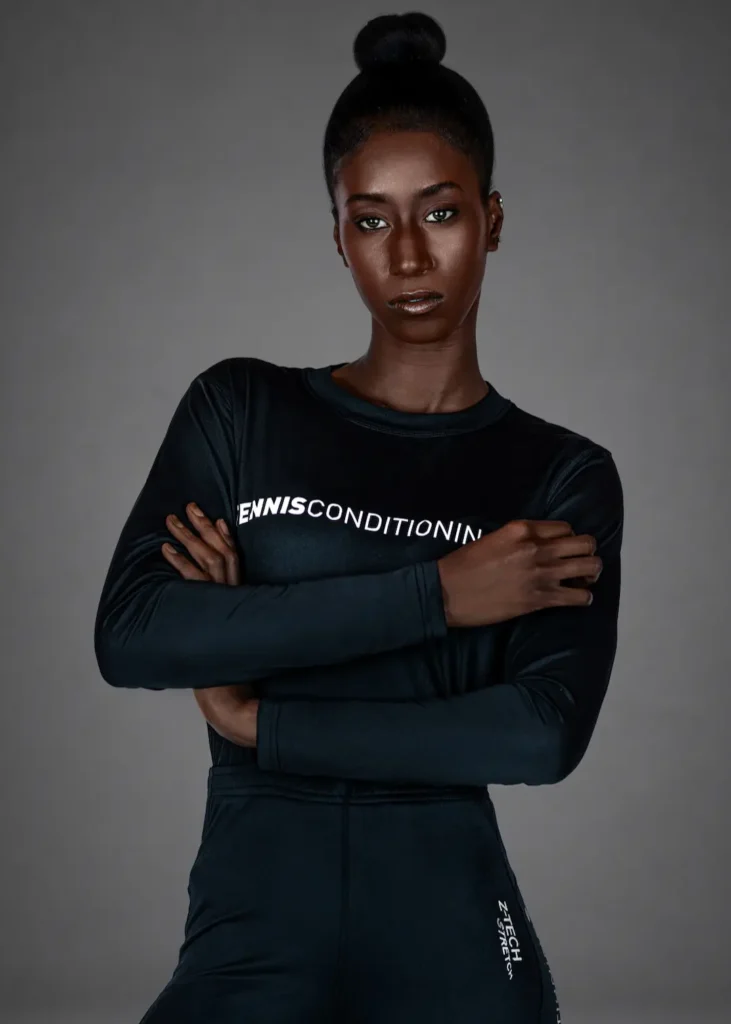
How the Editorial Production Expanded the System
The campaign production generated 31 final photographs across approximately six styled looks. These included black and white performance combinations, sports-bra looks, the Gainz tank, the white Gainz T-shirt, shorts, pants and a white skort.
More importantly, the production introduced different types of visual assets. The final selection contained 25 vertical photographs and six horizontal photographs, along with full-length, mid-length, seated, crouching, kneeling and walking compositions.
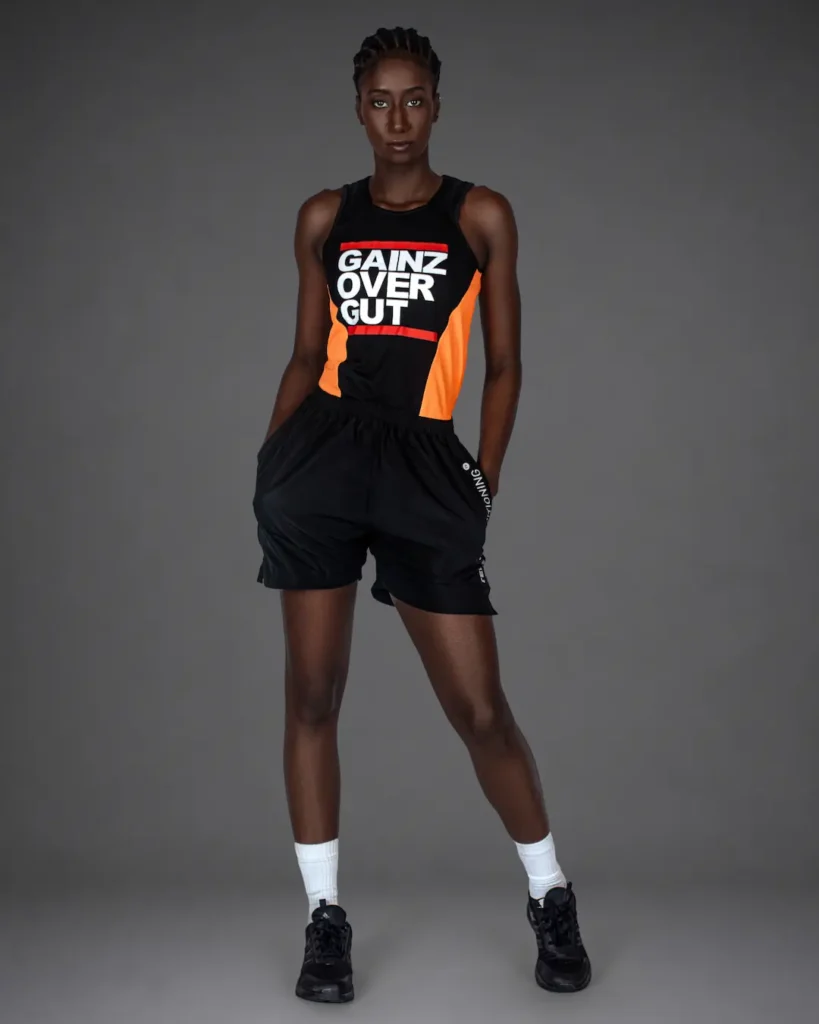
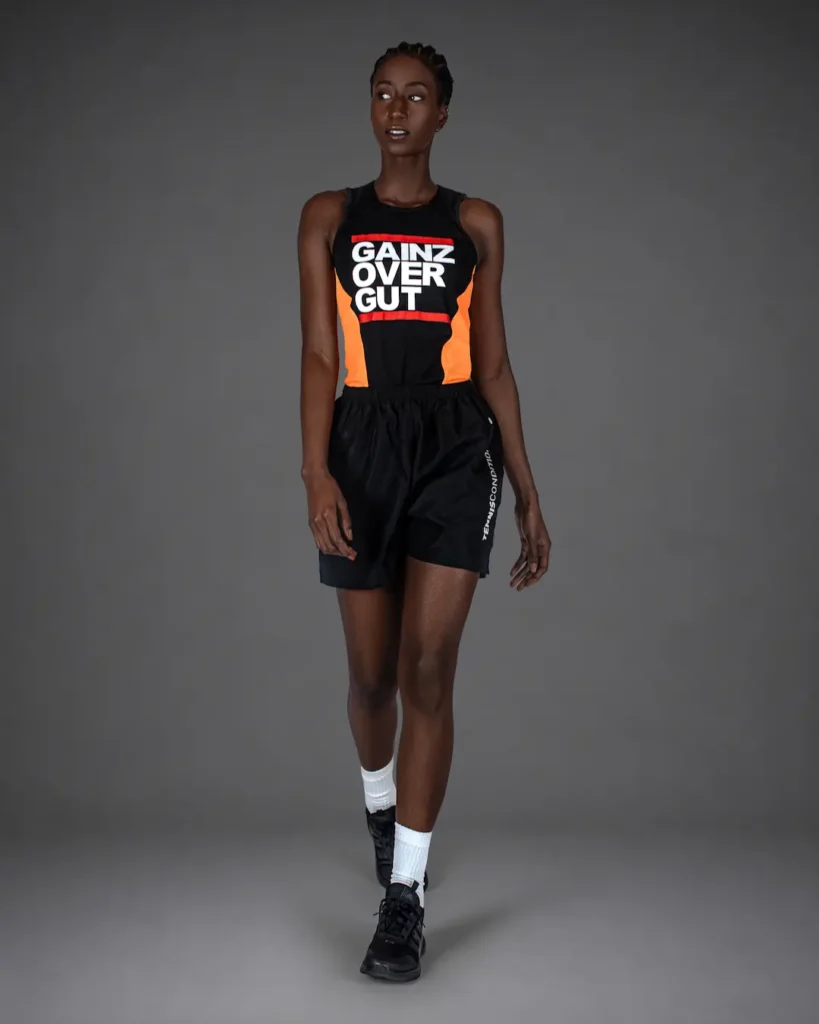
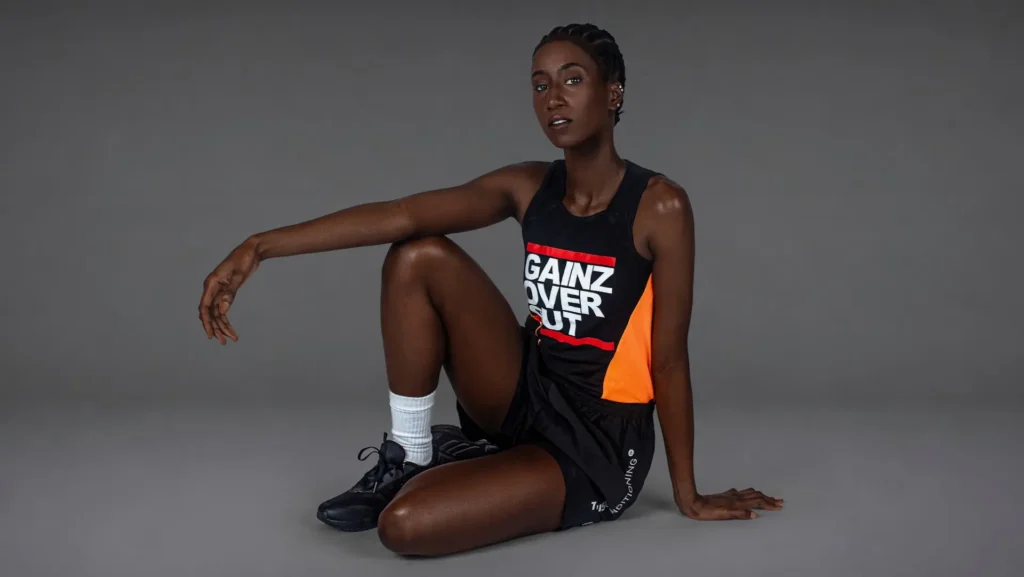
These are potential applications based on the available compositions. They should not be described as confirmed placements unless corresponding website, advertising, or social-media records are available.
Before vs After the Fashion Content System Transformation
| Before the system | After the system |
|---|---|
| 33 functional shop photographs | 31 additional editorial campaign photographs |
| Approximately 28 product and color variations | Approximately six coordinated styled looks |
| Products photographed mainly in isolation | Garments combined into complete outfits |
| Faces and identity frequently excluded | One recognizable model anchored the campaign |
| Predominantly static presentation | Standing, walking, crouching, kneeling, and seated poses |
| Light shop backgrounds | A controlled gray campaign environment |
| Product-led illumination | More directional light, contrast, and dimensionality |
| Limited format planning | 25 vertical and six horizontal images |
| Images primarily explained the products | Images also communicated confidence and positioning |
| One dominant content layer | Shop clarity plus editorial brand storytelling |
The “after” did not make the original images obsolete. Instead, it gave each category a clearer job. The shop photographs could continue supporting product evaluation, while the editorial photographs could create stronger first impressions and collection-level storytelling.
What One Styled Look Could Produce
The black sports-bra look illustrates how one styling decision could generate multiple usable compositions. Rather than stopping after one successful photograph, the production explored full-length, walking and horizontal variations.
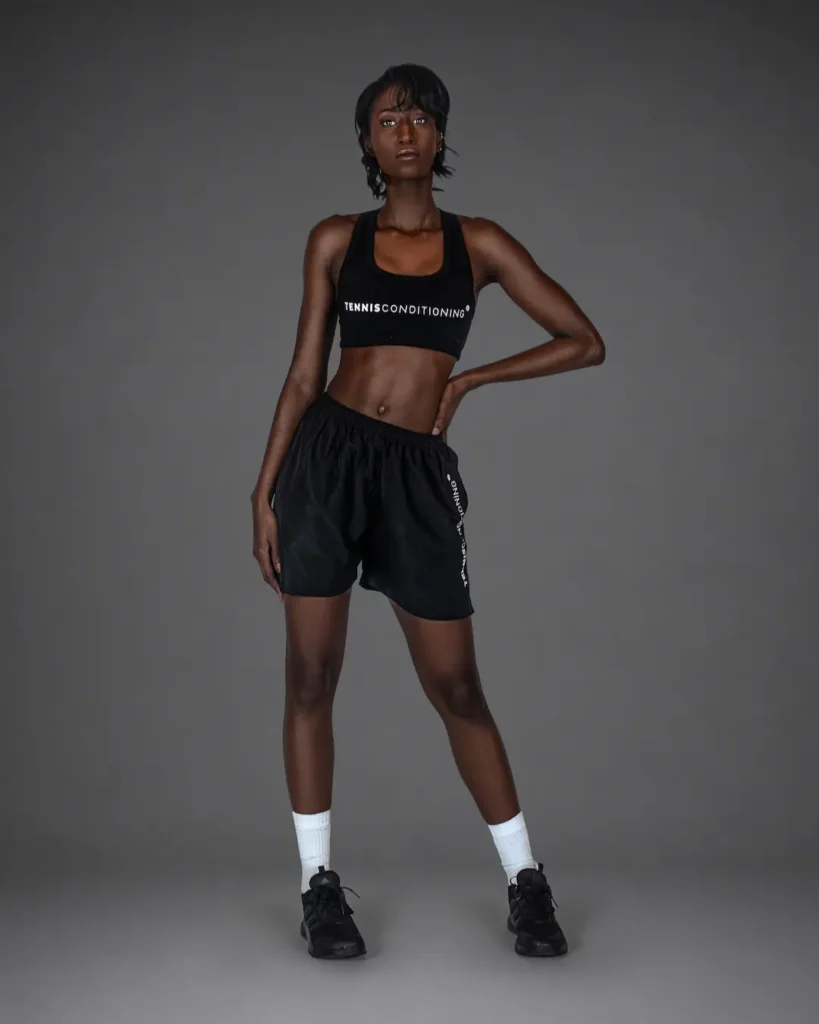
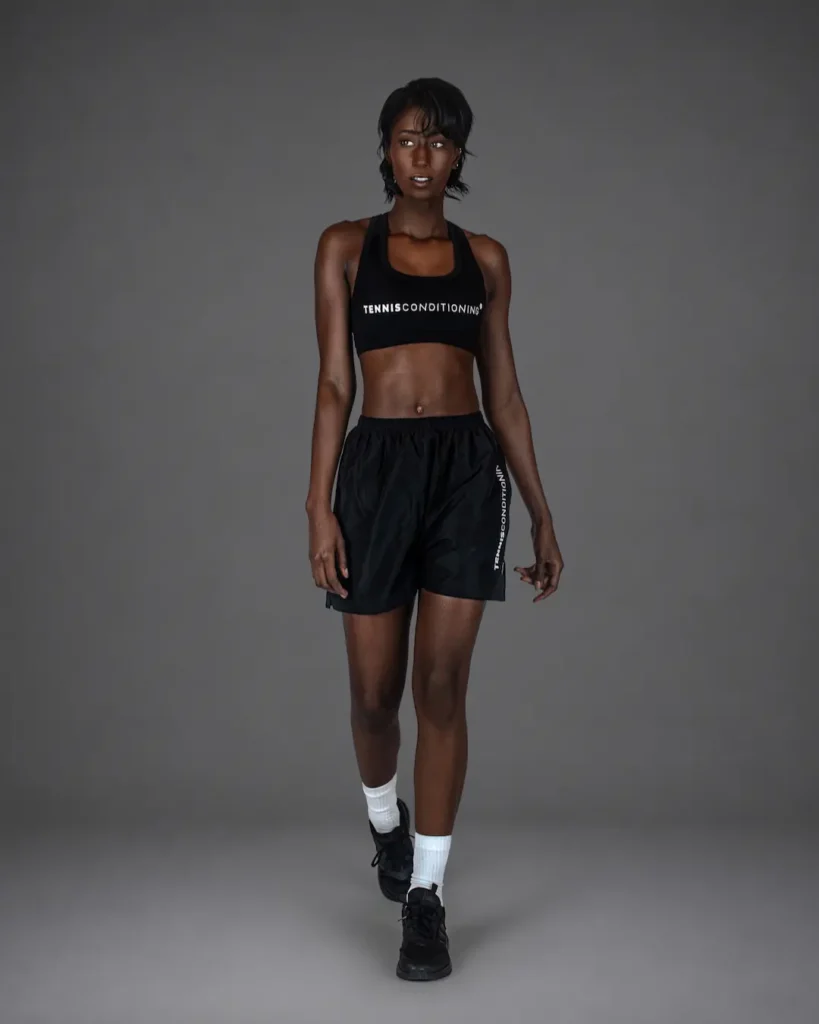
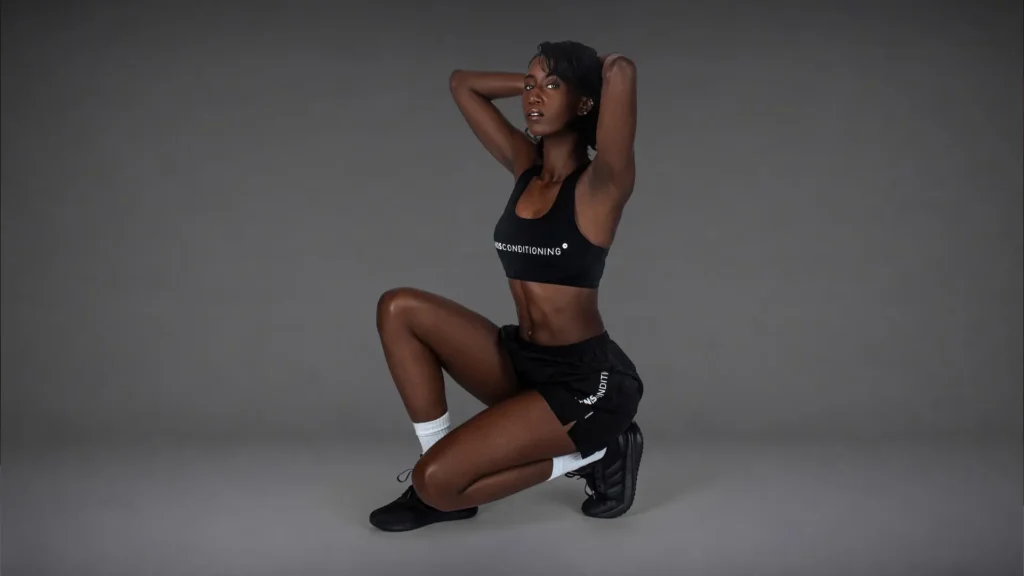
This approach improves creative flexibility because the brand does not have to force one photograph into every placement. It also demonstrates why campaign planning should define orientations and use cases before production. Read How to Plan a Fashion Campaign Shoot for a broader planning framework.
The Outcome: A Stronger Visual Brand Presence
The clearest documented result of the fashion content system transformation was the expansion of StyleConditioning’s visual language. Before the editorial production, the brand could show individual garments and color options. Afterwards, it could also present a recognizable model, complete looks, stronger posture, richer lighting, movement and a more deliberate campaign atmosphere.
The production created several defensible improvements:
Greater visual distinction
The controlled gray environment, stronger lighting, consistent model presence and coordinated styling gave the campaign a more recognizable identity.
Stronger collection storytelling
Products that had previously appeared as separate shop items could now be seen as complete athletic looks.
More composition variety
The combination of vertical and horizontal images created more potential applications than the original shop-first library.
A clearer distinction between content roles
Ecommerce photographs could explain the products, while campaign photographs could build emotion, recognition and perceived positioning.
A repeatable foundation
The project demonstrated how future collections could be planned around product coverage, styled looks, format variation, and campaign use rather than treated only as a list of garments to photograph.
Revenue, conversion rate, advertising return, and sales lift were not available for this project. Therefore, those outcomes should not be attributed to the photography. The case study demonstrates a documented change in content structure and visual positioning, not a verified financial-performance claim.
Benchmark: How a Planned Content Library Can Extend Across Channels
A separate multi-channel beauty production for Your True Shade provides a documented benchmark for how the same planning principle can extend beyond the shoot. That production created campaign heroes, model-and-product images, application photographs, close-ups, product-range visuals, crop-flexible compositions, a behind-the-scenes video and two approximately 15-second promotional videos.
The content supported the website, Facebook, and Instagram and remained visibly reusable for at least nine months. During the available reporting periods, Instagram Insights recorded 38,030 accounts reached. Facebook Insights recorded 37,814 people reached and 1,138 post engagements. The evaluation covered 21 promoted photo posts and two promoted video posts.
| Your True Shade output | Equivalent fashion-brand application |
|---|---|
| Campaign hero images | Collection-launch hero images |
| Model-and-product images | Full-look fashion photographs |
| Application photographs | Garments photographed in movement or use |
| Beauty close-ups | Fabric, logo, and construction details |
| Product-range images | Collection and outfit groupings |
| Crop-flexible compositions | Website, advertising, email, and social crops |
| Short promotional videos | Collection and garment-focused launch videos |
| Behind-the-scenes video | Campaign and production storytelling |
What Fashion Brands Can Learn From This Transformation
Many fashion brands already have photographs. However, having files is not the same as having a system. A useful system connects each asset to a specific stage of the customer journey.
- Discovery: Campaign images help the brand earn attention
- Interest: Styled looks communicate the collection’s identity
- Consideration: Full-length and closer photographs show fit, styling, and details
- Evaluation: Standardized ecommerce views help customers inspect products
- Decision: Consistent visuals strengthen confidence in the product and brand
- Retention: A repeatable visual language makes future collections feel connected
No single photograph can serve all six stages equally well. Therefore, brands should plan complementary content categories rather than search for one universal image style.
For another StyleConditioning example, see How One Fashion Campaign Shoot Could Support a Complete Content Plan. You can also explore Collection Launch Photography for guidance on building a visual system around a new collection.
The Core Lesson
StyleConditioning’s fashion content system transformation was not a move from bad photography to good photography. The original shop photographs remained useful because they served product clarity. The transformation came from adding the missing campaign layer.
With 33 shop images and 31 editorial campaign images, the complete archive could support two distinct visual responsibilities: helping customers understand the garments and helping them understand the brand.
The goal is not to make every product image editorial but to give every image a defined job within a larger content system.
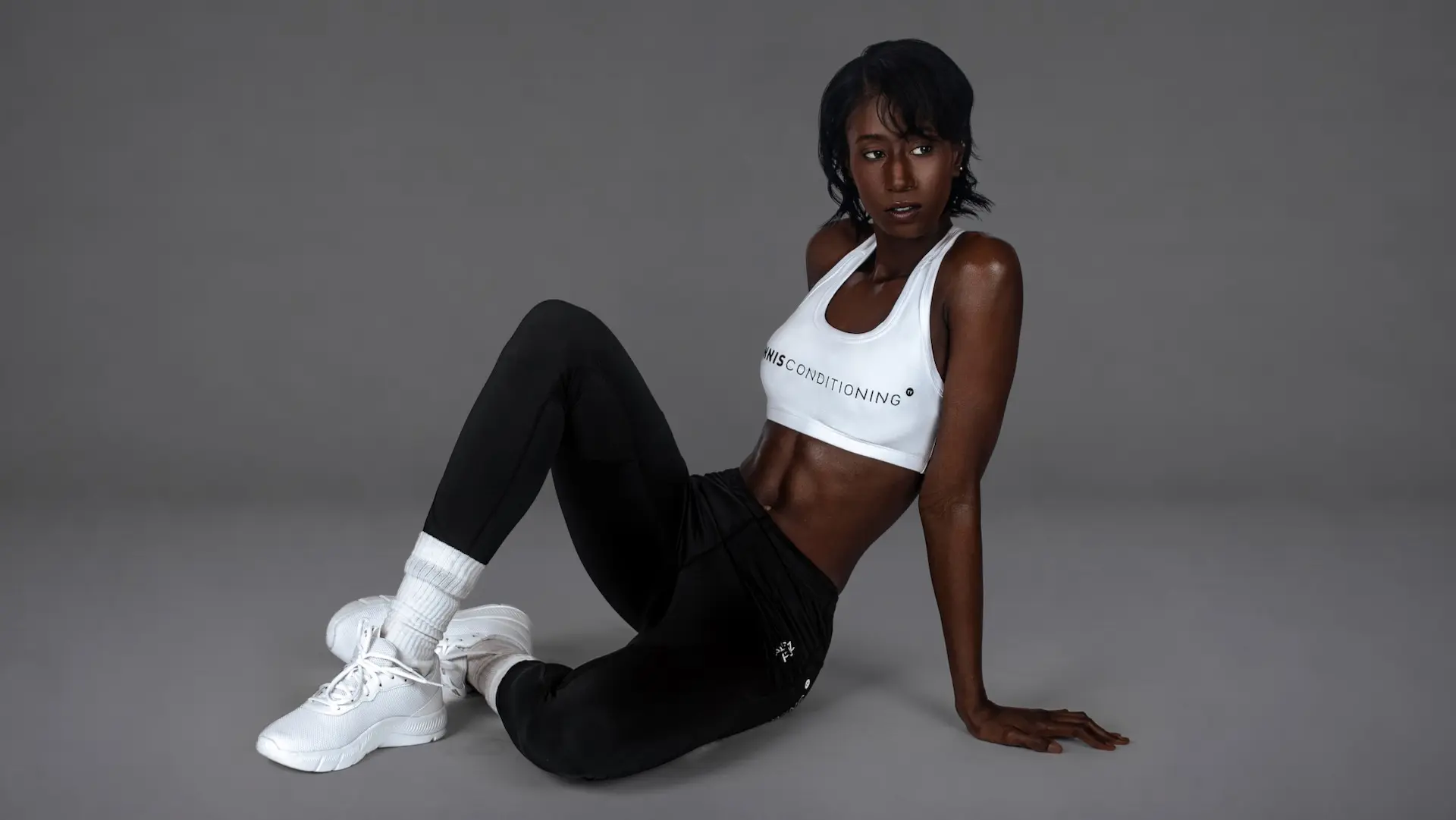
Campaign Credits
- Photographer: Phil Halfmann
- Creative Director: Sophia Lenore
- Wardrobe Stylist: Sophia Lenore
- Hair Stylist: Sophia Lenore
- Makeup Artist: Sophia Lenore
- Model: Gigi
Is One Type of Image Carrying Your Entire Brand?
If your current photography shows the products but does not fully communicate the brand behind them, the issue may not be image quality. It may be an incomplete content system.
A Free Visual Audit examines how your current visuals support launches, ecommerce, paid media, website content, and ongoing publishing. The session identifies content gaps, unnecessary duplication, and opportunities to make future productions more useful across channels.