
🎥 Watch the Companion Video
Prefer video? This companion episode explains the principles behind high-performing fashion campaign photography and how strategic campaign production creates marketing assets that continue delivering value long after the shoot.
What Is Collection Launch Photography?
Collection launch photography is the coordinated creation of visual assets used to introduce and sell a new fashion, beauty or lifestyle collection. Depending on the launch, those assets may include campaign imagery, ecommerce photographs, product details, lookbook sequences, social content, press images, wholesale materials and short-form video.
Although these formats may be produced during the same production, they do not serve the same purpose. Fashion campaign photography builds desire and communicates the collection’s point of view. Ecommerce imagery reduces uncertainty and supports conversion. Meanwhile, lookbook photography explains styling, range and cohesion. PR images must also be easy for editors to publish, while paid-media assets need clear focal points and adaptable crops.
Consequently, the goal is not to force one photograph to perform every job. The goal is to design a family of assets that feels consistent while giving each channel what it needs.
Why Collection Launch Photography Needs a System
Many brands still treat launch photography as a single production date. Yet the shoot is only one step in a larger commercial process. Before the camera comes out, the team must decide what the collection means, which products matter most, where customers will encounter them and how the assets will be used.
Without that structure, predictable gaps appear. A horizontal hero image may look impressive but fail in vertical placements. A dramatic editorial crop may hide an important product feature. Likewise, a collection may have extensive social content but weak product pages. The brand then pays for additional crops, rushed reshoots or inconsistent supplementary content.
By contrast, a content system connects strategy, production and distribution. First, the brand defines the launch priorities. Next, the creative team translates those priorities into a visual hierarchy. Then, the shot list assigns each asset to a channel and format. Finally, performance data informs the next production.
This is the same principle behind a broader fashion brand content strategy: content becomes more valuable when it is planned for repeated, coordinated use rather than created as isolated output.
Start With the Launch Objective, Not the Moodboard

A moodboard is useful, but it cannot replace a business objective. Before discussing sets, poses or lighting, define what the launch must achieve. Is the priority awareness, direct ecommerce revenue, wholesale interest, press coverage, brand repositioning or a combination of these outcomes?
The answer changes the photography plan. For example, a direct-to-consumer launch may require stronger product demonstration, mobile-first crops and paid-ad variations. A wholesale-focused collection may need complete styling stories, clear silhouettes and line-sheet support. Meanwhile, a rebrand may place more weight on distinctive campaign imagery and a recognizable visual language.
Therefore, the brief should identify:
- The primary commercial objective
- The priority products or hero looks
- The target customer and buying context
- The key launch channels
- The campaign timeline
- The required usage rights and duration
- The metrics that will define success
These decisions also make the fashion marketing funnel practical. Rather than producing content for an abstract audience, the team creates specific visuals for discovery, evaluation, purchase and retention.
Build a Channel and Usage Map Before Production
A channel map lists where every asset will appear. A usage map adds how, where and for how long the brand is authorized to use it. Together, they prevent two common mistakes: missing essential formats and assuming that all commercial usage is automatically included.
At minimum, map the launch across the following touchpoints:
- Website homepage and collection landing page
- Product detail pages and ecommerce thumbnails
- Email launch sequence
- Organic social posts, Stories and Reels
- Paid social and display advertising
- Press releases and editorial outreach
- Wholesale presentations and buyer materials
- Retail displays, print collateral or packaging
Next, specify the aspect ratios, resolution, crop safety, file type and delivery date for each placement. In addition, separate owned-channel usage from paid advertising, print, third-party retail and other extended uses. This makes the licensing scope visible before the assets enter circulation.
Usage planning is not administrative friction. Instead, it protects the campaign timeline and aligns the fee with the commercial value of the imagery. It also allows the brand to extend successful assets deliberately rather than discovering restrictions after launch.
Design the Collection Launch Photography Asset Architecture
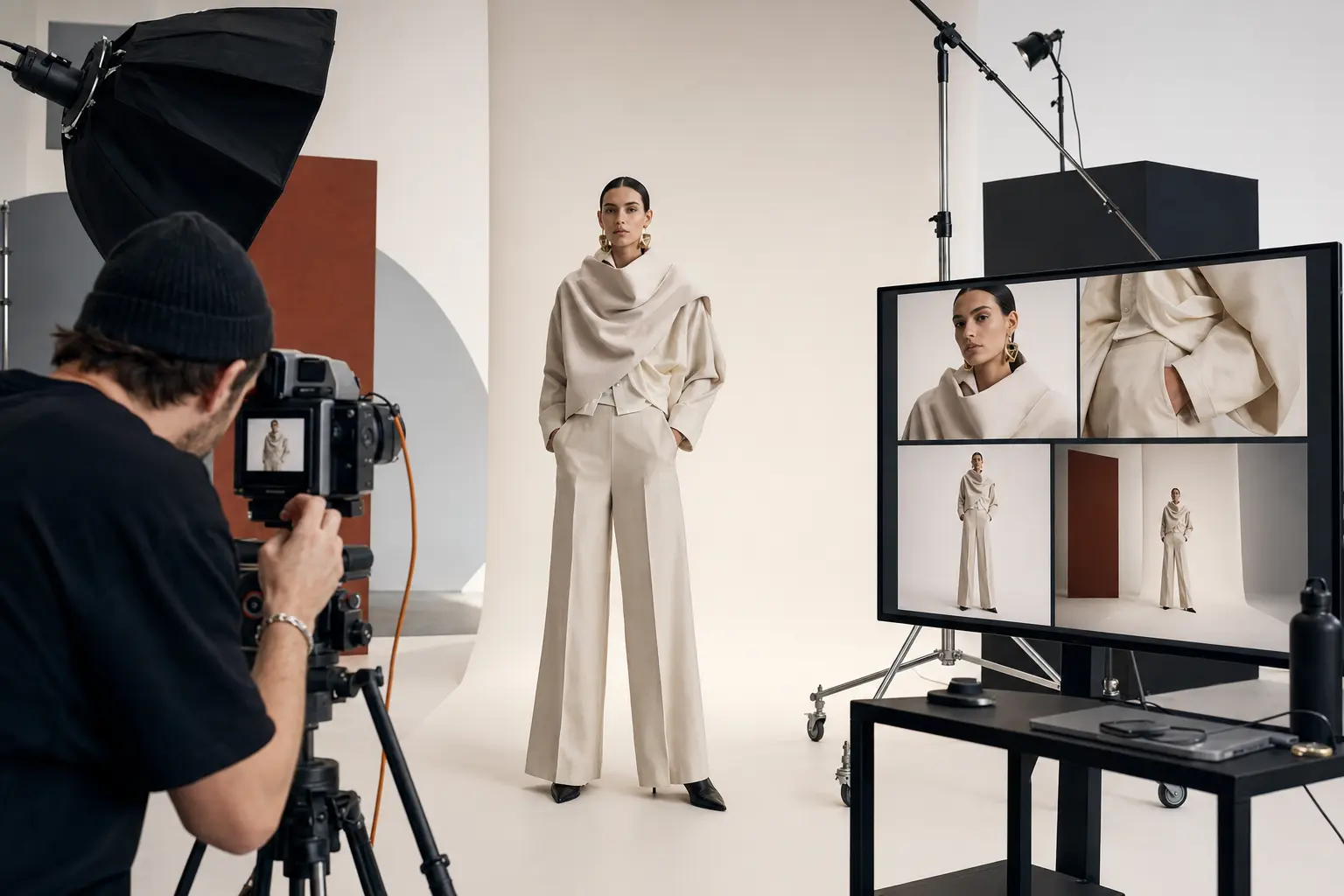
Once the channels are clear, build an asset architecture. This is a structured list of image families, each with a defined function. A useful architecture typically contains five layers.
Take a look at PDP image best practices. Use an art direction checklist to maintain a consistent visual language across your collection launch.
1. Hero campaign images
Hero images establish the emotional world of the collection. They should communicate the central idea quickly and create a recognizable launch identity. Moreover, they need enough compositional flexibility for homepage banners, launch announcements and high-impact media placements.
2. Supporting campaign stories
Supporting images expand the narrative through additional looks, environments, movements and details. Because they add rhythm and range, they are especially valuable for launch sequences, editorials and ongoing social storytelling.
3. Lookbook and styling coverage
Lookbook photography shows how the collection works as a whole. It can demonstrate outfit combinations, proportions and variation without losing the brand’s visual language. Therefore, it often bridges inspiration and practical evaluation.
4. Ecommerce and product-detail assets
These images answer purchase questions. They need accurate color, consistent views, visible fit and meaningful construction details. For a deeper production checklist, use the ecommerce photography checklist. Likewise, the product page image guide explains how image order and coverage can support customer decisions.
5. Modular performance content
Modular assets are designed for adaptation. They may include clean product-led compositions, alternate expressions, detail crops, movement clips and negative-space variations. As a result, marketing teams can test different messages without dismantling the campaign’s visual consistency.
Create a Product and Look Priority Matrix
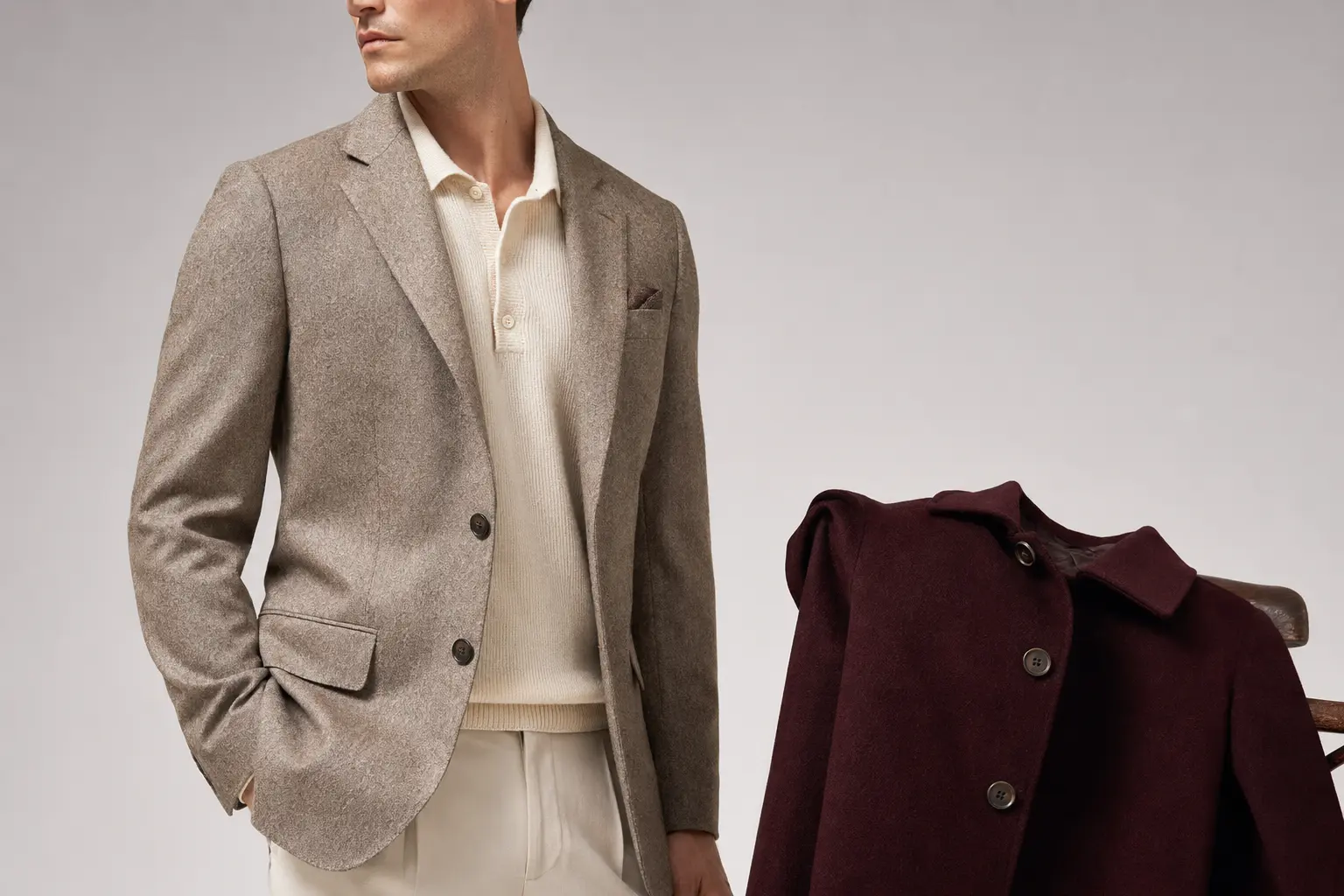
Not every piece in a collection deserves equal production weight. Some products define the brand story. Others are likely revenue drivers, new-category introductions or strong paid-media candidates. Therefore, assign each product or look a priority before the shot list is finalized.
A practical matrix can classify items as:
- Hero: central to the campaign narrative and launch communications
- Commercial priority: expected to drive volume, margin or acquisition
- Supporting: strengthens styling and collection breadth
- Complete coverage: requires ecommerce documentation but limited campaign emphasis
This hierarchy keeps creative ambition connected to inventory and marketing reality. However, it should not be based on aesthetics alone. Stock depth, price point, margin, audience relevance and launch timing should also influence the decision.
In addition, identify dependencies. If one accessory appears throughout the campaign but will not be available at launch, the resulting imagery may create unnecessary demand for an unavailable item. Similarly, if a hero product has limited inventory, placing it at the center of paid acquisition may waste attention. Strong fashion collection photography therefore depends on commercial information that the photography team cannot invent.
Turn Strategy Into a Production-Ready Shot List
A strong shot list is more than a list of garments. Each line should connect a subject, purpose, channel, composition and output. That level of detail allows the photographer, creative director, stylist, producer and marketing team to work from the same priorities.
A production-ready shot list template helps the team track every look, product, composition, crop and marketing placement.
For each required asset, include:
- Product, look or story
- Business priority
- Image function
- Talent and styling requirements
- Location or set
- Orientation and crop-safe area
- Still-image and video variations
- Target channel
- Delivery deadline
- Approval owner
Next, group related assets so the production can move efficiently. For instance, capture the campaign master, vertical variation, clean product-led frame and motion clip before changing the lighting or look. This reduces reset time while preserving consistency.
Nevertheless, efficiency should not turn the production into a mechanical checklist. The best plan creates room for discovery while protecting the non-negotiable deliverables. In other words, secure the assets the launch requires, then use the remaining time for creative exploration.
Plan Collection Launch Photography for Multiple Formats

Modern launches rarely live in one aspect ratio. A homepage banner, Instagram Story, product card and paid-social placement all frame the subject differently. Simply cropping one master image after the shoot can remove the product, weaken the composition or place interface elements over a face.
Therefore, capture format flexibility deliberately. Leave negative space where copy or interface elements may appear. Shoot selected compositions in both horizontal and vertical orientations. In addition, vary subject scale so the same visual idea can work as a wide banner, medium social frame and close product-led ad.
The fashion ecommerce images guide shows why consistency and coverage matter at product-page level. The same logic applies across the wider launch: every crop should preserve the intended focal point and make the product easy to understand.
However, “more formats” should not become uncontrolled volume. Each variation needs a defined placement. Otherwise, the brand creates a large archive that is expensive to edit but difficult to use.
Connect Creative Direction to Brand Recognition
A collection launch should feel new, but it should still feel like the brand. If every campaign uses an unrelated lighting style, palette and visual tone, the audience must relearn the brand each season. Novelty may attract short-term attention; however, consistency builds recognition.
Define which elements can change and which should remain stable. The collection concept, location and styling may evolve. Meanwhile, the brand may retain a recognizable approach to color, casting, composition, movement or post-production. This creates a system that is distinct without becoming repetitive.
The creative brief should translate strategy into specific visual choices. Rather than requesting something “bold” or “luxurious,” explain how the image should make the customer perceive the product. Should the garments feel precise, tactile, rebellious, effortless or technologically advanced? Then connect those traits to casting, pose, lens choice, lighting, set and retouching.
This translation is where experienced fashion campaign photography creates value. The objective is not decoration. It is to turn positioning into visual evidence.
Align Paid Media, Ecommerce, PR and Organic Content

Each channel has different requirements, but the launch should still look unified. The solution is a shared visual concept with channel-specific execution.
Paid media needs immediate clarity, testable variations and enough volume to manage creative fatigue. Ecommerce needs consistency, detail and confidence. PR needs images that communicate a story and remain easy to publish. Organic channels, meanwhile, benefit from sequence, personality and behind-the-scenes context.
Because these needs differ, the production should capture both brand-building and conversion-oriented material. A visually ambitious campaign alone may not answer product questions. Conversely, a library of clean product images may sell individual items but fail to establish a memorable collection identity.
The stronger approach combines both. Hero imagery generates attention; supporting stories deepen interest; product assets reduce doubt; and modular variations sustain the campaign. This is also why product launch photography should be integrated with the media plan before launch, not handed to the advertising team afterward.
Set a Realistic Collection Launch Timeline
A launch timeline must account for more than the shoot date. It should include strategy, creative development, samples, casting, pre-production, production, selects, retouching, approvals, delivery and channel implementation.
A practical sequence may look like this:
- Six to eight weeks before launch: confirm objectives, priority products, channels, budget and usage.
- Four to six weeks before launch: approve the concept, team, talent, location, styling and asset map.
- Three to four weeks before launch: finalize samples, shot list, production schedule and technical specifications.
- Two to three weeks before launch: produce the campaign and begin select approvals.
- One to two weeks before launch: complete retouching, exports, copy integration and channel setup.
- Launch week: deploy the coordinated campaign and monitor early performance.
- After launch: refresh assets, extend strong creative and document learnings.
Of course, larger productions may require more time. International logistics, complex sets, celebrity talent or extensive video can extend the schedule significantly. Therefore, the timeline should reflect actual dependencies rather than an idealized launch date.
A broader fashion campaign calendar can help connect this production to the brand’s seasonal marketing rhythm.
Define Approvals Before the Shoot
Approval delays can damage a launch even when production runs perfectly. Too many reviewers create contradictory feedback, while unclear authority leads to repeated revisions. Therefore, define who approves the concept, on-set direction, selects, retouching and final delivery before production begins.
Ideally, one accountable decision-maker consolidates feedback. In addition, the team should agree on review criteria. Does the image represent the product accurately? Does it support the intended channel? Is it consistent with the campaign concept? Is the retouching aligned with the brand standard? These questions produce more useful feedback than personal preferences alone.
On-set approvals are particularly valuable for hero looks, complex products and high-cost setups. They allow the team to correct styling, fit, lighting or composition while the necessary people and resources are still available.
Measure the Performance of Collection Launch Photography
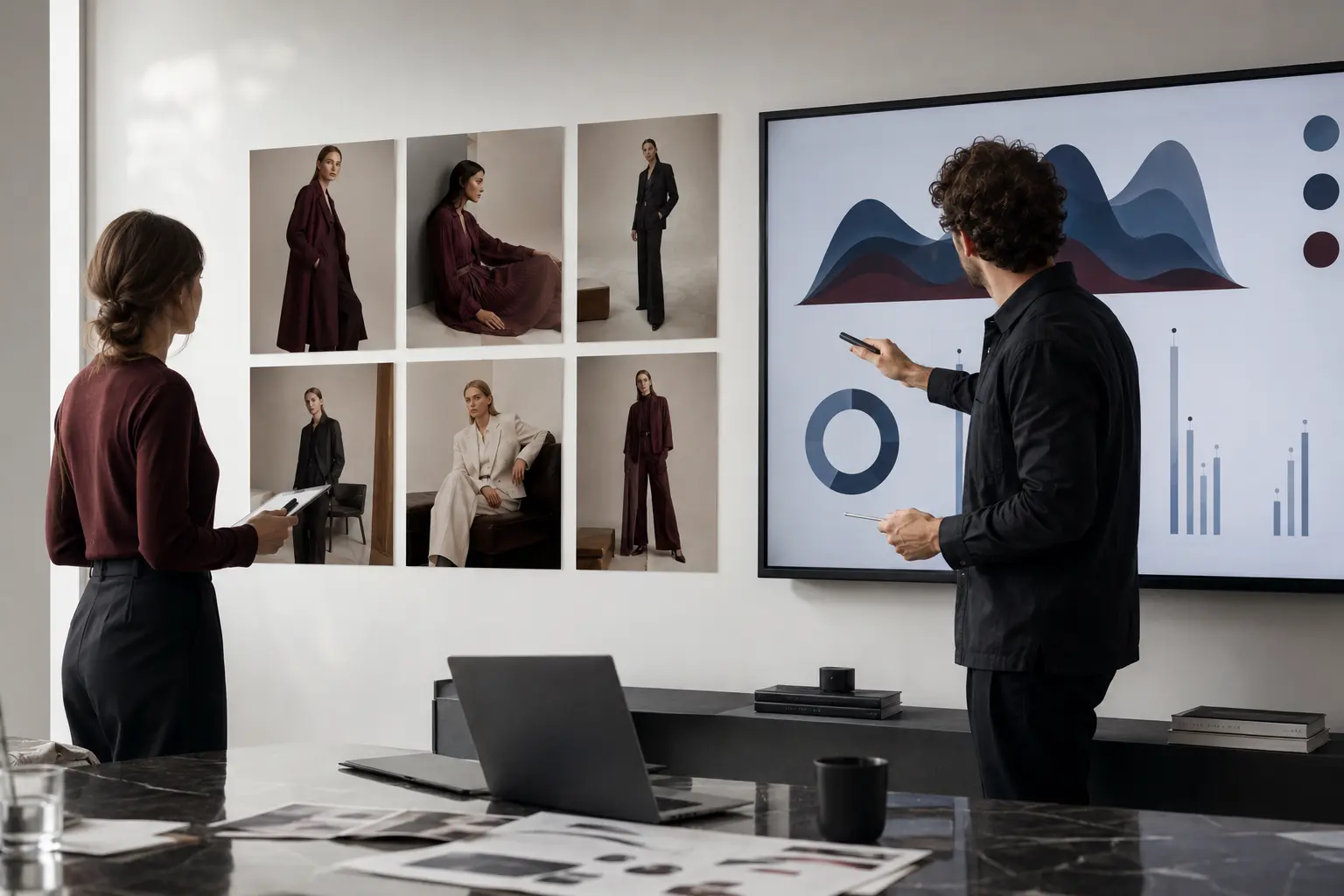
Photography performance cannot be reduced to likes. Different assets have different jobs, so they require different measures. Awareness imagery may be evaluated through reach, attention or press pickup. Paid assets may be assessed through click-through rate, acquisition cost and creative fatigue. Product images can influence product-page engagement, add-to-cart rate and conversion.
Start by connecting each asset family to a small number of relevant metrics. Then, compare like with like. A campaign image and an ecommerce detail shot should not be judged by the same standard. Moreover, performance is shaped by offer, targeting, copy, pricing, site experience and media spend. Photography is influential, but it does not operate in isolation.
The fashion marketing KPIs guide provides a wider measurement framework. Use it to distinguish signals that inform creative decisions from vanity metrics that merely describe activity.
After the launch, document which products, compositions, crops, messages and channels performed best. Those findings should shape the next brief. Consequently, each production becomes part of a learning system rather than a disconnected creative event.
Common Collection Launch Photography Mistakes
Planning only for the hero image
A strong hero is valuable, but it cannot carry the entire customer journey. Build supporting, product and performance assets around it.
Creating the shot list before the channel map
If the team does not know where the images will appear, it cannot define the right orientation, crop, detail or volume.
Treating every product equally
Equal coverage can waste production time. Prioritize according to story, revenue potential, inventory and customer relevance.
Adding paid-media variations after production
Retrofitted crops often weaken the creative. Instead, capture adaptable compositions and testable variations intentionally.
Ignoring licensing until launch
Unclear usage can delay deployment or create unplanned costs. Define media, territory and duration during pre-production.
Measuring all imagery by engagement
Engagement is only one signal. Evaluate each asset according to the job it was designed to perform.
A Practical Collection Launch Photography Checklist
- Define one primary launch objective.
- Identify hero products and commercial priorities.
- Map the customer journey and launch channels.
- Specify formats, crops and technical requirements.
- Confirm usage rights, territory and duration.
- Build campaign, lookbook, ecommerce and modular asset families.
- Connect every shot to a purpose and placement.
- Plan stills and motion together where practical.
- Assign approval authority and review criteria.
- Allow enough time for retouching and implementation.
- Define performance metrics before launch.
- Record post-launch insights for the next campaign.
Build a Launch Asset, Not a One-Day Shoot
The most valuable collection launch photography does not end when the final image is delivered. It continues to work across discovery, ecommerce, advertising, PR, wholesale and retention. Therefore, its value depends on how intelligently the system was planned, not simply how many images were created.
Start with commercial priorities. Map each channel. Define the visual hierarchy. Then produce a coherent family of assets with clear usage and measurable roles. This approach reduces content gaps, strengthens brand recognition and gives marketing teams more useful material throughout the launch cycle.
If your next fashion or beauty collection needs a more strategic visual system, book a Free Visual Audit. It is a working session designed to identify content gaps, channel requirements and opportunities to make each production work harder across the campaign.
Frequently Asked Questions
How far in advance should collection launch photography be planned?
For a focused production, begin at least six to eight weeks before launch. More complex campaigns may need several months, especially when they involve custom sets, international locations, extensive casting or integrated video.
What images does a fashion collection launch need?
Most launches need hero campaign images, supporting editorial content, lookbook or styling coverage, ecommerce views, product details, vertical and horizontal variations, PR-ready files and modular content for paid and organic media. However, the exact mix should follow the launch channels and customer journey.
Can campaign and ecommerce photography be produced together?
Yes, if the workflow, lighting, styling and schedule are designed for both. Nevertheless, the two image families serve different purposes, so each needs its own standards and dedicated production time.
How many final images should a collection launch include?
There is no universally correct number. The right quantity depends on the collection size, channel plan, campaign duration and testing needs. Coverage matters more than volume: every final asset should have a defined role.
Why should usage rights be discussed before production?
Usage rights affect where, how long and at what scale the images can create commercial value. Defining them early prevents launch delays and keeps the production fee aligned with the intended campaign scope.