
Prestige Artists needed more than occasional new photographs. The agency needed a content system strategy that could present its represented makeup artists, hair stylists and wardrobe stylists consistently across its website, Instagram profile and Facebook page. Through strategic planning and new artist portfolio photography, Phil Halfmann
helped build a clearer visual foundation for how the agency introduced its talent to prospective production clients.
Case Study Overview
Client: Prestige Artists
Industry: Creative talent representation and production services
Represented talent: Makeup artists, hair stylists and wardrobe stylists
Channels: Agency website, Instagram and Facebook
Phil Halfmann’s role: Strategic planning and photography for new artist portfolios
Primary objective: Produce portfolio imagery for the participating creative team while building a coordinated visual resource for the Prestige Artists
website, Instagram profile and Facebook page.
Production value: One coordinated photoshoot created portfolio material for the participating makeup, hair, wardrobe, nail and photography
professionals, while also supplying agency-level marketing content.
About Prestige Artists
Prestige Artists was a creative representation agency connecting makeup artists, hair stylists and wardrobe stylists with clients planning photoshoots and live events. Its value depended on more than maintaining a roster of talented professionals. The agency also had to communicate each artist’s abilities quickly and convincingly to prospective production clients.
Its website served as a central point of reference, while Instagram and Facebook helped the agency maintain visibility and share its artists’ work. Therefore, photography was not simply promotional decoration. It was part of the evidence clients used when deciding whether an artist was suitable for a production.
However, representing several creative disciplines created a structural challenge. Every artist had an individual style, level of experience and body of work. At the same time, Prestige Artists needed to present that variety through one recognizable agency identity.
The Challenge: Strong Talent Without a Unified Visual System
The underlying problem was not a lack of talent. Instead, Prestige Artists needed a more deliberate method for developing and presenting its artists’ portfolios. Without a shared
content system strategy, portfolio updates could become isolated projects rather than coordinated investments in the agency’s long-term visual presence.
This mattered because a creative talent agency serves two audiences simultaneously. First, it must support the careers of the artists it represents. Second, it must make the selection process easier for photographers, producers, brands and event clients. In both cases, inconsistent or outdated portfolio material can create uncertainty.
The visual strategy therefore needed to address several connected requirements:
- Show the quality and range of each represented artist’s work
- Create portfolio material suitable for the agency website
- Supply strong images for Instagram and Facebook
- Help prospective clients evaluate talent more efficiently
- Maintain enough consistency to support the Prestige Artists identity
- Allow individual artists to retain a distinctive creative voice
The challenge was not to make every portfolio look identical. It was to introduce enough structure that the agency’s content felt intentional, current and professionally connected.
The Strategic Shift: From Individual Shoots to a Content System Strategy
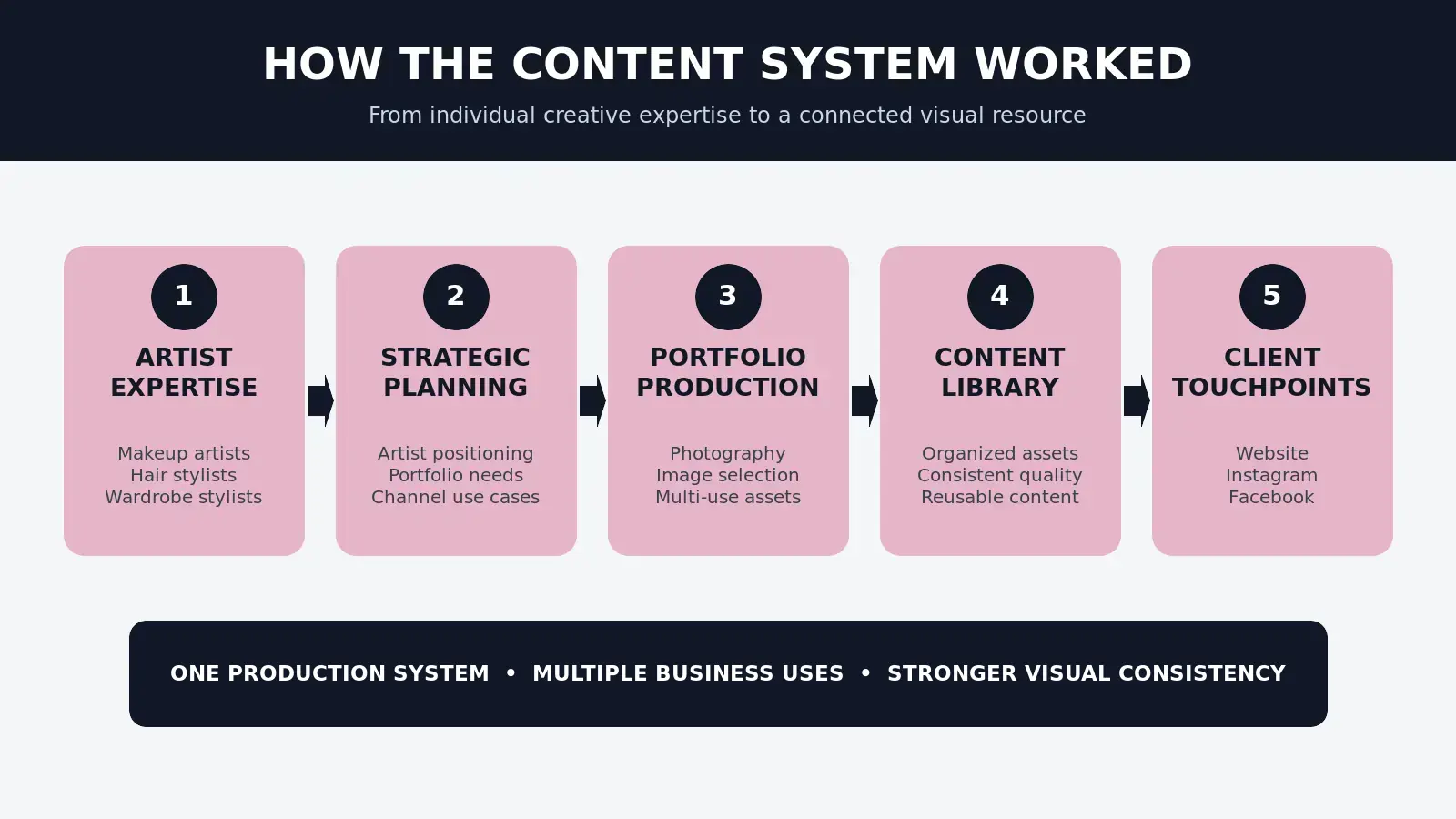
The strategic shift began by treating portfolio photography as part of a connected business system. Instead of viewing each photoshoot only as an opportunity to produce attractive images, planning started with a more useful question: What must these photographs communicate and where must they work?
That question connected production with representation. Each portfolio needed to demonstrate the artist’s expertise, but the resulting photographs also needed to function across the Prestige Artists website and its social channels.
This approach reflects the wider difference between creating content and building a content system.
Individual images can fill a publishing gap. In contrast, a visual content system creates an organized body of material with a defined role in the client journey.
For Prestige Artists, the photography became part of the agency’s representation infrastructure. It helped connect artist development, client presentation and channel publishing instead of treating them as unrelated activities.
Strategic Planning Around Artist Positioning
Before producing new work, the planning process had to account for the type of artist being represented. A makeup artist, hair stylist and wardrobe stylist may contribute to the same photograph, but prospective clients assess different details when reviewing their portfolios.
Makeup Artist Portfolios
Makeup portfolio images needed to make complexion work, color decisions, finish, precision and overall creative direction visible. Beauty details were especially important because a wide composition alone could conceal the technical qualities a client needed to evaluate.
Hair Stylist Portfolios
Hair-focused images needed to reveal shape, texture, control, movement and finish. Therefore, lighting, posing and camera angle had to support the hair work rather than allowing it to become secondary to the complete fashion image.
Wardrobe Stylist Portfolios
Wardrobe styling required enough visual context to show silhouette, proportion, coordination and narrative. The photographs needed to demonstrate how styling decisions supported the complete concept rather than presenting clothing as an isolated element.
Consequently, the planning process connected each artist’s discipline with the visual evidence production clients would need. This is also why a defined photography shot list is valuable: it turns creative objectives into specific frames, details and formats before production begins.
Photography Designed to Demonstrate Professional Capability
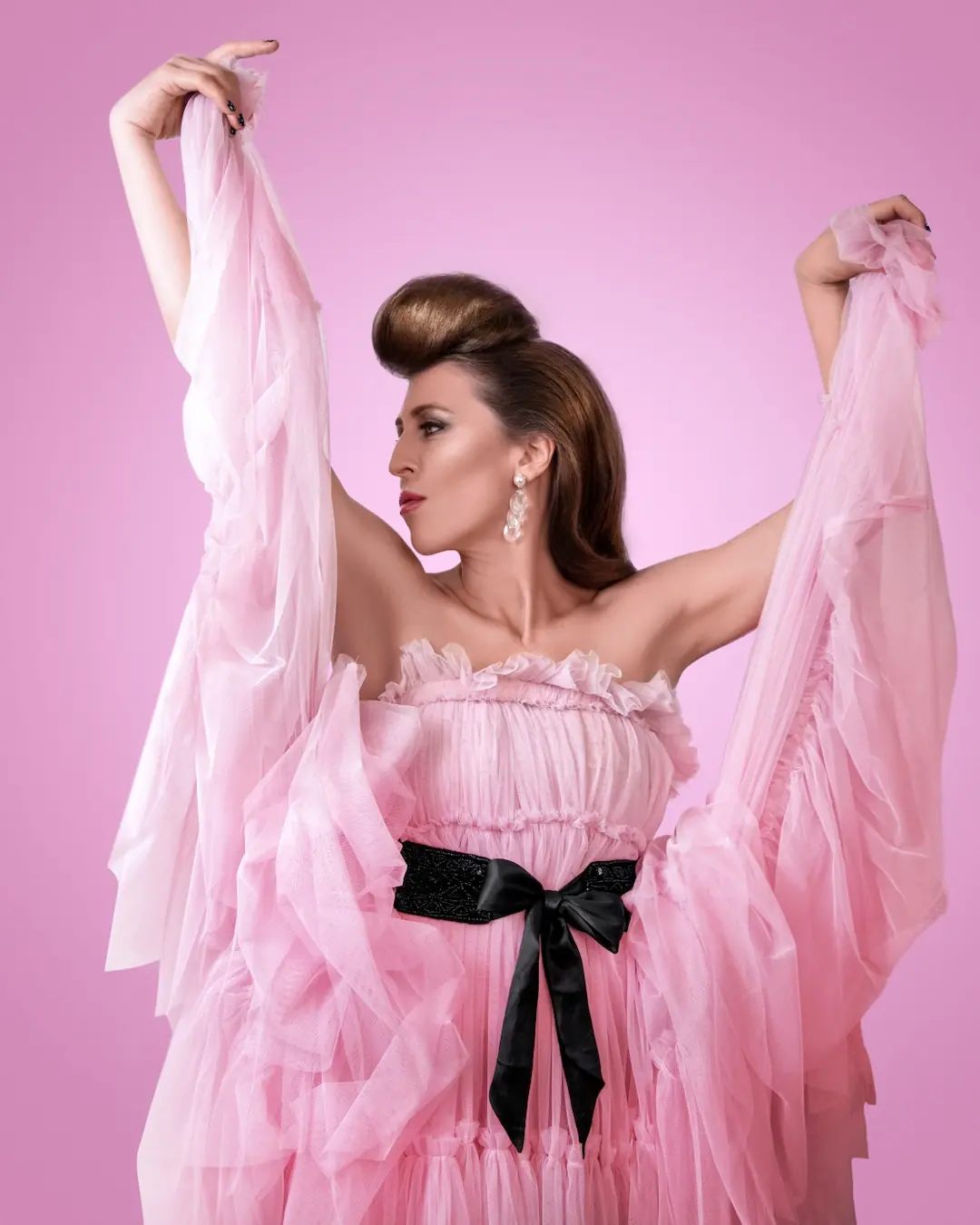
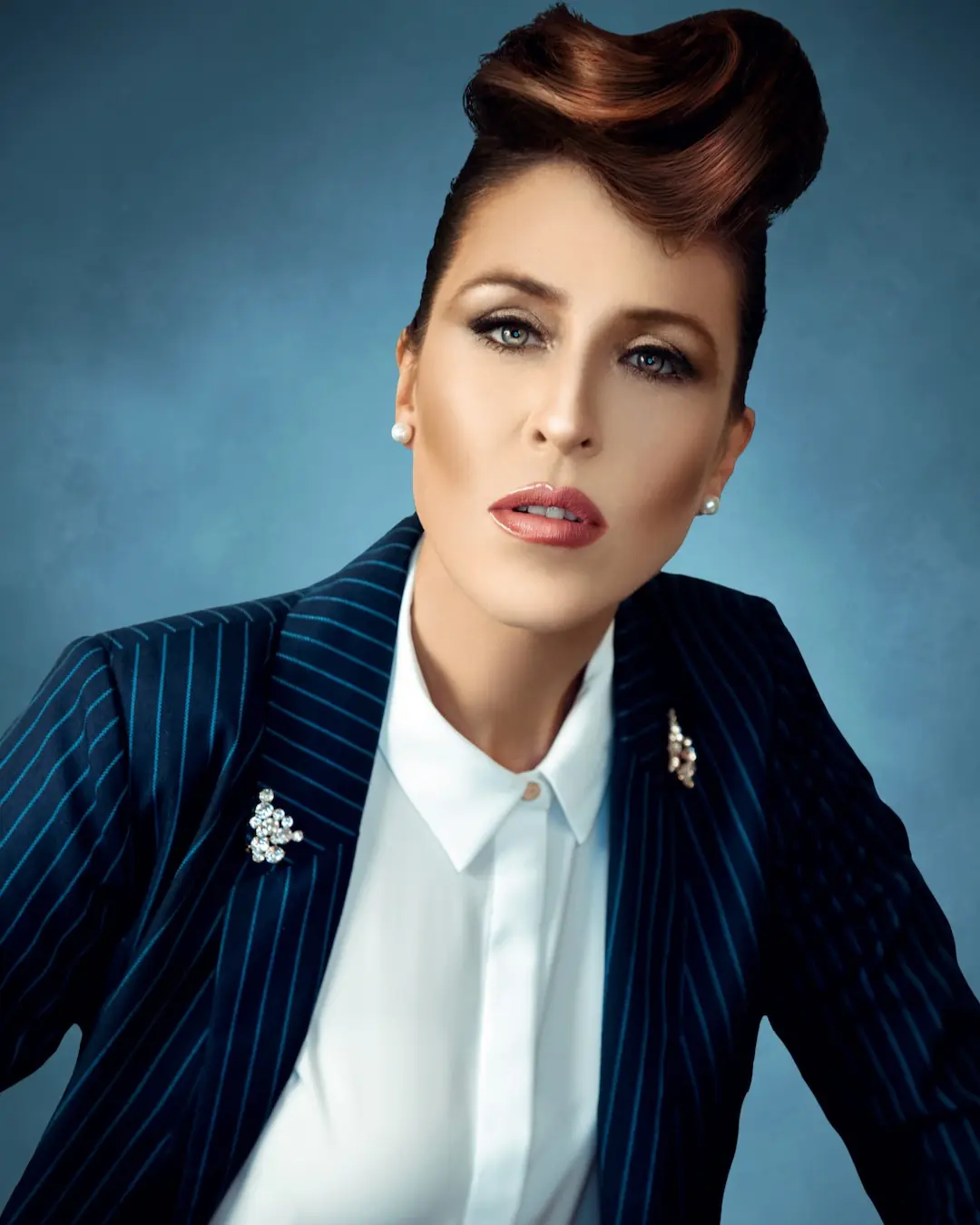
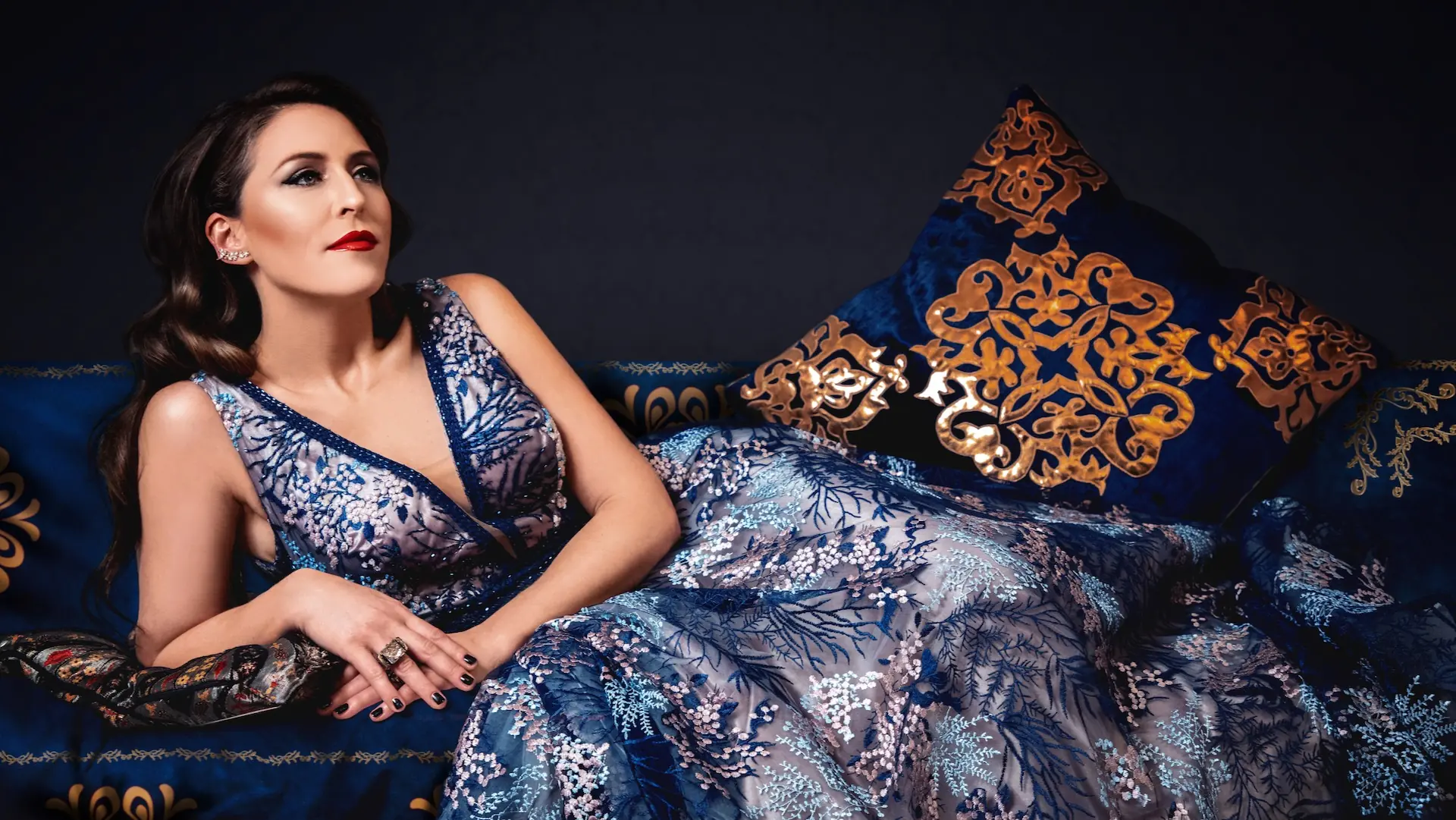
Phil Halfmann photographed new portfolio work for the represented artists. The objective was not simply to create attractive editorial images. Each production also needed to generate credible evidence of what the participating artists could contribute to future photoshoots, campaigns or live-event assignments.
Importantly, the production was structured to create portfolio images for the participating production crew. The same finished photographs documented the
contributions of the makeup artists, hair stylists, wardrobe team, nail technician, photographer and supporting creatives. Therefore, one coordinated photoshoot served
several individual portfolios while also creating visual content for Prestige Artists.
This required balancing several priorities. The finished image needed to feel visually complete, while the contribution of the relevant makeup artist, hair stylist or wardrobe stylist still had to remain identifiable. Moreover, the photography needed enough polish to strengthen both the individual portfolio and the agency’s wider presentation.
As a result, the portfolio production served multiple purposes:
- Creating portfolio images for the participating production crew
- Demonstrating the creative and technical abilities of multiple disciplines
- Showing how hair, makeup, nails, wardrobe and photography worked together
- Refreshing portfolio material used during client consideration
- Providing website content for Prestige Artists and its represented talent
- Creating publishable imagery for Instagram and Facebook
- Supporting the perceived professionalism of the agency roster
Because these uses were considered together, the images could contribute to a broader content system strategy rather than disappearing into disconnected galleries.
Connecting the Content System Strategy Across Channels
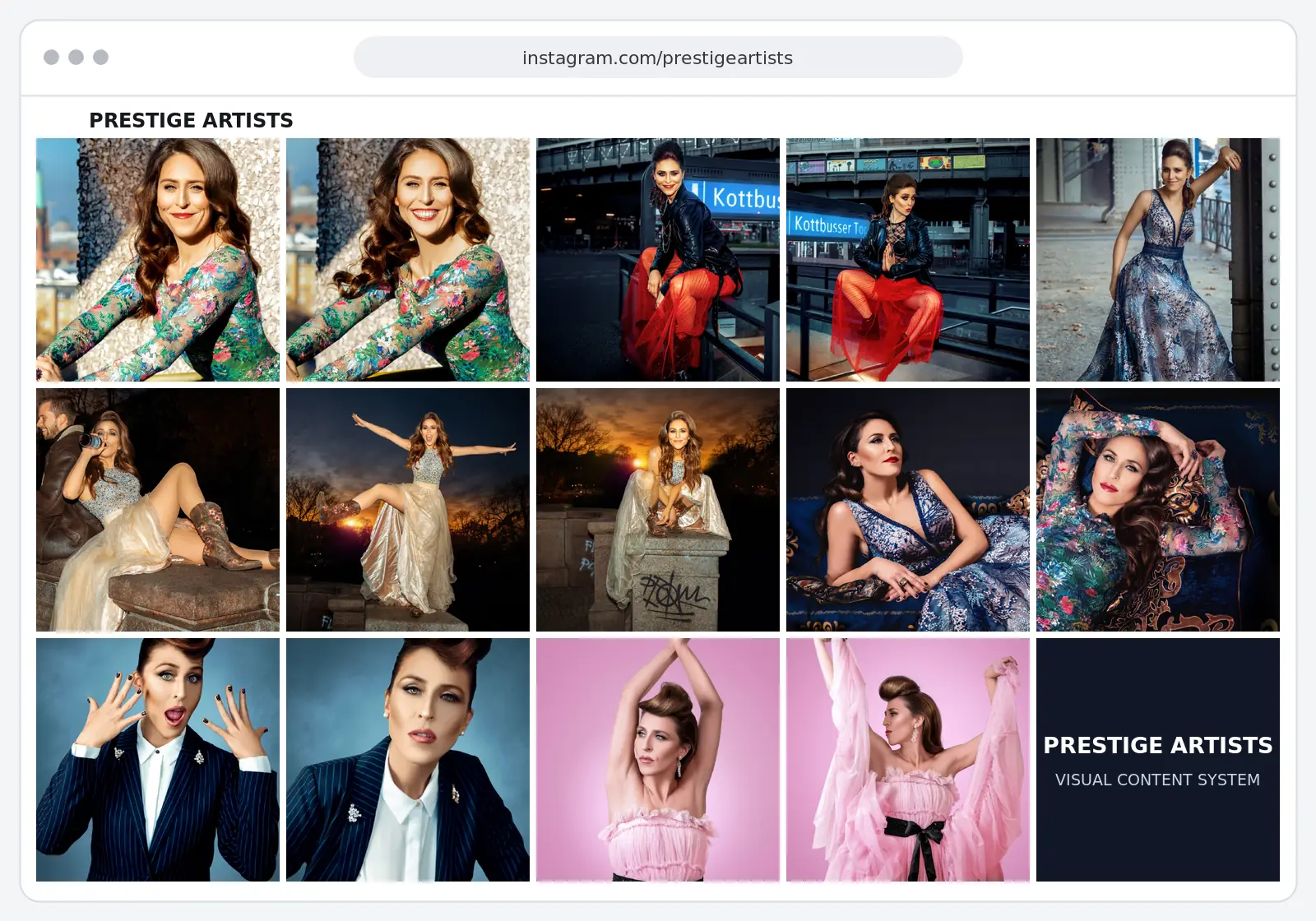
Prestige Artists maintained a website, an Instagram profile and a Facebook page. Although the same photographs could appear across these touchpoints, each channel served a different role.
The website provided a more permanent destination where production clients could review the agency and its represented artists. Instagram offered a visually immediate way to feature recent work, individual talent and creative range. Meanwhile, Facebook provided another channel for visibility, updates and professional discovery.
The strategic value came from connecting these platforms rather than treating each one as a separate demand for content. New portfolio productions could contribute to a shared image library, from which suitable photographs could be selected for artist pages, agency communications and
social publishing.
This principle is central to an end-to-end content system. Production becomes more useful when asset requirements, distribution and long-term access are
considered before the final photographs are delivered.
Before and After: The Operational Change
| Before the strategic shift | After the strategic shift |
|---|---|
| Portfolio photography approached primarily as individual projects | Portfolio production connected to the agency’s wider representation needs |
| Artist imagery considered separately from channel requirements | Website and social uses considered as part of planning |
| Visual material dependent on each artist’s existing body of work | New photography created to strengthen and update artist portfolios |
| Limited connection between artist development and agency marketing | Portfolio development became a source of agency content |
| Individuality and consistency treated as competing priorities | A shared production standard supported distinct artist identities |
The Outcome: A Stronger Visual Foundation for Representation
The production created portfolio images for the participating production crew while giving Prestige Artists a coordinated body of work for its website, Instagram profile
and Facebook page. As a result, the value of the photoshoot extended beyond one campaign, one artist or one publishing moment.
Makeup artists could use the photographs to demonstrate complexion work, finish and color decisions. Hair stylists gained images showing shape, texture and control.
Meanwhile, the wardrobe team could present silhouette, proportion and styling narrative, while the nail technician received visible evidence of the finishing
details contributed to the production.
The photography itself also became part of Phil Halfmann’s portfolio. More importantly, the completed images showed prospective clients how several creative
disciplines worked together to produce one coherent editorial result.
At the agency level, Prestige Artists gained relevant content for artist representation, its website and social publishing. Therefore, one coordinated
production created value at two levels: individual portfolio development and agency-level visual communication.
No single production can permanently solve every future content need. However, the strategic planning and portfolio photography established a stronger foundation: one in which new work could be developed with its purpose, audience and distribution already in view.
Production Credits
The portfolio photography featured in this case study was created through a collaborative fashion and beauty production.
- Photographer: Phil Halfmann
- Creative and Art Director: Sophia Lenore
- Lead Wardrobe Stylist: Sophia Lenore
- First Wardrobe Stylist Assistant: Yui Iida
- Second Wardrobe Stylist Assistant: Zoe Steinberger
- Hair and Makeup Supervisor: Sophia Lenore
- Hair and Makeup: Mirja Mueller, Patti Lu and Alesya Mincheva
- Nail Technician: Sasha NoirNoir
- Photography Assistants: David Fernandez, Umair Qazi and Anastasija Golumbovska
The Strategic Lesson: A Portfolio Is Part of the Business System
For a creative talent agency, a portfolio is more than a gallery. It is a decision-making tool. Prospective clients use it to judge quality, relevance, specialization and fit. Therefore, its
development should not be separated from the agency’s brand strategy or client-acquisition process.
The Prestige Artists case demonstrates that a content system strategy does not require every image to look the same. Instead, it creates a repeatable structure for deciding
what should be produced, what each image must communicate and where that content will be used.
When portfolio planning, photography and distribution work together, visual content becomes more than a publishing requirement. It becomes an asset that supports representation, strengthens positioning and helps clients make better-informed production decisions.
One coordinated production created portfolio value for every participating discipline while giving the agency a connected body of content for representation,
its website and social channels.
Does Your Visual Content Work as a System?
If your website, social channels and campaign materials feel disconnected, the problem may not be a shortage of images. It may be the absence of a clear system connecting strategy, production and distribution.
A Free Visual Audit examines how your current photography works across customer touchpoints, where important content gaps exist and whether future productions are being planned for reuse.