
A content system for brands is not a content calendar, a batch of assets, or a single campaign. It’s a structured way of producing, using, and evolving content over time — so output stays consistent, performance improves, and creative decisions become easier instead of harder.
In contrast to one-off shoots, a content system is designed to scale. It prioritizes repeatability, alignment, and long-term efficiency. As a result, brands stop rebuilding from scratch and start compounding value from what they create.
What Will You Learn About Content System For Brands?
- What is a content system?
- Why brands need a content system?
- What is the difference between a content system and a content calendar?
- What does a content system actually include?
- Why should campaigns drive content system?
- How does photography fit into a content system?
- How do content systems improve content ROI?
- Content system example for a fashion brand
What Is A Content System?
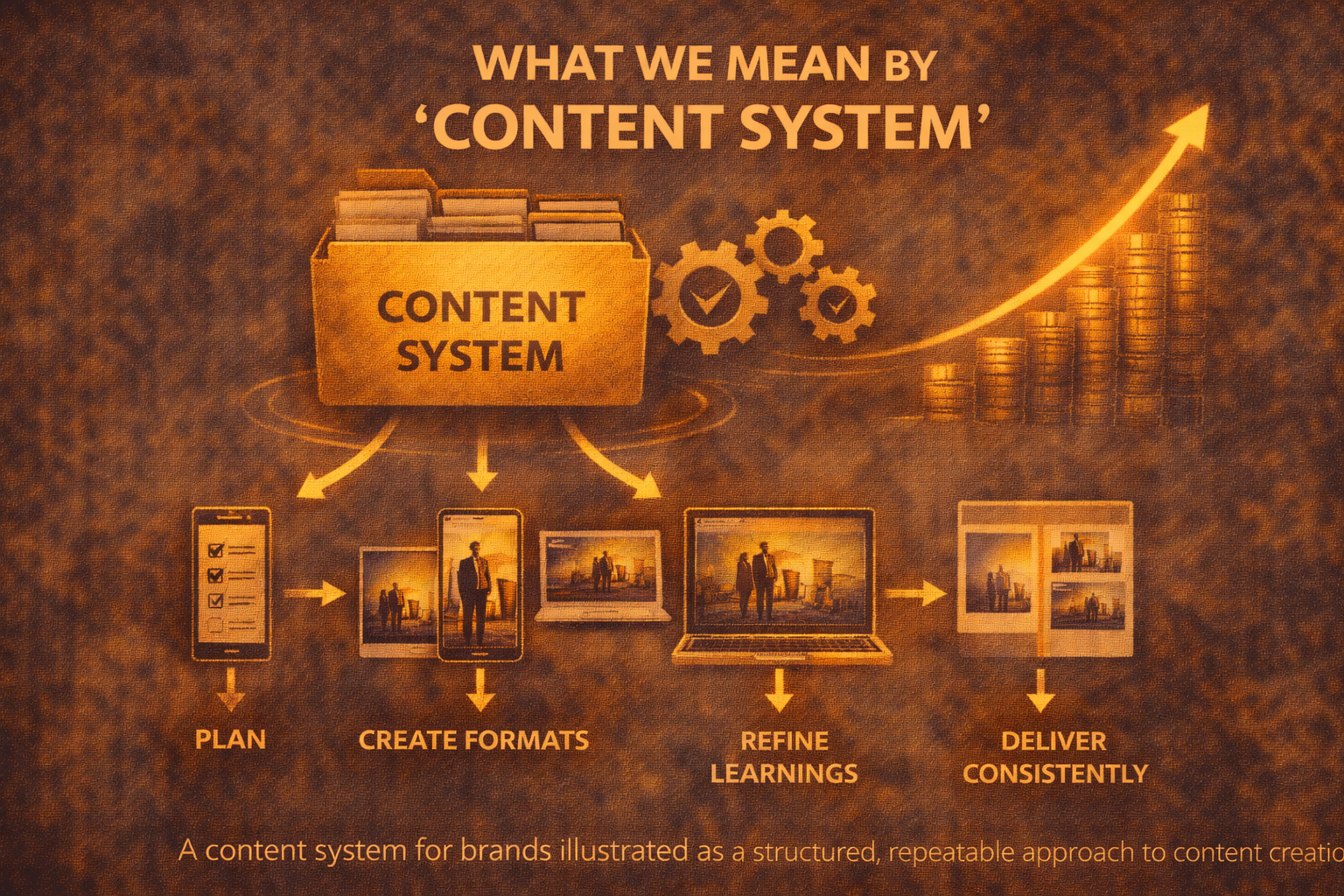
A content system is a structured framework that helps brands plan, create, organize, distribute, and manage marketing content consistently over time. Many people think a content system is simply a content calendar.
In reality, a content calendar is only one component of a much larger system.
A true content system connects:
- content strategy
- campaign planning
- content production
- asset management
- distribution
- performance measurement
The purpose of a content system is not simply to create more content. Its purpose is to ensure content supports business objectives while making marketing efforts more scalable, efficient, and consistent.
For growing brands, a strong content system becomes the foundation for sustainable marketing growth.
Structured Content Creation
At its core, a content system provides structure. Instead of creating content reactively whenever something needs to be posted, brands develop a repeatable process for content creation.
This includes:
- Campaign Planning
- Production Scheduling
- Content Creation
- Asset Development
- Approval Processes
- Publishing Workflows
Structured content creation reduces chaos and helps teams work more efficiently.
Rather than constantly asking: “What should we create next?” brands operate from a clear framework that aligns content with marketing objectives. This creates greater consistency and improves long-term content quality.
Content Planning
Content planning is one of the most important elements of a content system. Effective brands do not create content randomly. They create content with a purpose. Content planning helps determine:
- What Content Is Needed
- Why It Is Needed
- When It Will Be Used
- Which Channels It Supports
- How It Supports Campaigns
Examples may include:
- Product Launches
- Seasonal Campaigns
- Brand Awareness Initiatives
- Customer Acquisition Campaigns
- Website Updates
- Advertising Campaigns
Planning content in advance allows brands to create assets more strategically and avoid last-minute production decisions.
Asset Management
Every piece of content has value. Unfortunately, many brands struggle to locate, organize, and reuse assets effectively. Asset management ensures content remains accessible and usable long after production.
Examples include:
- Photography Libraries
- Video Libraries
- Campaign Assets
- Product Photography
- Advertising Creatives
- Brand Storytelling Content
A strong asset management process helps brands:
- Improve Asset Utilization
- Reduce Duplicate Production
- Launch Campaigns Faster
- Maintain Consistency
- Increase Content ROI
Rather than constantly creating new content, brands can maximize the value of existing assets.
Content Distribution
Creating content is only part of the process. A content system also defines how content will be distributed. Distribution may include:
- Website Content
- Social Media
- Paid Advertising
- Email Marketing
- Public Relations
- Retail Marketing
- Sales Materials
The same asset may be adapted for multiple channels. For example, a campaign photoshoot might support:
- Homepage Banners
- Instagram Posts
- Meta Ads
- Product Pages
- Email Campaigns
- PR Materials
Distribution planning helps ensure content reaches the right audience through the right channels.
Marketing Workflows
Marketing workflows connect all elements of the content system. They define how work moves from idea to execution. Examples include:
- Content Requests
- Campaign Planning
- Production Processes
- Creative Reviews
- Approvals
- Publishing
- Performance Reporting
Workflows help teams collaborate more effectively and reduce bottlenecks. As brands grow, workflows become increasingly important because content production often involves:
- Marketing Teams
- Creative Teams
- Photographers
- Designers
- Copywriters
- Advertising Specialists
Clear workflows improve efficiency while maintaining quality and consistency.
A Content System Is More Than A Content Calendar
One of the biggest misconceptions is that a content system and a content calendar are the same thing. Content calendar helps schedule content and a content system helps create, manage, distribute, and optimize content.
Content calendar answers: When Are We Posting?
A content system answers:
- Why Are We Creating This Content?
- How Will It Be Used?
- Where Will It Be Distributed?
- How Will We Measure Success?
This distinction is critical for brands seeking sustainable growth.
Why Content Systems Matter
As marketing channels continue to expand, content demands increase.
Brands need content for:
- Websites
- Social Media
- Advertising
- Email Marketing
- Product Launches
- Customer Acquisition
Without a system, marketing often becomes reactive and inefficient. A content system creates the structure needed to scale while maintaining consistency and strategic focus.
The Best Content Systems Support Business Growth
A strong content system includes:
- Structured Content Creation
- Content Planning
- Asset Management
- Content Distribution
- Marketing Workflows
Together, these elements create a framework that helps brands produce better content, use assets more effectively, and support long-term marketing objectives.
Ultimately, a content system is not simply a process for creating content. It is a system for creating marketing assets that support growth, strengthen brand consistency, and improve return on investment over time.
Why Brands Need A Content System
Modern marketing requires significantly more content than it did just a few years ago. Brands are expected to support:
- websites
- social media
- paid advertising
- email marketing
- product launches
- public relations
- customer acquisition campaigns
As content demands increase, many businesses find themselves constantly reacting rather than executing a clear strategy. Content gets created at the last minute. Campaigns launch without sufficient assets.
Marketing teams scramble to fill content gaps. A content system helps solve these challenges by creating a structured framework for planning, producing, managing, and distributing content.
The goal is not simply to create more content. The goal is to create content more strategically and more efficiently.
Increasing Content Demands
One of the primary reasons brands need a content system is the growing demand for content across virtually every marketing channel. A single campaign may require:
- Website Assets
- Product Photography
- Social Media Content
- Advertising Creatives
- Email Marketing Assets
- Short-Form Video
- Public Relations Materials
- Sales Support Content
Without a system, these demands can quickly overwhelm internal teams. Marketing becomes reactive. Deadlines become difficult to manage. Content quality often suffers.
A content system provides the structure needed to handle increasing content requirements without creating constant production chaos.
Multi-Channel Marketing
Modern customers interact with brands across multiple touchpoints. A customer may discover a brand through:
then visit the:
Website
before receiving:
Email Marketing
and later seeing:
Paid Advertising
Every channel contributes to the overall customer experience. A content system helps ensure content is planned and created for all relevant channels rather than treating each platform as a separate project.
This allows brands to create content that works together as part of a larger marketing ecosystem. The result is a more cohesive and effective customer journey.
Campaign Consistency
Consistency is one of the most important drivers of brand recognition and trust. However, maintaining consistency becomes increasingly difficult as content volume grows. Without a content system, brands often experience:
- Inconsistent Visuals
- Inconsistent Messaging
- Disconnected Campaigns
- Fragmented Customer Experiences
A strong content system creates alignment across:
- Campaign Photography
- Advertising
- Social Media
- Website Content
- Email Marketing
- Product Launches
This consistency helps customers recognize and trust the brand more quickly. Over time, consistency becomes a competitive advantage. Take a look at One-Off Shoot vs Content System – A Side-by-Side Comparison.
Content Scalability
Many brands can produce content successfully when they are small. The challenge comes when marketing activity expands. As businesses grow, they often need to support more:
- Products
- Campaigns
- Markets
- Platforms
- Customers
Without a content system, scaling content production becomes increasingly difficult. Teams may find themselves scheduling constant photoshoots, creating duplicate assets, or struggling to keep up with demand.
A content system creates scalable processes that allow content production to grow alongside the business. For a deeper look at building a scalable approach to marketing, see How To Build A Scalable Content Strategy.
Marketing Efficiency
Efficiency is not the primary purpose of a content system, but it is one of its most valuable benefits. A strong content system helps brands:
- Plan More Effectively
- Reduce Content Shortages
- Improve Asset Reuse
- Launch Campaigns Faster
- Reduce Production Waste
- Improve Team Collaboration
Rather than creating content from scratch for every initiative, brands can leverage existing assets strategically. This improves both operational efficiency and content ROI.
The key is ensuring that efficiency supports the brand rather than replacing creative strategy.
Content Systems Reduce Marketing Chaos
Many marketing challenges are actually content system challenges. Examples include:
- Constant Last-Minute Requests
- Content Gaps
- Inconsistent Campaigns
- Repeated Emergency Shoots
- Underutilized Assets
- Production Bottlenecks
A content system helps solve these problems by creating structure around content planning, production, and distribution. Instead of reacting to marketing needs, brands can anticipate them.
Strong Brands Build Systems Around Growth
The strongest brands do not create content one post at a time. They build systems that support long-term growth. A content system helps brands manage:
- Increasing Content Demands
- Multi-Channel Marketing
- Campaign Consistency
- Content Scalability
- Marketing Efficiency
These capabilities allow marketing teams to operate more strategically while supporting business growth. Ultimately, a content system is not about producing more content.
It is about creating a framework that allows content, campaigns, and marketing efforts to work together more effectively over time.
The Difference Between A Content System And A Content Calendar
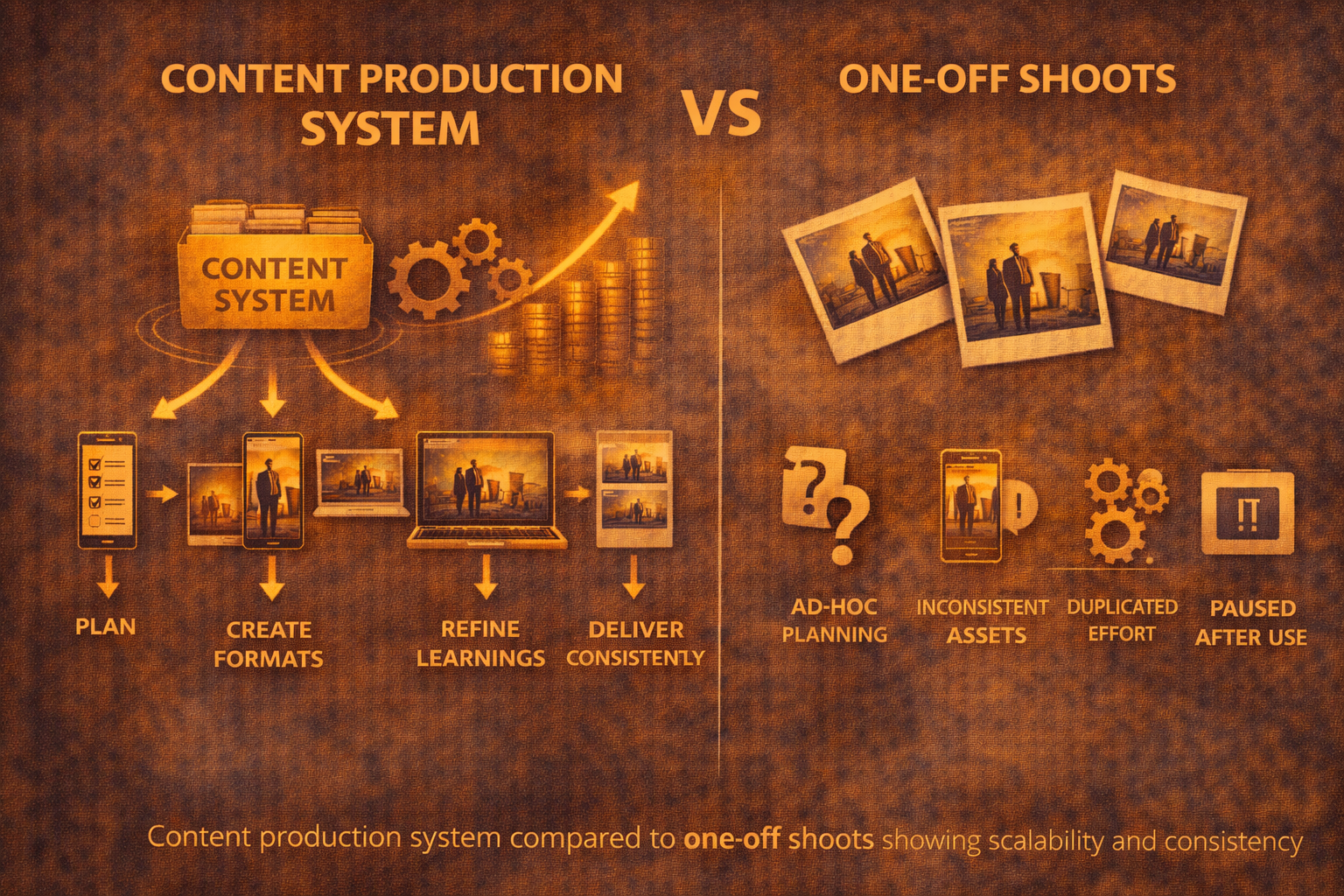
Many brands use the terms content system and content calendar interchangeably. However, they are not the same thing. A content calendar is an important marketing tool, but it represents only a small part of a larger content system.
Understanding the difference is critical because many brands mistakenly believe they have a content strategy when they simply have a publishing schedule.
A content calendar helps organize content distribution. A content system helps organize the entire content ecosystem. The distinction becomes increasingly important as brands grow and marketing complexity increases.
Planning vs Publishing
The simplest way to understand the difference is this: A content calendar focuses on publishing but a content system focuses on planning and a content calendar typically answers questions such as:
- What Are We Posting?
- When Are We Posting?
- Which Platform Are We Using?
- Who Is Responsible?
Examples may include:
- Instagram posts
- TikTok videos
- LinkedIn updates
- email campaigns
A content system starts much earlier in the process. It answers questions such as:
- Why Are We Creating This Content?
- What Business Objective Does It Support?
- Which Campaign Does It Belong To?
- How Will Success Be Measured?
- How Can It Be Reused?
Publishing is only one step in the larger process. Planning determines whether the content has strategic value in the first place.
Assets vs Posts
A content calendar is usually focused on individual posts. A content system is focused on assets.
For example:
A content calendar might include:
- Instagram Post On Monday
- TikTok Video On Wednesday
- Email Campaign On Friday
A content system focuses on creating the assets that support all of those activities.
Examples include:
- Campaign Photography
- Product Photography
- Short-Form Video
- Advertising Creatives
- Website Assets
- Brand Storytelling Content
One campaign photoshoot might generate:
- Website Content
- Social Media Content
- Email Marketing Assets
- Paid Advertising Creatives
- PR Materials
The asset becomes the foundation. The posts become the distribution mechanism. This is why content systems often generate significantly higher ROI than calendar-driven marketing alone.
Strategy vs Scheduling
A content calendar is primarily a scheduling tool. A content system is a strategic framework. Scheduling focuses on:
- Dates
- Publishing Frequency
- Channel Management
- Content Deadlines
Strategy focuses on:
- Brand Positioning
- Customer Needs
- Campaign Objectives
- Content Priorities
- Business Goals
Without strategy, a calendar can quickly become a list of content obligations. Teams begin creating content simply because a slot exists on the calendar.
The content may be published consistently, but it often lacks a clear purpose. A content system ensures that every piece of content supports a larger marketing objective.
Long-Term vs Short-Term
Content calendars typically operate on shorter time horizons.
Examples include:
- Weekly Planning
- Monthly Planning
- Quarterly Scheduling
Their purpose is operational. Content systems operate over much longer time horizons. They help brands build:
- Asset Libraries
- Campaign Frameworks
- Brand Consistency
- Content Infrastructure
- Marketing Efficiency
- Long-Term Growth
A content system asks:
- What Assets Will Support Marketing For The Next Six Months?
- How Can We Reduce Future Content Shortages?
- How Can We Build A Reusable Content Library?
- How Can We Improve Content ROI?
The focus shifts from immediate publishing needs to long-term marketing performance.
Why The Difference Matters
Many brands experience problems such as:
- Constant Content Shortages
- Last-Minute Production Requests
- Inconsistent Campaigns
- Weak Asset Libraries
- Repeated Emergency Shoots
- Low Content ROI
These issues often occur because the organization has a content calendar but not a content system. The calendar helps schedule content. The system helps create, manage, and maximize content value.
One organizes activity. The other creates capability.
A Content Calendar Is Part Of A Content System
Importantly, this is not an either-or decision. Brands need both. A content calendar helps manage:
- Publishing
- Scheduling
- Deadlines
- Channel Activity
A content system manages:
- Strategy
- Campaign Planning
- Asset Creation
- Content Distribution
- Asset Libraries
- Performance Analysis
The calendar sits inside the system. It is one component of a larger framework.
Build Systems, Not Just Schedules
The strongest brands understand that publishing content is not the same as building a marketing engine. A content calendar focuses on:
- Planning vs Publishing
- Posts
- Scheduling
- Short-Term Activity
A content system focuses on:
- Strategic Planning
- Assets
- Marketing Objectives
- Long-Term Growth
Ultimately, a content calendar helps brands stay organized. A content system helps brands grow. The most effective marketing organizations use both—but they build the system first and the calendar second.
What A Content System Actually Includes
Many brands assume a content system is simply a content calendar or a process for posting on social media. In reality, a true content system is much broader.
A content system is the infrastructure that supports how content is planned, created, managed, distributed, and measured across the entire marketing organization.
Without a system, content creation often becomes reactive. Teams scramble to fill content gaps, campaigns launch without sufficient assets, and valuable content gets lost or underutilized.
A strong content system creates structure while ensuring every piece of content supports larger business objectives. The best content systems are built around strategy, not just production.
Content Strategy
Every successful content system begins with strategy. Content should not be created simply because a channel requires activity. It should be created to support specific marketing and business objectives.
A content strategy defines:
- Brand Positioning
- Target Audience
- Core Messaging
- Marketing Objectives
- Content Priorities
- Customer Journey Needs
The strategy provides direction for everything that follows. Without strategy, content often becomes random and disconnected. With strategy, every asset has a clear purpose. The strongest content systems begin by answering:
- Who Are We Trying To Reach?
- What Do We Want Them To Think?
- What Action Do We Want Them To Take?
- How Does Content Support Business Growth?
Campaign Planning
Campaigns are often the engine that drives a content system. Rather than creating isolated pieces of content, brands create content around strategic initiatives. Examples include:
- Product Launches
- Seasonal Campaigns
- Brand Awareness Initiatives
- Customer Acquisition Campaigns
- Collection Releases
- Promotional Events
Campaign planning helps determine:
- What Assets Are Needed
- Which Channels Will Be Used
- Production Requirements
- Launch Timelines
- Success Metrics
Campaigns create alignment between marketing activities and content production. This helps ensure that content serves a larger objective rather than existing as standalone pieces.
Asset Libraries
One of the most valuable components of a content system is the asset library. Asset libraries contain:
- Campaign Photography
- Product Photography
- Video Content
- Advertising Assets
- Website Content
- Brand Storytelling Assets
- Design Resources
- Marketing Materials
A well-organized asset library allows teams to:
- Reuse Existing Content
- Launch Campaigns Faster
- Maintain Consistency
- Reduce Production Costs
- Improve Asset Utilization
Strong brands treat content as an asset that compounds in value over time rather than something that is created and forgotten.
Production Workflows
A content system also includes the processes required to create content efficiently. Production workflows help coordinate:
- Creative Development
- Photography Production
- Video Production
- Copywriting
- Design
- Approvals
- Asset Delivery
- Publishing Preparation
Workflows establish clear responsibilities and timelines. This reduces confusion and helps teams work more effectively together.
As organizations grow, production workflows become increasingly important because more people are involved in content creation.
Without workflows, production often becomes unpredictable and difficult to scale.
Distribution Plans
Creating content is only one part of the equation. A content system should also define how content will be distributed. Distribution plans determine:
- Where Content Will Appear
- Which Channels Matter Most
- How Assets Will Be Adapted
- How Campaigns Will Be Supported
Examples include:
- Website Content
- Social Media
- Paid Advertising
- Email Marketing
- Public Relations
- Retail Marketing
- Sales Materials
A single asset may support multiple channels. The stronger the distribution plan, the greater the return on every production investment.
Performance Tracking
The final component of a content system is performance tracking. Many brands measure output. The best brands measure outcomes. Performance tracking evaluates:
- Engagement
- Reach
- Conversions
- Customer Acquisition
- Advertising Performance
- Asset Utilization
- Revenue Contribution
- Content ROI
Tracking performance helps teams identify:
- Which Assets Perform Best
- Which Campaigns Generate Results
- Which Messages Resonate
- Where Future Investments Should Be Made
Without measurement, content decisions are often based on assumptions. With measurement, content becomes increasingly strategic over time.
A Content System Is A Marketing Infrastructure
The most effective content systems include:
- Content Strategy
- Campaign Planning
- Asset Libraries
- Production Workflows
- Distribution Plans
- Performance Tracking
Together, these components create a framework that supports both marketing execution and long-term growth. Rather than treating content as a series of isolated projects, brands create a repeatable system that continuously generates value.
Strong Content Systems Create Stronger Brands
A content system should do more than help brands publish content. It should help brands:
- Build Recognition
- Improve Consistency
- Increase Efficiency
- Support Campaigns
- Maximize Asset Value
- Improve Marketing Performance
Ultimately, the strongest content systems are not content production systems. They are brand-building systems.
They provide the structure that allows content, campaigns, photography, advertising, and marketing initiatives to work together in support of long-term business growth.
Why A Content System Requires A Retainer
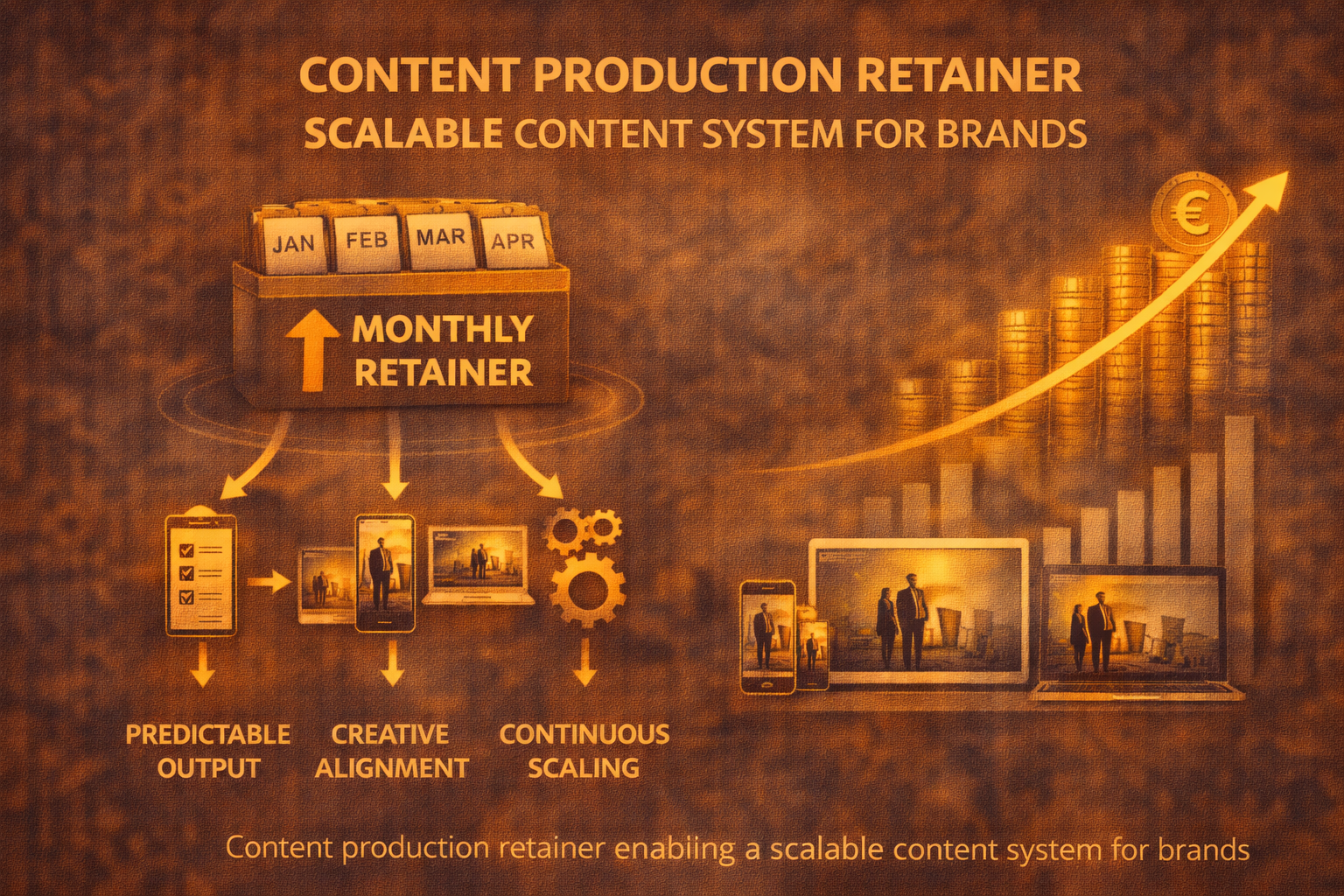
A system cannot exist without continuity. That’s why we deliver our work through a content production retainer.
Through a retainer, brands gain:
- Predictable monthly output
- Ongoing creative alignment
- Lower cost per usable asset over time
- A scalable content strategy that doesn’t rely on urgency
As a result, the content production system becomes operational — not aspirational.
Content Retainer Packages
| Package | Investment | What’s Included | Best For |
|---|---|---|---|
| Essential Brand Content | From €3,000 / month 3-month minimum |
1 content shoot per month Up to 40 edited images Short-form video clips Multi-format delivery (vertical, square, landscape) Web & organic social usage license |
Emerging brands Seasonal collections Content refreshes |
| Growth Brand Partnership (Most Popular) | From €5,000 / month 3–6 month commitment |
1–2 shoots per month Campaign-style & lifestyle imagery 60–80 edited images Video content optimized for ads Paid ads usage included Quarterly creative alignment |
Brands running paid ads Launching products Scaling visibility |
| Full Creative Partnership | From €8,000 / month 6-month minimum |
Monthly campaign-level productions 100+ images per month Advanced short-form video Priority scheduling Paid ads, web & print usage Category exclusivity Creative direction & concept development |
Established brands Rebrands Global campaigns |
Why Campaigns Should Drive Content Systems
Many brands build content systems around publishing schedules. The result is often a constant cycle of creating content to fill calendars, satisfy platform requirements, and maintain activity.
While publishing consistency is important, it should not be the foundation of a content system. The strongest content systems are built around campaigns. Campaigns provide purpose.
They connect content creation to business objectives, marketing priorities, and customer needs.
Instead of asking: “What should we post next week?”
campaign-driven brands ask: “What are we trying to achieve?”
This shift creates more strategic content, stronger asset utilization, and significantly better marketing performance.
Product Launches
Product launches are one of the most powerful drivers of content creation. Every launch creates a clear objective and a specific content need. Examples include:
- New Collections
- New Products
- Limited Editions
- Seasonal Releases
- Brand Expansions
A launch-driven content system typically generates:
- Campaign Photography
- Product Photography
- Website Assets
- Advertising Creatives
- Social Media Content
- Email Marketing Assets
- Public Relations Materials
Instead of creating disconnected pieces of content, the entire content system aligns around a shared goal. This often leads to:
- Better Planning
- Better Content Utilization
- Better Launch Performance
- Higher Content ROI
A single product launch can generate months of usable content when approached strategically.
Seasonal Campaigns
Many brands experience predictable seasonal opportunities throughout the year. Examples include:
- Spring Collections
- Summer Campaigns
- Holiday Promotions
- Black Friday Campaigns
- Back-To-School Campaigns
- New Year Initiatives
Seasonal campaigns create natural content planning cycles. Rather than producing content reactively, brands can build production schedules around upcoming seasonal opportunities.
This allows teams to:
- Plan Earlier
- Produce More Efficiently
- Build Larger Asset Libraries
- Improve Cross-Channel Consistency
Seasonal campaigns provide a recurring framework that helps structure the entire content system.
Brand Initiatives
Not every campaign is focused on products. Many of the most valuable campaigns focus on strengthening the brand itself. Examples include:
- Brand Repositioning
- Sustainability Initiatives
- Community Building
- Founder Stories
- Brand Awareness Campaigns
- Partnership Announcements
- Corporate Social Responsibility Initiatives
These campaigns often create assets that remain valuable for extended periods. Examples include:
- Brand Storytelling Content
- Website Assets
- Public Relations Content
- Social Media Campaigns
- Long-Term Advertising Assets
Brand initiatives help ensure the content system supports long-term brand equity rather than only short-term sales objectives.
Advertising Campaigns
Advertising is one of the clearest examples of why cam
paigns should drive content systems. Advertising requires content built around specific objectives. Examples include:
- Customer Acquisition
- Product Launches
- Retargeting
- Awareness Campaigns
- Lead Generation
- E-Commerce Growth
Successful advertising campaigns require:
- Multiple Creative Variations
- Testing Assets
- Different Formats
- Product-Focused Content
- Conversion Assets
When campaigns drive content production, advertising assets are intentionally planned rather than created as an afterthought. This often results in:
- Better Advertising Performance
- Higher Conversion Rates
- Lower Customer Acquisition Costs
- Improved Return On Ad Spend
The strongest advertising campaigns begin during content planning—not after the shoot is finished.
Customer Acquisition
Ultimately, most marketing activities support customer acquisition in some form. Content systems become significantly more effective when they are aligned with growth objectives. Campaign-driven content helps brands create assets designed to:
- Capture Attention
- Build Trust
- Demonstrate Value
- Support Conversion
- Strengthen Brand Recognition
Rather than creating content simply to remain active, brands create content with a clear purpose. This often leads to better:
- Marketing Efficiency
- Campaign Performance
- Resource Allocation
- Business Outcomes
Customer acquisition campaigns provide a measurable framework for evaluating content effectiveness.
Campaigns Create Purpose
One of the biggest weaknesses of calendar-driven marketing is that activity can become disconnected from objectives. Teams focus on:
- Publishing Content
- Filling Schedules
- Maintaining Frequency
- Meeting Deadlines
Campaign-driven systems focus on:
- Marketing Objectives
- Customer Needs
- Business Priorities
- Strategic Outcomes
The difference is significant. One creates content because the calendar requires it. The other creates content because the business needs it.
Campaigns Improve Asset Utilization
Campaign-driven content systems also improve asset value. A single campaign can generate:
- Website Assets
- Social Content
- Advertising Creatives
- Email Marketing Assets
- PR Materials
- Sales Support Content
- Product Launch Content
This approach maximizes the value of every production investment and reduces the need for constant content creation.
The Best Content Systems Are Campaign-Driven
The strongest content systems are built around:
- Product Launches
- Seasonal Campaigns
- Brand Initiatives
- Advertising Campaigns
- Customer Acquisition
These campaigns create the strategic framework that guides content creation, asset planning, distribution, and measurement. Ultimately, content should not drive marketing.
Marketing objectives should drive content. That is why the most effective content systems are campaign-driven rather than calendar-driven. Campaigns create purpose. Purpose creates better content and better content creates better business results.
How Photography Fits Into A Content System
Many brands think of photography as a standalone creative project. A photoshoot is planned, content is delivered, and then the team moves on to the next campaign.
However, brands with the strongest marketing performance approach photography differently. They treat photography as a core component of their content system.
Rather than creating images for a single purpose, they create assets that support multiple marketing channels, campaigns, and business objectives.
In this context, photography becomes more than content creation. It becomes content infrastructure. A well-planned photography strategy helps brands build asset libraries, support campaigns, improve consistency, and maximize content ROI.
Campaign Photography
Campaign photography is often the foundation of a content system. A strong campaign shoot is not designed to generate a few social media posts. It is designed to create a content ecosystem.
Campaign photography can support:
- Product Launches
- Website Updates
- Advertising Campaigns
- Email Marketing
- Public Relations
- Social Media
- Retail Marketing
A single campaign production can generate months of marketing assets when planned strategically. This is why campaign photography often delivers significantly more value than isolated content creation.
For a deeper breakdown, see How Campaign Photography Improves ROI.
Product Photography
Product photography plays a critical role within a content system because it supports some of the highest-converting areas of marketing. Examples include:
- Product Pages
- E-Commerce Platforms
- Digital Catalogs
- Advertising Campaigns
- Email Marketing
- Marketplace Listings
- Product Launches
Product photography creates consistency across customer touchpoints while helping customers evaluate products more confidently.
Unlike trend-driven content, product photography often remains valuable for extended periods, making it one of the most reusable asset categories within a content system.
Advertising Assets
Advertising is one of the most important applications of photography within a content system. Customer acquisition campaigns require a steady supply of creative assets. Examples include:
- Meta Ads
- Instagram Ads
- TikTok Ads
- Google Display Ads
- Pinterest Ads
- Retargeting Campaigns
Photography created specifically for advertising often includes:
- Multiple Formats
- Creative Variations
- Product-Focused Assets
- Conversion-Focused Content
- Testing Assets
When advertising requirements are considered during production, brands create assets that can support customer acquisition efforts for months rather than weeks.
This significantly improves the value of every production investment.
Website Content
For many brands, the website is the most important marketing channel. Photography supports nearly every part of the website experience. Examples include:
- Homepage Banners
- Collection Pages
- Product Pages
- About Pages
- Landing Pages
- Blog Content
- Brand Storytelling Sections
Website content often remains active far longer than social content. As a result, photography created for website use frequently becomes one of the most valuable asset categories within a content system.
Strong website imagery helps:
- Build Trust
- Improve User Experience
- Support Conversions
- Reinforce Brand Positioning
- Strengthen Customer Confidence
Social Content
Social media is often where brands feel the greatest pressure to create content. The challenge is that social platforms require a continuous flow of assets. Examples include:
- Instagram Posts
- Reels
- Stories
- TikTok Content
- Pinterest Content
- LinkedIn Content
Without a content system, brands frequently experience:
- Content Shortages
- Last-Minute Productions
- Inconsistent Visuals
- Creative Burnout
Photography helps solve these problems by providing a library of assets that can be repurposed across multiple social channels.
Instead of creating content one post at a time, brands create content libraries that support ongoing publishing needs. For a broader discussion of content volume requirements, see How Much Content Does A Brand Need?
Brand Libraries
Perhaps the most important role photography plays within a content system is helping build the brand library. A brand library is a collection of reusable visual assets that support marketing over time. Examples include:
- Campaign Photography
- Product Photography
- Lifestyle Imagery
- Advertising Assets
- Founder Photography
- Team Photography
- Brand Storytelling Content
- Video Content
Brand libraries allow marketing teams to:
- Launch Campaigns Faster
- Improve Consistency
- Reduce Production Costs
- Increase Asset Utilization
- Support Multiple Channels
Rather than starting from zero with every campaign, brands can leverage existing assets strategically. This creates a compounding effect where every production increases the overall value of the content system.
Photography Is Not Just Content Creation
One of the biggest misconceptions in marketing is that photography exists to create content. In reality, photography exists to create assets. Those assets can then support:
- Campaigns
- Product Launches
- Advertising
- Websites
- Social Media
- Email Marketing
- Public Relations
- Customer Acquisition
The distinction is important because assets create value long after they are produced. Content is often consumed once. Assets continue working.
Photography Is The Engine Behind Many Content Systems
A strong content system relies on:
- Campaign Photography
- Product Photography
- Advertising Assets
- Website Content
- Social Content
- Brand Libraries
Together, these elements create the visual foundation that supports marketing across every channel. Ultimately, photography should not be viewed as a standalone creative expense.
It should be viewed as a strategic asset-building investment that strengthens brand consistency, improves marketing efficiency, supports customer acquisition, and increases content ROI over time.
How Content Systems Improve Content ROI
Many brands invest heavily in content creation but struggle to maximize the value of the assets they produce. Photoshoots are completed. Videos are edited. Campaigns launch.
Then the content is often forgotten and replaced by the next production. This approach creates a cycle of constant content creation without fully capturing the value of previous investments.
A content system helps solve this problem. By creating structure around planning, production, asset management, and distribution, brands can significantly improve content ROI.
The goal is not simply to create more content. The goal is to extract more value from every asset produced.
Asset Utilization
One of the most significant benefits of a content system is improved asset utilization. Many brands use only a small percentage of the content they create. Images may be posted once and never used again.
Videos may support a single campaign before disappearing into a folder. A strong content system ensures assets are created with multiple applications in mind. Examples include:
- Website Content
- Social Media
- Paid Advertising
- Email Marketing
- Public Relations
- Retail Marketing
- Sales Materials
A single campaign image might support several channels simultaneously. The more ways an asset can be used, the greater its overall value. High-performing brands maximize asset utilization rather than constantly replacing assets.
Reduced Production Waste
Content production is expensive. Costs often include:
- Photography
- Video Production
- Models
- Styling
- Hair And Makeup
- Locations
- Creative Direction
- Post-Production
When assets are poorly planned or underutilized, much of that investment is wasted. Content systems reduce waste by improving:
- Planning
- Asset Creation
- Production Efficiency
- Content Reuse
- Campaign Alignment
Instead of producing content that serves only one purpose, brands create assets that support multiple business objectives. This increases the return generated from every production investment.
Longer Asset Lifespan
One of the biggest drivers of content ROI is asset lifespan. The longer an asset remains useful, the more value it creates. Examples of long-lifespan assets include:
- Campaign Photography
- Product Photography
- Website Content
- Brand Storytelling Assets
- Advertising Creatives
- Lifestyle Photography
These assets may continue supporting marketing efforts for months or even years. A content system helps extend asset lifespan by:
- Organizing Content Properly
- Improving Accessibility
- Encouraging Reuse
- Supporting Repurposing
- Building Asset Libraries
The result is a larger return on every piece of content created.
Better Campaign Support
Campaigns perform better when they are supported by a complete set of assets. Without a content system, brands often experience:
- Missing Content
- Last-Minute Productions
- Inconsistent Messaging
- Limited Creative Variations
- Advertising Constraints
A content system helps ensure campaigns have the assets they need before launch. Examples include:
- Hero Images
- Product Photography
- Advertising Assets
- Website Content
- Social Media Content
- Email Marketing Assets
When campaigns are properly supported, marketing performance often improves while reducing the need for emergency content creation.
Cross-Channel Performance
Customers rarely interact with a brand through a single channel. A customer may encounter:
- A Social Media Post
- A Paid Advertisement
- An Email Campaign
- A Product Page
- A Website Landing Page
All before making a purchase decision. Content systems improve ROI by ensuring assets work effectively across multiple channels. A single campaign production can generate:
- Website Assets
- Social Content
- Advertising Creatives
- Email Marketing Content
- PR Materials
- Sales Support Assets
This cross-channel approach dramatically increases the value generated from each asset. Rather than supporting one marketing activity, content supports the entire customer journey.
ROI Improves When Assets Work Harder
Many brands attempt to improve ROI by reducing production costs. While cost management is important, ROI often improves more dramatically when brands increase asset value. A content system helps assets:
- Reach More Audiences
- Support More Channels
- Serve More Campaigns
- Remain Useful Longer
- Generate More Business Impact
The focus shifts from producing more content to creating more valuable content.
Content Systems Create Compounding Value
Every campaign contributes to a growing asset library and every photoshoot strengthens future marketing efforts but every production creates resources that can support future initiatives.
This compounding effect is one of the most powerful advantages of a content system. Rather than starting from zero every time, brands continuously build marketing infrastructure that becomes more valuable over time.
Content ROI Is About More Than Content Volume
As discussed in , the highest-performing brands do not measure success by the amount of content they create. They measure success by the value their content generates.
A strong content system improves content ROI through:
- Asset Utilization
- Reduced Production Waste
- Longer Asset Lifespan
- Better Campaign Support
- Cross-Channel Performance
Together, these factors help brands maximize the return on every creative investment. Ultimately, content ROI improves when assets are treated as long-term business resources rather than short-term marketing outputs.
The most successful brands do not simply create content. They build asset libraries that continue generating value long after production is complete.
Content System Example For A Fashion Brand
Many fashion brands struggle with content shortages despite investing heavily in photography and content creation. The problem is rarely a lack of content. The problem is often a lack of systems.
Without a content system, brands frequently create content for immediate needs rather than building assets that support marketing over time.
A strong content system ensures every photoshoot contributes to multiple campaigns, channels, and business objectives. The following example demonstrates how a fashion brand can build a content system around quarterly campaign production.
Quarterly Campaign
Instead of creating content month-to-month, the brand plans content production quarterly.
Quarter 1
Spring Collection Launch
Quarter 2
Summer Collection Launch
Quarter 3
Fall Collection Launch
Quarter 4
Holiday Collection Launch
Each campaign becomes the primary content engine for the quarter. Campaign planning begins 6–8 weeks before launch and includes:
- Marketing Objectives
- Product Priorities
- Advertising Requirements
- Website Updates
- Social Media Needs
- PR Opportunities
- Email Marketing Campaigns
Rather than producing isolated content, every asset is tied to a larger business initiative.
Photography Production
The quarterly campaign shoot is designed to create significantly more than a few hero images. Production is planned to support multiple marketing channels simultaneously.
Campaign Photography
20–30 Hero Images
Product Photography
50–100 Product Images
Lifestyle Photography
30–50 Images
Advertising Assets
20–40 Variations
Short-Form Video
20–30 Video Assets
Website Assets
Homepage, Collection Pages, Landing Pages
The objective is to create enough content to support the entire quarter rather than a single launch moment. This reduces the need for constant emergency productions.
Asset Library Creation
Following production, all assets are organized into a structured brand library. Examples include:
- Campaign Assets
- Product Photography
- Lifestyle Imagery
- Advertising Creatives
- Video Assets
- Website Content
- Brand Storytelling Assets
- Each asset is tagged and categorized for future use.
Examples:
Product Category
- Dresses
- Outerwear
- Accessories
Marketing Use
- Website
- Advertising
- Social Media
- Email Marketing
Campaign
- Spring 2026
- Summer 2026
This allows teams to quickly locate assets and maximize content reuse.
Advertising Assets
Advertising is planned before the shoot — not after. The campaign includes dedicated content for:
- Meta Ads
- Instagram Ads
- TikTok Ads
- Pinterest Ads
- Retargeting Campaigns
- Customer Acquisition Campaigns
Production intentionally captures:
- Vertical Formats
- Square Formats
- Lifestyle Assets
- Product-Focused Assets
- Conversion-Focused Assets
- Multiple Creative Variations
This allows the marketing team to:
- Test Creatives
- Refresh Campaigns
- Reduce Ad Fatigue
- Improve Performance
Instead of adapting content later, advertising assets are created from the beginning.
Social Content
The campaign also fuels ongoing social media activity. One quarterly shoot may generate:
- 40–60 Instagram Posts
- 20–30 Reels
- 50–100 Stories
- Pinterest Content
- LinkedIn Content
- TikTok Content
Instead of creating social content one post at a time, the brand works from a larger content library. Benefits include:
- Better Consistency
- Reduced Production Stress
- More Strategic Publishing
- Stronger Visual Identity
The social team spends less time chasing content and more time executing strategy.
Product Launch Support
The campaign serves as the foundation for product launches throughout the quarter. Each launch receives:
- Product Photography
- Website Assets
- Advertising Assets
- Social Content
- Email Marketing Content
- PR Assets
- Retail Marketing Materials
Because these assets were planned during production, launches become easier to execute. The brand avoids:
- Last-Minute Shoots
- Content Shortages
- Inconsistent Visuals
- Delayed Campaigns
Every product launch benefits from assets already built into the system.
How The Content Gets Distributed
One quarterly campaign may support:
- Website Updates
- Product Pages
- Collection Pages
- Paid Advertising
- Email Marketing
- Social Media
- Public Relations
- Retail Marketing
- Sales Presentations
- Wholesale Materials
The same assets work across multiple channels. This dramatically improves content ROI.
Quarterly Content System Output
A typical quarterly campaign might generate:
- 100–200 Professional Images
- 20–30 Video Assets
- 30–50 Advertising Variations
- 3–4 Product Launch Packages
- 90 Days Of Social Content
- Complete Website Content Updates
- Email Marketing Assets
- PR Materials
One production investment supports hundreds of marketing activities.
Why This Approach Works
The content system is built around campaigns rather than content calendars.
Instead of asking: “What should we post next week?”
the brand asks: “What assets do we need to support the next quarter?”
This shift creates:
- Better Campaign Planning
- Better Asset Utilization
- Stronger Advertising Performance
- More Consistent Branding
- Reduced Production Waste
- Higher Content ROI
Ultimately, the most successful fashion brands do not create content one post at a time. They build campaign-driven content systems where every photoshoot becomes a strategic asset creation event that supports growth across the entire marketing ecosystem.
Related Articles
Why a Fashion Content Retainer Is the Smartest Investment for Scalable Brand Growth