
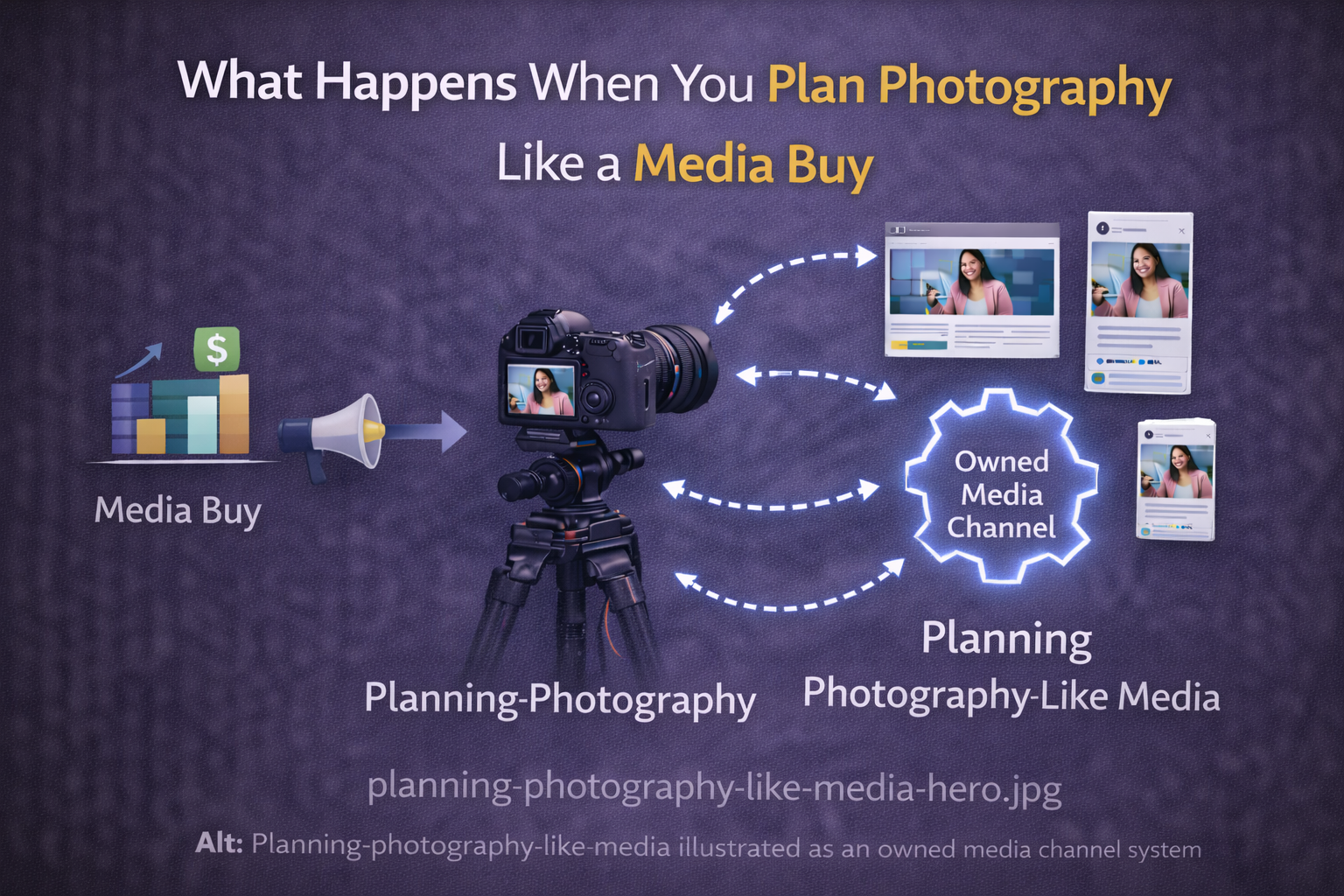
Planning photography like media changes everything. Instead of treating photography as a one-time creative expense, brands begin to manage visuals as a measurable, repeatable investment. As a result, photography starts behaving like what it truly is—an owned media channel with real performance potential.
In short, the moment photography is planned like media, it stops being disposable.
Why Photography Should Be Planned Like a Media Buy
Media buys are planned around reach, frequency, formats, and lifecycle. Therefore, when brands apply the same logic to photography, decisions become strategic instead of reactive.
Planning photography like media forces teams to ask where visuals will run, how long they’ll be used, and how they’ll be refreshed—core principles of any strong visual content strategy.
Photography Is Already an Owned Media Channel
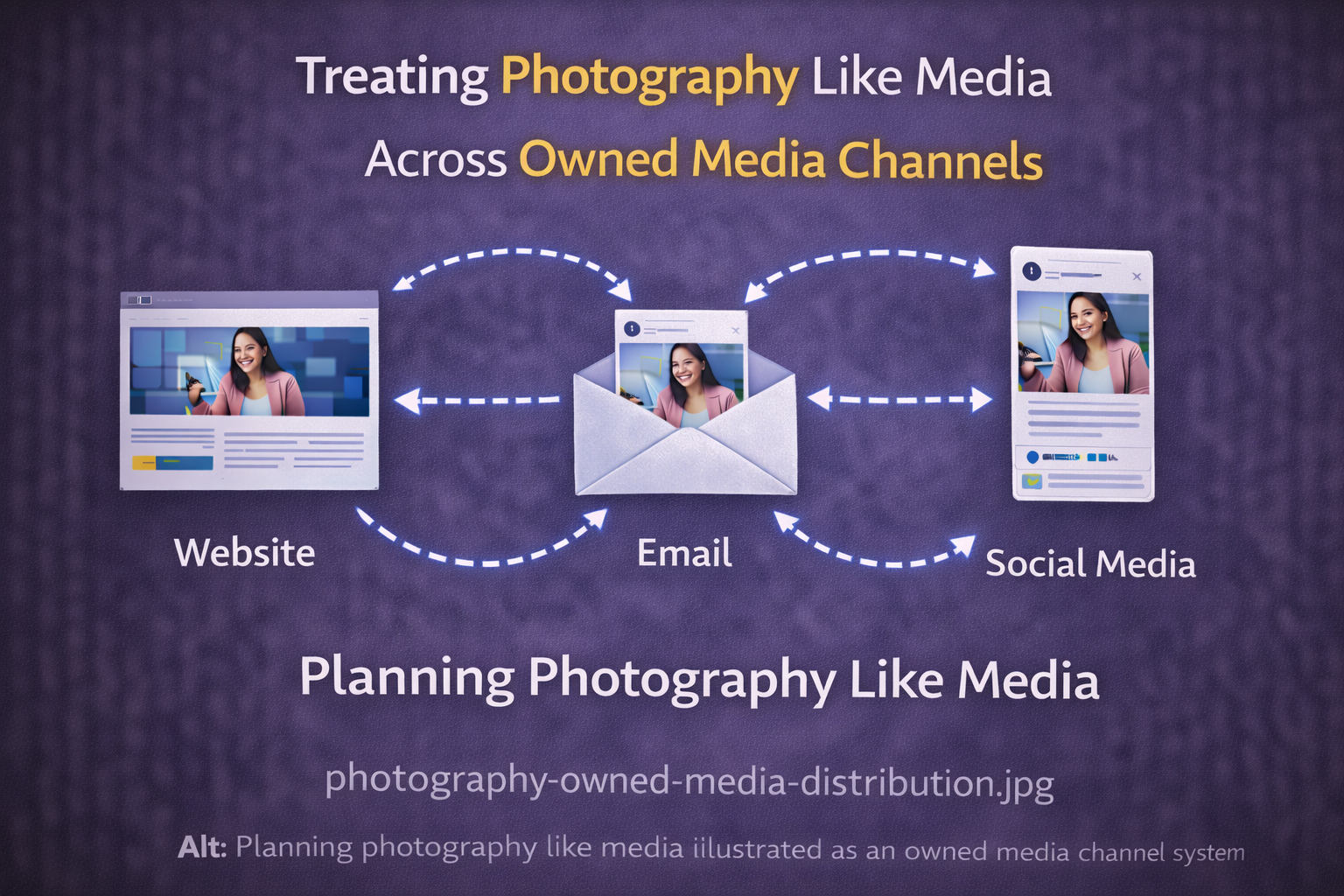
Every image appears across websites, email campaigns, social platforms, and landing pages. Consequently, photography already functions as an owned media channel, even if it’s rarely treated as one.
However, without structure, images are often underutilized. This disconnect is where content creation ROI begins to erode.
What Changes When Photography Is Planned Like Media
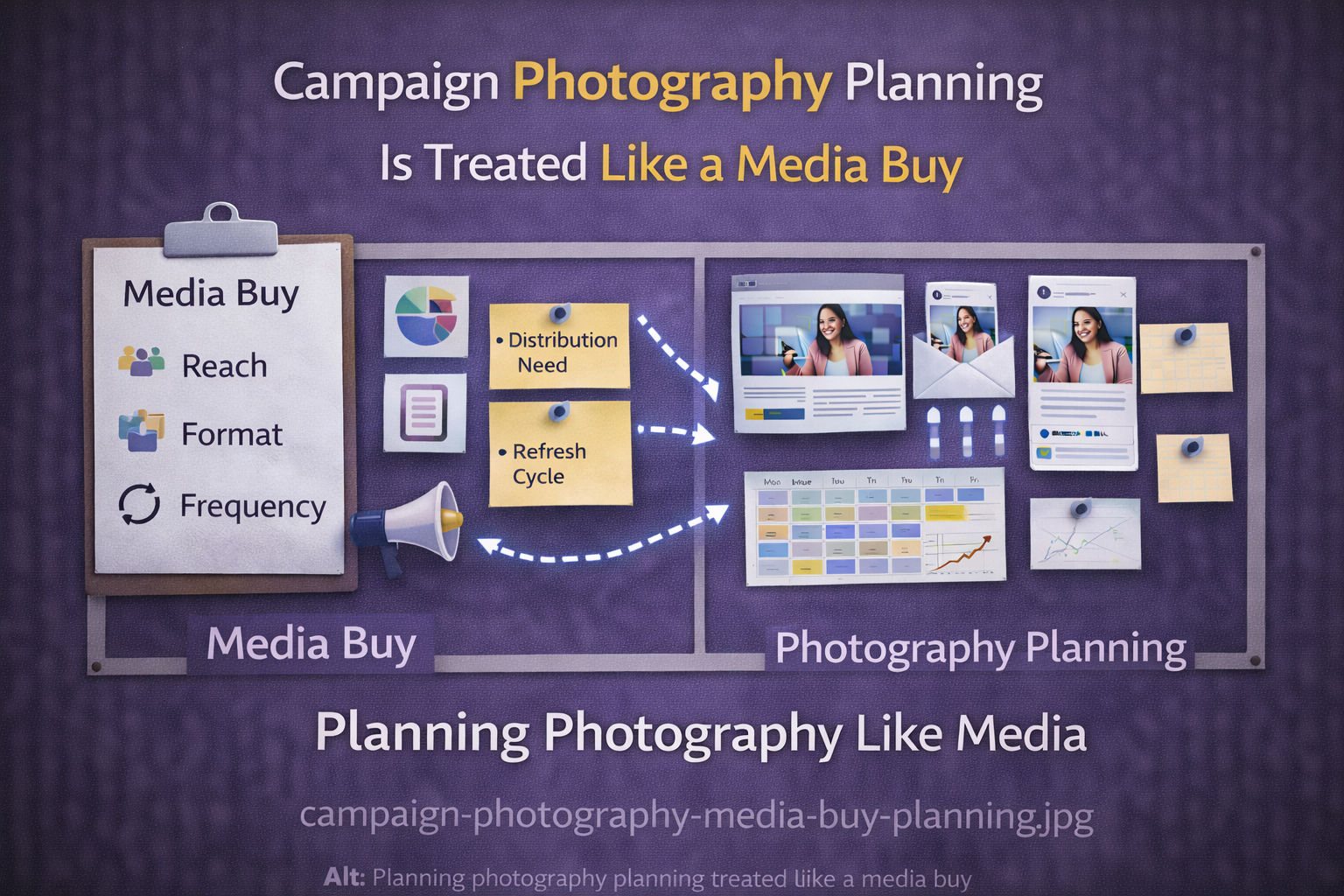
When teams embrace planning photography like media, campaign photography planning moves upstream. Shoots are designed around distribution needs, not creative guesswork.
As a result, assets are created for reuse, sequencing, and variation—hallmarks of an effective visual content strategy.
Read: Why content production costs keep rising →
Improved Content Creation ROI Is the Immediate Outcome
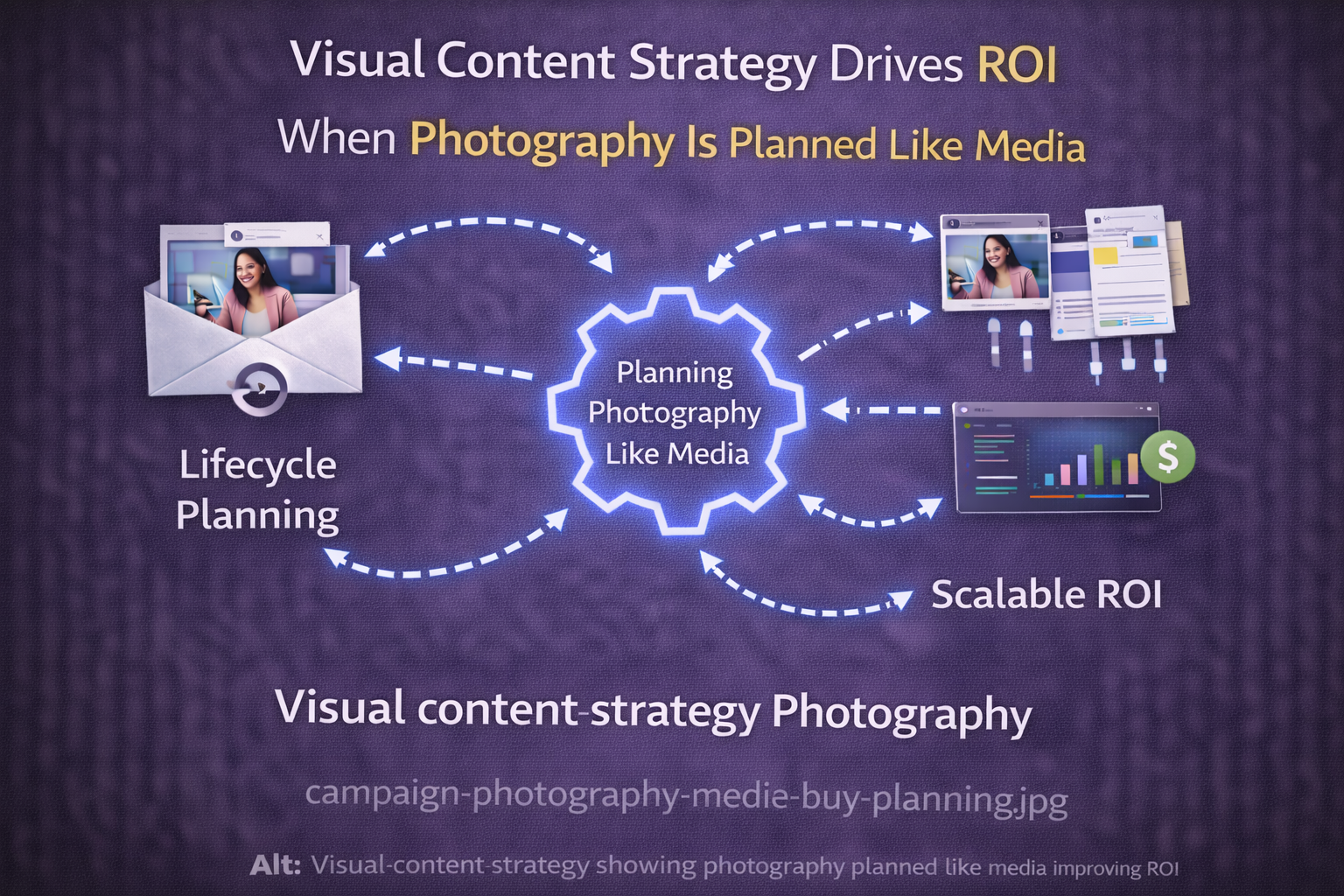
Once photography is planned as media, content creation ROI improves almost immediately. Fewer shoots deliver more usable assets across more channels.
Moreover, because photography supports multiple campaigns, costs stabilize instead of spiking unpredictably.
Campaign Photography Planning Becomes Predictable
With a system in place, campaign photography planning aligns with editorial calendars and launch timelines. Therefore, photography stops reacting to demand and starts anticipating it.
This approach strengthens your owned media channel by creating consistency across touchpoints.
Why Most Brands Still Don’t Do This
Historically, photography has been treated as a creative output rather than a media asset. Consequently, it’s rarely evaluated through performance or lifecycle metrics.
However, brands that adopt planning photography like media gain efficiency, clarity, and long-term value.
Read: How to build a scalable content strategy →
Final Thoughts
Photography doesn’t fail because of creativity—it fails because of planning.
When brands start planning photography like media, visuals evolve from one-off assets into a scalable owned media channel that consistently delivers measurable content creation ROI.