
Beauty product photography campaigns perform best when they are planned as marketing systems, not isolated collections of attractive images. The campaign must help customers understand the product, give paid-media teams enough creative variation to test, and supply every launch channel with assets that feel unmistakably connected.
That is the practical difference between photographing a product and building a campaign around it. One records what the product looks like. The other creates a reusable visual library designed to support discovery, evaluation, conversion, retention, retail and brand growth.
What Is a Beauty Product Photography Campaign?
A beauty product photography campaign is a strategically planned set of product, texture, application, model and lifestyle assets created around a specific business objective. That objective may be a product launch, a retail presentation, a paid-media campaign, an ecommerce refresh or an ongoing content program.
The strongest campaigns begin with intended use. Before the shot list is approved, the team identifies where the images will appear, which formats each channel needs, what customers must understand and how success will be measured. This turns the shoot into part of the brand’s marketing infrastructure.
How Beauty Product Photography Campaigns Drive Performance
1. They reduce purchase uncertainty
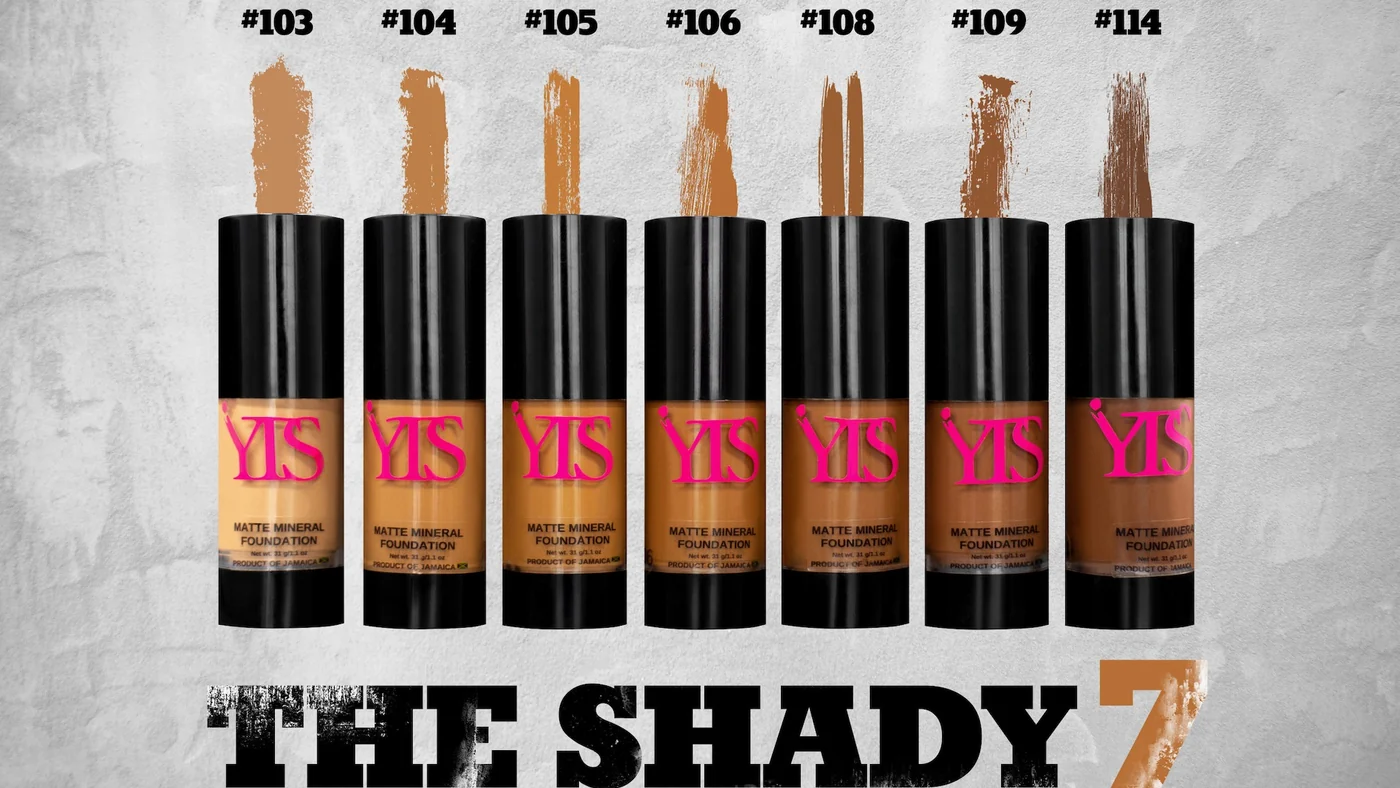
Beauty customers cannot test a formula, inspect a texture or compare a shade through a screen. Photography must close part of that sensory gap. Clear pack shots establish what is included. Texture and application images explain finish and consistency. Shade-range imagery makes comparison easier. Scale references prevent the packaging from feeling misleading.
This does not guarantee a sale. It removes avoidable friction from the decision. When the product is presented accurately and consistently, customers can evaluate it with more confidence.
2. They create a recognizable brand system
Recognition is built through repetition of intentional choices: light, color, composition, model direction, texture treatment and visual rhythm. A campaign establishes those rules across the full asset set. Consequently, the homepage, product page, email, retailer listing and social post look like parts of one brand rather than unrelated productions.
3. They give paid media room to learn
Paid campaigns need more than one polished hero. Teams need different hooks, crops, product arrangements, model expressions, backgrounds and levels of information. Planning those variations during production is usually more efficient than commissioning emergency reshoots after creative fatigue appears.
Usage must also be agreed before the images enter advertising. The paid ads usage guide explains why reach, duration, territory and media scale affect licensing value.
4. They coordinate the launch
A launch loses force when the website, email, organic social, PR and retailer assets arrive at different times or communicate different ideas. A campaign creates one visual source of truth. Every channel can then reinforce the same product promise while adapting the execution to its format.
5. They extend the value of production
Return is not determined by image count alone. It depends on how many useful placements, variations and marketing moments the production can support. A well-planned campaign may supply the initial launch, evergreen product education, retailer requests, seasonal edits and later paid-media tests without forcing the brand to rebuild the visual language each time.
The Asset System a Beauty Campaign Should Create
The exact deliverables depend on the product and distribution plan. However, most beauty brands need a deliberate combination of the following asset families:
| Asset family | Primary job | Typical uses |
|---|---|---|
| Clean product and packaging | Show the product accurately | Ecommerce, retailer listings, catalogues |
| Hero product imagery | Create attention and desire | Launch pages, homepage banners, PR |
| Texture, swatch and ingredient | Explain formula, finish and differentiation | Product pages, education, email, social |
| Application and demonstration | Show use and expected experience | Ads, tutorials, product detail pages |
| Model and lifestyle | Connect the product to identity and context | Campaign pages, social, retail, editorial |
| Creative variations | Support testing and format changes | Paid social, display, vertical video covers |
Channel requirements should shape production decisions. For example, Google Merchant Center requires a real, accurately represented product image and recommends high-resolution source files; its current guidance also notes a 500 × 500-pixel minimum for all product images beginning January 31, 2027. Review the official Google product-image guidance before final export.
Map the campaign before the shoot
Use the Beauty Campaign Asset Map & Brief Builder to connect business goals, channels, formats, shot requirements and approvals in one working document.
Campaign Photography vs. an Isolated Product Shoot
| Isolated product shoot | Performance-led campaign |
|---|---|
| Starts with an image count | Starts with business goals and placements |
| Optimizes for one immediate request | Maps assets across the launch and customer journey |
| Creates a few finished compositions | Builds heroes, details, education and variations |
| Considers crops after production | Frames horizontal, square and vertical uses on set |
| Treats licensing as an afterthought | Aligns usage with channels, duration and media |
| Measures delivery | Measures deployment and marketing performance |
The issue is not that one-off shoots are always wrong. They are appropriate when the requirement is genuinely narrow. The problem is commissioning a narrow shoot while expecting it to support a multi-channel launch.
A Real Multi-Channel Beauty Campaign Example
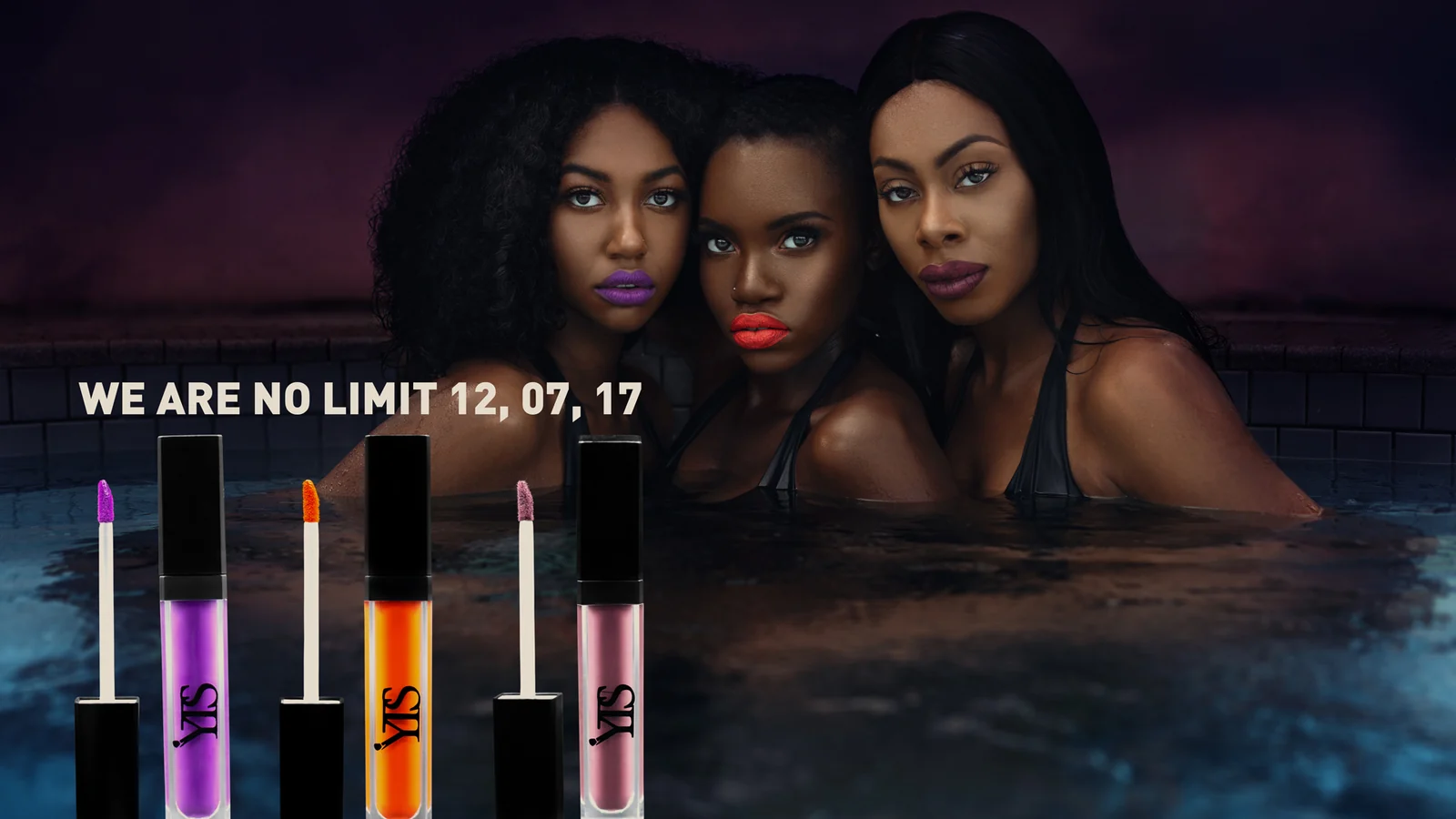
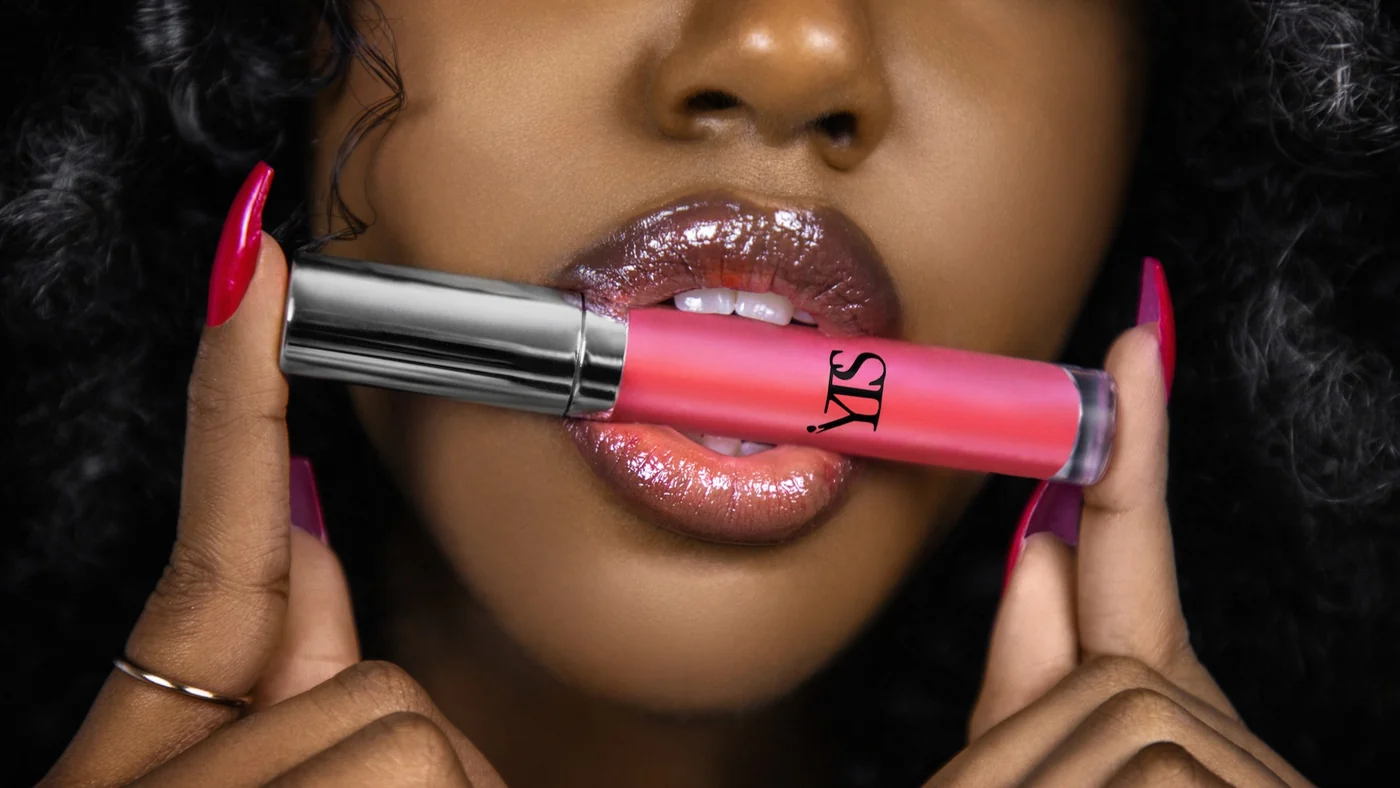
The Your True Shade production shows how one coherent shoot can serve different commercial roles. The image library included campaign portraits, product-focused compositions, shade-range assets and close details. Those assets were then adapted for the brand’s website, Facebook and Instagram over an extended period.
See the complete multi-channel beauty product photography case study for the documented channel use and performance context.
Watch: What Makes a High-Performing Cosmetic Campaign Shoot?
How to Plan a Beauty Product Campaign for Performance
Define the decision the imagery must support
Start with the customer’s unanswered questions and the brand’s commercial goal. Does the audience need to understand shade, texture, application, ingredients, efficacy positioning or premium value? A useful creative brief turns those questions into visual proof rather than relying on mood alone.
Map placements before deliverables
List the launch page, product detail page, retailer portal, email sequence, organic posts, paid placements and PR requirements. Then specify orientation, crop tolerance, copy space, safe zones and delivery dates for each. The Beauty Product Launch Checklist helps connect production to the wider launch sequence.
Build a shot architecture
Organize the shot list by job, not only by setup. Separate the essential product truth assets from campaign heroes, education, social storytelling and testing variations. This makes approval easier and exposes gaps before the production day. Use the Photography Shot List Template to structure the working list.
Design for adaptation on set
Capture the same core idea with enough framing and negative space to support landscape, square and vertical outputs. Record alternate product positions, hands, expressions and background relationships while the lighting and team are already in place. The goal is controlled variation, not random volume.
Plan ownership, licensing and approvals
Confirm who can use the assets, where they can appear, for how long and whether paid media, print, retail partners or third parties are included. Also define who approves selects, retouching, copy integration and final exports. For a clear overview, read Licensing Explained for Brands.
How to Measure Campaign Performance
Photography does not operate independently from offer, targeting, media spend, page speed, pricing or distribution. Therefore, a responsible evaluation avoids claiming that imagery alone caused every result. Instead, compare asset performance within the same commercial context and track how effectively the library is deployed.
- Product-page behavior: conversion rate, add-to-cart rate and engagement with image galleries.
- Paid-media response: thumb-stop or hold rate for video, click-through rate, conversion rate, cost per acquisition and creative fatigue.
- Launch readiness: percentage of required placements delivered on time and without emergency adaptations.
- Asset utilization: how many approved assets were actually used, across how many channels and for how long.
- Operational efficiency: reshoots avoided, turnaround time and repeated requests from retailers or internal teams.
- Brand consistency: whether every customer-facing placement follows the same visual rules and product representation.
The most revealing metric is often not total files delivered but useful asset deployment. A smaller library that supports six planned touchpoints can create more value than a larger library that remains difficult to crop, license or find.
Watch: How Strategic Beauty Content Supports Growth
Common Mistakes That Reduce Content ROI
- Starting with aesthetics instead of the product promise. A mood board cannot replace a clear message hierarchy.
- Producing only hero images. Heroes create attention, but ecommerce and education require details, textures and application.
- Ignoring paid-media variations. One composition cannot answer every audience, placement and stage of awareness.
- Leaving crop decisions until post-production. Important details are often lost when vertical or square formats were never framed on set.
- Using inconsistent product color. Inaccurate shade or packaging representation can undermine trust and increase expectation gaps.
- Failing to organize the final library. Assets that cannot be found, understood or licensed confidently are functionally unavailable.
This is why a media-first campaign photography approach plans creation and distribution as one connected process.
How Often Should Beauty Brands Produce New Photography?
There is no credible universal schedule based only on brand size. Production frequency should follow commercial demand. New imagery is justified when a product launches, packaging changes, a new retailer has different specifications, paid creative is fatigued, seasonal positioning changes, or the existing library no longer represents the brand.
For brands with continuous launches and paid media, an ongoing production rhythm may be more efficient than repeated one-off commissions. For a focused product line with stable packaging, a strong campaign library may remain useful much longer. The right cadence is the one that closes documented asset gaps without creating unused content.
Beauty Product Photography Campaigns and ROI
A useful ROI model begins with the full campaign cost, including production, talent, retouching, usage and internal deployment. Then assess both commercial outcomes and avoided costs.
Content ROI = attributable contribution margin + avoided production costs − total campaign investment
Attribution will never be perfect because imagery interacts with the offer, channel and customer experience. Still, brands can compare variations, track deployment and document whether a planned library reduces repeated production. That creates a more honest business case than assigning value solely by the number of final images.
For the broader operating logic, read The Compounding ROI of Planned Content Systems.
Frequently Asked Questions
What should a beauty product photography campaign include?
It should include the asset families required by the actual launch plan: accurate product views, campaign heroes, textures or swatches, application, model or lifestyle imagery, channel-specific crops and enough creative variation for testing. Not every product needs every category.
Is product photography the same as beauty campaign photography?
No. Product photography concentrates on representing the item. Beauty campaign photography can include the product, model, story, identity and wider launch idea. In practice, a strong commercial campaign often combines both.
Should paid-ad usage be included automatically?
Not necessarily. Paid advertising can multiply an image’s reach and commercial value. Usage should be defined by channel, territory and duration so the production fee and license remain transparent.
Do beauty brands need both stills and video?
Only when the channel plan supports both. Video is especially useful for texture movement, application and short-form advertising, while stills remain essential for ecommerce, press, retailer portals and many campaign placements.
How many images should a campaign deliver?
There is no useful standard number. The deliverable count should follow the approved placement map and variation plan. A campaign is complete when it covers the necessary marketing jobs—not when it reaches an arbitrary file total.
Turn the Shoot Into a Working Content System
Beauty product photography campaigns create stronger business value when strategy, production, licensing and distribution are planned together. The images still need craft and desire. However, their real performance comes from helping the brand communicate clearly and consistently wherever the customer encounters the product.
Find the gaps before your next production
A Free Visual Audit is a working session focused on how your visuals perform across campaigns and platforms, where the current library is inconsistent or incomplete, and whether the next shoot is designed for reuse and scale.