
A fashion campaign call sheet turns an approved production plan into clear instructions for the people who must execute it. It tells the brand, creative team, crew, talent and suppliers where to be, when to arrive, what the day requires and who can resolve a problem. Without that shared document, even a visually strong concept can lose time to missed entrances, unclear call times, unavailable products, conflicting schedules or decisions made through scattered messages.
However, a call sheet is not merely an address and a list of phone numbers but rather the final operational interface between pre-production and the shoot day. A useful version consolidates confirmed information, exposes unresolved risk and gives each recipient only the detail needed to act. This guide explains what to include, how to build and distribute the document, and how brands should use it to protect both creative ambition and production value.

What Is a Fashion Campaign Call Sheet?
A fashion campaign call sheet is the controlled production document issued to everyone required for a shoot. It confirms the production identity, date, location, contacts, individual call times, working schedule, department requirements, access instructions, safety information and essential contingencies.
The call sheet answers the immediate questions a recipient needs before leaving for the production:
- Where exactly do I report?
- When am I expected, not when does the first photograph happen?
- Who should I contact if I am delayed or cannot access the location?
- What must I bring, prepare or hand over?
- Which schedule, products, looks and setups affect my department?
- What safety, weather, parking or location restrictions apply?
- What is the backup plan if a known risk becomes real?
One producer, production coordinator or clearly assigned project lead should own the document. Other departments contribute verified information, but multiple editors should not publish competing versions. The guide to fashion campaign production roles explains how the producer, creative director, photographer, brand lead and department heads divide wider responsibility.
Before distributing the final call sheet, confirm that location access and commercial photography permissions have been approved.
Fashion Campaign Call Sheet vs. Brief, Shot List and Schedule
Production documents overlap, but they are not interchangeable. Treating one file as a substitute for every other file creates either an unreadable call sheet or a serious information gap.
| Document | Primary question | Core content |
|---|---|---|
| Campaign brief | Why are we producing this campaign? | Objective, audience, message, product priorities, channels, budget and success criteria |
| Creative treatment or art direction | What should the campaign communicate visually? | Concept, references, casting, styling, beauty, light, color, set and composition |
| Shot list | Which assets must be captured? | Shot IDs, products, talent, framing, formats, channels, priorities and status |
| Production schedule | How will work move through the day? | Setup, preparation, shooting, moves, meals, approvals and wrap |
| Call sheet | What does each person need to do and know now? | Calls, contacts, locations, access, schedule, requirements, safety and contingency |
Start with an approved fashion campaign brief. Then use a photography shot list template to translate the brief into required frames. The call sheet should reference those sources, not copy every strategic or creative detail into a dense operational document.
The distinction matters because the call sheet is often read quickly on a phone, in a vehicle or at a loading entrance. If essential arrival and safety information is buried beneath pages of creative references, the document has failed its most practical job.
Why Brands Need More Than an Informal Shoot Plan
A lean fashion production may involve fewer people than a global advertising campaign, but that does not remove the need for coordination. In fact, smaller teams often combine roles, which makes undocumented assumptions more dangerous. A stylist may also manage wardrobe logistics. The photographer may lead creative direction. A brand founder may be the only authorized approver. Those overlaps must be visible.
A call sheet protects paid production time
Studios, locations, talent, specialists and equipment are usually booked for defined windows. If one delayed dependency blocks the first setup, the cost continues even when the camera does not. Staggered calls, realistic preparation time and clear escalation contacts reduce idle time without forcing every person to arrive unnecessarily early.
It aligns the brand with the working reality
The brand sees when product samples must arrive, when an on-set decision is required and which representative has authority. That prevents an internal stakeholder from appearing late and reopening a decision after the team has moved to another setup. A reliable fashion campaign approval workflow should determine what is already locked before the call sheet is issued.
It makes risk visible before the day begins
Weather, access, public interaction, fragile samples, overtime, transport and talent restrictions are not creative details. They can change what the production is legally or physically able to deliver. Naming the trigger, response, decision owner and cutoff time turns a vague backup idea into a usable contingency.
It creates one operational truth
Group chats are useful for live communication but they are poor master records. Important instructions disappear between reactions, questions and unrelated updates. The approved call sheet gives the team a baseline; live messages should communicate changes to that baseline, not replace it.
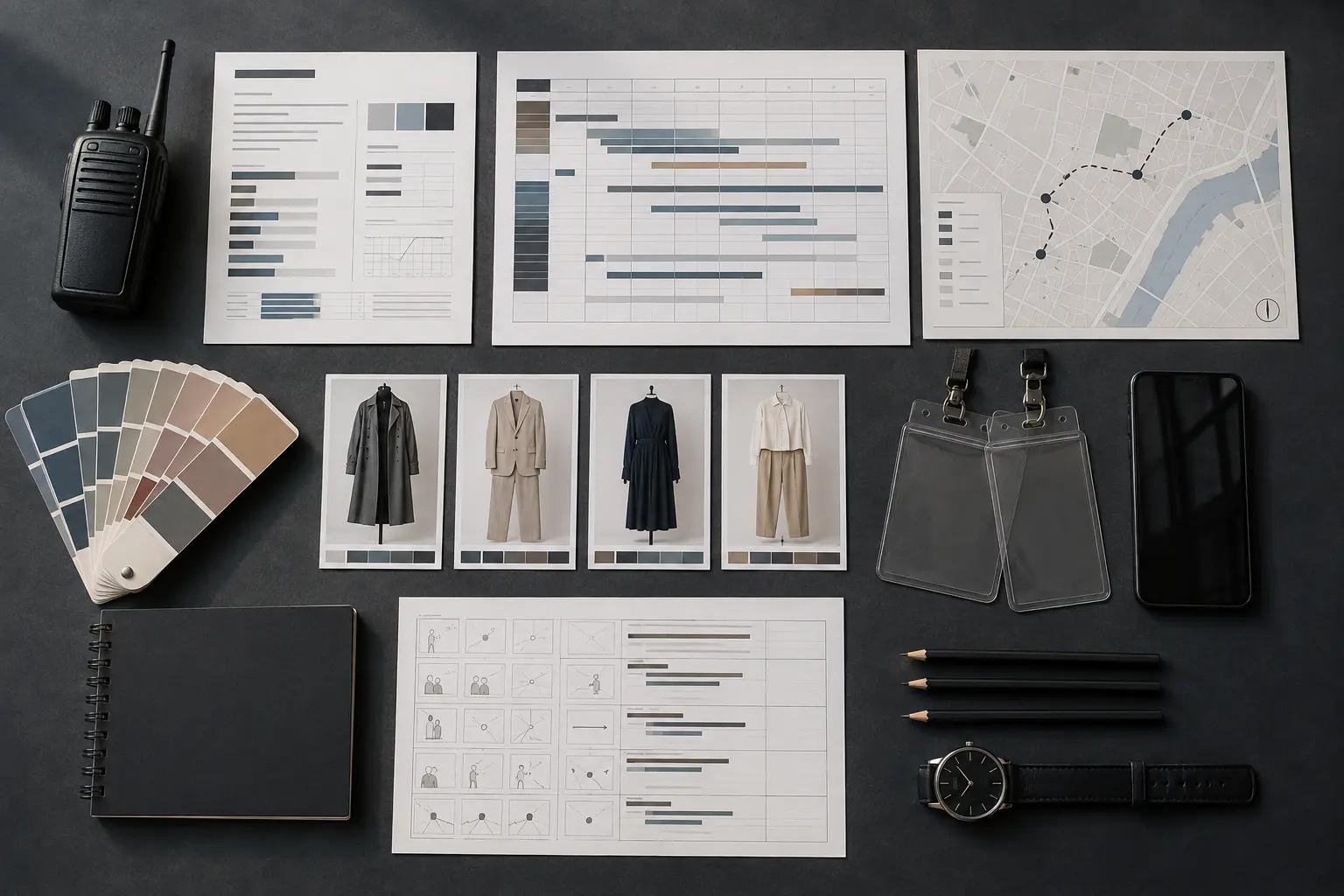
What to Include in a Fashion Campaign Call Sheet
The exact format depends on production scale, but the following sections form a reliable minimum. More information is not automatically better. Include what changes preparation, movement, safety, timing, authority or delivery.
1. Production identity and document control
- Brand, campaign and production title
- Shoot date and production day number
- Call-sheet version, issue date and issue time
- Producer or production-company contact
- Confidentiality notice when appropriate
Version information is essential. “Final” is not a version if three different files carry that label. Use a simple convention such as project code, shoot date, version number and issue time.
2. Primary contacts and escalation order
List the production contact first, followed by the location contact, emergency contact and department heads. Clarify whom recipients should contact for access, delay, creative decisions, product questions and emergencies. Avoid publishing personal information to people who do not need it, and obtain consent before distributing private numbers.
3. Location, access and movement
- Full address and a precise reporting point
- Map or navigation link plus any entrance that differs from the public entrance
- Load-in route, lift details and equipment restrictions
- Parking, public transport and vehicle instructions
- Security, check-in, keys, passes or identification requirements
- Holding, wardrobe, hair and makeup, catering and client areas
- Accessibility information
A street address is rarely enough for a complex property. Approved scout information should flow directly into the call sheet. Use the fashion campaign location scouting framework to confirm access, light, working zones, rights, restrictions and contingency before the document is locked.
4. General call and individual call times
A general call establishes the main production start, but departments often need different arrival times. Hair and makeup may begin before the lighting team is ready. A digital technician may need setup time before camera tests. A model’s call should reflect check-in, beauty, fitting and rehearsal, not merely the first scheduled frame.
For every person or department, specify:
- arrival or check-in time
- ready time where relevant
- reporting location and contact
- preparation or equipment requirement
- expected release or wrap window when it is useful
Do not create artificial punctuality by calling everyone hours early. That hides weak scheduling and wastes budget. Build the day within the wider fashion campaign timeline, then assign calls based on real dependencies.
5. Working schedule and priority milestones
The schedule should show the day at a useful level: crew call, setup, talent preparation, first shot, key looks or scenes, major moves, meal, client review, company move, final capture and wrap. Identify immovable windows such as location access, natural light, talent release or courier collection.
Allow buffers around transitions. A schedule with no margin is not efficient; it is merely optimistic. Flag which elements are must-have coverage and which can move or be removed if the day falls behind.
6. Talent, wardrobe, beauty and product information
Include confirmed talent, agency or guardian contacts where appropriate, call and ready times, fitting requirements, special movement needs and agreed restrictions. The detailed fashion campaign casting record should already contain availability and usage terms; the call sheet should surface only what affects the day.
List hero products, looks, samples and accountable handlers. Note fragile, unique, embargoed or not-yet-released items. Specify when products must arrive and who verifies completeness. For wardrobe and beauty, include preparation instructions that must be completed before arrival, while avoiding unnecessary personal or medical information.
7. Department requirements
Summarize the dependencies that other teams must act on: power restrictions, tethering position, steamer access, sound requirements, lighting-control rules, approved props, data handoff, client-monitor location or sustainability procedures. Department-specific equipment lists can remain separate attachments.
8. Weather, safety and contingency
For exterior or weather-sensitive work, include a forecast source, sunrise and sunset, expected temperature, precipitation, wind and the time of the final weather decision. Then name the response: weather cover, alternate zone, delayed call, reduced setup or rescheduled date.
Safety information should identify the responsible person, emergency number, nearest appropriate medical facility, exits, assembly point and significant production-specific hazards. A generic disclaimer is not a risk assessment. Complex shoots may require a separate safety plan, permits, insurance evidence or qualified specialists.
9. Meals, facilities and conduct
Confirm meal timing, water, dietary-information process, restrooms, changing areas and any location rules. Include a concise conduct or anti-harassment point of contact when the production policy requires it. The goal is not only compliance; basic working conditions directly affect performance, pace and trust.
10. Attachments and reference links
Link to the approved schedule, shot list, creative treatment, location pack, parking map or safety documents. Mark each link with the current version and access setting. Do not attach ten files without explaining which one controls which decision.
Download the Fashion Campaign Call Sheet Template
Turn the framework into a working production document. Download the editable Fashion Campaign Call Sheet Template with dedicated sections for document control, individual calls, contacts, access, scheduling, talent, products, safety, weather, contingency and final pre-issue verification.
The download includes an editable Excel workbook for production planning and a fillable PDF that can be issued to the confirmed team.
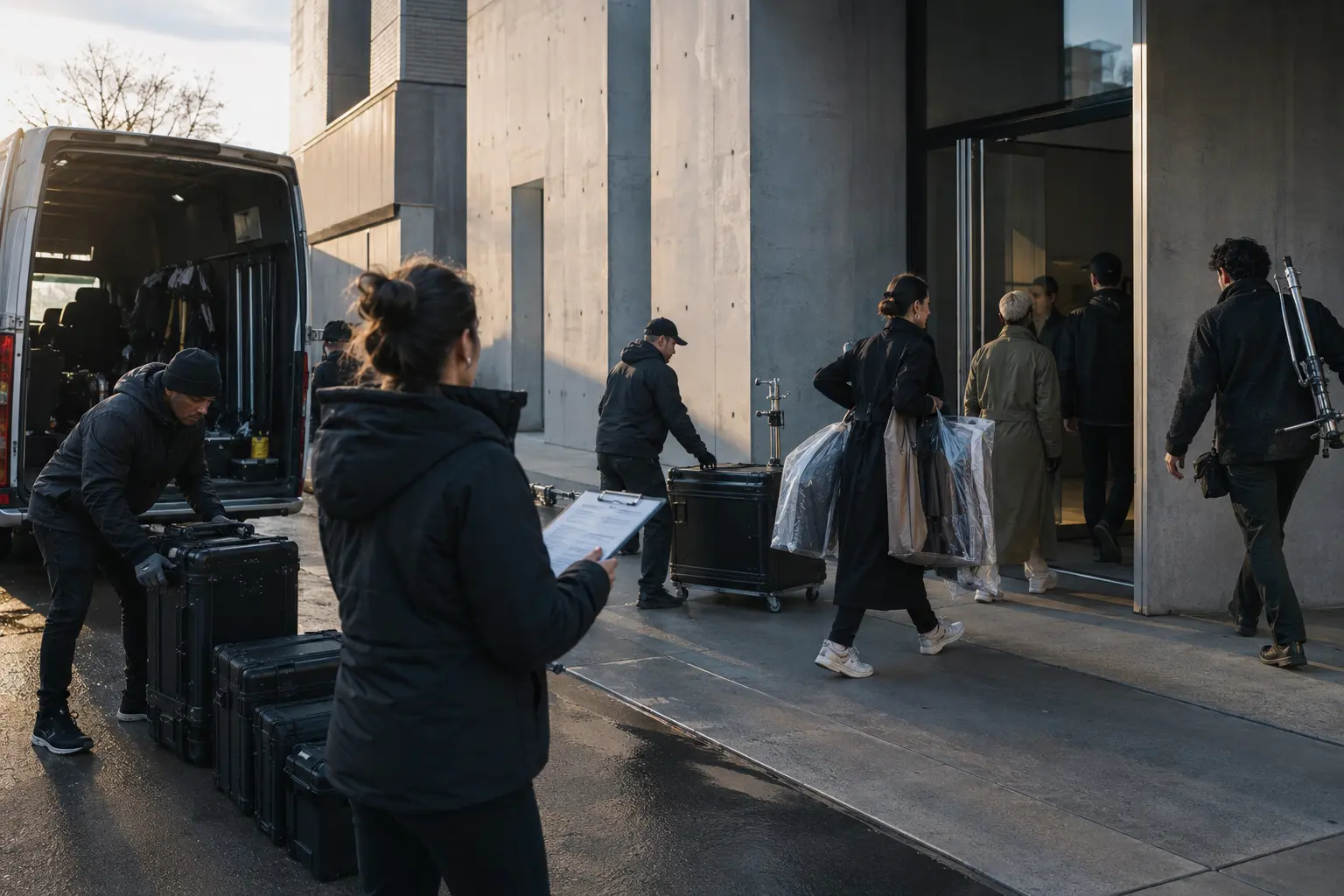
How to Build a Fashion Campaign Call Sheet Step by Step
Step 1: Start from approved source documents
Collect the approved brief, creative direction, shot list, schedule, crew list, talent bookings, location agreement, scout report, supplier confirmations, product manifest and safety information. If a source is unapproved, mark it as a blocker instead of silently converting an assumption into an instruction.
Step 2: Map dependencies before assigning times
Work backward from the first priority frame. Ask what must be ready: location access, lighting, set, product, wardrobe, hair, makeup, talent and client approval. Then calculate realistic call times for each dependency. Repeat the process for company moves and later setups.
Step 3: Verify facts with their owners
The producer should not guess a model’s contracted hours, a studio’s load-in door or a stylist’s preparation time. Ask the responsible owner to confirm the exact information. Record the confirmation and deadline so late changes can be traced.
Step 4: Separate universal from recipient-specific information
Keep the core document consistent, but make individual calls and sensitive contacts easy to identify. On larger or confidential productions, recipients may need tailored versions. Every version must still share the same master schedule and revision number.
Step 5: Run a pre-issue conflict check
Compare the call sheet against bookings, contracts and approvals. Check that talent hours cover the planned schedule, access begins before load-in, the meal does not collide with a location window, the stylist receives products before fitting and the brand approver is available for required reviews.
Step 6: Approve, lock and issue
The producer or production lead completes the operational check. The brand lead confirms client-side contacts, product availability and approval attendance. Department heads verify their calls and requirements. After sign-off, publish one locked PDF or controlled mobile-friendly document rather than an editable link that can change without notice.
Fashion Campaign Call Sheet Distribution and Version Control
For many standard productions, issue the call sheet approximately 24 to 48 hours before the shoot, after the essential facts are confirmed. Complex travel, permits, international crews or unusual preparation may require an earlier preliminary production memo, followed by the controlled final call sheet. Do not delay information people genuinely need simply to preserve a ritual of sending the file the night before.
Use a distribution list based on role. Confirm receipt from department heads, talent representatives, drivers, location contacts and anyone whose absence would block the day. A successful email delivery is not proof that a critical recipient opened the document.
If information changes:
- Assess the effect on calls, cost, safety, access and coverage.
- Update the master source, not an old exported copy.
- Increase the version number and change the issue time.
- Highlight the change in the distribution message.
- Require acknowledgement from affected recipients.
- Withdraw or clearly supersede the previous version.
A correction hidden inside a new attachment is not controlled communication. If a change is urgent, use direct contact as well as written distribution.
How to Use the Call Sheet on the Shoot Day
The document remains active after everyone arrives. Begin with a short pre-call briefing for department heads. Confirm the first setup, priority coverage, access rules, decision authority, safety issue and next hard deadline. The team does not need a dramatic speech; it needs a shared understanding of what cannot be missed.
During production, the producer or coordinator should track actual milestones against the plan. If the day slips, diagnose the critical path. Moving ten optional tasks faster will not solve a blocked hero setup. Use the call sheet, schedule and shot list together:
- the call sheet confirms people, place, timing and escalation
- the schedule shows the intended sequence
- the shot list confirms required coverage and priority
- the approved creative direction protects the visual idea
When circumstances require a change, record what changed, who approved it and what the decision affects. This prevents the post-production team or brand from later assuming that omitted coverage was simply forgotten.

Common Fashion Campaign Call Sheet Mistakes
Sending it before the underlying plan is approved
A polished layout cannot stabilize unresolved casting, location, products or timing. If critical information remains open, issue a clearly labeled preliminary memo and identify the decision deadline.
Using the same call time for everyone
A universal early call may appear safe, but it creates fatigue, unnecessary labor and crowded working areas. Schedule around dependencies and contracted time.
Confusing call time with ready time
A model’s arrival, completion of hair and makeup, wardrobe readiness and camera-ready moment are different milestones. State them separately when the distinction controls the schedule.
Burying essential access information
Put the reporting point, entrance, parking and delay contact where recipients can find them in seconds. A beautifully designed five-page document can still be operationally weak.
Copying sensitive information indiscriminately
Distribute only the personal data required for production. Private addresses, medical details, unreleased product information and personal phone numbers need appropriate handling and access.
Treating the forecast as the contingency plan
“Rain possible” is information, not a response. State the decision time, authority and operational alternative.
Letting live messages create a second schedule
Use chat for alerts and coordination but confirm material changes in a controlled update. Otherwise, different departments may follow different instructions.
Fashion Campaign Call Sheet Final Checklist
- Campaign name, date, day number and version are correct
- Producer, location and emergency contacts are verified
- Address, reporting point, access, parking and load-in are precise
- General, individual and ready times reflect real dependencies
- Schedule includes hard windows, buffers, meal and wrap
- Talent, products, looks and accountable handlers are confirmed
- Department requirements are concise and actionable
- Weather decision, safety notes and contingency are usable
- Attachments link to approved current versions
- Personal and confidential information has appropriate access
- Conflicts with bookings, rights, location terms and approvals are resolved
- Critical recipients have acknowledged receipt
From Production Document to Campaign Value
A fashion campaign call sheet will not improve a weak concept or replace experienced production leadership. Its value is more specific: it gives an approved plan a reliable point of execution. People arrive prepared. Critical dependencies become visible. The brand knows when it must decide. The crew understands where authority sits. Creative time is spent creating rather than reconstructing logistics.
Most importantly, the document protects the campaign as a connected asset system. When the brief, art direction, shot list, schedule and call sheet agree, the production is better positioned to capture the required formats, products and stories while there is still time to verify them.
Is Your Campaign Ready for Production?
A free Visual Audit can identify gaps between your campaign objective, visual direction, asset requirements and production plan before talent, locations and crew make those decisions expensive. It is a focused working session, not a portfolio presentation or generic sales call.
Request your free Visual Audit.
Frequently Asked Questions
Who creates a fashion campaign call sheet?
The producer, production coordinator or assigned production lead usually creates and controls it. Department heads, talent representatives, the location and the brand provide verified inputs, but one owner should issue the master version.
When should a call sheet be sent?
Many standard productions issue the final call sheet 24 to 48 hours before the shoot. Send essential travel, preparation or access information earlier when recipients need it. Complex productions may use an advance memo followed by the final controlled version.
What is the difference between a call sheet and a shot list?
The call sheet organizes people, location, timing, contacts, safety and logistics. The shot list organizes the images or video coverage the campaign must capture. They should reference the same approved plan, but neither document replaces the other.
Does a small fashion shoot need a call sheet?
Yes. The format can be shorter, but every paid production needs one reliable record of calls, contacts, location, schedule, requirements and contingencies. Small teams often combine roles, which makes clear ownership even more important.
Should every crew member receive the same call sheet?
Not always. The core schedule and version must remain consistent, while sensitive contacts, individual calls or confidential details may require tailored distribution. Each recipient should receive enough information to work safely and effectively, but not unnecessary personal data.
Can a messaging app replace the call sheet?
No. Messaging is useful for urgent updates, acknowledgements and live coordination. It does not provide reliable version control or a stable master record. Material changes should be incorporated into a controlled update.