
This independent editorial Trippen Shoes shoot began before the camera was switched on. A shared mood board established the visual territory, while two detailed shot lists translated that direction into executable setups. As a result, the production team arrived with a common framework for composition, lighting, props and product visibility, while retaining enough freedom to improve individual photographs on set.
Trippen Shoes Shoot: Project Overview
| Project | Independent editorial footwear campaign featuring shoes by Trippen |
|---|---|
| Strategic focus | Fashion campaign pre-production and visual consistency |
| Creative framework | Mood board, two shot lists and eight planned setups |
| Visual priorities | Silhouette, materiality, proportion, negative space and product visibility |
| Primary lesson | Planning should define the system without making execution rigid |
The Challenge: Make the Footwear the Visual Protagonist
Trippen footwear has a distinctive design language. The silhouettes, leather construction and sculptural soles require more than conventional product placement. Therefore, the central challenge was not simply to photograph several pairs of shoes. It was to build a coherent visual world in which the footwear controlled the composition.
The campaign also needed an editorial point of view. However, styling, posing and props could not compete with the product. Every element had to reinforce the footwear’s structure and attitude. That meant balancing human presence with product clarity, and visual experimentation with a repeatable campaign language.

From Mood Board to a Clear Campaign Direction
The Pinterest mood board was useful because it established recurring principles rather than prescribing one finished photograph. Across the references, shoes remained prominent while bodies were cropped, concealed or arranged into geometric forms. Minimal settings created negative space. Meanwhile, chairs, publications and simple objects supported the composition without becoming the main subject.
Those references suggested five priorities for the Trippen Shoes shoot:
- Product-first framing: the footwear needed to remain immediately readable
- Sculptural posing: legs and body lines would echo the architecture of the shoes
- Restrained environments: simple backgrounds would isolate silhouette and material
- Editorial interruption: selected props would introduce attitude and narrative pacing
- Controlled variation: the photographs would change without losing their shared visual logic
This distinction matters. As explained in the fashion mood board guide, a professional mood board should reduce ambiguity rather than encourage literal imitation. In this production, references established the boundaries of the visual system. Original execution still had to happen on set.
How the Fashion Campaign Shot List Made the Direction Executable
A mood board can communicate atmosphere, but it cannot replace production instructions. Consequently, the broad visual direction was translated into two shot lists covering eight planned setups. Each entry identified the pose family, camera angle, image orientation, lighting approach and relevant props.
The plan prioritized standing, seated, side and reclining compositions. Most frames were intended to be vertical and photographed from a low perspective. In addition, a consistent two-light setup was specified from the left and right. Chairs, magazines and other surfaces provided planned structures for the poses.
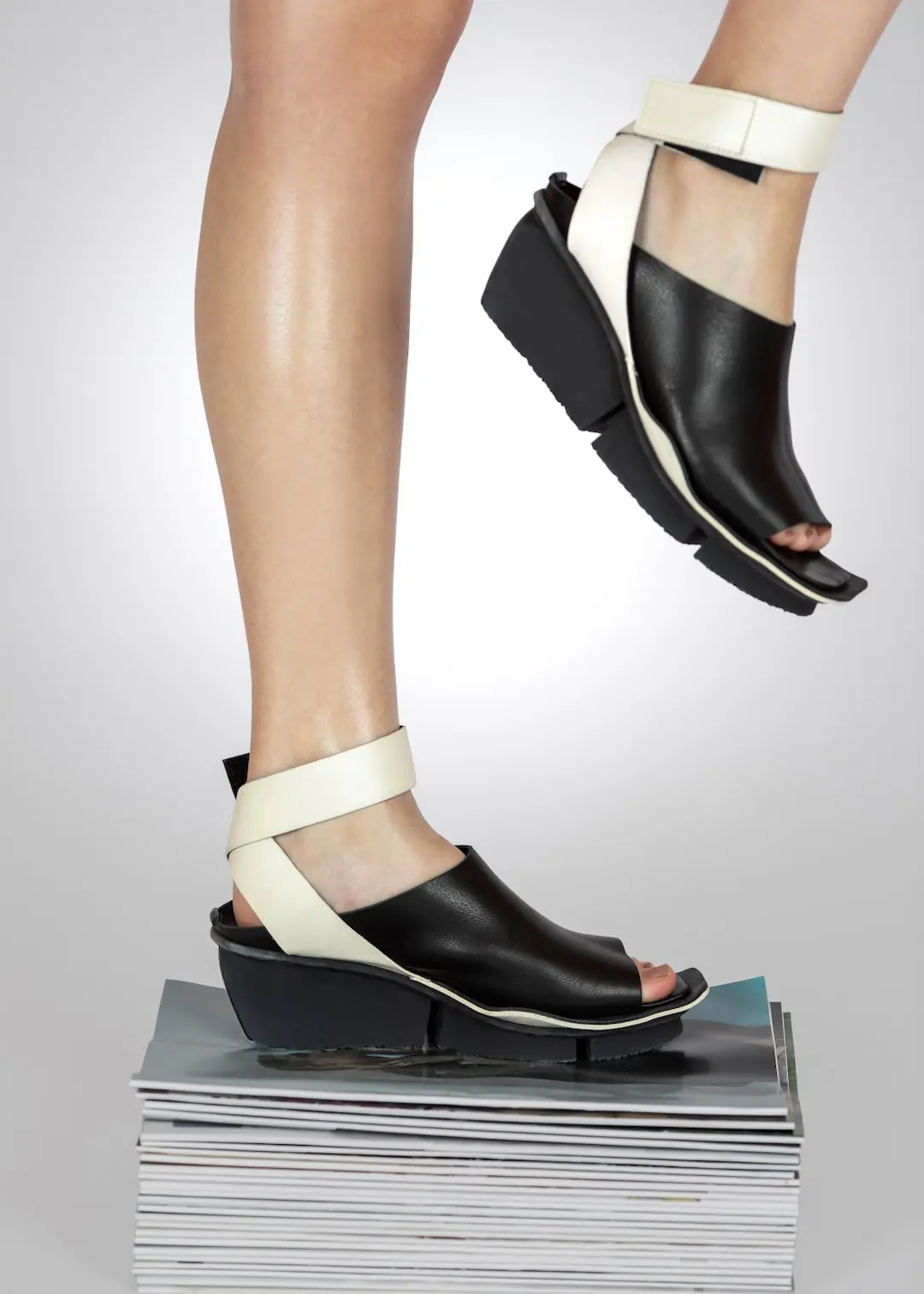
Pre-production therefore removed several basic decisions from the shooting day. The team did not need to invent the crop strategy, general lighting logic or product hierarchy from scratch. Instead, the production could concentrate on refinement: the exact leg position, the relationship between shoe and chair, the balance of negative space and the way each material responded to light.
For brands planning a comparable production, the broader process is outlined in the guide to campaign concept development. The essential principle is the same: creative direction becomes operational only when it is translated into decisions a production team can execute.
Using Silhouette and Proportion to Create Consistency
The final image set repeatedly uses legs as compositional lines. Some poses are symmetrical and contained. Others extend across the frame or interrupt its edges. Nevertheless, the footwear consistently remains the visual anchor.
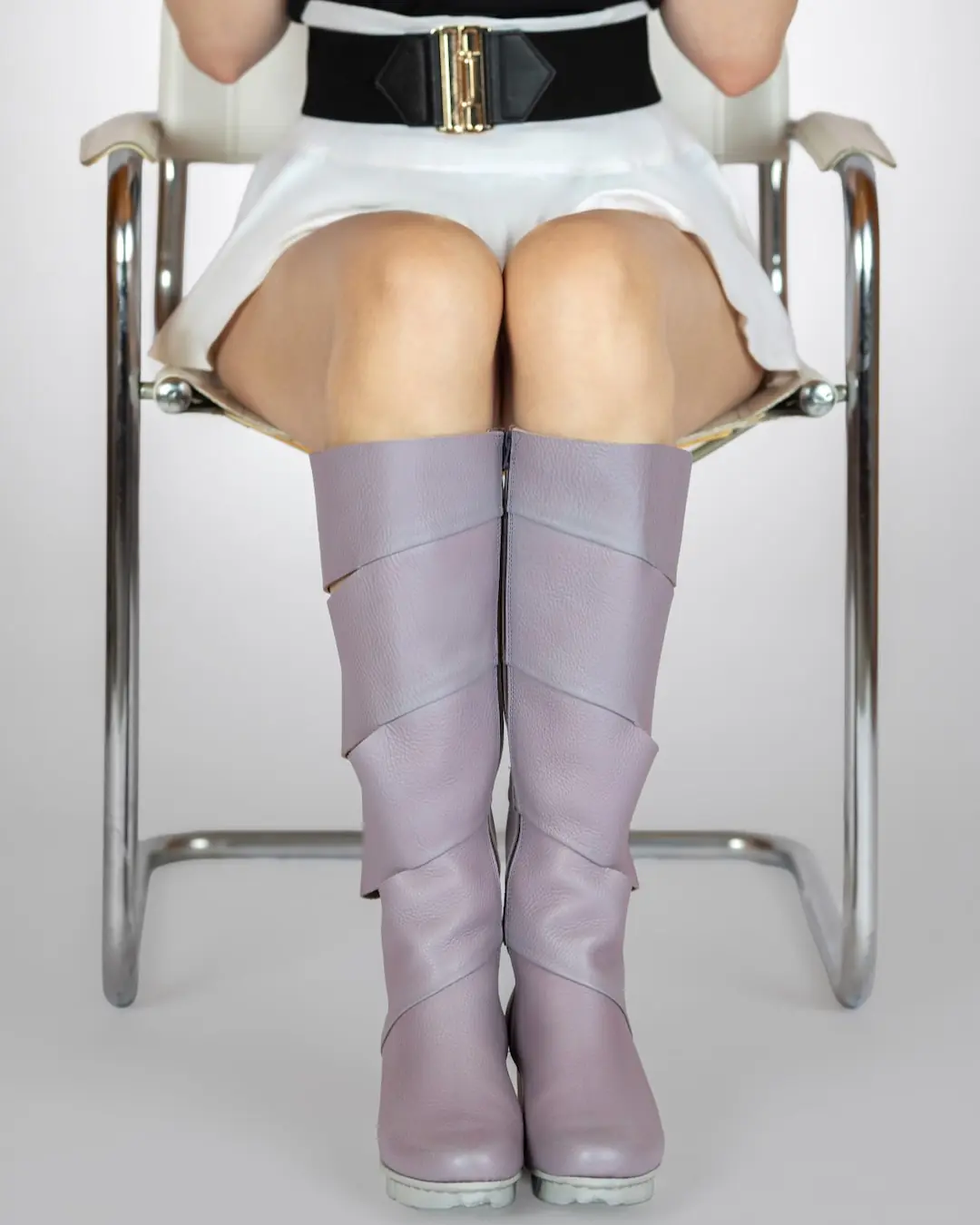
This approach allowed different shoe designs to sit within one campaign system. Rather than forcing every product into the same pose, the team used a shared set of principles: controlled cropping, deliberate geometry, minimal environmental information and clear separation between the footwear and background.
Materiality and Form in the Trippen Shoes Shoot
Footwear campaign photography must describe construction as well as mood. Therefore, the lighting and framing needed to preserve detail in the black leather while separating the shoes from the grey set. The restrained palette helped seams, panels, cutouts and sole shapes remain visible.
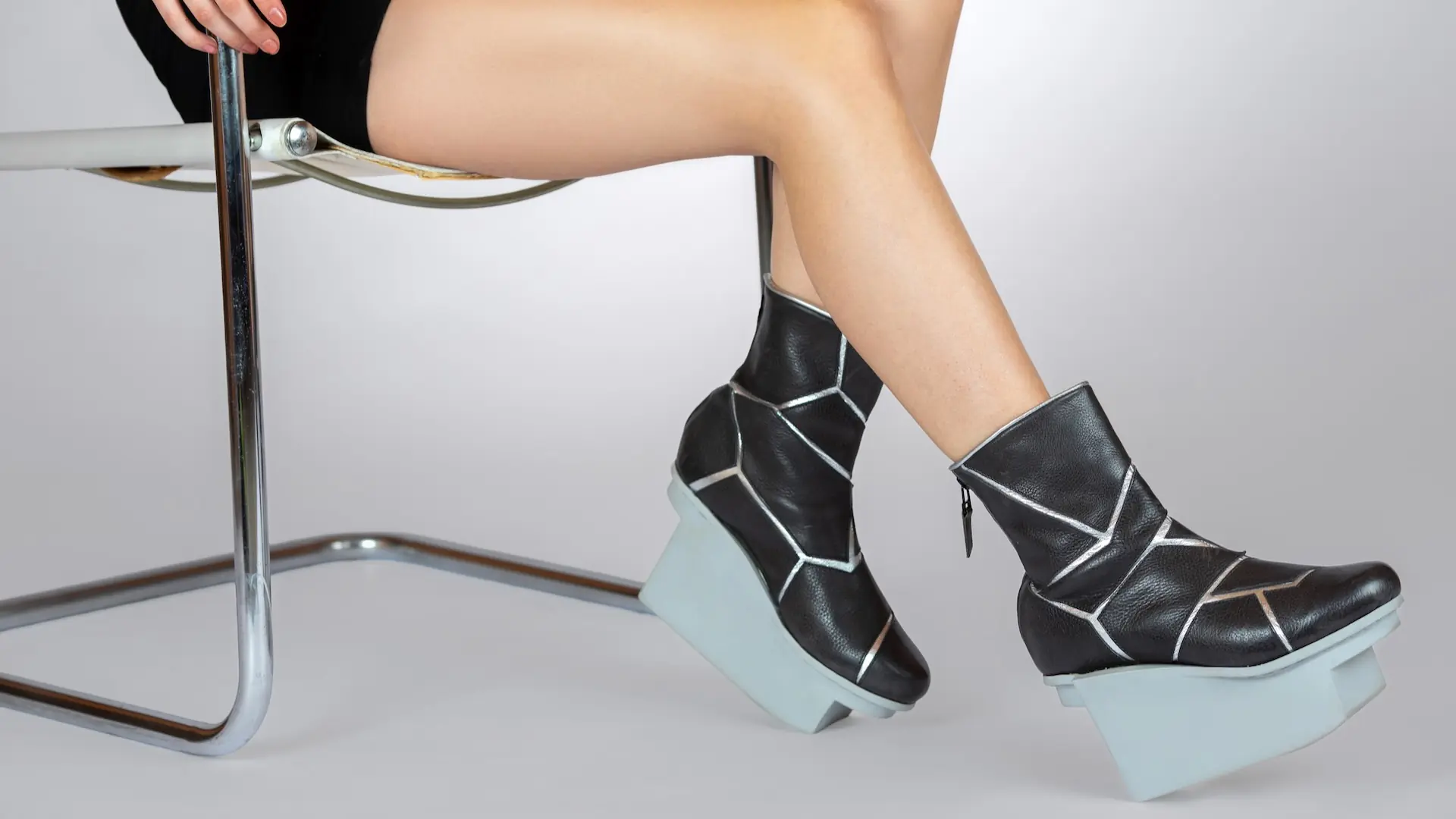
Close and medium framings also served different purposes. Tighter compositions made material and construction easier to evaluate. Wider arrangements, by contrast, introduced posture, attitude and spatial balance. Together, those perspectives created a more complete visual description of the footwear.
Why Strong Pre-Production Still Leaves Room to Adapt
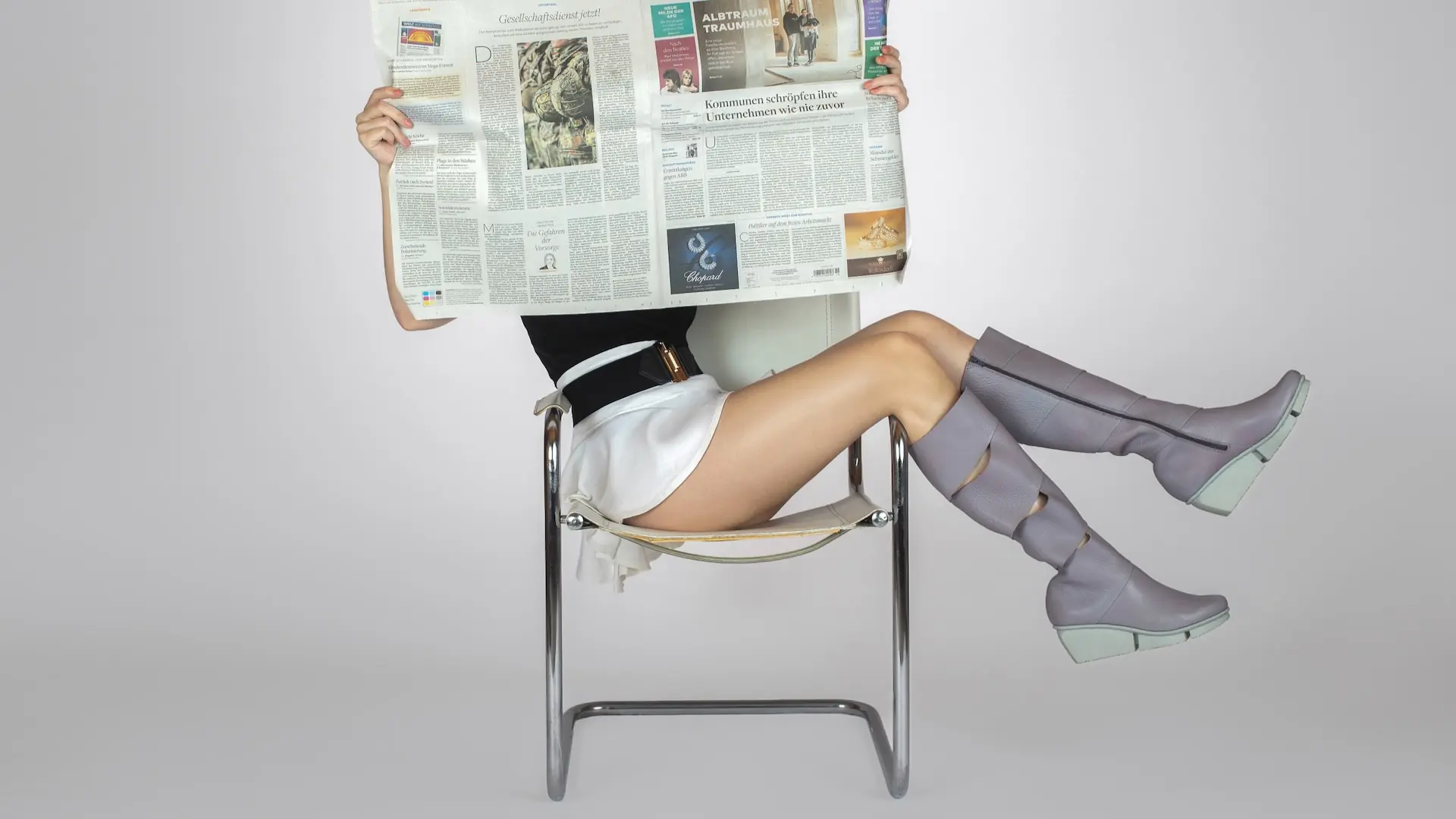
The shot lists were not treated as rigid diagrams. Several production choices evolved once the team could see the shoes, models, props and set together. For example, the finished campaign used a chrome chair rather than reproducing every furniture reference literally. Publications became both a pedestal and a narrative device. Additionally, selected horizontal frames expanded the campaign beyond the original vertical priority.
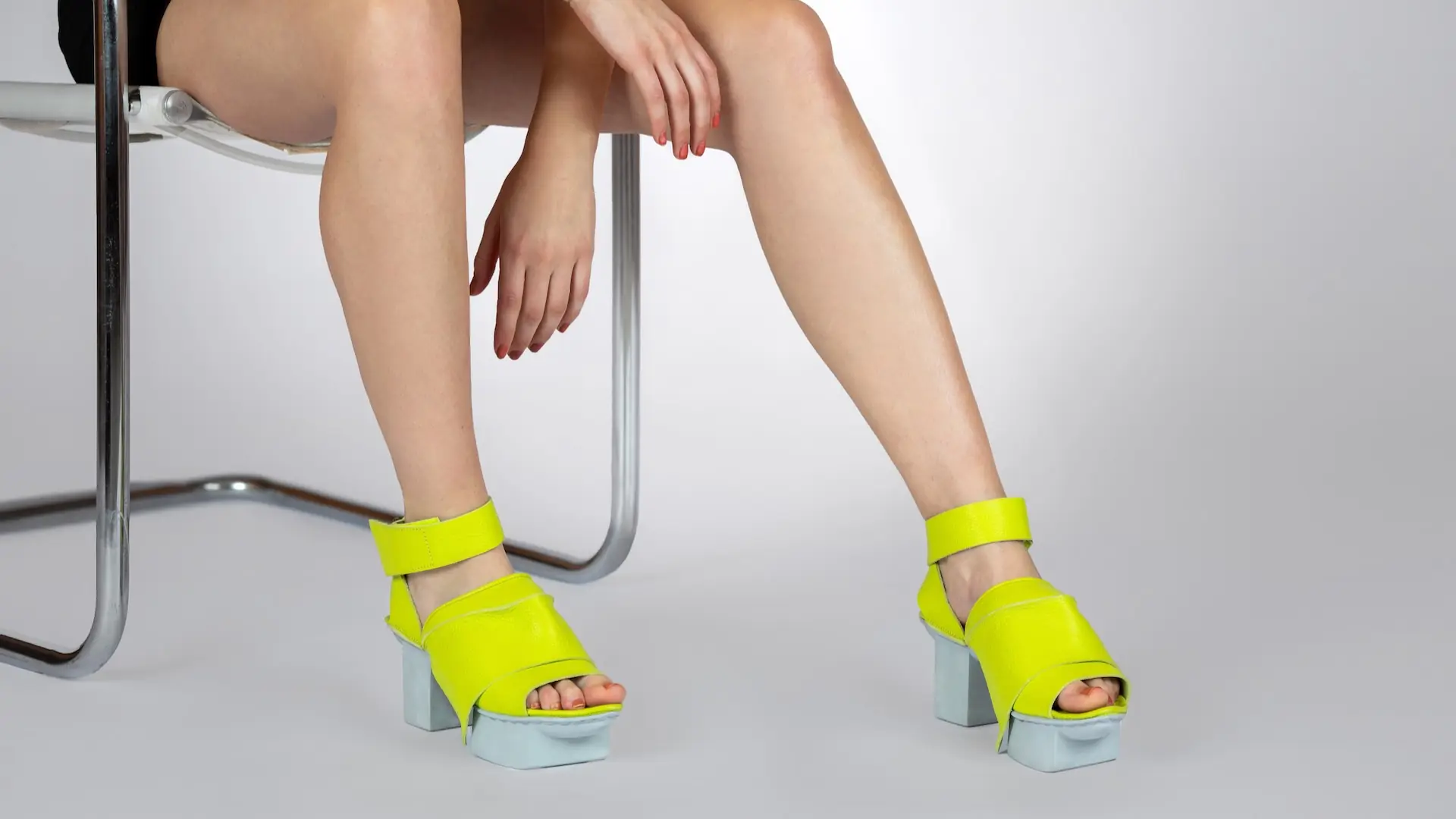
That is the practical value of pre-production: it reduces foundational uncertainty without eliminating judgment. Because the team already shared a visual hierarchy, it could change a pose or prop while protecting the campaign’s central idea. Planning created a decision filter. If an adaptation strengthened product visibility, silhouette or editorial rhythm, it belonged in the system.
Turning a Planned Prop into Editorial Narrative
The publication concept became one of the clearest examples of translation rather than imitation. The mood board included editorial references involving magazines and newspapers. The shot list then specified magazines as a prop. On set, that idea developed into a full newspaper composition that concealed identity and redirected attention toward posture and footwear.
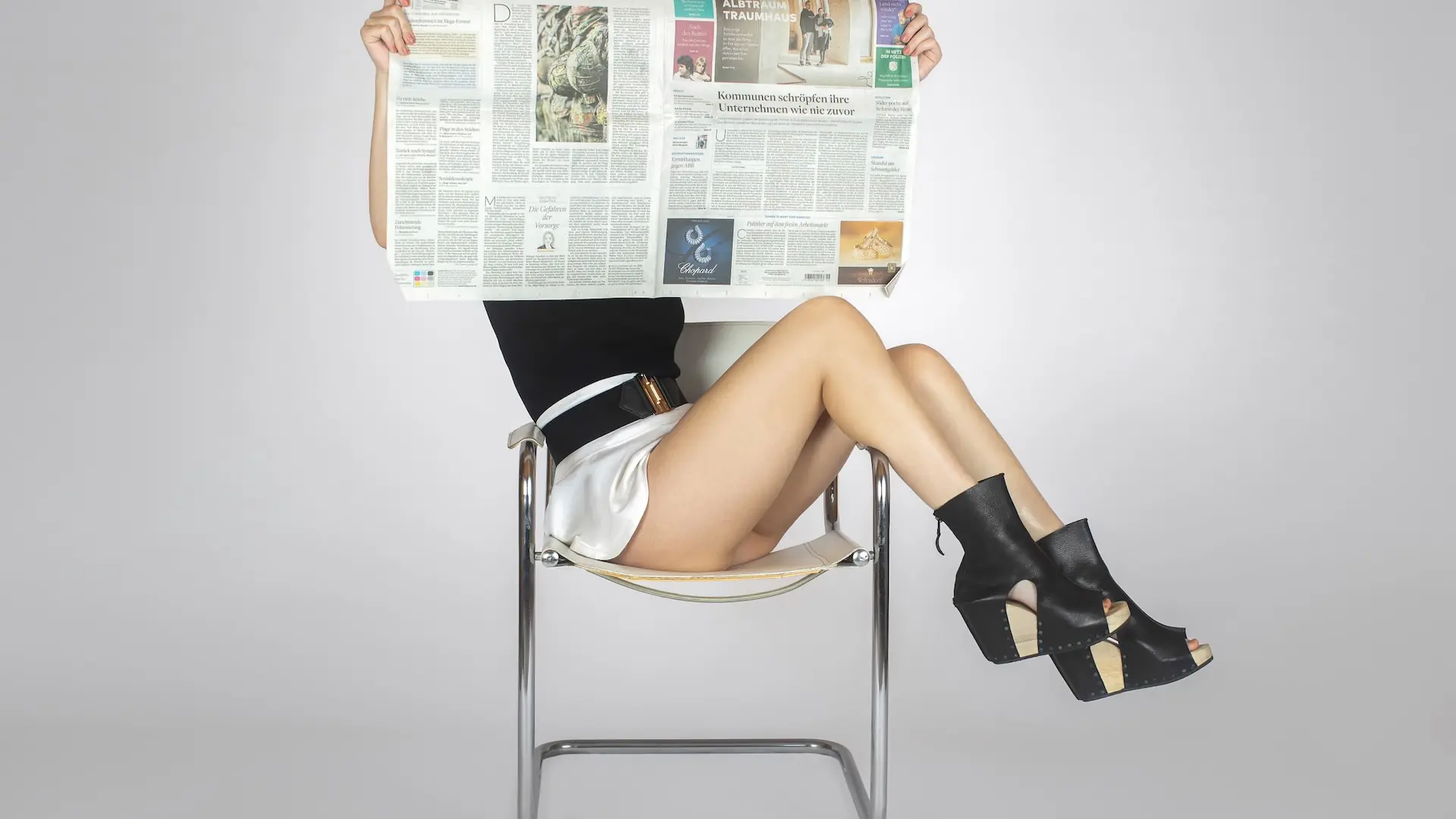
The photograph interrupts the cleaner silhouette studies without feeling unrelated. It uses the same neutral environment, controlled crop and chair structure. As a result, it expands the campaign story while remaining recognizably part of the same body of work.
Building Variation for Campaign Applications
Although the shot lists emphasized vertical assets, the final selection also included horizontal compositions. This was a useful adaptation because campaign images often need to work across banners, editorial layouts, social placements and presentation formats. A single orientation rarely covers every application efficiently.
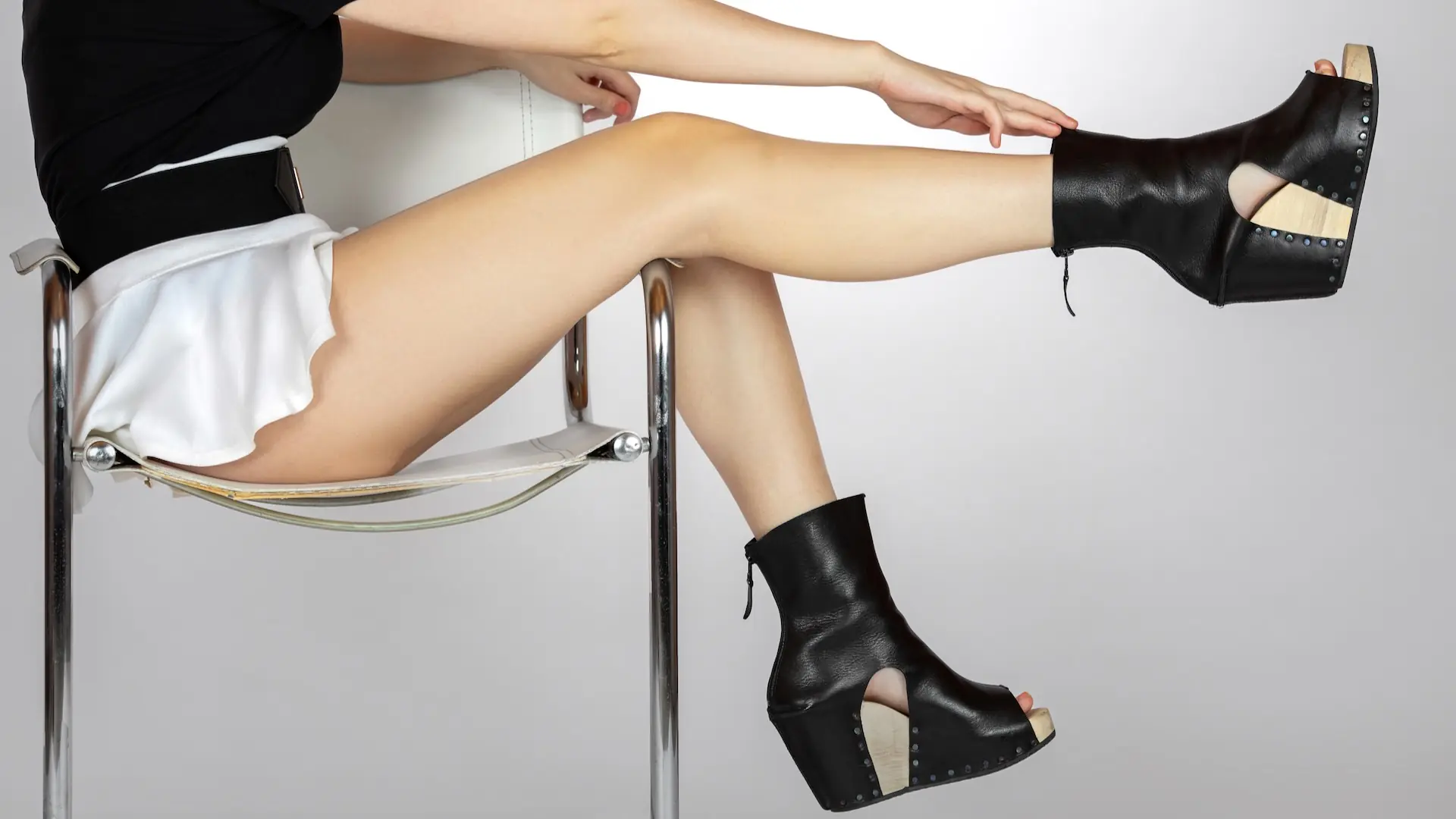
The production was not documented as a channel-performance campaign, so it would be inaccurate to claim measured advertising or sales results. However, the mix of vertical, horizontal, tight and wider frames demonstrates a sound planning principle: intended applications should influence composition before final delivery. The article on what a campaign shoot should include explains why deliverable planning needs to happen before production rather than after the images are created.
The Result: One Coherent Visual System, Not a Collection of Isolated Images
The finished Trippen Shoes shoot moves between sandals, platforms and boots while maintaining a recognizable campaign language. Product visibility remains high. The chrome chair establishes a recurring spatial structure. Meanwhile, controlled lighting, grey backgrounds, cropped bodies and deliberate negative space connect the full selection.
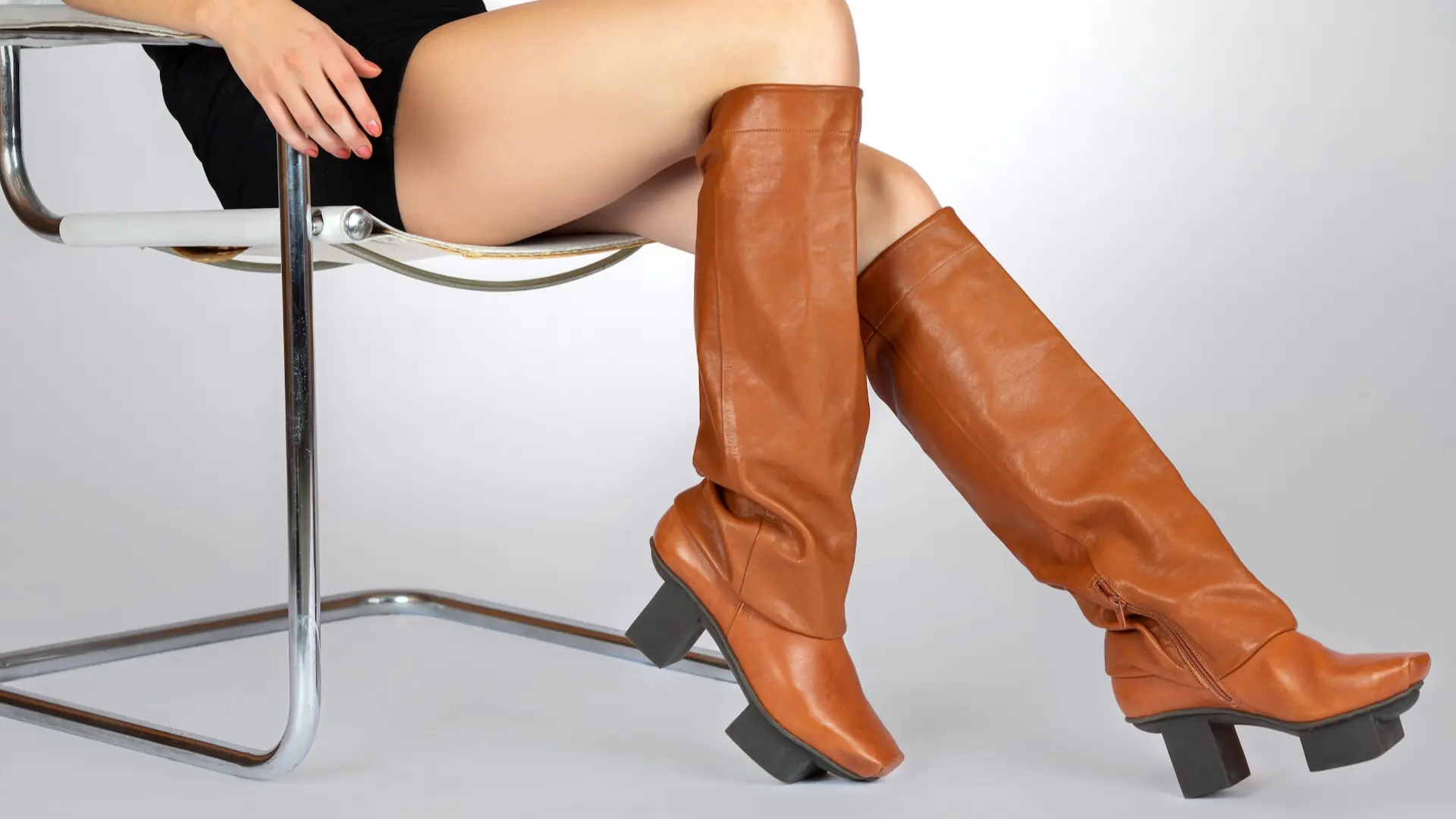
Most importantly, the photographs do not look like copies of individual reference images. The campaign adopted underlying principles—product priority, sculptural posing, editorial cropping and purposeful props—then developed an original execution around the specific footwear.
What Fashion Brands Can Learn from This Pre-Production Process
Pre-production matters because it improves the quality of decisions made during execution. A mood board alone is not enough. Likewise, a shot list without a strategic visual direction can become a mechanical checklist. The strongest process connects both.
- Define the visual territory. Decide what the campaign should communicate before collecting references
- Extract principles, not copies. Identify the useful patterns behind reference images
- Translate direction into production instructions. Specify crops, orientations, angles, lighting, poses, props and priorities
- Protect the non-negotiables. Make product hierarchy and campaign identity clear to every department
- Adapt intelligently. Allow better ideas to emerge on set without abandoning the agreed system
- Edit as a campaign. Select images for how they work together, not only for their individual impact
For a wider strategic framework, see how a fashion marketing campaign connects planning, content and distribution.
Trippen Shoes Shoot Credits
- Photographer: Phil Halfmann
- Creative Director: Sophia Lenore
- Hair Stylist: Sophia Lenore
- Makeup Artist: Sophia Lenore
- Wardrobe Stylist: Sophia Lenore
- Models: Liza & Rosalie
- Retoucher: Stas Ponomarenko
- Shoes: Trippen
Plan the Campaign Before Production Begins
If your next fashion or beauty production needs to support a clear launch, visual identity or content system, the planning should begin before the shot list is finalized. A focused working session can identify visual gaps, campaign priorities and the assets the production must deliver.