
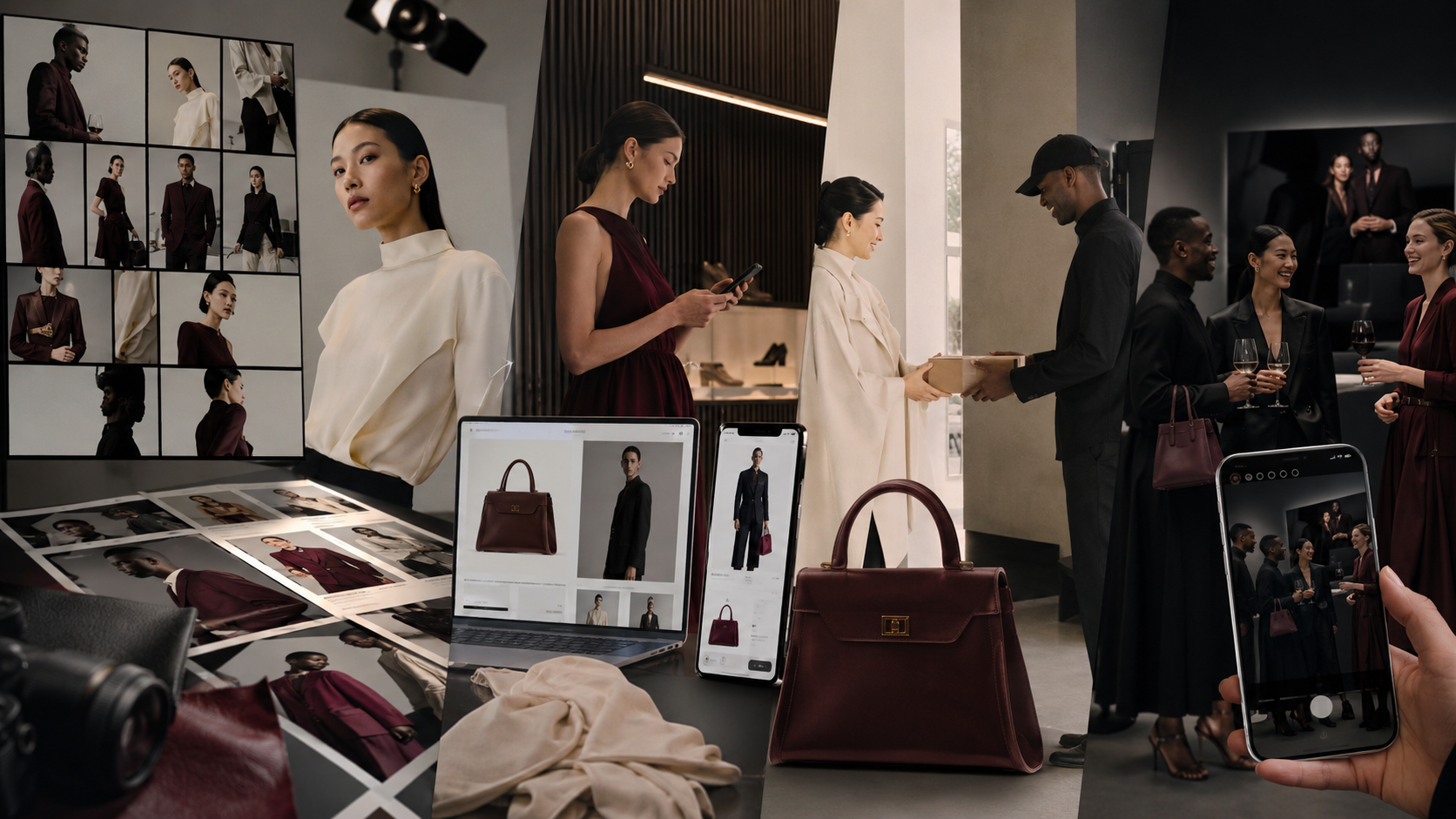
What Is a Fashion Marketing Funnel?
A Fashion Marketing Funnel is a planning framework that organizes how a fashion brand attracts attention, builds preference, removes purchase friction, develops loyalty and encourages recommendation. The model helps teams answer four essential questions at every stage:
- What does the customer need to see, understand or believe?
- Which message and creative asset can meet that need?
- Which channel is most appropriate for delivering it?
- Which metric indicates whether the stage is working?
Although the word “funnel” suggests a neat downward path, real buying behavior is not linear. Someone may discover a brand on Instagram, visit a product page, leave, see a creator wearing the item, read reviews, subscribe to email and purchase weeks later. Meanwhile, another customer may search for a specific product, compare two options and buy during the first visit. Therefore, the funnel should not be treated as a literal prediction of individual behavior.
Nevertheless, abandoning the model would create a different problem. Without a shared framework, teams often plan channels in isolation and measure every asset with the same metric. The funnel remains valuable because it exposes missing content, unclear handoffs and misplaced expectations. In other words, it is a management tool, not a claim that every customer behaves identically.
Why Fashion Brands Need More Than Awareness
Fashion marketing is unusually dependent on desire. Strong photography, casting, styling and art direction can establish a world customers want to enter. However, desire alone does not answer practical questions. Customers may still need to understand silhouette, texture, construction, sizing, versatility, shipping, returns and social proof before making a decision.
As a result, fashion brands frequently overinvest at the top of the funnel. They produce dramatic campaign imagery and a stream of discovery content, while the middle and lower stages rely on generic product pages, repeated crops and discounts. This imbalance may create reach without sufficient confidence. Moreover, it can force paid media to keep acquiring attention that the website and nurture system fail to convert.
A complete fashion conversion funnel balances aspiration with evidence. First, the brand creates a distinctive reason to care. Next, it makes the product easier to evaluate. Then, it reduces friction around purchase. Afterward, it expands the value of ownership and gives customers reasons to return. Finally, it creates moments worth sharing.
The Five Stages of a Fashion Marketing Funnel
1. Awareness: Create Distinctive, Qualified Attention
At the awareness stage, the customer may not know the brand, the product or even the problem the product solves. Therefore, the immediate goal is not to explain everything. It is to earn qualified attention and establish a memorable point of view.
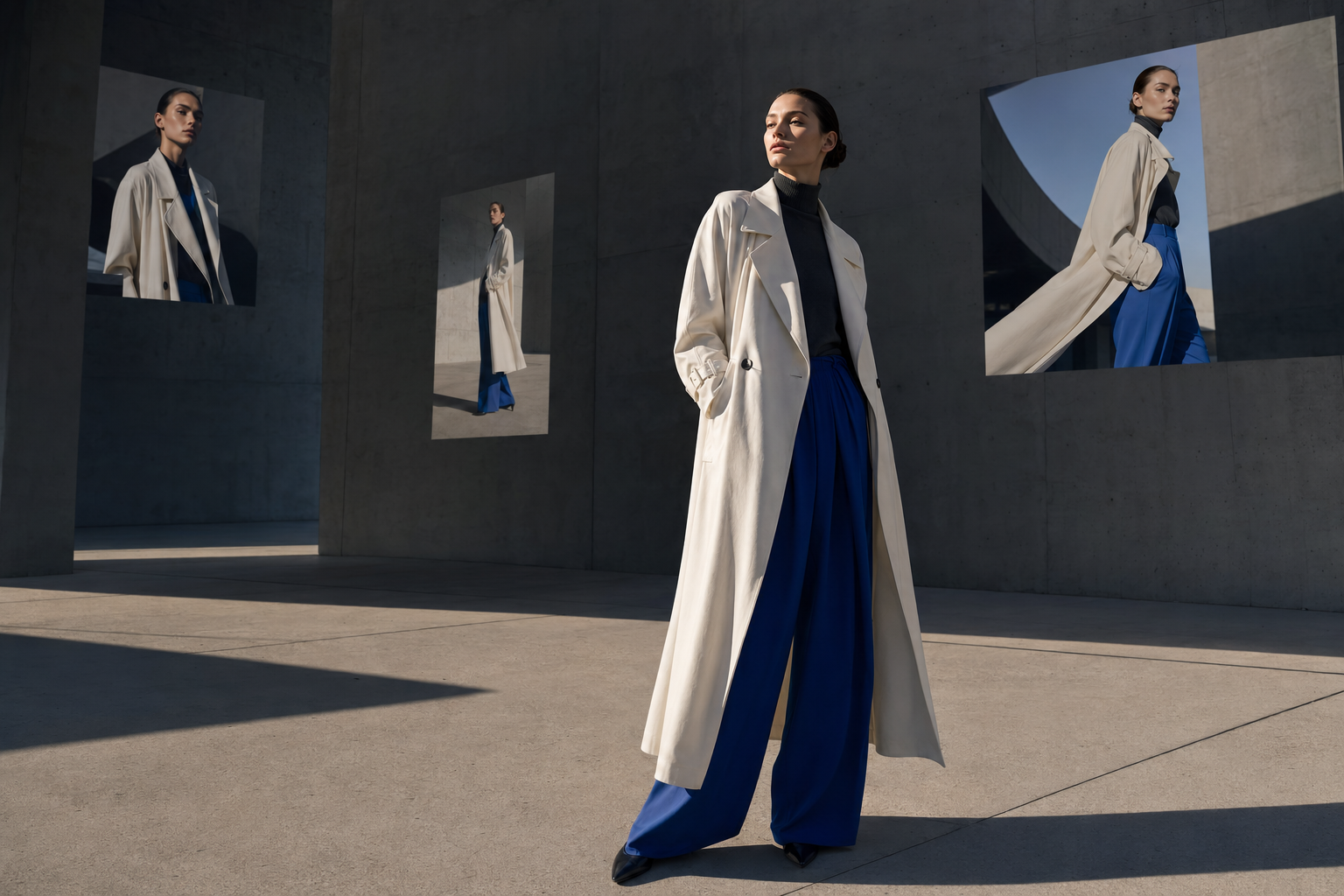
Effective awareness content communicates a recognizable brand world through creative codes such as color, casting, silhouette, composition, lighting, movement and tone. These elements should be distinctive enough to build memory across repeated exposure. At the same time, they should attract the right audience rather than maximize empty reach.
Useful awareness assets include:
- hero campaign photography and film;
- short-form video with a strong visual opening;
- editorial stories and cultural collaborations;
- creator introductions and earned media;
- search-led guides and Pinterest content;
- paid-social prospecting creative.
Typical channels include Instagram, TikTok, Pinterest, YouTube, PR, editorial placements, creators, search and paid social. However, distribution should follow audience behavior and campaign goals, not a default requirement to appear everywhere.
Awareness metrics may include qualified reach, video hold rate, new visitors, branded search growth, direct traffic and the cost of reaching the intended audience. Engagement can provide context; nevertheless, it should not be confused with business impact. A large volume of low-intent likes may be less valuable than a smaller increase in relevant site visits or branded searches.
2. Consideration: Turn Interest Into Preference
Once a potential customer becomes interested, the job changes. Consideration content must answer the questions that stand between attraction and confidence. For fashion, those questions often concern fit, fabric, construction, styling, versatility, provenance, care and value.

This is where a strong fashion customer journey moves from atmosphere to substance. Campaign imagery remains important because it preserves desire. However, it should now work alongside product proof. Detailed stills, movement clips, fit references, styling combinations, customer reviews and comparisons help shoppers imagine ownership and reduce perceived risk.
Useful consideration assets include:
- product-detail and material close-ups;
- fit, scale and movement demonstrations;
- styling guides and outfit combinations;
- craftsmanship, sourcing or process stories;
- customer reviews and credible creator demonstrations;
- product comparisons and buying guides;
- email nurture sequences and retargeting creative.
Website and e-commerce pages play a central role at this stage. In addition, email, organic social, creator content, search and retargeting can bring the customer back with more relevant evidence. Therefore, a fashion content strategy should not merely recycle the awareness image with a stronger call to action. It should deliberately produce the information customers need to progress.
Consideration metrics may include engaged product-page sessions, return visits, product video completion, saves, email sign-ups, size-guide use, review interaction, add-to-wishlist activity and assisted conversions. Because the customer may move across channels, evaluate patterns rather than forcing every interaction into a last-click explanation.
3. Conversion: Make the Decision Clear and Low-Friction
At conversion, the customer has sufficient interest but still needs a compelling, trustworthy path to purchase. The task is not simply to add urgency. Instead, the brand should remove uncertainty and make the next action obvious.
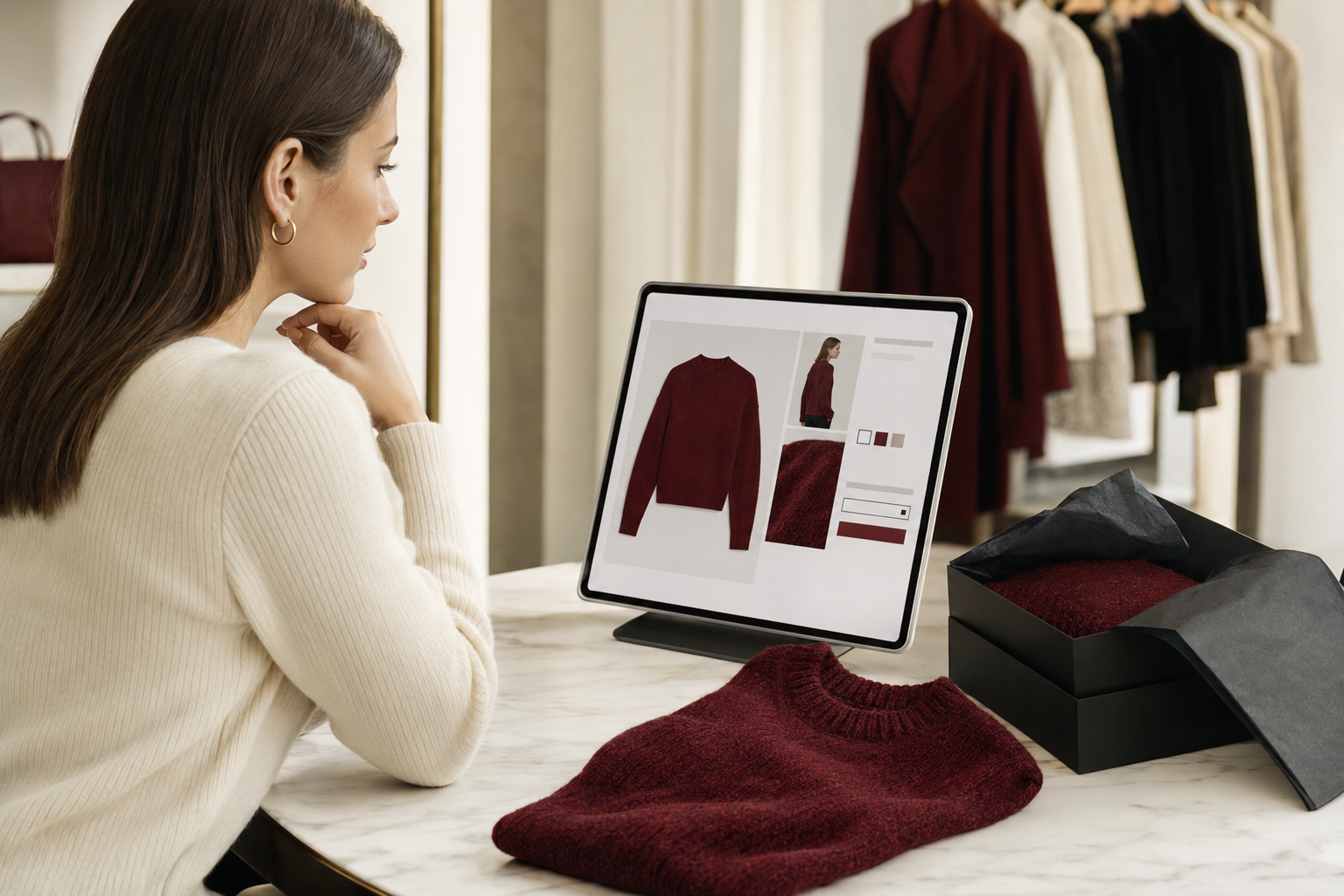
A high-performing fashion conversion funnel aligns the promise of the campaign with the reality of the product page. If an advertisement emphasizes craftsmanship, the destination should immediately provide material and construction evidence. If the creative sells versatility, the page should show multiple looks. In contrast, a disconnect between campaign message and landing-page content forces the customer to reconstruct the argument alone.
Conversion support typically includes:
- clear product titles, pricing and availability;
- consistent, accurate product photography;
- fit, sizing, delivery and return information;
- reassuring proof and relevant reviews;
- focused landing pages for campaign traffic;
- cart and checkout recovery;
- retargeting based on genuine behavior and intent.
Discounts may increase short-term conversion, but they are not a substitute for clarity. Frequent promotion can train customers to delay purchases and may weaken premium positioning. Therefore, brands should first diagnose whether the barrier is price, insufficient proof, poor merchandising, unclear fit, low trust or checkout friction.
Product images that reduce purchase hesitation.
Conversion metrics include conversion rate, add-to-cart rate, checkout completion, customer acquisition cost, revenue per session, average order value and return on ad spend. Yet averages can hide important differences. Accordingly, segment performance by source, device, geography, customer status, product category and campaign message whenever the volume supports a reliable comparison.
4. Retention: Increase the Value of Ownership
The Fashion Marketing Funnel should not end at checkout. In many businesses, sustainable growth depends on repeat purchase, stronger customer value and lower dependence on continuous acquisition. Retention begins with the product and service experience; marketing cannot compensate for disappointing quality, inaccurate representation or poor fulfillment.

When the experience is strong, content can extend it. Post-purchase communication should help the customer use, style, care for and appreciate the product. Subsequently, the brand can introduce complementary pieces, relevant launches, early access and community experiences. The goal is not to increase message frequency indiscriminately. Rather, it is to remain useful and recognizable after the transaction.
Retention assets may include:
- care and longevity guidance;
- post-purchase styling content;
- complementary product recommendations;
- early access and clienteling communication;
- repair, alteration or resale information where relevant;
- customer-specific editorial stories;
- loyalty and community experiences.
Important metrics include repeat purchase rate, purchase frequency, customer lifetime value, time to second purchase, retention by acquisition source, email contribution and return rate. However, examine the economics behind the metric. A second purchase driven by aggressive discounting may not create the same value as a full-price return from a satisfied customer.
5. Advocacy: Make the Experience Worth Sharing
Advocacy occurs when customers, creators, editors or communities voluntarily extend the brand’s reach. Although referral programs can encourage action, genuine advocacy begins with a distinctive product and experience. People share what strengthens identity, creates social value or helps someone else make a decision.
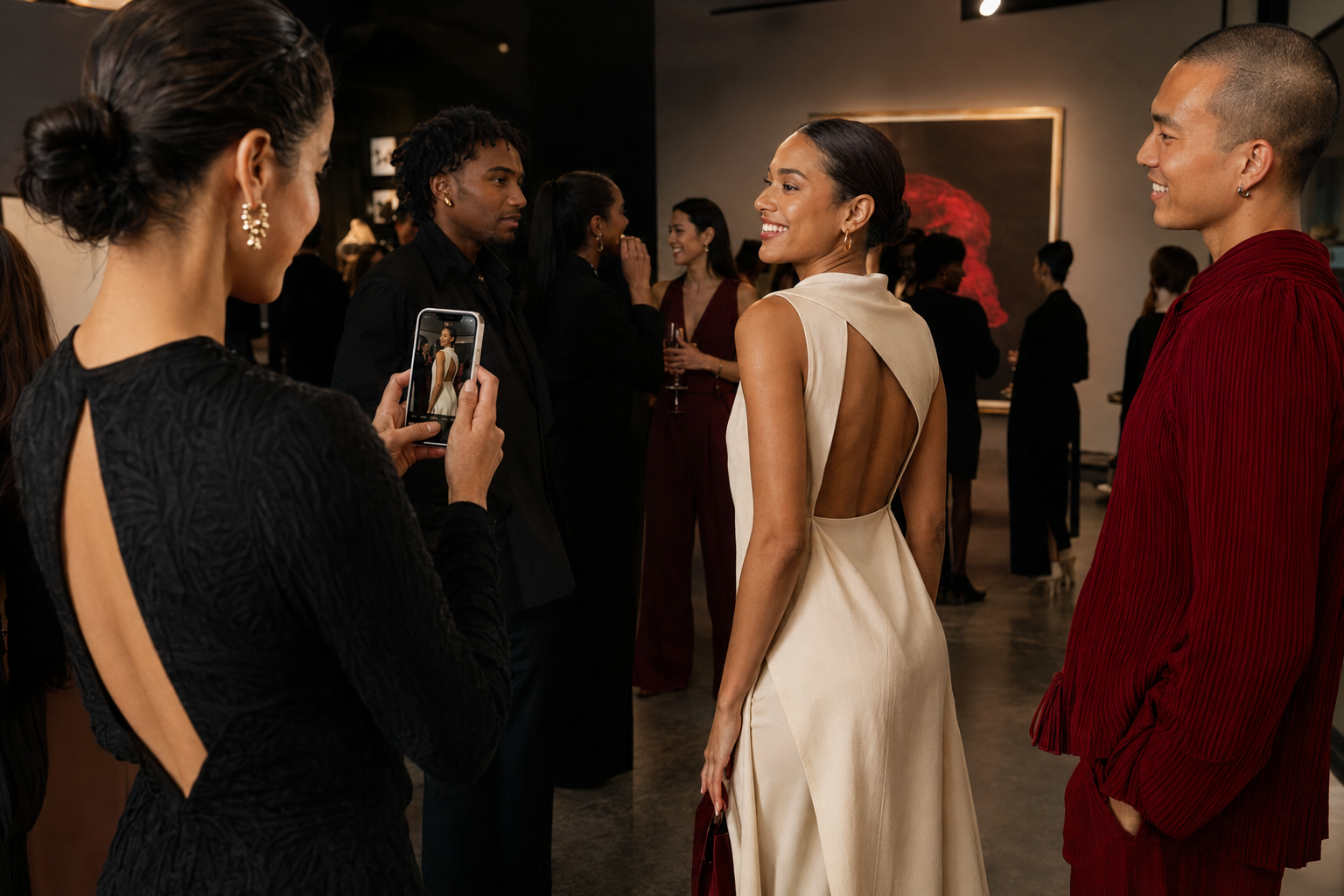
Brands can support advocacy by making participation easy and meaningful. For example, they can feature customer styling, invite clients into events, provide useful sharing assets, recognize community contributions and respond visibly to feedback. Nevertheless, advocacy should not become a request for unpaid promotional labor. The exchange must create value for the participant as well as the brand.
Advocacy metrics can include referral revenue, customer-generated content, review volume and quality, organic mentions, earned reach, creator re-engagement and recommendation intent. In addition, qualitative feedback matters. The language customers use when recommending the brand often reveals whether the intended positioning is actually understood.
Map Content Jobs Across the Fashion Customer Journey
The most practical way to operationalize the funnel is to create a content map. Start with the customer’s question at each stage, then assign a message, asset, channel, destination and metric. This process prevents teams from jumping directly from a broad objective to a shoot list.

| Stage | Customer question | Content job | Primary evidence | Example metric |
|---|---|---|---|---|
| Awareness | Why should I notice this? | Create memory and relevance | Distinctive campaign world | Qualified new traffic |
| Consideration | Is this right for me? | Build preference and confidence | Fit, quality, styling and proof | Engaged product visits |
| Conversion | Why should I act now? | Remove friction and clarify value | Accurate offer and purchase path | Conversion rate |
| Retention | Why should I return? | Expand ownership value | Utility, service and relevance | Repeat purchase rate |
| Advocacy | Why should I share this? | Create participation and recommendation | Identity, experience and community | Referral contribution |
After mapping the content jobs, compare the framework with your current asset library. Most brands will discover duplication in some stages and shortages in others. For instance, there may be dozens of awareness photographs but no useful movement clips, size references or post-purchase styling assets. That insight should inform the next production brief.
Design Campaign Photography for the Entire Fashion Marketing Funnel
Campaign production becomes more efficient when intended use is defined before the shoot. Rather than treating photography as a final creative output, plan it as media infrastructure. Each scene, composition and format should support a known placement or customer question.
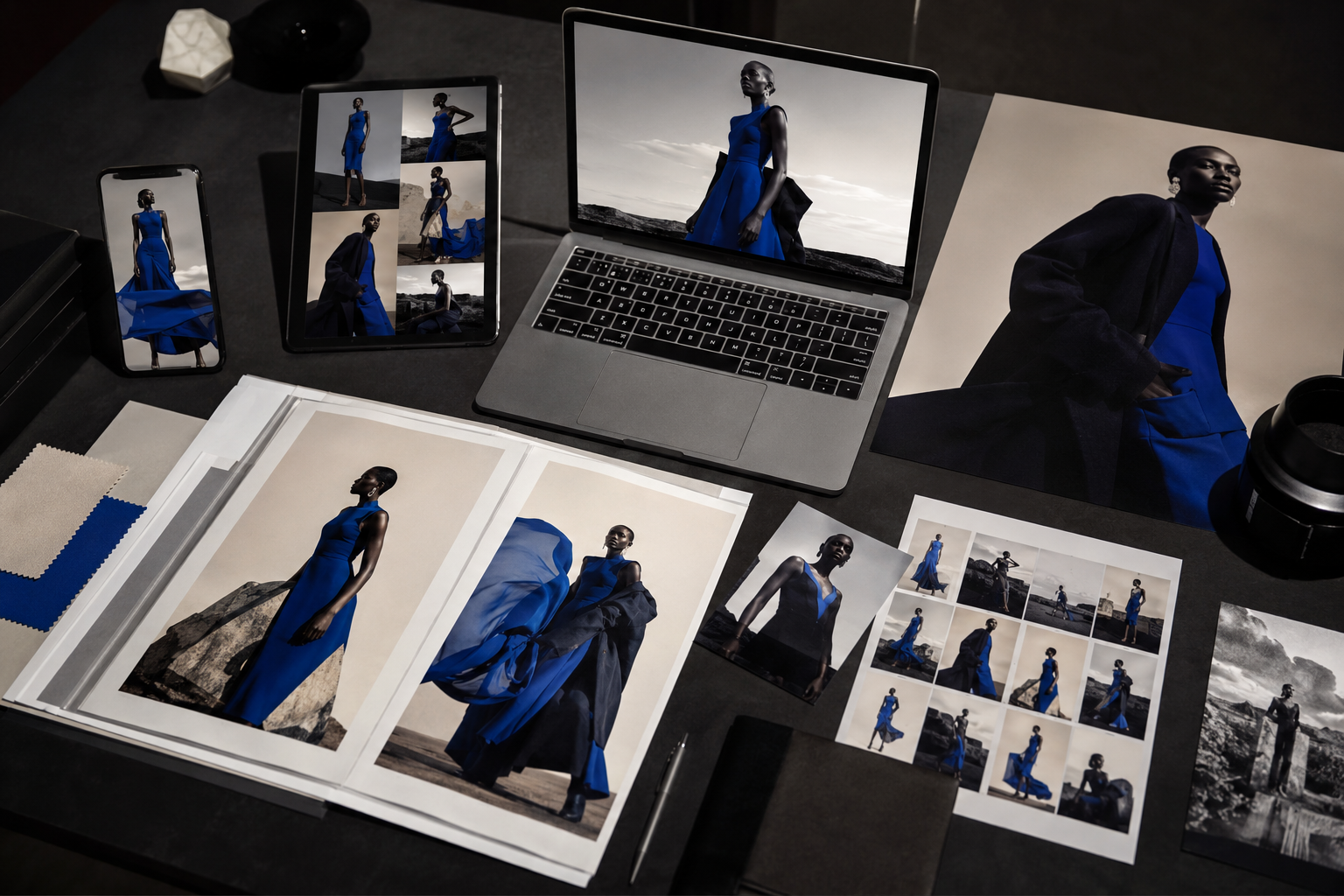
A media-first production may capture several layers:
- Distinctive hero assets for awareness and campaign recognition.
- Product-led editorial images that connect aspiration with specific items.
- Proof assets showing fit, movement, texture, scale and construction.
- Conversion variations with clear product priority and usable negative space.
- Retention content built around styling, care and complementary products.
- PR and community assets that make the story easy to share.
Crucially, multiple crops are not the same as multiple ideas. If paid media needs creative testing, vary meaningful elements such as the hook, product emphasis, composition, talent, proof point or context. Moreover, confirm paid usage, duration, territory and formats during planning. Otherwise, the team may produce suitable images without the rights or technical versions required for deployment.
For production sequencing, use the Fashion Campaign Timeline. Then validate the launch requirements with the Fashion Marketing Checklist. Finally, connect individual launches across the year through a Fashion Campaign Calendar.
Connect Paid, Owned and Earned Channels
A strong fashion marketing strategy does not assign the entire funnel to one platform. Social discovery may introduce the campaign, but the website must provide deeper evidence. Email may nurture consideration and retention, while PR and creators contribute authority. Paid media can accelerate discovery and re-engagement, yet owned channels should capture and develop the relationship.
Therefore, every campaign needs intentional handoffs. An awareness video should lead to a destination that continues the same story. A product-view retargeting ad should add information rather than repeat the first impression. A post-purchase email should help the customer gain value rather than immediately push another sale.
This is also why follower count is an incomplete business asset. Platforms mediate access to the audience, whereas email permissions, customer data, site behavior and direct relationships provide more durable learning. Nevertheless, data collection should remain transparent, proportionate and compliant. More tracking is not automatically better strategy.
Measure the Fashion Marketing Funnel Without False Precision
Measurement should diagnose the system, not merely decorate a report. Start by assigning a primary objective and a small group of supporting indicators to each stage. Then define the decision the metric will influence.

For example, if new visitors watch a campaign video but rarely explore products, the brand may have an awareness-to-consideration problem. If product engagement is strong but checkout completion is weak, examine price communication, delivery, payment options, trust and technical friction. If first orders are healthy but repeat purchase is low, investigate product satisfaction, category cadence, post-purchase value and audience quality.
Use the Fashion Marketing KPIs guide to build the reporting layer. However, avoid claiming certainty the data cannot support. Attribution models are estimates, channel reports have incentives and last-click reporting undervalues earlier influence. Therefore, combine platform data with site analytics, customer cohorts, experiments, surveys and commercial outcomes.
Common Fashion Marketing Funnel Mistakes
Treating the Journey as Perfectly Linear
Customers enter, leave and return at different points. Use the funnel to plan content and diagnose friction, but do not force every person into an identical sequence.
Producing Awareness Content for Every Stage
A beautiful campaign crop does not automatically answer questions about fit, quality or value. Produce stage-specific evidence instead of relying on repeated visuals.
Using Discounts to Repair Weak Consideration
If the customer does not understand the product, a lower price may create a temporary sale without creating preference. First, identify the actual barrier.
Ending the Funnel at Purchase
Acquisition becomes expensive when every order must come from a new customer. Retention, service and advocacy deserve planned content and ownership.
Measuring Every Asset by Engagement
A sizing video may receive fewer likes than a campaign film while contributing more directly to confidence and conversion. Match the metric to the content job.
Ignoring Creative and Usage Requirements Until Production
Late decisions about aspect ratios, placements, motion, paid media or licensing create gaps and reshoots. Plan the intended media before the camera is on set.
A 90-Day Fashion Marketing Funnel Implementation Plan
Days 1–30: Audit the Journey
- define priority customers, commercial goals and products;
- map existing channels, messages, assets and metrics;
- review customer questions, reviews, returns and service conversations;
- identify the largest stage-to-stage drop-offs;
- separate missing content from product, offer or experience problems.
Days 31–60: Build the System
- assign a customer question and content job to each stage;
- define channel roles and destination pages;
- create the campaign asset map and production brief;
- confirm formats, approvals, licensing and measurement;
- produce the highest-priority funnel assets.
Days 61–90: Launch, Learn and Refine
- coordinate paid, owned and earned distribution;
- test meaningful creative and message variations;
- review performance by stage and audience segment;
- document what customers responded to and where they stalled;
- feed the learning into the next campaign and production cycle.
Frequently Asked Questions About the Fashion Marketing Funnel
How many stages should a fashion marketing funnel have?
Five stages—awareness, consideration, conversion, retention and advocacy—provide enough detail for most fashion brands. A team can add sub-stages when the buying cycle, category or channel structure requires them. However, additional labels only help when they change a decision.
Is a marketing funnel still relevant if customer journeys are nonlinear?
Yes, provided it is used as a planning and diagnostic framework rather than a literal prediction. The model helps teams identify content jobs, handoffs and measurement gaps even when individual customers move unpredictably.
Which content converts best for fashion brands?
No single format converts best in every context. Product clarity, fit evidence, movement, styling relevance, credible proof and a low-friction purchase path usually work together. The correct mix depends on the customer’s barrier and the product category.
Should fashion brands create separate content for every funnel stage?
Not every asset must be completely separate. One coordinated production can serve several stages. Nevertheless, the images, edits, messages and formats should be deliberately adapted to the job each stage performs.
What is the difference between a fashion marketing funnel and a fashion customer journey?
The funnel is the brand’s planning model for moving and measuring audiences across decision stages. The customer journey is the broader lived experience, including nonlinear interactions, emotions, service, product use and external influence. Strong planning uses the funnel without reducing the customer to it.
Build a Funnel That Creates More Than Transactions
A Fashion Marketing Funnel is effective when every stage makes the next decision easier. Awareness creates a distinctive reason to care. Consideration connects desire with evidence. Conversion removes friction. Retention increases the value of ownership. Advocacy turns a strong experience into trusted reach.
Ultimately, the advantage is not a larger volume of content. It is better architecture. When campaign photography, product proof, channels, destinations and measurement are planned as one system, every creative investment can work harder across the full fashion customer journey.
Is Your Content Supporting the Entire Funnel?
A Visual Audit is a working session designed to identify where your current imagery supports attention, evaluation and conversion—and where missing formats, inconsistent deployment or weak reuse may be limiting campaign performance.