If you’ve ever asked why do I need usage rights, you’re not alone. In fact, many brands don’t think about licensing until something goes wrong. The shoot is finished, images look amazing and the campaign launches.
Then suddenly someone asks:
- Can we use these images in paid ads?
- Can we run them internationally?
- Can we use them next year?
- Can we put them on packaging?
- Can we use them in print?
And that’s when businesses discover that creating content and using content are not the same thing. As a buyer, I used to think paying for photography meant owning everything.
However, that’s one of the most common misunderstandings in marketing and unfortunately, it often becomes an expensive one.
What I See Most Often As A Fashion Photographer
One of the most common conversations I have with fashion brands happens after a campaign starts performing better than expected.
A brand initially licenses images for website and social media usage, then later wants to expand into paid advertising, retail partnerships, or international campaigns. This is why discussing licensing before production is so important.
What You Will Learn About Why Do I Need Usage Rights?
- What we mean by why do I need usage rights
- Photography licensing explained
- Why do I need usage rights if I already paid for the shoot?
- Why do I need usage rights for paid advertising?
- Why do I need usage rights if I want to use images everywhere?
- How much should you charge for usage rights?
- Time-limited vs in perpetuity licensing
- Why do I need usage rights and how licensing protects both sides
- Real-World photography licensing examples for fashion brands
Key Photography Licensing Definitions
What Are Photography Usage Rights?
Photography usage rights are the permissions that allow a client to use images for specific commercial purposes. These rights define where the images can be used, how long they can be used, which marketing channels are included, and whether advertising, print, retail, or international usage is permitted.
What Is Commercial Photography Licensing?
Commercial photography licensing is the agreement that gives a business permission to use images created by a photographer. The license explains the scope of usage, including duration, territory, platforms, advertising rights, and any restrictions.
What Is Copyright In Photography?
Copyright is the legal ownership of a photograph. In most commercial photography projects, the photographer owns the copyright unless ownership is transferred in writing. The client usually receives a license to use the images rather than owning the copyright itself.
What Is Image Ownership?
Image ownership refers to who legally controls the copyright of a photograph. Paying for a photoshoot does not automatically transfer image ownership. Unless a full copyright transfer is agreed, the photographer usually retains ownership while the client receives usage rights.
What Is Commercial Use?
Commercial use means using photography to support business, marketing, advertising, sales, or brand visibility. Examples include website content, paid ads, social media campaigns, email marketing, e-commerce pages, print materials, packaging, retail displays, and product launches.
What Is Paid Advertising Usage?
Paid advertising usage means using images in sponsored campaigns, such as Meta Ads, Instagram Ads, Facebook Ads, TikTok Ads, Pinterest Ads, Google Display Ads, or other paid media placements. Because paid ads increase reach and commercial value, they are often licensed separately from organic social media usage.
What Is A Content Usage Agreement?
A content usage agreement is a written agreement that defines how creative assets may be used. It typically covers permitted channels, campaign scope, licensing duration, geographic territory, paid advertising rights, renewal terms, and any usage restrictions.
What Is Licensing Duration?
Licensing duration refers to how long a client may use the images. Common licensing periods include 12 months, 24 months, 36 months, or in perpetuity. Longer usage periods usually increase licensing value because the images continue supporting the business for a longer time.
What Does In Perpetuity Mean In Photography Licensing?
In perpetuity means the client can use the images indefinitely within the agreed scope. Because perpetual usage removes future renewal opportunities and allows the content to keep generating value over time, it usually costs significantly more than a time-limited license.
What Is A Licensing Renewal?
A licensing renewal is an extension of the original usage agreement. If a brand wants to continue using images after the license expires, the client can renew the usage rights for an additional period, channel, territory, or campaign scope.
What We Mean By Why Do I Need Usage Rights
One of the most common questions brands ask after commissioning a photoshoot is: “Why do I need usage rights if I already paid for the shoot?”
It is a reasonable question. After all, the brand paid for the photographer. The production was completed and the images were delivered.
Many people naturally assume that payment automatically includes unlimited rights to use the images however they choose. However, commercial photography does not typically work that way.
Understanding why do I need usage rights starts with understanding the difference between creating an image and licensing an image.
These are two separate components of the commercial photography process. Production creates the asset and usage rights determine how the asset can be used.
This distinction is one of the most important concepts brands should understand before investing in commercial photography.
Why Do I Need Usage Rights Definition
At its core, why do I need usage rights refers to the permissions required to legally use photography for specific commercial purposes. Usage rights define:
- Where Images Can Be Used
- How Images Can Be Used
- How Long Images Can Be Used
- Which Marketing Channels Can Use The Images
- Which Geographic Regions Are Covered
Without usage rights, a brand may have access to the images but not the legal permission to use them beyond the agreed scope.
Usage rights create clarity between the photographer and the client. Both parties understand exactly how the content may be deployed. This is the foundation of commercial licensing.
Licensing Basics: Why Do I Need Usage Rights?
To understand why do I need usage rights, it helps to understand the basics of licensing. When a photographer creates an image, copyright generally remains with the creator unless ownership is formally transferred.
The client receives a license that grants permission to use the images under specific terms. These terms may include:
- Website Usage
- Social Media Usage
- Email Marketing Usage
- Advertising Usage
- Print Usage
- Retail Usage
The license determines what is permitted.
The broader the commercial usage, the greater the value being created for the brand. This is why licensing is often structured separately from production costs.
The production creates the asset. The license determines how much business value the brand can extract from that asset.
Ownership And Usage Rights Are Not The Same Thing
One of the biggest misconceptions in commercial photography is confusing ownership with usage rights. This confusion is often the reason brands ask: “Why do I need usage rights if I paid for the images?”
Paying for a photoshoot does not automatically mean purchasing copyright ownership. In most commercial photography agreements, the photographer retains copyright ownership while granting the client usage rights.
This works similarly to many other industries. For example:
- Buying Software Does Not Transfer Ownership Of The Software Company
- Purchasing Music Does Not Transfer Copyright Ownership Of The Song
- Licensing Stock Photography Does Not Transfer Copyright Ownership Of The Image
The same principle applies to commercial photography. The brand receives the right to use the images according to the agreed license.
The photographer retains ownership of the intellectual property. Understanding this distinction helps explain why usage rights exist in the first place.
Commercial Photography Licensing Reflects Business Value
One of the most important reasons behind why do I need usage rights is commercial value.
Not all image usage creates the same value for a brand.
For example:
A Website Banner
and
A Global Advertising Campaign
may use the exact same image.
However, the business value generated by those uses can be dramatically different. A local website image may reach a limited audience but a paid advertising campaign may reach millions of potential customers.
Because the commercial value differs, licensing structures differ as well. Usage rights allow licensing to align with the actual business value created by the photography.
This creates a more transparent and scalable framework for both photographers and brands.
Why Intellectual Property Matters In Commercial Photography
Another important aspect of why do I need usage rights involves intellectual property. Photography is not simply a service. It is also intellectual property.
The images created during a production become valuable business assets. They may support:
- Advertising Campaigns
- Product Launches
- Website Experiences
- E-Commerce Platforms
- Email Marketing
- Brand Awareness Initiatives
Because these assets can directly contribute to revenue generation, their use requires clear licensing terms.
Usage rights establish those terms. They protect the value of the intellectual property while ensuring brands have the permissions they need to achieve their marketing objectives.
Why Do I Need Usage Rights? It Is About Clarity And Commercial Value
Many brands initially view usage rights as an unnecessary complication. In reality, usage rights create clarity. They help define:
- Permitted Usage
- Commercial Scope
- Marketing Channels
- Campaign Requirements
- Licensing Duration
Without these definitions, misunderstandings become much more likely.
With them, both the photographer and the brand understand exactly how the content may be used. This transparency benefits everyone involved.
What We Mean By Why Do I Need Usage Rights
Ultimately, why do I need usage rights is really a question about commercial value. Usage rights are not an additional fee for the sake of creating complexity. They are a licensing framework that connects image usage to business value.
Understanding this framework requires understanding:
- Licensing Basics
- Ownership vs Usage Rights
- Commercial Photography Licensing
- Intellectual Property
- Commercial Value Creation
Once brands understand these concepts, usage rights become much easier to understand.
Because commercial photography is not just about creating images, it is about how those images create value after the shoot is over.
Photography Licensing Explained
One of the biggest sources of confusion in commercial photography is the terminology surrounding licensing. Brands often hear terms such as copyright, ownership, usage rights, and commercial use, but many are unsure how these concepts relate to one another.
Understanding these definitions helps businesses make better decisions when commissioning photography and prevents misunderstandings after a campaign launches.
Copyright
Copyright is the legal ownership of a creative work.
In commercial photography, the photographer typically owns the copyright to the images they create unless ownership is specifically transferred through a written agreement.
Copyright gives the creator exclusive rights to:
- Reproduce the images
- Distribute the images
- License the images
- Modify the images
- Authorize commercial usage
When a photographer creates an image, copyright exists automatically. It does not need to be registered or purchased separately.
This means that paying for a photoshoot does not automatically transfer copyright ownership to the client.
License
A license is permission to use copyrighted work under specific conditions.
In commercial photography, a license allows a brand to use images for agreed marketing activities without owning the copyright itself.
A license may define:
- Where images can be used
- How images can be used
- How long images can be be used
- Which territories are covered
- Whether advertising is included
For example, a fashion brand may receive a license that permits website usage, organic social media usage, and email marketing for 12 months.
The photographer retains copyright ownership while the brand receives permission to use the images within the agreed scope.
Ownership
Ownership refers to who legally controls the intellectual property.
In most commercial photography projects:
- The photographer owns the copyright.
- The client licenses the usage.
Many brands assume that paying for photography means purchasing ownership. However, commercial photography typically operates under a licensing model.
This works similarly to other industries:
- Buying software does not transfer ownership of the software company.
- Purchasing music does not transfer ownership of the song.
- Licensing stock photography does not transfer ownership of the image.
Photography follows the same principle.
Ownership and usage are separate concepts.
Usage Rights
Usage rights define the specific permissions granted to the client.
They establish:
- Which channels may use the images
- Whether advertising is included
- Which geographic territories are covered
- How long the images may be used
- Whether usage can be expanded later
Examples of usage rights include:
- Website usage
- Organic social media usage
- Email marketing usage
- Paid advertising usage
- Print advertising usage
- Retail marketing usage
- Global campaign usage
Usage rights create clarity for both the photographer and the client by defining exactly how the content may be deployed.
Commercial Use
Commercial use refers to any activity intended to support a business, generate revenue, promote products, acquire customers, or increase brand visibility.
Examples of commercial use include:
- Website content
- E-commerce platforms
- Paid advertising
- Social media marketing
- Email marketing campaigns
- Product launches
- Retail displays
- Packaging
- Trade show materials
Commercial use often creates measurable business value. As a result, licensing is frequently structured around how extensively photography contributes to a company’s marketing and sales activities.
For example, an image used in a global advertising campaign typically creates significantly more commercial value than the same image used only on a website.
Understanding How These Terms Work Together
The simplest way to understand photography licensing is:
- Copyright = Ownership of the image
- License = Permission to use the image
- Ownership = Who controls the intellectual property
- Usage Rights = How the image may be used
- Commercial Use = Business activities supported by the image
When a fashion brand commissions a photoshoot, the photographer usually retains copyright ownership while granting the brand a license with defined usage rights for specific commercial purposes.
Understanding these distinctions helps brands plan campaigns more effectively, avoid licensing misunderstandings, and ensure their photography assets can support future marketing objectives with confidence.
Photography Usage Rights For Fashion Brands
Photography usage rights are especially important for fashion brands because content rarely lives in a single place. Unlike many businesses that use imagery for a website or occasional marketing campaigns, fashion brands often distribute the same assets across multiple channels, campaigns, and markets.
A single photograph may support a collection launch, appear in paid advertising, be featured in a retailer catalog, and later be reused in seasonal marketing campaigns. As a result, understanding usage rights before production begins helps brands avoid licensing issues and plan their content more effectively.
Collection Launches
Collection launches are often the first commercial use of new campaign imagery.
Photography may be used across:
- Launch announcements
- Collection landing pages
- Product pages
- Email marketing campaigns
- Social media content
- Press releases
- Retail partner communications
Because launch content frequently appears across multiple channels simultaneously, usage rights should clearly define where and how the imagery may be used.
Planning licensing around launch requirements helps ensure the content can fully support the collection’s introduction to the market.
Lookbooks
Lookbooks remain an important marketing tool for many fashion brands. They help communicate the creative vision behind a collection while supporting both wholesale and direct-to-consumer sales efforts.
Photography used in lookbooks may appear in:
- Digital lookbooks
- Printed lookbooks
- Wholesale presentations
- Buyer meetings
- Retail partner communications
- Press kits
If a lookbook is distributed internationally or provided to multiple retail partners, the commercial value and distribution scope may differ significantly from standard website usage.
Usage rights help clarify these applications before distribution begins.
Paid Social Campaigns
Paid social media is one of the most common reasons fashion brands require expanded usage rights.
Platforms may include:
- Meta Ads
- Instagram Ads
- Facebook Ads
- TikTok Ads
- Pinterest Ads
Unlike organic social media, paid advertising actively amplifies content and often reaches significantly larger audiences.
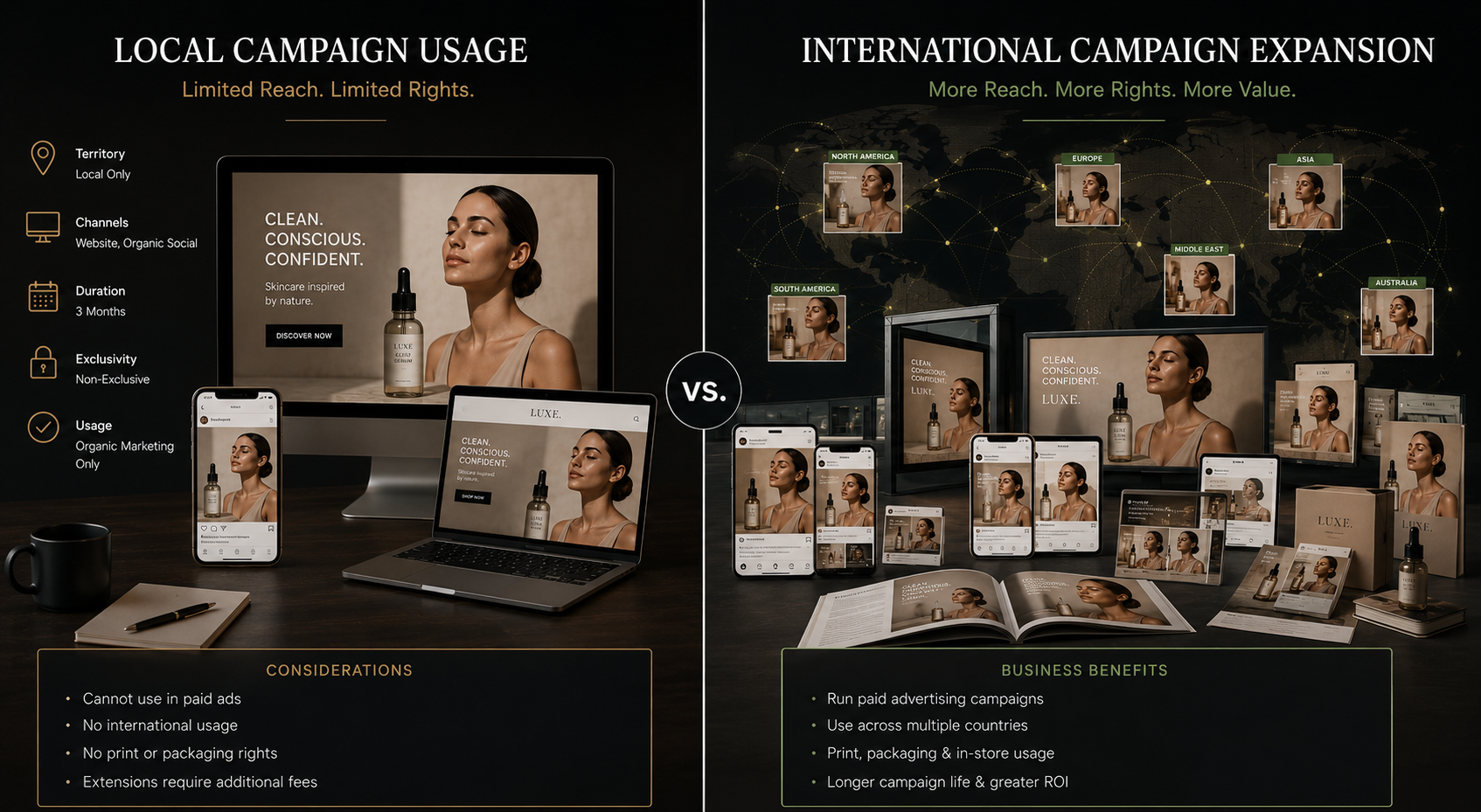
For example, an image used organically on Instagram may reach a few thousand followers. The same image used in a paid campaign may be seen by hundreds of thousands or even millions of potential customers.
Because paid social campaigns create additional commercial value, advertising usage is often licensed separately from organic social media usage.
Retailer Catalogs
As fashion brands expand distribution, retailers frequently request marketing assets to support product sales.
Photography may appear in:
- Retailer websites
- Printed catalogs
- Product launch materials
- Seasonal promotions
- In-store marketing
- Buyer presentations
Many brands overlook these requirements during production planning. However, retailer usage often extends beyond the original marketing scope.
Discussing retailer catalog usage before production ensures the necessary permissions are already in place when opportunities arise.
E-Commerce
E-commerce is often the foundation of a fashion brand’s digital presence. Photography supports nearly every stage of the online shopping experience.
Images may be used across:
- Product pages
- Collection pages
- Homepage banners
- Category pages
- Shopping campaigns
- Conversion-focused landing pages
Because e-commerce content directly influences customer confidence and purchasing decisions, photography often remains active for extended periods of time.
Usage rights help define how long these assets can remain in use and whether future updates or expansions are permitted.
Seasonal Campaigns
Fashion marketing is heavily driven by seasonal activity.
Photography may support:
- Spring/Summer collections
- Autumn/Winter collections
- Holiday campaigns
- Sale promotions
- Special collaborations
- Limited-edition launches
Many brands initially license content for a single campaign. However, successful imagery is often reused in future seasonal marketing efforts.
This is where licensing duration becomes particularly important. Brands planning to reuse campaign assets across multiple seasons should discuss long-term usage requirements before production begins.
Why Usage Rights Matter More In Fashion
Fashion brands often use photography more extensively than many other industries. A single image can support:
- Collection launches
- Lookbooks
- Paid advertising
- Retail partnerships
- E-commerce platforms
- Seasonal campaigns
As content moves across additional channels, markets, and campaigns, its commercial value increases.
That is why photography usage rights are so important for fashion brands. They provide clarity regarding how assets can be used, help prevent licensing misunderstandings, and ensure content can support growth as marketing activities expand.
The most successful fashion brands do not treat licensing as a legal formality. They view it as part of strategic content planning that ensures every image can deliver maximum value long after the photoshoot is complete.
Why Do I Need Usage Rights If I Already Paid For The Shoot?
This is probably the first question most buyers ask. It sounds logical. You paid for the production, the photographer and for the team. So why do you need photography usage rights as well?
Because the shoot and the usage are two different things. Think about it this way: Buying a book doesn’t give you the right to print and sell copies of that book.
Similarly, paying for photography doesn’t automatically grant unlimited usage. This is where commercial image licensing enters the conversation.
And although many brands overlook it initially, it becomes incredibly important as campaigns grow. Take a look at Paid Ads Usage Explained.
Situation #1: Your Campaign Suddenly Becomes Successful

Most brands only think about licensing when success arrives. For example: A paid advertising campaign performs well.
The company increases ad spend. The images get rolled out internationally. New markets open. Retail partners request assets.
However, the original content usage agreement only covered website and organic social media. Now the business needs additional permissions.
Suddenly, licensing becomes a business issue. This is one reason image licensing for brands exists in the first place because usage often grows beyond the original plan.
Situation #2: You Want To Use The Images Longer Than Expected
Many businesses assume campaign images can be used forever. However, that’s not always the case. As a buyer, this was surprising.
You may launch a campaign today. Yet twelve months later, you might want to:
- refresh your website
- update brochures
- continue running ads
- reuse campaign assets
- create new landing pages
Without proper photography usage rights, those activities may require extensions. Consequently, understanding licensing before production becomes much easier than solving problems afterward.
Situation #3: You Need The Images Everywhere
This is where many brands run into unexpected challenges. Initially, the images were intended for:
- website content
However, later the business wants to expand. Now the images are needed for:
- paid advertising
- print campaigns
- packaging
- trade shows
- retailer catalogs
- PR opportunities
At that point, commercial image licensing becomes much more important because the value of the images has changed. And therefore the licensing requirements often change as well.
Situation #4: Nobody Discussed Licensing Before The Shoot
This happens more often than most people realize. The creative team focuses on:
- moodboards
- shot lists
- locations
- models
- styling
Meanwhile, nobody discusses the content usage agreement. Then months later, confusion appears. Questions start arriving. The marketing team isn’t sure what is permitted.
The agency assumes one thing. The photographer assumes another and now a simple campaign becomes a legal discussion. Clear image licensing for brands helps avoid these situations before they happen.
Why Do I Need Usage Rights For Paid Advertising?
This is one of the most important questions brands should ask. Paid advertising changes the value of imagery.
For example: An image used on Instagram may reach a few thousand people. However, the same image used in advertising could reach millions.
Because paid media increases visibility and commercial value, licensing often reflects that difference.
This is why many commercial image licensing agreements separate:
- organic social media
- website usage
- paid advertising
- print advertising
- global campaigns
Understanding these distinctions protects both sides. Read more about Paid Ads Usage Explained.
Why Do I Need Usage Rights If I Want To Use Images Everywhere?
One of the most common questions brands ask is: “Why do I need usage rights if I want to use the images everywhere?”
From a marketing perspective, the question makes sense. Modern brands rarely use content in a single place.
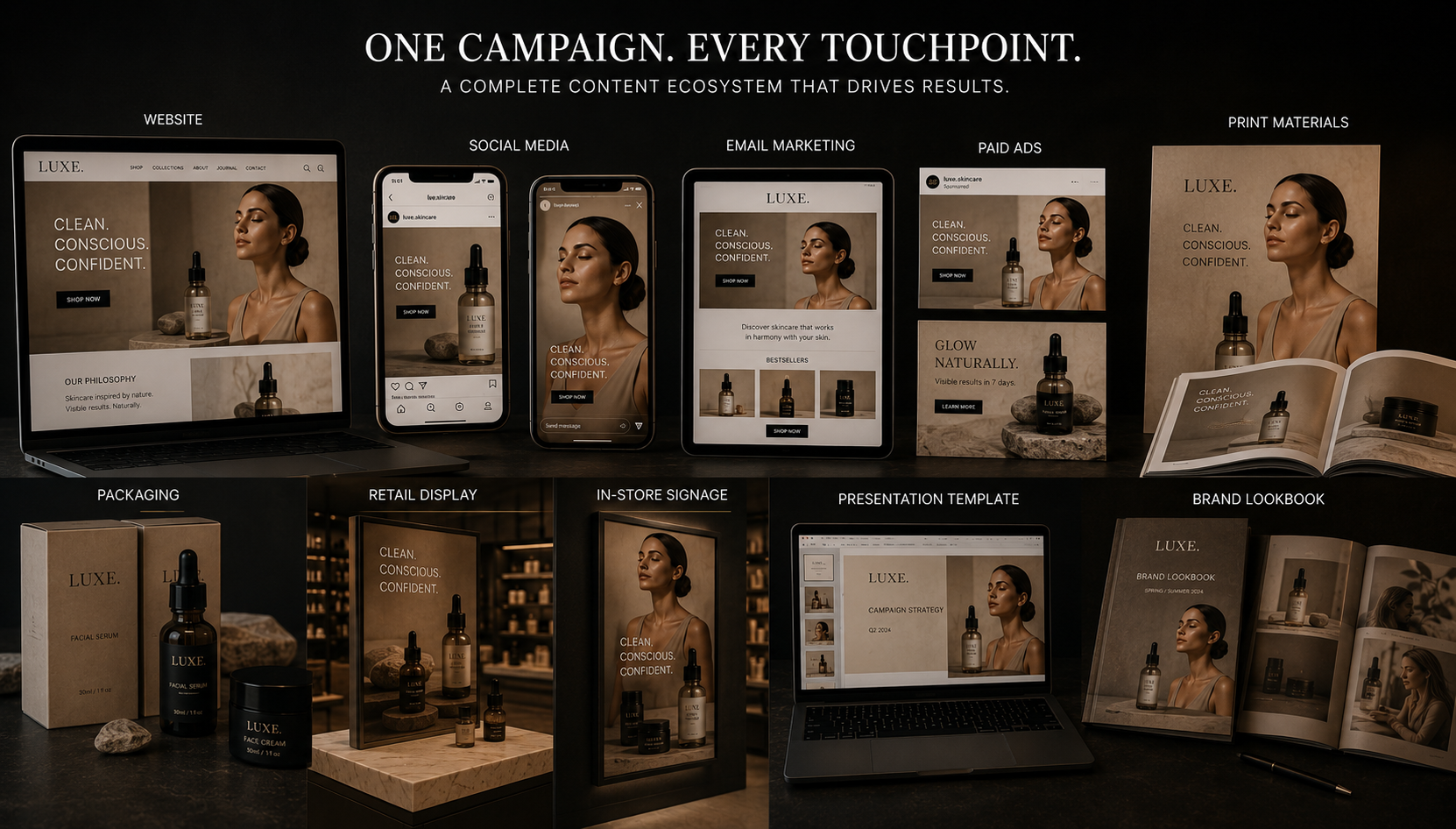
A single image may appear on a website, in social media campaigns, email marketing, paid advertising, e-commerce platforms, retail displays, and future product launches.
Because content moves across so many channels, many brands assume a photoshoot should automatically include unlimited usage everywhere.
However, commercial licensing is designed to define exactly how images are used and how much business value they create. The more channels an image supports, the greater its commercial value becomes.
This is one of the primary reasons behind why do I need usage rights. Usage rights establish clear permissions for how photography may be deployed across different marketing environments.
Why Do I Need Usage Rights For Website Usage?
For many brands, the website is one of the most important marketing assets they own. Photography may appear throughout:
- Homepages
- Landing Pages
- Product Pages
- Collection Pages
- Brand Story Sections
Website usage is often included within standard commercial licenses because it represents a core business function. However, usage rights still matter.
The license clarifies that the images may be used on the brand’s website and establishes the scope of that permission. Without licensing terms, misunderstandings can arise regarding duration, territories, ownership, and commercial use.
This is one reason why usage rights remain important even when the images are only being used online.
Why Do I Need Usage Rights For Social Media?
Social media has become one of the most common destinations for commercial photography. Brands routinely publish images across:
- TikTok
- X
Many brands assume social media use automatically includes unlimited rights. In many licensing agreements, organic social media usage is included because it supports the brand’s owned channels.
However, the license still defines how the images may be used. This creates clarity for both the photographer and the client.
Understanding these permissions is another important aspect of why do I need usage rights.
The goal is not restriction but transparency regarding how commercial assets are being deployed.
Why Do I Need Usage Rights For Email Marketing?
Email marketing is often overlooked when discussing licensing. Yet it remains one of the highest-performing marketing channels for many brands. Photography frequently supports:
- Product Launch Emails
- Promotional Campaigns
- Brand Newsletters
- Abandoned Cart Campaigns
- Customer Retention Campaigns
Because email marketing directly supports revenue generation, it is considered a commercial use of the imagery.
Usage rights help clarify whether email marketing is included within the license and ensure brands can confidently deploy the assets throughout their customer communications.
This is another example of why usage rights exist in commercial photography.
Why Do I Need Usage Rights For Retail Marketing?
Retail marketing often extends photography far beyond digital channels. Images may appear in:
- Store Displays
- Window Graphics
- Point-Of-Sale Materials
- Printed Campaign Assets
- Trade Show Displays
- In-Store Branding
Retail environments can significantly increase the visibility and commercial impact of photography.
Because these applications create additional business value, they are frequently addressed separately within licensing agreements.
Usage rights ensure that brands have the permissions required to deploy content confidently across physical marketing environments.
Using Images Everywhere Increases Their Commercial Value
The more places an image is used, the more valuable that image becomes to the brand. A photograph that supports only a website creates one level of value. The same image used across:
- Website Content
- Social Media
- Email Marketing
- Paid Advertising
- Retail Marketing
creates substantially more value.
This is why commercial photography licensing is often structured around usage rather than image quantity. The licensing reflects how extensively the assets support business objectives.
Understanding this relationship is central to understanding why do I need usage rights.
Why Do I Need Usage Rights If I Want To Use Images Everywhere?
Ultimately, why do I need usage rights comes down to one simple principle. Usage rights define how photography can be used commercially.
They provide clarity for:
- Website Usage
- Social Media Usage
- Email Marketing
- Paid Advertising
- Retail Marketing
The broader the usage, the greater the commercial value of the images becomes. Licensing ensures that value is clearly defined and properly aligned with the way the assets support the business.
Because commercial photography is not simply about creating images. It is about how those images generate value across every marketing channel after the shoot is complete.
| Usage Type | Typical Reach | Typical Licensing |
|---|---|---|
| Website | Low | Low |
| Organic Social | Medium | Low |
| Email Marketing | Medium | Moderate |
| Paid Advertising | High | Higher |
| Print Advertising | High | Higher |
| Global Campaigns | Very High | Highest |
What Buyers Actually Want
Most buyers don’t want legal complexity. They want clarity.
Specifically, they want to know:
- where can we use the images?
- how long can we use them?
- can we run ads?
- can we expand usage later?
- what happens if campaigns grow?
A clear content usage agreement answers those questions and therefore it makes campaign planning significantly easier.
Why Do I Need Usage Rights? The Simple Answer
Because usage creates value. The more places your content appears:
- the more customers see it
- the more campaigns it supports
- the more revenue it can generate
Consequently, licensing is not really about restrictions. It’s about defining how marketing assets create value. That’s why professional image licensing for brands exists.
How Much Should You Charge for Usage Rights?
One of the biggest misconceptions brands have is that usage rights should cost the same regardless of how images are used. However, usage creates value.
An image used on a small website page has a very different commercial value than an image used in a global paid advertising campaign reaching millions of people.
Therefore, licensing is typically priced according to the business value generated by the imagery.
Typical Licensing Multipliers
Organic Social Media
Typical Usage:
- TikTok
- Organic (non-paid) posts
Typical Licensing Fee: 0% – 25% of production fee
Included in many commercial shoots.
Example:
Shoot Fee: €3,000
Organic Social Usage: €0 – €750
Because reach is limited and distribution remains within owned channels.
Website Usage
Typical Usage:
- Homepage
- Product pages
- Landing pages
- Blog articles
- Resource pages
Typical Licensing Fee: 10% – 50% of production fee
Example:
Shoot Fee: €3,000
Website Usage: €300 – €1,500
Website usage often remains lower because distribution is passive rather than actively amplified.
Paid Advertising
Typical Usage:
- Meta Ads
- Instagram Ads
- Facebook Ads
- TikTok Ads
- Google Display
- Paid Social
Typical Licensing Fee: 50% – 300%+ of production fee
Example:
Shoot Fee: €3,000
Paid Advertising License: €1,500 – €9,000+
This is where most commercial value exists.
As ad spend increases, licensing value usually increases as well.
Print Advertising
Typical Usage:
- Magazines
- Newspapers
- Catalogs
- Outdoor posters
- Trade publications
Typical Licensing Fee: 25% – 200% of production fee
Example:
Shoot Fee: €3,000
Print Usage: €750 – €6,000
The exact amount depends on:
- circulation
- size
- territory
- duration
Global Campaigns
Typical Usage:
- Worldwide advertising
- International e-commerce
- Retail partners
- Packaging
- OOH advertising
- Multi-country campaigns
Typical Licensing Fee: 200% – 1,000%+ of production fee
Example:
Shoot Fee: €5,000
Global Campaign License: €10,000 – €50,000+
This reflects the enormous commercial value created by worldwide exposure.
Luxury brands routinely pay significantly higher licensing fees than production fees.
Time-Limited vs In Perpetuity Licensing
This is where many photographers leave money on the table.
12-Month License
Most common.
Good balance for:
- campaigns
- launches
- paid advertising
- websites
Typical multiplier: 100% of standard licensing fee
Example:
Paid Ads License: €3,000
Duration: 12 months
24-Month License
Typical multiplier: 1.5x – 2x
Example:
12 Months: €3,000
24 Months: €4,500 – €6,000
36-Month License
Typical multiplier: 2x – 3x
Example:
12 Months: €3,000
36 Months: €6,000 – €9,000
In Perpetuity
This is where pricing should increase significantly.
Because:
- the client never renews
- future revenue disappears
- exclusivity may increase
- the image can continue generating value indefinitely
Typical multiplier: 3x – 10x+
Example:
12 Month License: €3,000
Perpetual License: €9,000 – €30,000+
For luxury brands and large campaigns, perpetual usage can exceed the original production fee many times over.
How Licensing Protects Both Sides
Many brands initially view licensing as a limitation. They see usage rights as additional terms attached to a photoshoot.
However, licensing is not designed to create obstacles. It is designed to create clarity.
In commercial photography, both the photographer and the client benefit when expectations are clearly defined from the beginning.
This is one of the most important reasons behind why do I need usage rights.
Licensing establishes a transparent framework that protects both parties while ensuring the commercial value of the imagery is properly understood.
Without licensing, misunderstandings can occur regarding ownership, usage, duration, advertising rights, and future commercial applications.
With licensing, everyone understands the rules before the images are ever used.
Licensing Creates Clarity
One of the biggest benefits of licensing is clarity. Commercial photography assets often support multiple marketing activities.
Images may appear across:
- Websites
- Social Media
- Email Marketing
- Advertising Campaigns
- Retail Marketing
- E-Commerce Platforms
Without clear licensing terms, assumptions can easily develop.
A brand may assume advertising usage is included. A photographer may assume only website and social media usage were intended. These misunderstandings can create unnecessary disputes.
Licensing removes ambiguity. Usage rights clearly define:
- Permitted Channels
- Commercial Scope
- Usage Duration
- Geographic Territories
- Advertising Rights
This clarity benefits both parties and helps create a smoother working relationship.
Licensing Sets Expectations Early
One of the most common causes of licensing disputes is mismatched expectations. A brand may assume unlimited usage rights were included. A photographer may have licensed only specific uses.
The disagreement often occurs because expectations were never properly established. This is another reason why usage rights matter. Licensing establishes expectations before production begins.
Both parties understand:
- What Is Included
- What Is Not Included
- How Images May Be Used
- When Additional Licensing May Be Required
- How Future Usage Requests Are Handled
Clear expectations reduce friction and allow everyone to focus on the success of the project rather than negotiating usage after the fact.
Licensing Reflects Commercial Value
One of the most misunderstood aspects of licensing is the relationship between usage and value. Not all image usage creates the same business impact.
For example:
A Product Page Image
and
A Global Paid Advertising Campaign
may use the exact same photograph.
However, the commercial value generated by those uses can be dramatically different. The paid advertising campaign may reach millions of consumers and directly support revenue generation.
The product page image may have a much narrower audience. Licensing allows image usage to align with commercial value. This is one of the key reasons behind why do I need usage rights.
It creates a fair framework that reflects how extensively the imagery contributes to the success of the business.
Licensing Provides Legal Protection
Another major benefit of licensing is legal protection. Commercial photography involves intellectual property. Usage rights provide documented permission for how that intellectual property may be used.
This protects both parties. For brands, licensing provides confidence that the images can be used within the agreed scope. For photographers, licensing protects the value of their intellectual property and prevents unauthorized commercial use.
Legal protection becomes especially important when images are used for:
- Advertising Campaigns
- National Marketing Initiatives
- International Campaigns
- Retail Marketing
- Large-Scale Brand Activations
Clear licensing agreements help prevent disputes while ensuring everyone understands their rights and responsibilities.
Licensing Protects The Brand
Many brands assume licensing primarily benefits photographers. In reality, licensing also protects the client. Usage rights provide documented evidence that the brand has permission to use the images commercially.
This creates confidence when deploying assets across multiple channels. Licensing helps brands:
- Avoid Unauthorized Usage Claims
- Understand Their Rights Clearly
- Plan Campaigns More Effectively
- Budget For Future Usage Needs
- Scale Campaigns With Greater Confidence
When usage rights are clearly documented, marketing teams can focus on execution rather than uncertainty.
Licensing Protects The Photographer
Licensing also protects the photographer’s intellectual property. Commercial photography often creates assets that continue generating business value for years. Without licensing, photographers may lose control over how those assets are used.
Usage rights help establish:
- Commercial Boundaries
- Permitted Usage
- Advertising Rights
- License Duration
- Future Expansion Opportunities
This framework allows photographers to maintain a sustainable business model while continuing to support their clients’ growth.
How Licensing Protects Both Sides
Ultimately, why do I need usage rights is not simply a question about legal agreements. It is a question about transparency. Licensing protects both photographers and brands by creating:
- Clarity
- Clear Expectations
- Alignment With Commercial Value
- Legal Protection
- Better Business Relationships
When usage rights are clearly defined, everyone benefits.
The brand understands exactly how the images may be used. The photographer understands exactly how the assets are creating value.
Most importantly, both parties can focus on achieving successful marketing outcomes without uncertainty. That is why licensing is not simply a legal requirement.
It is one of the most important tools for protecting both sides of a commercial photography partnership.
Real-World Photography Licensing Examples For Fashion Brands
One of the easiest ways to understand photography licensing is to look at real-world scenarios. While every project is different, the following examples illustrate how usage rights typically scale alongside commercial value.
Example 1: Website & Organic Social Media Usage
Scenario
A fashion startup commissions a photoshoot for a new collection.
The images will be used for:
- Website banners
- Product pages
- Collection pages
- Instagram posts
- TikTok content
- Pinterest content
- Email marketing
The brand is not running paid advertising and does not require print, retail, or international campaign usage.
Typical Licensing Scope
- Website usage
- Organic social media usage
- Email marketing
- 12-month license
- Single market
Why Licensing Costs Remain Lower
The content supports the brand’s owned marketing channels and has relatively limited distribution.
Although the imagery is important, the commercial reach remains modest compared to paid media campaigns.
This is often the most common licensing arrangement for emerging fashion brands.
Example 2: Fashion Brand Running Paid Advertising
Scenario
An emerging fashion brand launches a new collection and plans to support the release with paid advertising.
The images will be used for:
- Website content
- Instagram Ads
- Meta Ads
- TikTok Ads
- Retargeting campaigns
- Email marketing
The advertising budget is expected to scale if the campaign performs well.
Typical Licensing Scope
- Website usage
- Organic social media
- Paid social advertising
- Email marketing
- 12-month advertising license
Why Licensing Value Increases
Paid advertising significantly expands the audience reached by the content.
A campaign image that might reach 5,000 people organically could reach hundreds of thousands of potential customers through advertising.
Because the imagery directly contributes to customer acquisition and revenue generation, licensing often reflects that increased commercial value.
This is why paid advertising usage is commonly licensed separately from organic social media usage.
Example 3: International Fashion Campaign
Scenario
An established fashion brand launches a collection across multiple countries.
The imagery will support:
- International e-commerce
- Paid advertising
- Retail partner marketing
- Wholesale presentations
- Print campaigns
- PR and editorial outreach
The campaign is expected to run across several markets simultaneously.
Typical Licensing Scope
- Global usage
- Paid advertising
- Retail marketing
- Print advertising
- E-commerce
- Multi-country campaign rights
- Extended duration
Why Licensing Value Is Higher
The same images now support:
- Multiple markets
- Larger audiences
- Additional revenue opportunities
- Broader commercial distribution
The business value created by the content is substantially greater than a local campaign.
For this reason, licensing fees for international campaigns often exceed the original production fee.
Example 4: Fashion Brand Expanding Usage After Launch
Scenario
A brand initially licenses images for:
- Website usage
- Organic social media
Six months later, the campaign performs exceptionally well.
The brand now wants to use the same imagery for:
- Paid advertising
- Retail marketing
- New landing pages
- International distribution
Typical Licensing Solution
Instead of organizing a new production, the brand extends the existing license.
Additional rights may be added for:
- Paid advertising
- Additional territories
- Longer duration
- Retail applications
Why Licensing Flexibility Matters
This situation is extremely common. Brands often do not know at the beginning of a campaign how successful it will become.
A licensing framework allows usage to expand as business needs evolve without requiring a completely new photoshoot.
Example 5: Seasonal Collection Reuse
Scenario
A fashion brand photographs an Autumn/Winter collection.
The original license covers:
- Collection launch
- Website content
- Social media
The following year, the brand wants to reuse selected images for:
- Seasonal promotions
- Email marketing
- Retargeting campaigns
- Website refreshes
Typical Licensing Considerations
The original license may have expired.
The brand may require:
- A renewal
- An extension
- Expanded usage rights
Why Duration Matters
Many brands assume photography can be used forever. However, licensing duration is often one of the most important factors influencing image usage.
Understanding renewal options before production helps brands plan future campaigns more effectively.
The Common Theme Across Every Example
The photography itself never changes. What changes is the value the images create for the business. A single image may be used for:
- Website content
- Paid advertising
- Product launches
- Retail marketing
- E-commerce
- International campaigns
As commercial value increases, licensing requirements often evolve as well.
That is why photography licensing is not based solely on image quantity. It is based on how the content supports marketing objectives, customer acquisition, brand visibility, and long-term business growth.
Free Download: Licensing & Usage Explainer
Before your next campaign, make sure you understand how licensing affects content value.
Download the Licensing & Usage Explainer to learn:
- photography usage rights
- paid advertising usage
- commercial image licensing
- licensing extensions
- campaign planning considerations
👉 https://philhalfmann.com/licensing-explained-for-brands/
Frequently Asked Questions About Photography Usage Rights
What Are Photography Usage Rights?
Photography usage rights are the permissions that define how, where, and for how long a business can use images. Usage rights may cover websites, social media, email marketing, paid advertising, retail marketing, print campaigns, and other commercial applications.
Why Do I Need Usage Rights If I Already Paid For The Shoot?
Paying for a photoshoot covers the creation of the images. Usage rights determine how those images can be used after production. In most commercial photography agreements, the photographer retains copyright ownership while granting the client a license for specific commercial uses.
Do I Own The Images After Paying A Photographer?
Not usually. In most commercial photography projects, the photographer retains copyright ownership and grants the client usage rights through a licensing agreement. Ownership and usage rights are separate concepts.
What Is Commercial Photography Licensing?
Commercial photography licensing is the agreement that gives a business permission to use images for specific purposes. The license defines factors such as usage channels, duration, geographic territories, advertising rights, and commercial scope.
Can I Use Licensed Images In Paid Advertising?
Only if paid advertising rights are included in the license. Many commercial photography agreements treat paid advertising separately because advertising significantly increases the commercial value and reach of the imagery.
Why Does Paid Advertising Require Separate Licensing?
An image used organically on social media may reach a relatively small audience. The same image used in paid advertising can reach hundreds of thousands or even millions of potential customers. Because paid advertising creates additional business value, licensing often reflects that increased commercial impact.
What Is The Difference Between Copyright And Usage Rights?
Copyright refers to legal ownership of the image. Usage rights refer to the permissions granted to the client. A photographer may retain copyright ownership while allowing a brand to use the images through a licensing agreement.
Can I Use Images Everywhere If I Have Usage Rights?
That depends on the license. Some licenses only cover specific uses, while others may include broader rights. Usage rights should clearly define whether the images can be used for:
- Websites
- Social media
- Email marketing
- Paid advertising
- Retail marketing
- Print campaigns
- International campaigns
How Long Do Photography Usage Rights Last?
Usage rights may be granted for a specific period such as:
- 12 months
- 24 months
- 36 months
or in some cases:
- In perpetuity
The licensing agreement should clearly define the duration of the permitted usage.
What Happens When A License Expires?
Once a license expires, the client may need to stop using the images or negotiate a licensing renewal. Renewal terms are often discussed before production and can be adjusted based on future marketing requirements.
What Does In Perpetuity Mean?
In perpetuity means the client may continue using the images indefinitely within the agreed scope of usage. Because perpetual usage removes future renewal opportunities and allows the images to generate long-term business value, it is typically priced significantly higher than time-limited licenses.
Can Licensing Be Expanded Later?
Yes. Many brands begin with a limited license and expand usage as campaigns grow. For example, a brand may initially license images for website and organic social media usage and later add:
- Paid advertising
- International markets
- Retail marketing
- Print campaigns
This flexibility allows licensing to evolve alongside business growth.
How Are Photography Usage Rights Priced?
Licensing is typically based on the commercial value created by the imagery. Factors that influence pricing include:
- Usage channels
- Advertising rights
- Geographic territory
- Campaign duration
- Audience reach
- Distribution scale
The greater the commercial value generated by the images, the higher the licensing value is likely to be.
What Are The Most Common Licensing Mistakes Brands Make?
Common mistakes include:
- Assuming payment includes unlimited usage
- Ignoring paid advertising rights
- Not discussing licensing before production
- Overlooking international usage
- Forgetting renewal requirements
- Assuming website usage includes all other channels
Discussing licensing early helps avoid these misunderstandings.
Why Are Usage Rights Important For Fashion Brands?
Fashion brands often use photography across multiple channels simultaneously, including:
- Collection launches
- E-commerce platforms
- Paid advertising
- Social media
- Lookbooks
- Retail partner marketing
- Seasonal campaigns
Usage rights help ensure that photography can support these activities while providing clarity for both the brand and the photographer.
What Is The Simplest Explanation Of Photography Licensing?
The simplest explanation is:
- Copyright = Who owns the image.
- License = Permission to use the image.
- Usage Rights = How the image can be used.
- Commercial Use = Business activities supported by the image.
Photography licensing exists to clearly define these relationships so both the photographer and the client understand how the images may be used and how they create value after the shoot is complete.
Recommended Next Reads
What Images Do I Need for Ads? The Mistakes Brands Make Before Their Campaign Even Launches