
Random content marketing may feel flexible, but it consistently fails in competitive environments. While ad-hoc content can fill channels, it rarely builds momentum. In crowded markets, brands don’t win by publishing more — they win by executing better, repeatedly.
In other words, randomness cannot compete with systems.
What Will You Learn About Random Content Marketing?
- What is random content?
- Why brands create random content?
- Why random content creates inconsistent branding?
- Why consistency beats random activity?
- Why competitive brands build content systems?
- Why campaigns outperform random content?
- How to replace random content with a content system?
- What is a real-world example?
What Is Random Content?
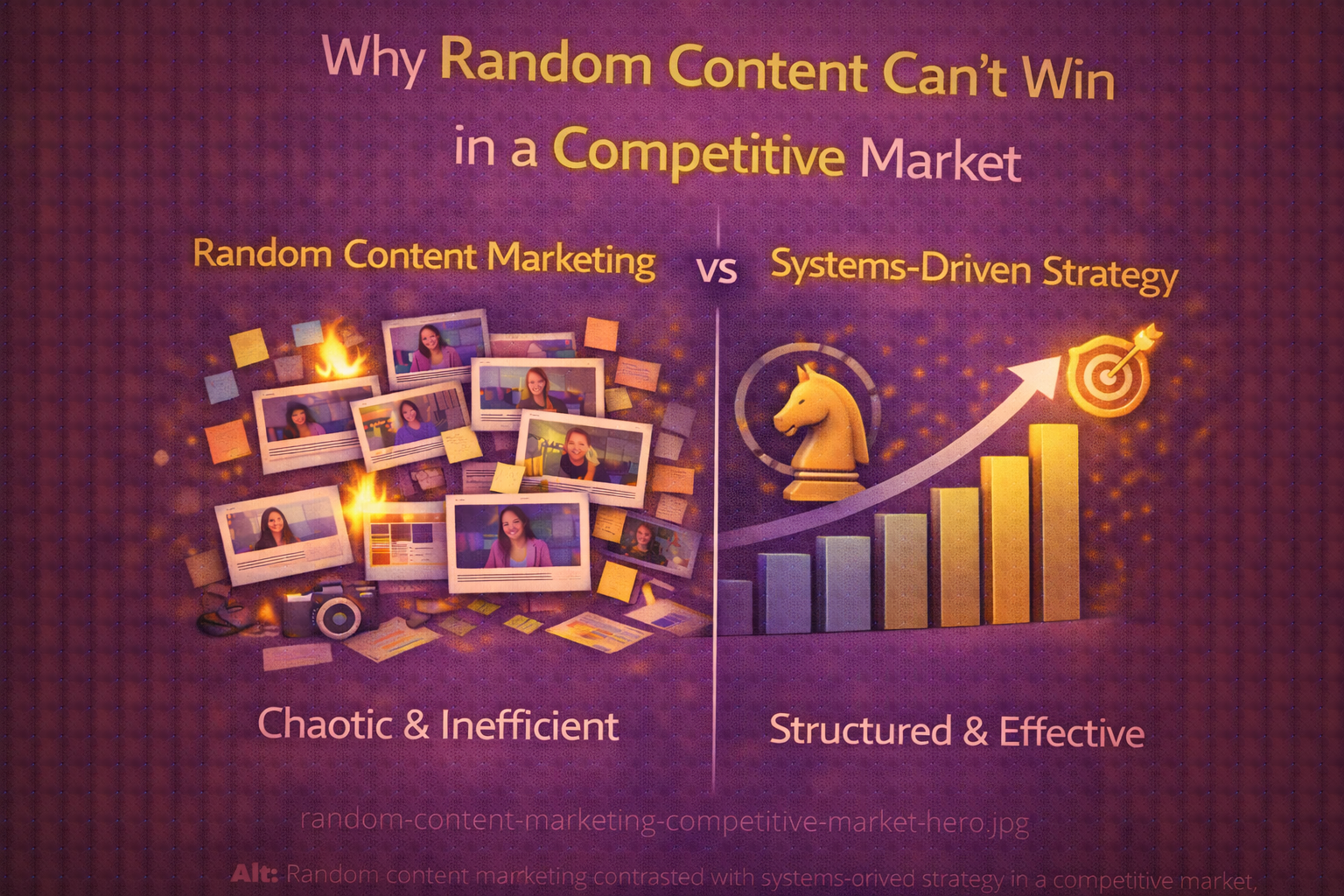
Random content is content that is created without a clear strategy, objective, or connection to broader marketing goals. At first glance, random content can appear productive. Brands are posting regularly. Content is being published. Social channels remain active.
However, activity alone does not guarantee effectiveness. Many brands create content simply because they feel pressure to stay visible. As a result, content becomes disconnected from campaigns, customer acquisition efforts, and business objectives.
Random content often generates short-term activity but delivers limited long-term value. In competitive markets, this approach makes it increasingly difficult to build recognition, consistency, and sustainable growth.
Unplanned Content
One of the clearest characteristics of random content is the absence of planning. Content is often created at the last minute to fill immediate needs.
Examples include:
- A Social Post Is Needed Today
- A Product Launch Is Approaching
- An Empty Content Calendar Needs Filling
- A Trend Is Gaining Attention
- Competitors Are Posting Frequently
The problem is not the content itself. The problem is that it was created without a larger strategic framework.
Without planning, content often lacks:
- Clear Purpose
- Consistent Messaging
- Campaign Alignment
- Long-Term Value
Instead of supporting marketing objectives, content simply reacts to immediate demands.
Reactive Marketing
Random content is often the result of reactive marketing. Rather than anticipating future needs, brands continuously respond to current problems.
Examples include:
- Running Out Of Social Content
- Needing Assets For A Campaign
- Updating The Website At The Last Minute
- Creating Content After Advertising Launches
- Scheduling Emergency Shoots
This creates a cycle where marketing teams are constantly solving short-term problems.
As a result:
- Content Quality Suffers
- Production Costs Increase
- Consistency Declines
- Marketing Becomes Less Efficient
Reactive marketing keeps brands busy, but it rarely helps them build long-term competitive advantages.
Trend-Driven Posting
Many brands confuse trend participation with content strategy. Trending topics can be useful when aligned with brand objectives. However, problems arise when trends become the primary driver of content creation.
Examples include:
- Viral Challenges
- Popular Audio Clips
- Trending Formats
- Platform Trends
- Competitor-Inspired Content
Trend-driven posting often creates: Short-Term Attention
but not necessarily:
- Long-Term Brand Growth
- Stronger Positioning
- Better Recognition
- Customer Loyalty
When brands constantly chase trends, they risk becoming visually and strategically similar to everyone else in their category.
Disconnected Campaigns
Random content often lacks connection to larger campaigns. Content is created as individual pieces rather than components of a coordinated marketing strategy.
Examples include:
- Standalone Social Posts
- Isolated Product Features
- Unrelated Brand Messages
- Separate Creative Directions
- Independent Marketing Initiatives
Over time, customers experience:
- Inconsistent Visuals
- Mixed Messaging
- Fragmented Brand Experiences
- Reduced Brand Recognition
The strongest brands create content that supports larger campaigns and reinforces consistent messaging across every customer touchpoint.
Content Without Objectives
Perhaps the most significant characteristic of random content is the absence of clear objectives. Many brands create content without answering basic questions such as:
- What Is This Content Trying To Achieve?
- Who Is It For?
- What Action Should It Encourage?
- How Will Success Be Measured?
Without objectives, content often becomes activity for the sake of activity. The brand remains visible, but visibility alone does not guarantee business results. Effective content should support objectives such as:
- Brand Awareness
- Customer Acquisition
- Product Sales
- Website Traffic
- Lead Generation
- Customer Retention
Objectives transform content from a marketing task into a business tool.
Why Random Content Feels Productive
One reason random content is so common is that it creates the appearance of progress.
Teams are:
- Posting Frequently
- Creating New Content
- Following Trends
- Staying Active
However, activity and effectiveness are not the same thing. A brand can publish content every day and still struggle with:
- Recognition
- Consistency
- Conversions
- Customer Acquisition
- ROI
Without a strategy, content volume often masks deeper marketing problems.
The Competitive Market Problem
In highly competitive industries, random content becomes increasingly ineffective. Customers are exposed to thousands of marketing messages every day. Brands that stand out typically share several characteristics:
- Consistent Messaging
- Strong Visual Identity
- Campaign Alignment
- Strategic Content Planning
- Long-Term Brand Building
Random Content Is A Symptom, Not A Strategy
Random content is often the result of:
- Unplanned Content
- Reactive Marketing
- Trend-Driven Posting
- Disconnected Campaigns
- Content Without Objectives
These challenges make marketing less effective and more difficult to scale. The solution is not simply creating more content. The solution is creating content with purpose.
Ultimately, successful brands do not win because they post more frequently. They win because every piece of content supports a larger strategy, reinforces their positioning, and contributes to measurable business objectives.
Why Brands Create Random Content
Most brands do not intentionally create random content. In fact, many marketing teams are working extremely hard to keep up with growing content demands.
The problem is that content creation often becomes driven by pressure rather than strategy. As deadlines increase and channels multiply, brands begin focusing on immediate content needs instead of long-term marketing objectives.
The result is a cycle of reactive content creation that feels productive but often delivers inconsistent results. Understanding why brands create random content is the first step toward building a more strategic and effective content system.
Social Media Pressure
Social media has dramatically increased the demand for content. Brands are constantly exposed to:
- Competitor Activity
- Industry Trends
- Influencer Content
- Viral Campaigns
- Platform Algorithms
This creates pressure to remain visible at all times. Marketing teams often feel that they need to:
- Post More Frequently
- Publish Faster
- Follow Every Trend
- Stay Constantly Active
As a result, content is frequently created to satisfy platform expectations rather than business objectives.
The focus shifts from:
Strategic Communication
to
Constant Activity
Over time, this pressure encourages quantity over quality and activity over effectiveness.
Content Demands
Modern brands need content for far more than social media. Content is required for:
- Websites
- Product Pages
- Paid Advertising
- Email Marketing
- Product Launches
- Public Relations
- Retail Marketing
- Sales Materials
The volume of content required can feel overwhelming. Without a structured system, teams often respond by creating content whenever a need arises.
Examples include:
- A Product Launch Needs Assets
- Advertising Needs New Creative
- Social Content Is Running Low
- The Website Needs Updating
- A Campaign Is Approaching
Rather than planning ahead, brands create content reactively. The result is fragmented production and inconsistent marketing execution.
Lack Of Strategy
One of the most common causes of random content is the absence of a clear content strategy. Without strategy, teams often struggle to answer questions such as:
- What Are We Trying To Achieve?
- Who Are We Trying To Reach?
- What Message Should We Reinforce?
- Which Channels Matter Most?
- How Will Success Be Measured?
When these questions remain unanswered, content decisions become tactical rather than strategic. Content gets created because:
- A Post Is Needed
- A Channel Needs Activity
- A Competitor Posted Something Similar
- The Calendar Has Empty Spaces
Without strategic direction, content often lacks purpose and fails to support broader marketing goals.
Trend Chasing
Trends can be useful marketing opportunities. However, problems arise when trends become the primary driver of content creation. Brands often feel pressure to participate in:
- Viral Trends
- Popular Formats
- Trending Audio
- Industry Challenges
- Competitor Tactics
The danger is that trend chasing can pull brands away from their positioning and long-term objectives. Trend-driven content often generates:
- Short-Term Attention
but rarely guarantees:
- Long-Term Recognition
- Brand Differentiation
- Customer Loyalty
- Sustainable Growth
When every brand follows the same trends, content becomes increasingly similar and harder for customers to remember.
Resource Constraints
Many brands create random content simply because they lack the resources to build a proper content system. Examples include:
- Limited Budgets
- Small Marketing Teams
- Tight Deadlines
- Limited Production Capacity
- Competing Priorities
Under these conditions, planning often becomes difficult. Teams focus on immediate needs because they do not have the time or resources to develop long-term content strategies.
This frequently leads to:
- Last-Minute Shoots
- Inconsistent Content
- Short-Term Decision Making
- Asset Underutilization
- Marketing Inefficiencies
Ironically, these challenges often make content creation more expensive over time. Without systems, brands continually solve the same problems again and again.
Why Random Content Feels Like The Right Decision
One reason random content is so common is that it provides immediate relief. When a content gap appears, creating something quickly feels productive.
The team can:
- Publish A Post
- Fill A Calendar Slot
- Respond To A Trend
- Launch A Campaign
- Meet A Deadline
The problem is that these actions solve symptoms rather than underlying issues. Random content may address today’s need, but it rarely improves tomorrow’s marketing performance.
The Real Issue Is Not Creativity
Many brands assume they need:
- Better Ideas
- More Creative Content
- More Frequent Posting
In reality, the issue is often structural. The challenge is not creativity. The challenge is creating a system that connects content to:
- Business Objectives
- Marketing Goals
- Campaigns
- Customer Acquisition
- Brand Building
When those connections are missing, even high-quality content can feel random.
Strategy Replaces Randomness
Brands typically create random content because of:
- Social Media Pressure
- Growing Content Demands
- Lack Of Strategy
- Trend Chasing
- Resource Constraints
These pressures push marketing teams toward reactive decisions and short-term thinking. The solution is not creating more content but creating content with purpose.
When strategy drives content creation, every asset supports a larger objective, every campaign becomes more cohesive, and marketing efforts become significantly more effective.
Ultimately, successful brands do not win because they create the most content. They win because they create the right content for the right reasons.
Random Content Creates Inconsistent Branding
One of the biggest risks of random content is that it slowly erodes brand consistency. Many brands focus on producing more content without considering how that content contributes to the overall perception of the brand.
A single inconsistent post may not seem significant. However, when inconsistency becomes a pattern, customers begin receiving mixed signals about who the brand is, what it stands for, and why it matters.
In competitive markets, consistency is one of the most powerful drivers of recognition and trust. Without it, even high-quality content can become ineffective.
Random content often creates inconsistency because it is produced without a unified strategy, creative direction, or long-term objective.
Visual Inconsistency
Visual consistency helps customers recognize a brand instantly. The strongest brands maintain a recognizable visual identity across every customer touchpoint.
This includes:
- Photography Style
- Editing Style
- Color Palette
- Composition
- Typography
- Creative Direction
Random content often disrupts this consistency. Examples include:
- Different Photography Styles
- Different Editing Approaches
- Inconsistent Design Elements
- Trend-Driven Visuals
- Unrelated Creative Concepts
Over time, the brand begins to look different from one channel to the next. Customers may encounter:
- One Style On Instagram
- Another Style On The Website
- Different Visuals In Advertising
- Unrelated Campaign Imagery
This inconsistency weakens brand recognition and reduces the effectiveness of marketing efforts.
Messaging Inconsistency
Visuals are only one part of branding. Messaging consistency is equally important. Customers should hear a consistent story regardless of where they interact with the brand.
Examples include:
- Brand Positioning
- Value Proposition
- Brand Personality
- Customer Promise
- Campaign Messaging
Random content often creates messaging inconsistencies because content is produced for immediate needs rather than strategic objectives.
The result can be:
- Contradictory Messages
- Shifting Brand Tone
- Mixed Priorities
- Unclear Positioning
- Fragmented Campaign Communication
When messaging changes constantly, customers struggle to understand what the brand represents. This makes it harder to build trust and long-term loyalty.
Customer Confusion
When visual and messaging inconsistencies accumulate, customer confusion follows. Customers begin asking questions such as:
- What Does This Brand Stand For?
- Who Is This Brand For?
- Why Is This Different From What I Saw Before?
- What Makes This Brand Unique?
Confusion creates friction and friction makes buying decisions more difficult. In highly competitive markets, customers often choose the brand that feels most familiar and easiest to understand.
Brands that present inconsistent experiences risk losing attention to competitors with clearer positioning. Consistency reduces confusion by reinforcing the same core message repeatedly across every channel.
Weak Recognition
Brand recognition is built through repetition and consistency. Customers rarely remember a brand because of a single piece of content. They remember brands because they encounter consistent signals over time.
Examples include consistent:
- Photography
- Messaging
- Campaigns
- Customer Experiences
Random content interrupts this process. Instead of reinforcing recognition, every new piece of content may introduce a different visual style, message, or creative direction.
As a result:
- Recall Decreases
- Familiarity Weakens
- Trust Develops More Slowly
- Differentiation Becomes More Difficult
- Brand Equity Suffers
The brand remains active, but it becomes harder for customers to remember.
Why Consistency Creates Competitive Advantage
In crowded markets, consistency often outperforms creativity alone. Customers are exposed to thousands of marketing messages every day.
Brands that consistently communicate the same visual identity and core message become easier to recognize and trust.
Consistency helps create:
- Familiarity
- Trust
- Credibility
- Recognition
- Customer Preference
Over time, these advantages compound. For a deeper look at how consistency drives growth, see Consistency As A Growth Lever.
Strong Brands Reinforce The Same Signals
The strongest brands do not constantly reinvent themselves. They consistently reinforce their:
- Visual Identity
- Positioning
- Messaging
- Customer Promise
- Brand Experience
Every campaign strengthens the last. Every piece of content contributes to a larger narrative. This consistency helps customers build stronger mental associations with the brand.
Random Content Weakens Brand Equity
Random content often creates:
- Visual Inconsistency
- Messaging Inconsistency
- Customer Confusion
- Weak Recognition
These issues make marketing less effective and reduce the long-term value of content investments. The solution is not producing more content.
The solution is producing content that consistently supports the same strategic objectives. Ultimately, brands become memorable when customers know what to expect.
Consistency creates that expectation and in competitive markets, recognition is often the first step toward trust, preference, and purchase.
Why Consistency Beats Random Activity
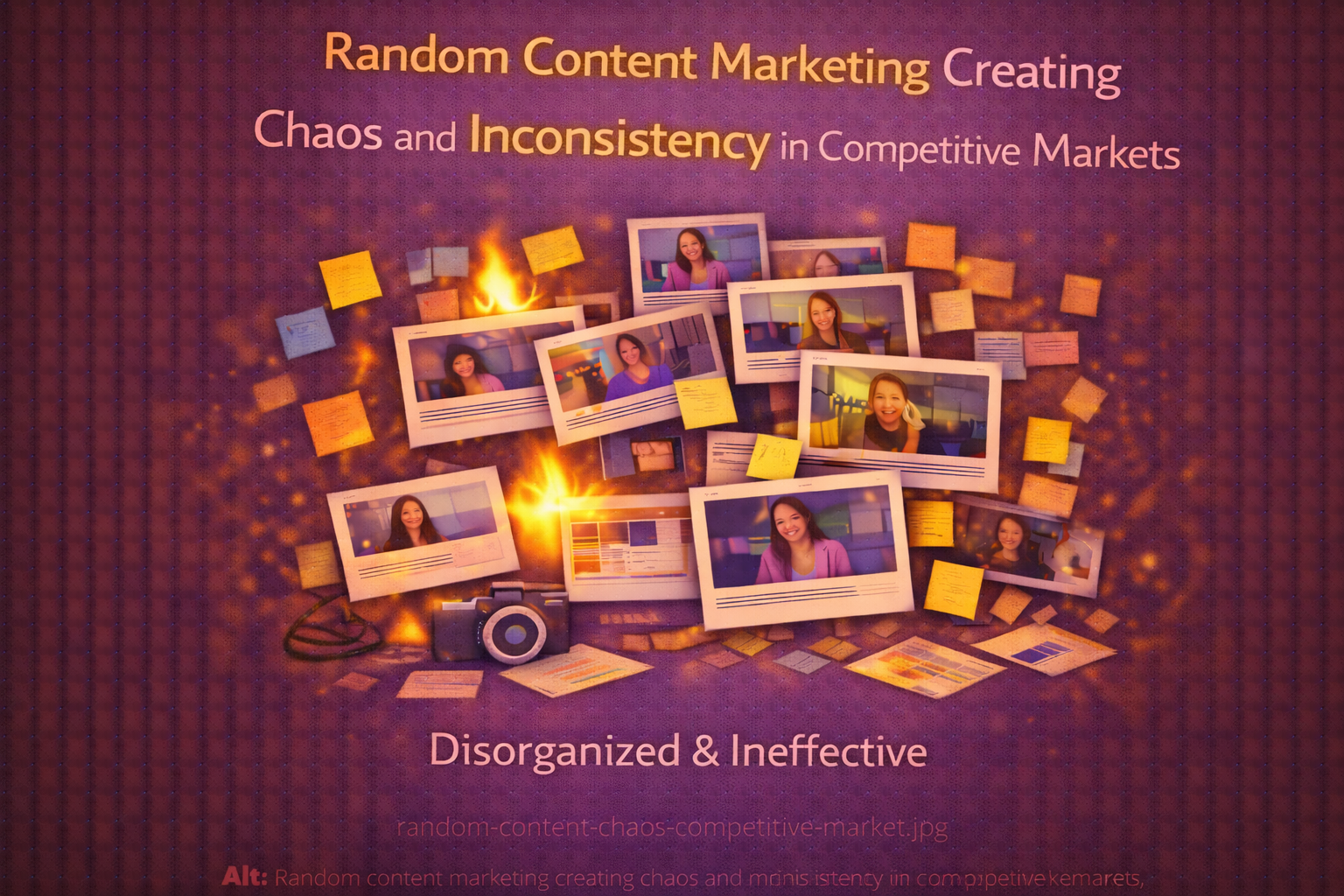
Many brands assume growth comes from doing more. More posts, content, campaigns and activity. While activity can create visibility, visibility alone is not enough to build a strong brand.
In competitive markets, customers are exposed to thousands of marketing messages every day. Very few of those messages are remembered. The brands that stand out are not necessarily the brands creating the most content.
They are often the brands communicating the most consistently. Consistency helps customers recognize, remember, and trust a brand over time.
Random activity may create temporary attention. Consistency creates long-term brand value.
Recognition
Brand recognition is one of the most valuable assets a company can build. Customers are more likely to engage with brands they recognize. Recognition develops when customers repeatedly encounter consistent:
- Visuals
- Messaging
- Campaigns
- Brand Experiences
Random activity makes recognition more difficult because every piece of content may look or feel different.
Examples include:
- Changing Visual Styles
- Shifting Messaging
- Unrelated Campaigns
- Trend-Driven Content
- Inconsistent Creative Direction
As a result, customers struggle to connect individual pieces of content back to the brand. Consistency helps create stronger mental associations.
The more recognizable a brand becomes, the easier it is for future marketing efforts to succeed.
Familiarity
People naturally gravitate toward what feels familiar. Psychologists often refer to this as the “mere exposure effect”. The more often customers encounter a consistent brand, the more comfortable that brand becomes.
Consistency reinforces familiarity through:
- Repeated Visual Cues
- Consistent Brand Messaging
- Predictable Brand Experiences
- Ongoing Campaign Themes
Random activity often interrupts this process. Instead of reinforcing familiarity, brands continually introduce new visual styles, messages, and creative directions.
Customers may notice the content, but they do not necessarily remember the brand behind it. Familiarity is built through repetition. Repetition requires consistency.
Trust
Trust is one of the most important factors in customer decision-making. Customers are more likely to buy from brands that feel reliable and credible. Consistency helps establish trust because it signals stability.
Customers begin to see:
- Professionalism
- Reliability
- Clarity
- Confidence
- Brand Maturity
Random content can create the opposite effect. Inconsistent visuals and messaging may cause customers to question brand:
- Quality
- Direction
- Credibility
- Expertise
Trust rarely develops through a single campaign. It develops through consistent experiences over time.
Customer Recall
Recognition helps customers identify a brand. Recall helps customers remember it later. This distinction is important. A customer may recognize a brand when they see it.
However, customer recall determines whether that brand comes to mind when a buying opportunity appears. Consistency strengthens recall through:
- Repeated Exposure
- Consistent Visual Identity
- Consistent Messaging
- Consistent Campaign Execution
- Consistent Brand Positioning
Random activity often weakens recall because every piece of content introduces new signals. Customers may remember the content itself but fail to remember who created it.
Strong brands make recall easy because they repeatedly reinforce the same visual and strategic cues.
Competitive Advantage
In highly competitive markets, consistency becomes a competitive advantage. Many competitors can copy:
- Products
- Offers
- Promotions
- Marketing Tactics
What is much harder to replicate is a strong and recognizable brand presence. Consistency helps create:
- Stronger Brand Equity
- Better Recognition
- Greater Customer Trust
- Improved Marketing Efficiency
- Stronger Long-Term Positioning
Over time, these advantages compound. Each campaign strengthens previous campaigns and each asset reinforces previous assets while each customer interaction builds upon previous experiences.
The result is a brand that becomes increasingly difficult to ignore and increasingly difficult to replace.
Why Random Activity Often Fails
Random activity creates motion. Consistency creates momentum. Brands that rely on random activity often experience:
- Short-Term Attention
- Inconsistent Performance
- Weak Recognition
- Lower Recall
- Fragmented Branding
The content may generate engagement in the moment, but it rarely contributes to long-term brand growth. Without consistency, every new piece of content starts from zero.
Consistency Compounds Over Time
One of the most powerful aspects of consistency is its cumulative effect. Every consistent customer interaction strengthens:
- Recognition
- Familiarity
- Trust
- Recall
- Brand Equity
These benefits compound over months and years. This is why many of the strongest brands appear more efficient than their competitors. Their content is not working in isolation. Each new asset builds upon years of consistent communication.
The Brands That Win Are Usually The Most Consistent
Consistency beats random activity because it creates:
- Recognition
- Familiarity
- Trust
- Customer Recall
- Competitive Advantage
These advantages make every future marketing effort more effective. Ultimately, successful brands do not grow because they are constantly creating new messages.
They grow because they consistently reinforce the right messages. Random activity creates noise. Consistency creates brand equity and brand equity is what helps companies win in competitive markets.
Why Competitive Brands Build Content Systems
In highly competitive markets, creating content is no longer enough. Most brands are producing more content than ever before. They are active on social media, investing in advertising, launching campaigns, and updating websites regularly.
Yet many still struggle with:
- inconsistent marketing
- content shortages
- weak campaign performance
- rising production costs
- low content ROI
The difference is often not how much content a brand creates. The difference is whether the brand has a system. Competitive brands understand that content should not be managed as a series of isolated projects.
It should operate as a structured business process. That is why leading brands build content systems that connect planning, production, asset management, distribution, and performance measurement.
For a deeper explanation, see What We Mean By Content System For Brands.
Planning
Competitive brands rarely create content without a clear purpose. Before production begins, they define:
- Business Objectives
- Marketing Goals
- Campaign Priorities
- Customer Acquisition Objectives
- Content Requirements
- Distribution Channels
Planning creates alignment between content and business outcomes. Without planning, content often becomes:
- Reactive
- Disconnected
- Difficult To Scale
- Inefficient
With planning, every asset supports a larger objective.
The question shifts from: “What should we create?”
to “What does the business need to achieve?”
This creates stronger campaigns and more valuable content investments.
Production
Most brands think content systems are about organization. In reality, they also improve production. Competitive brands use content systems to ensure production is:
- Strategic
- Efficient
- Repeatable
- Scalable
Instead of creating content one request at a time, production is designed around:
- Campaigns
- Product Launches
- Advertising Needs
- Website Requirements
- Long-Term Marketing Objectives
A single production may generate:
- Campaign Photography
- Product Photography
- Lifestyle Content
- Advertising Assets
- Short-Form Video
- Website Assets
This approach increases the value of every production investment while reducing the need for constant content creation.
Asset Libraries
One of the biggest advantages competitive brands have is their asset libraries. Many businesses create content and then lose track of it. Competitive brands treat content as a long-term asset.
They build libraries that include:
- Campaign Photography
- Product Photography
- Advertising Assets
- Website Content
- Video Content
- Brand Storytelling Assets
- Marketing Resources
These libraries allow teams to:
- Launch Faster
- Reuse Assets
- Improve Consistency
- Reduce Production Waste
- Support Multiple Campaigns
Over time, the library becomes a strategic advantage that competitors cannot easily replicate.
Distribution
Content only creates value when it reaches customers. Competitive brands understand that distribution is just as important as production. Instead of creating content for a single channel, they plan distribution across:
- Websites
- Social Media
- Paid Advertising
- Email Marketing
- Public Relations
- Retail Marketing
- Sales Materials
This creates a multiplier effect. One asset may support multiple channels simultaneously.
As a result:
- Asset Utilization Improves
- Consistency Improves
- Marketing Efficiency Improves
- ROI Improves
The strongest brands maximize content value through strategic distribution rather than simply increasing production volume.
Measurement
Many brands stop after content is published. Competitive brands continue by measuring performance.
They evaluate:
- Asset Performance
- Campaign Results
- Advertising Performance
- Engagement Metrics
- Conversion Metrics
- Content Utilization
- ROI
Measurement helps answer questions such as:
- Which Assets Perform Best?
- Which Campaigns Generate Results?
- Which Channels Deliver The Highest Return?
- What Should We Produce Next?
Rather than relying on assumptions, future content decisions are guided by data. This creates continuous improvement over time.
Why Systems Outperform Random Content
Random content often creates:
- Content Shortages
- Inconsistent Branding
- Duplicate Production
- Marketing Inefficiencies
- Weak Campaign Support
- Lower ROI
Content systems solve these challenges by creating structure. Instead of operating campaign by campaign, brands build repeatable processes that support long-term growth.
The result is better:
- Planning
- Production
- Asset Management
- Distribution
- Performance
Every stage strengthens the next.
The Competitive Advantage Is Not More Content
Many brands assume success comes from creating more content. In reality, competitive advantage often comes from creating better systems.
The strongest brands build content systems because they improve:
- Planning
- Production
- Asset Libraries
- Distribution
- Measurement
Together, these elements create a marketing operation that is more consistent, more efficient, and more scalable. Ultimately, competitive brands do not win because they produce the most content.
They win because they build systems that allow every piece of content to create more value, support more objectives, and contribute to long-term business growth.
Why Campaigns Outperform Random Content
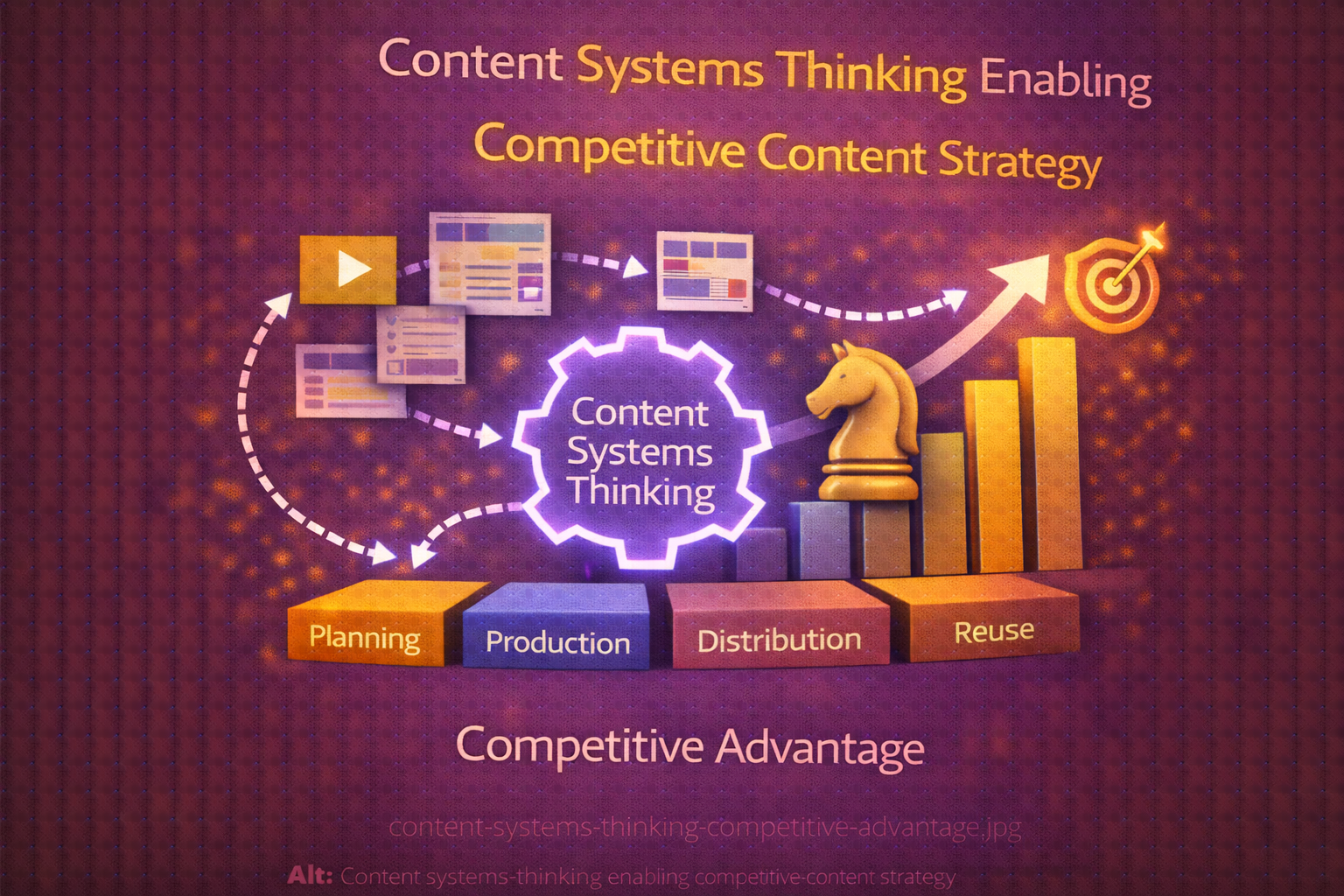
Many brands create content continuously but still struggle to generate meaningful marketing results.
The reason is often simple: They are creating content without a campaign.
Content gets published because a social channel needs activity, a trend is gaining attention, or the marketing calendar has empty spaces.
While this approach can create visibility, it rarely creates momentum. Campaigns outperform random content because they provide structure, purpose, and strategic direction.
Instead of creating isolated pieces of content, campaigns bring multiple assets together to support a shared objective. The result is stronger marketing performance, better asset utilization, and more consistent brand growth.
For a deeper exploration of this concept, see Why Campaigns Should Drive Content Systems.
Strategic Objectives
The biggest difference between campaigns and random content is purpose. Random content is often created because content is needed. Campaigns are created because an objective exists.
Examples include:
- Product Launches
- Customer Acquisition
- Brand Awareness
- Seasonal Promotions
- Collection Releases
- Market Expansion
Every campaign begins by answering questions such as:
- What Are We Trying To Achieve?
- Who Are We Trying To Reach?
- What Action Should Customers Take?
- How Will Success Be Measured?
These objectives provide direction for every content decision. Without strategic objectives, content often becomes activity without impact. Campaigns ensure content serves a business purpose rather than simply filling a schedule.
Cross-Channel Support
Modern marketing happens across multiple channels. Customers may interact with a brand through:
- Social Media
- Paid Advertising
- Websites
- Email Marketing
- Product Pages
- Public Relations
- Retail Marketing
Random content is often created for a single channel. A social post supports social media. An email supports email marketing. An advertisement supports advertising. Campaigns connect these channels.
One campaign may generate assets that support:
- Website Content
- Social Content
- Advertising Creative
- Email Marketing
- Product Launch Materials
- PR Outreach
- Retail Displays
This creates a cohesive customer experience while maximizing the value of every asset produced.
Consistency
Consistency is one of the most powerful advantages campaigns provide. Random content often leads to:
- Changing Visual Styles
- Different Messages
- Unrelated Content Themes
- Inconsistent Brand Experiences
Campaigns solve this problem by creating a unified framework.
Every asset supports the same:
- Objective
- Messaging
- Visual Direction
- Customer Experience
As customers encounter campaign content across multiple channels, recognition and familiarity increase.
This consistency strengthens:
- Brand Recognition
- Customer Trust
- Recall
- Marketing Effectiveness
Over time, consistent campaigns help build stronger brand equity than isolated content ever can.
Better Asset Utilization
One of the biggest weaknesses of random content is that assets are often used once and then forgotten. Examples include:
- Single Social Posts
- One-Time Promotions
- Isolated Campaign Assets
- Short-Lived Creative
Campaigns create opportunities for significantly greater asset utilization. A single photoshoot may generate:
- Website Assets
- Advertising Creative
- Social Content
- Email Marketing Assets
- Product Launch Support
- Retail Marketing Materials
Instead of serving one purpose, assets support multiple marketing activities.
This increases:
- Asset Lifespan
- Asset Value
- Marketing Efficiency
- Content ROI
The more uses an asset has, the more valuable it becomes.
Better Performance
Ultimately, campaigns outperform random content because they are designed to perform. Campaigns are planned around measurable outcomes.
Examples include:
- Sales
- Leads
- Customer Acquisition
- Engagement
- Brand Awareness
- Website Traffic
- Product Launch Success
Because campaigns are built around specific objectives, performance can be evaluated and optimized. Random content often lacks this advantage.
Without clear objectives, it becomes difficult to determine what:
- Worked
- Failed
- Should Be Improved
- Should Be Repeated
Campaigns create a framework for continuous improvement. Every campaign generates insights that help improve future marketing efforts.
Why Random Content Struggles To Compete
Random content often creates:
- Short-Term Attention
- Inconsistent Branding
- Weak Asset Utilization
- Limited Strategic Value
- Poor Measurement
- Marketing Inefficiency
Campaigns create:
- Strategic Direction
- Consistency
- Asset Multiplication
- Better Measurement
- Better Marketing Outcomes
The difference is not necessarily the quality of the content itself. The difference is how the content is organized and deployed.
Campaigns Create Momentum
Random content creates activity. Campaigns create momentum. Every campaign strengthens:
- Recognition
- Familiarity
- Trust
- Customer Recall
- Brand Equity
Instead of isolated pieces of content competing for attention, assets work together toward a common objective. This creates a cumulative effect that improves marketing performance over time.
Why Campaign-Driven Brands Win
Campaigns outperform random content because they provide:
- Strategic Objectives
- Cross-Channel Support
- Consistency
- Better Asset Utilization
- Better Performance
These advantages help brands create more value from every asset, every production investment, and every marketing initiative.Ultimately, successful brands do not win because they create more content.
They win because they create content with a purpose. Campaigns provide that purpose and purpose is what turns content into business results.
Scalable Content Strategy Requires Structure
A scalable content strategy cannot depend on inspiration alone. It requires defined workflows, formats, and standards.
Therefore, brands using systems consistently outperform those relying on sporadic output.
Random Content Undermines Long-Term Marketing Performance
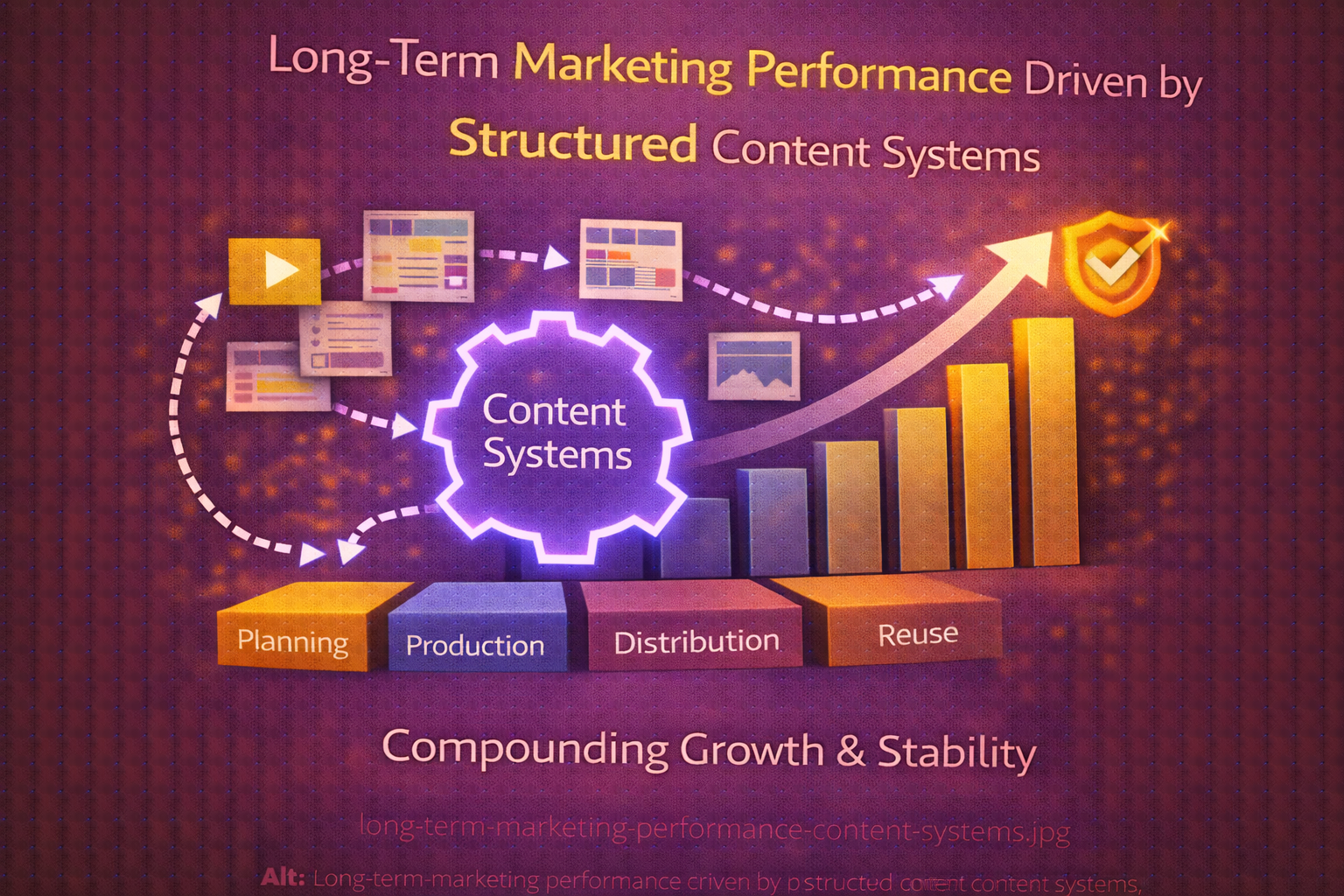
Long-term marketing performance depends on accumulation. Each asset should reinforce previous efforts.
Random content resets momentum instead of building it, making sustained growth nearly impossible.
How To Replace Random Content With A Content System
Many brands recognize that random content is not producing the results they want. Despite publishing regularly, they often experience:
- inconsistent branding
- content shortages
- reactive marketing
- rising production costs
- low content ROI
The solution is not creating more content. The solution is building a content system. A content system transforms content creation from a reactive activity into a strategic business process.
Instead of constantly asking: “What should we post next?”
brands begin asking: “What assets do we need to achieve our objectives?”
This shift improves consistency, efficiency, and marketing performance across every channel.
Strategy First
Every effective content system begins with strategy. Without strategy, content decisions are often driven by:
- Trends
- Deadlines
- Competitor Activity
- Platform Demands
- Short-Term Needs
A strategic approach begins by defining:
- Business Objectives
- Marketing Goals
- Target Audience
- Brand Positioning
- Customer Acquisition Priorities
- Key Marketing Initiatives
These elements create a framework for future content decisions. When strategy comes first, content becomes more intentional and more valuable. Every asset supports a larger objective.
Campaign Planning
Once strategy is established, content should be organized around campaigns. Campaigns provide structure and purpose.
Examples include:
- Product Launches
- Seasonal Promotions
- Customer Acquisition Initiatives
- Brand Awareness Campaigns
- Collection Releases
- Market Expansion Efforts
Campaign planning helps identify:
- Required Assets
- Distribution Channels
- Production Requirements
- Timelines
- Success Metrics
Rather than creating isolated pieces of content, brands create coordinated content ecosystems designed to support specific objectives. This dramatically improves marketing effectiveness.
Asset Creation
Many brands focus on creating content. Strong content systems focus on creating assets. The distinction is important. Content is often viewed as something that gets published. Assets are resources that continue creating value over time.
Examples include:
- Campaign Photography
- Product Photography
- Advertising Assets
- Website Content
- Lifestyle Photography
- Short-Form Video
- Brand Storytelling Content
Production should be designed to create assets that can support multiple channels and future campaigns. This increases the value generated from every production investment.
Asset Libraries
Creating assets is only part of the process. Brands must also organize and manage them effectively. Asset libraries provide a central location for:
- Campaign Assets
- Product Photography
- Advertising Creative
- Website Content
- Video Content
- Brand Resources
Libraries help teams:
- Locate Assets Quickly
- Reuse Content
- Improve Consistency
- Reduce Duplicate Production
- Increase Content ROI
Instead of constantly creating new content, brands maximize the value of assets they already own. Over time, the library becomes one of the company’s most valuable marketing resources.
Distribution
Content only creates value when it reaches the right audience. A content system includes a clear distribution strategy that determines where assets will be used.
Examples include:
- Website Content
- Social Media
- Paid Advertising
- Email Marketing
- Public Relations
- Retail Marketing
- Sales Materials
The goal is to maximize asset value through cross-channel use. A single campaign asset may support multiple channels simultaneously.
This improves:
- Asset Utilization
- Marketing Efficiency
- Brand Consistency
- Content ROI
Strong distribution ensures every asset works harder.
Performance Tracking
The final step is performance tracking. Many brands stop after publishing content. The strongest brands measure outcomes.
Examples include:
- Asset Performance
- Advertising Performance
- Engagement Metrics
- Conversion Metrics
- Website Performance
- Campaign Results
- Content Utilization
Performance data helps answer questions such as:
- Which Assets Perform Best?
- Which Campaigns Generate Results?
- Which Channels Deliver The Highest ROI?
- What Should We Produce Next?
These insights improve future planning and production decisions. Every campaign becomes a learning opportunity.
The Difference Between Random Content And A Content System
Random content typically follows this pattern:
- Need Content
- Create Content
- Publish Content
- Run Out Of Content
- Repeat
A content system follows a different process:
- Define Strategy
- Plan Campaigns
- Create Assets
- Build Libraries
- Distribute Content
- Measure Performance
- Improve Future Campaigns
One approach creates activity. The other creates long-term marketing infrastructure.
Why Content Systems Win
Brands that replace random content with content systems often experience:
- Better Consistency
- Stronger Campaign Performance
- Better Asset Utilization
- Faster Marketing Execution
- Improved Content ROI
- More Predictable Growth
Instead of constantly reacting to content needs, they build a repeatable framework that supports marketing across every channel. Ultimately, the goal is not simply to produce content.
The goal is to create a system where every asset has a purpose, every campaign supports a strategy, and every marketing investment generates more value over time.
Real-World Example: Random Content vs A Campaign-Driven Content System
The difference between random content and a campaign-driven content system is not simply organizational. It affects how efficiently marketing operates, how effectively campaigns perform, and how much value brands generate from every content investment.
Consider the following example of two fashion brands with similar products, similar target audiences, and similar marketing budgets. The primary difference is how they approach content.
Brand A: Random Content
Brand A creates content as needs arise. Typical workflow:
- Need Content
- Schedule A Shoot
- Create Assets
- Publish Content
- Run Out Of Content
- Repeat
Marketing is largely reactive. Content decisions are driven by:
- Social Media Needs
- Upcoming Deadlines
- Trend Participation
- Immediate Campaign Requirements
- Short-Term Priorities
Every new marketing initiative typically requires new production.
Brand B: Campaign-Driven Content System
Brand B operates through a structured content system. Typical workflow:
- Quarterly Campaign Planning
- Strategic Production
- Asset Library Development
- Multi-Channel Distribution
- Performance Analysis
- Optimization
Content is created around:
- Product Launches
- Customer Acquisition Campaigns
- Seasonal Initiatives
- Brand Objectives
- Long-Term Marketing Needs
Instead of creating content for individual channels, Brand B creates assets that support the entire marketing ecosystem.
Asset Lifespan
Brand A
Most content supports:
- one campaign
- one promotion
- one social post
Assets are frequently used once and then replaced.
Average asset lifespan: Days Or Weeks
Result:
- Constant Content Shortages
- Frequent New Productions
- Higher Costs
Brand B
Assets are created for:
- websites
- advertising
- social media
- email marketing
- PR
- future campaigns
Average asset lifespan: Months Or Years
Result:
- Higher Asset Value
- Better Content ROI
- Reduced Production Pressure
- Stronger Asset Libraries
Campaign Performance
Brand A
Campaigns often launch with:
- Limited Assets
- Inconsistent Creative
- Few Advertising Variations
- Weak Cross-Channel Support
Performance tends to be inconsistent because campaigns are built around available content rather than strategic objectives.
Brand B
Campaigns launch with:
- Campaign Photography
- Product Photography
- Advertising Assets
- Email Marketing Assets
- Website Content
- Social Content
Every channel supports the same campaign objective.
Result:
- Better Campaign Execution
- Better Customer Experience
- Better Marketing Performance
- Stronger Launches
Consistency
Brand A
Customers experience:
- Different Visual Styles
- Changing Messaging
- Unrelated Campaigns
- Inconsistent Brand Experiences
Over time:
- Recognition Weakens
- Trust Develops More Slowly
- Brand Equity Suffers
Brand B
Customers repeatedly encounter consistent:
- Photography
- Messaging
- Campaigns
- Positioning
Over time:
- Recognition Increases
- Familiarity Increases
- Trust Increases
- Brand Equity Strengthens
ROI
Brand A
Content investments often generate:
- Short-Term Value
- Limited Reuse
- Minimal Asset Multiplication
- Frequent Replacement Costs
Marketing teams are constantly investing in new production. ROI remains limited because assets are underutilized.
Brand B
Content investments generate:
- Website Assets
- Advertising Assets
- Social Media Content
- Email Marketing Content
- Product Launch Support
- Future Campaign Resources
The same production investment creates value repeatedly.
Result:
- Higher ROI
- Longer Asset Lifespan
- Better Asset Utilization
- Improved Marketing Efficiency
Marketing Efficiency
Brand A
Marketing teams spend significant time:
- Requesting New Content
- Scheduling Emergency Shoots
- Solving Content Gaps
- Searching For Assets
- Reacting To Deadlines
The organization is constantly trying to catch up.
Brand B
Marketing teams work from:
- Planned Campaigns
- Existing Asset Libraries
- Defined Workflows
- Distribution Plans
- Performance Data
Result:
- Faster Execution
- Better Planning
- Reduced Stress
- Lower Production Waste
- Greater Scalability
Side-By-Side Comparison
| Category | Brand A: Random Content | Brand B: Campaign-Driven System |
|---|---|---|
| Asset Lifespan | Days or weeks | Months or years |
| Campaign Support | Limited | Comprehensive |
| Consistency | Inconsistent | Highly consistent |
| Asset Utilization | Low | High |
| Marketing Efficiency | Reactive | Proactive |
| Production Costs | Repeated and fragmented | Strategic and optimized |
| ROI | Lower | Higher |
| Brand Recognition | Weaker | Stronger |
The Difference Is Not More Content
The most important takeaway is this: Brand B does not necessarily create more content than Brand A.
Brand B simply creates content more strategically. The advantage comes from:
- Longer Asset Lifespans
- Better Campaign Performance
- Stronger Consistency
- Higher ROI
- Greater Marketing Efficiency
Ultimately, competitive brands do not win because they produce more content. They win because every asset serves a purpose, every campaign supports a strategy, and every production investment generates value long after the content is created.
Final Thoughts
In competitive markets, effort alone is not enough.
Random content marketing cannot keep up with structured execution. Brands that invest in systems achieve stronger differentiation, faster iteration, and sustainable long-term marketing performance.
Recommended Next Reads
Brand Photography for Fashion Brands: The System Behind Strong Visual Identity and Scalable Growth
From Shoot to System – Treating Visuals As A Content Channel