
A beauty content production workflow helps a growing brand increase output without weakening visual quality, creating channel gaps, or turning every launch into an emergency. The goal is not to produce the largest possible number of files. It is to build a repeatable system that creates the right assets, in the right formats, with clear ownership from brief to distribution.
That distinction matters. When content demand grows faster than the production process, teams often respond by booking more shoots. However, more production does not automatically create more usable content. Without an asset plan, approval structure, quality standard, and distribution logic, a larger shoot can simply create a larger folder of underused files.
This guide explains how beauty brands can scale production as an operating system: one that protects the brand, supports paid and owned channels, and makes each production more valuable over time.
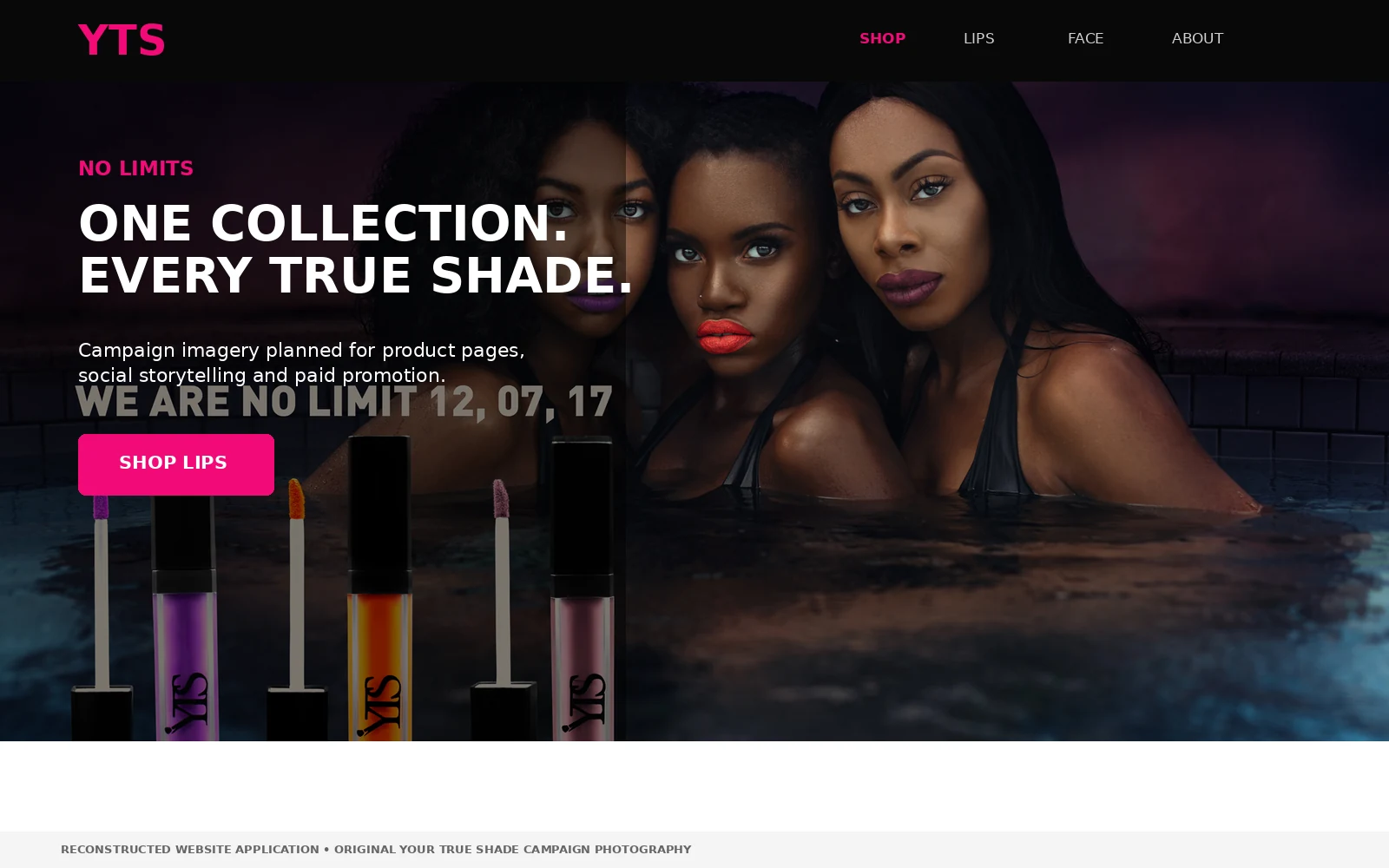
See the approach in practice: one beauty production planned for website, Facebook, and Instagram.
What Scalable Beauty Content Production Actually Means
Scaling is the ability to support more products, channels, markets, and creative variations without allowing cost, delay, inconsistency, and rework to rise at the same rate.
A scalable system should improve five things at once:
- Coverage: the production serves the placements the campaign genuinely needs.
- Consistency: product color, skin tone, lighting, styling, typography, and brand cues remain coherent.
- Speed: decisions and approvals move through a defined path.
- Utilization: a higher percentage of delivered assets reaches a live channel.
- Learning: performance evidence informs the next brief instead of disappearing after launch.
This is why a beauty campaign photography strategy must begin with business use, not a list of attractive visual ideas.
Why Quality and Consistency Break at Scale
Quality usually declines because the operating model stays informal while demand becomes more complex. Different teams commission assets independently. Briefs describe a mood but not a job. Paid media asks for variations after the shoot. Ecommerce discovers that a key product angle is missing. Social crops a landscape image into an unusable vertical frame. Legal and licensing questions appear only when the campaign is ready to launch.
The visible problem may look creative, but the root problem is operational. Common failure points include:
- no shared definition of what “on-brand” means;
- no channel-by-channel asset matrix;
- one master composition expected to work everywhere;
- late product, claims, legal, or usage-rights review;
- too many decision-makers and no final approver;
- delivery folders without naming, metadata, or usage information;
- performance reporting that never reaches the creative brief.
The solution is not rigid sameness. Consistency means that variations still feel as though they belong to the same brand and campaign.
The Eight-Part Beauty Content Production Workflow
1. Translate the marketing plan into content demand
Start with launches, promotions, evergreen priorities, retail moments, and paid-media tests. For each initiative, identify the audience, offer, destination, channel, format, deadline, and expected lifespan. This turns a vague request for “more content” into a visible demand plan.
If the team does not yet know where the gaps are, use the Content Gap Calculator for fashion and beauty brands before scheduling production.
2. Build an asset matrix before the shot list
An asset matrix connects every required placement to a deliverable. It should specify the product or story, funnel stage, channel, dimensions, orientation, safe area, copy space, variation, usage window, and owner.
Only then should the team build the photography shot list. The asset matrix defines what the business needs; the shot list defines what production must capture.
Download: Beauty Campaign Asset Map & Brief Builder
Map products, placements, formats, messages, approvals, and usage requirements before the shoot.
3. Create a visual control system
A mood board is useful, but it is not enough. Translate the creative direction into repeatable controls: lighting ratios, background values, skin-finish treatment, product color references, framing rules, lens character, styling boundaries, retouching tolerance, and mandatory brand cues.
These controls form a visual grammar. They allow new assets to vary without drifting. For a beauty brand, color accuracy, skin texture, finish, and product detail are not cosmetic preferences; they affect product comprehension and trust.
4. Design content families, not isolated images
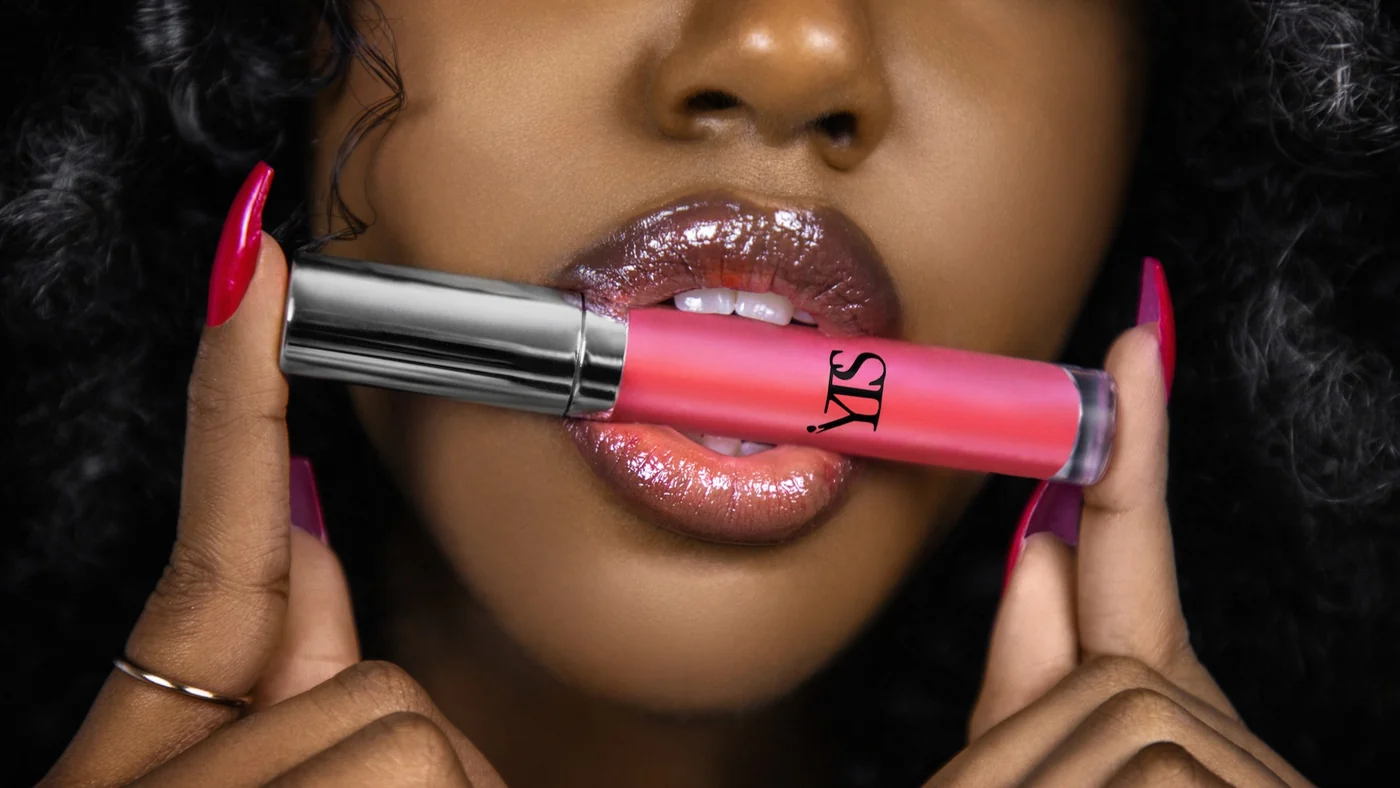
Plan each concept as a family of related assets. A hero setup might create a campaign key visual, a clean product frame, a product-in-hand detail, an application moment, a model close-up, a negative-space composition, and vertical or square variations.
The point is not to crop one photograph repeatedly. The point is to capture deliberate variations that preserve composition, product visibility, and message across placements.
5. Batch compatible work
Batching can reduce setup changes and duplicated effort, but only when the grouped assets share compatible production requirements. Combine products, talent, lighting, styling, and set builds where it improves efficiency. Separate them when a compromise would weaken the result.
A useful batching decision asks: what can share the same production environment without making every outcome look interchangeable?
6. Use approval gates
Define approval stages before production. A practical sequence is:
- brief and business objective;
- asset matrix and shot list;
- creative direction and product accuracy;
- on-set capture review;
- selects;
- retouching reference;
- final delivery and usage confirmation.
Each stage should have one accountable decision owner and a deadline. Consolidated feedback protects both speed and consistency.
7. Deliver a usable content library
Delivery is part of production. Assets should arrive with consistent filenames, campaign and product identifiers, channel or orientation markers, version status, usage information, and a clear folder structure. Otherwise, the marketing team wastes time searching, recreating, or accidentally using the wrong file.
For a deeper system, see the guide to visual content library management and the companion framework for marketing asset metadata.
8. Feed performance back into production
After launch, record which assets were used, where they ran, and what happened. The purpose is not to declare one image a universal winner. It is to identify repeatable evidence: which hooks, crops, product views, talent combinations, messages, and formats performed their assigned jobs.
Use the Content ROI Calculator to connect utilization and campaign outcomes with production investment.
How to Calculate the Right Asset Volume
There is no defensible universal rule that a startup needs 20–40 assets or an established brand needs 250–500 assets each month. Those ranges sound precise, but they ignore launch cadence, channel mix, SKU count, localization, paid-media testing, retail requirements, and the difference between a master asset and a simple export.
Calculate demand from placements instead:
Required master assets = active placements × content families × meaningful creative variants × refresh cycles
Then separate master assets from derivatives. A new crop, compression size, or captioned export may be operationally necessary, but it is not equivalent to a newly photographed concept.
For example, a product launch may require:
- one campaign hero family for the homepage, email, PR, and launch announcement;
- one product-information family for product pages and retail partners;
- one application or texture family to explain use and finish;
- several paid-social concepts with genuinely different hooks;
- planned aspect-ratio variations for the placements that matter.
This method produces a smaller, more useful answer than an arbitrary monthly quota.
How to Protect Quality and Brand Consistency
Quality control should be defined before the camera is switched on. Build a short, testable standard covering:
- Product truth: shade, finish, texture, packaging, label, and applicator are accurate.
- Human truth: skin retains believable texture and the retouch does not distort the product claim.
- Brand truth: lighting, palette, composition, styling, and tone match the approved direction.
- Channel fitness: the asset survives the intended crop, interface, copy area, and viewing size.
- Commercial readiness: releases, usage rights, territory, duration, media, and exclusivity are documented.
Paid usage should be defined early because media scale can change the value and required variation of the assets. The Paid Ads Usage Explainer outlines the licensing logic.
One-Off Shoot, Internal Team, or Ongoing Partner?
| Model | Best fit | Main risk |
|---|---|---|
| One-off production | Distinct launch, seasonal campaign, or occasional need | Repeated onboarding and disconnected asset planning |
| Internal team | High-frequency, fast-turnaround content with stable capabilities | Capacity limits and creative sameness |
| Ongoing creative partner | Recurring launches, paid media, and multi-channel demand | Requires clear scope, cadence, and decision ownership |
| Hybrid system | Always-on internal needs plus campaign-level external production | Brand drift unless both teams share standards and asset plans |
An ongoing partnership becomes valuable when repeated planning, inconsistent availability, and content shortages cost more than continuity saves. Read the practical decision guide: when to invest in a content retainer.
For context, my ongoing brand-content partnerships start from €3,000 per month with a three-month minimum. The value is a consistent campaign content system—planning, continuity, multi-format delivery, and clearer usage—not an hourly bundle or a fixed number of shoot days. Final scope depends on production complexity, deliverables, licensing, and cadence.
How to Measure Whether the System Is Working
Measure the production system with both operational and marketing evidence:
- percentage of delivered master assets actually used;
- time from approved brief to channel-ready delivery;
- number of late asset requests and emergency reshoots;
- coverage of required products, channels, formats, and markets;
- approval rounds and time lost to conflicting feedback;
- performance by content family, hook, placement, and audience;
- useful lifespan and reuse of each asset family;
- cost per used master asset—not cost per file exported.
A system is improving when the team can launch with fewer gaps, use more of what it commissions, learn faster, and maintain a recognizable brand across channels.
Frequently Asked Questions
What is a beauty content production workflow?
It is the repeatable process that connects marketing demand to briefing, asset planning, creative direction, production, approvals, delivery, licensing, distribution, and performance learning.
How can a beauty brand create more content without lowering quality?
Standardize the process, not the ideas. Define brand and product-quality controls, plan content families and channel formats before production, batch only compatible work, and use clear approval gates.
How many beauty content assets should a brand produce each month?
There is no reliable number based on company size alone. Calculate demand from active placements, products, content families, meaningful test variants, localization needs, and refresh cycles. Count master assets separately from crops and exports.
How often should beauty brands schedule production?
The cadence should follow the launch calendar and creative-refresh demand. Some brands need monthly production; others are better served by larger quarterly campaigns with planned derivatives and a well-managed content library.
When does a beauty content retainer make sense?
It is usually appropriate when the brand has recurring launches, continuous paid media, multiple active channels, repeated shortages, or costly onboarding and planning cycles.
How do usage rights affect scalable content production?
Usage rights define where, for how long, in which territories, and through which media the assets may run. They should be agreed before production so the scope, casting, budget, and deliverables match the campaign’s commercial use.
Build the System Before You Add More Shoots
Beauty brands rarely lose quality because they care too little about creativity. Quality declines when demand expands but decision-making, asset planning, and delivery remain informal.
A strong beauty content production workflow makes growth visible before production begins. It converts campaigns into content families, gives every asset a job, protects product and brand truth, and carries performance evidence into the next brief.
Find the Gaps in Your Current Content System
A Free Visual Audit is a working session focused on channel coverage, inconsistency, reuse, paid-media readiness, and the points where your current production process slows launches.