
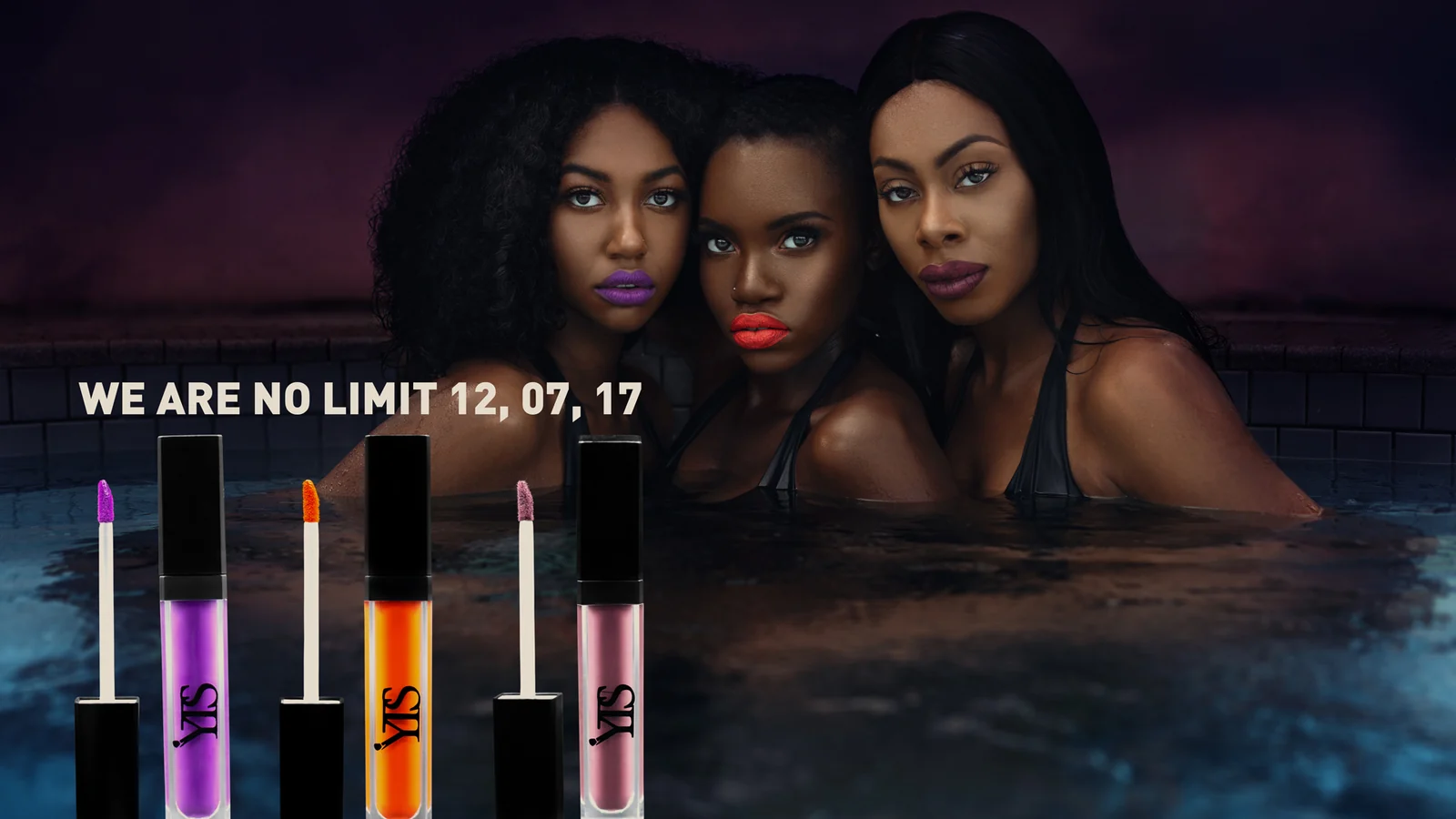
One multi-channel beauty product photography shoot gave Your True Shade a cohesive image library for three distinct destinations: its ecommerce website, Facebook and Instagram. Through strategic planning and photography, we created beauty portraits, product-led campaign images, application shots, shade stories and clean ecommerce assets for the brand’s lipsticks, foundations and powders. The goal was not simply to produce more photographs but to make every setup work harder, extend the useful life of the campaign and eliminate single-use creative.
Project Snapshot
- Client: Your True Shade
- Brand: Natural makeup and skincare
- Products: Lipsticks and glosses, liquid foundations, loose mineral powders and glow powders
- Channels: Website, Facebook and Instagram
- Services: Strategic content planning and photography by Phil Halfmann
- Core objective: Build one adaptable image library that could support ecommerce, social publishing and paid promotion without fragmenting the brand
Your True Shade positioned itself as a trailblazer in natural makeup and skincare, dedicated to creating healthy products of the highest quality. Its visual content therefore needed to do two jobs at once: present the products clearly and communicate how colour, texture and finish looked on melanated skin.
The Challenge: One Shoot Had To Do Three Jobs
Website, Facebook and Instagram do not ask the same thing of an image. Ecommerce photography must make products legible and easy to compare. Facebook creative needs a clear subject and enough stopping power to earn attention in a busy feed. Instagram benefits from strong colour, close crops and a recognisable visual rhythm.
Producing each channel in isolation would have multiplied the planning, styling and production effort. It could also have produced three disconnected versions of the brand. Instead, we planned the campaign as one visual system.
The brief was simple in principle: create enough variety for all three channels while keeping the lighting, colour language and treatment consistent. The practical solution required a detailed shot architecture before the camera came out.
The Multi-Channel Beauty Product Photography Strategy
The shoot was structured around reusable content families rather than a list of isolated hero images. Each family solved a different communication need:

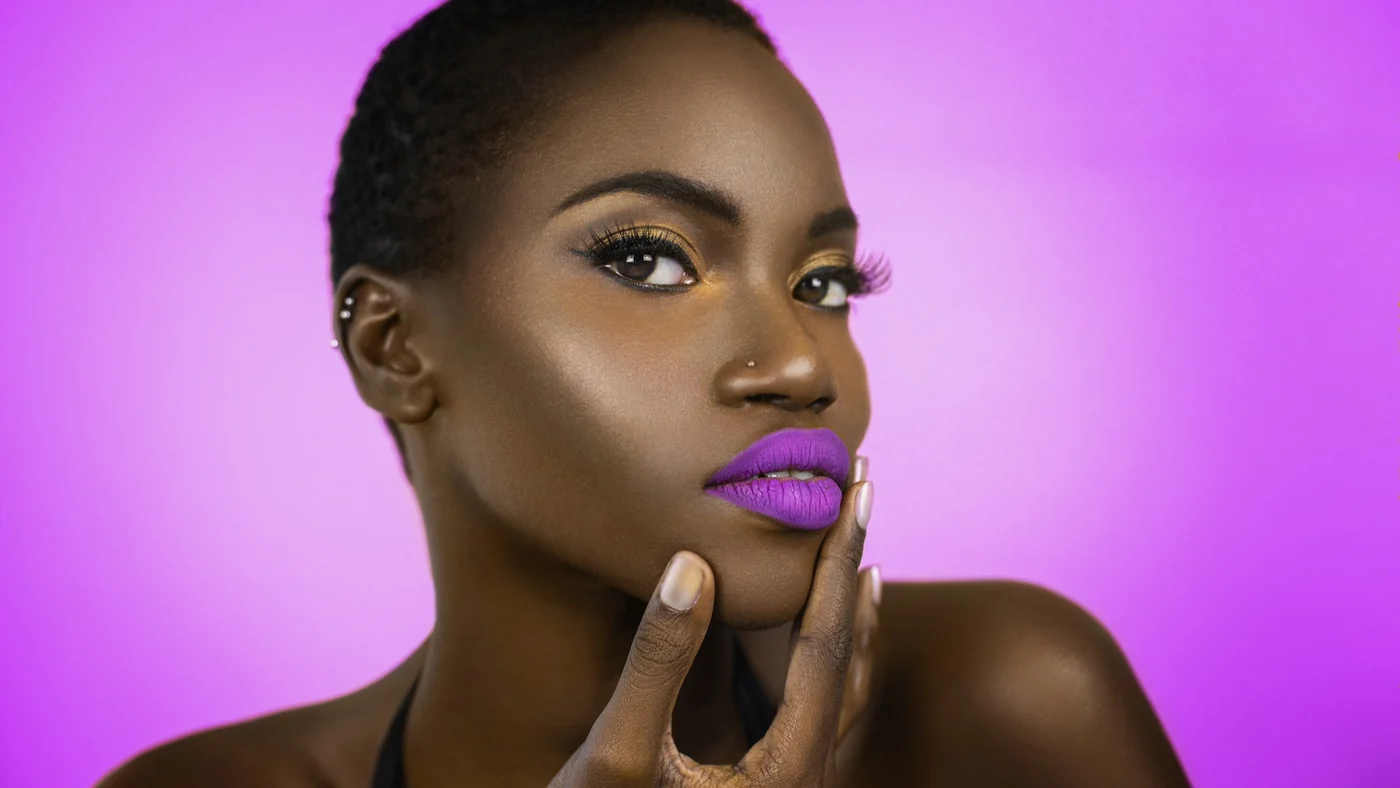
- Campaign hero photographs established mood, confidence and a premium beauty identity
- Model-and-product images connected a shade or formula directly to the person wearing it
- Application photographs demonstrated product use and gave educational posts a natural visual anchor
- Close-up beauty images made texture, shine and pigmentation immediately visible
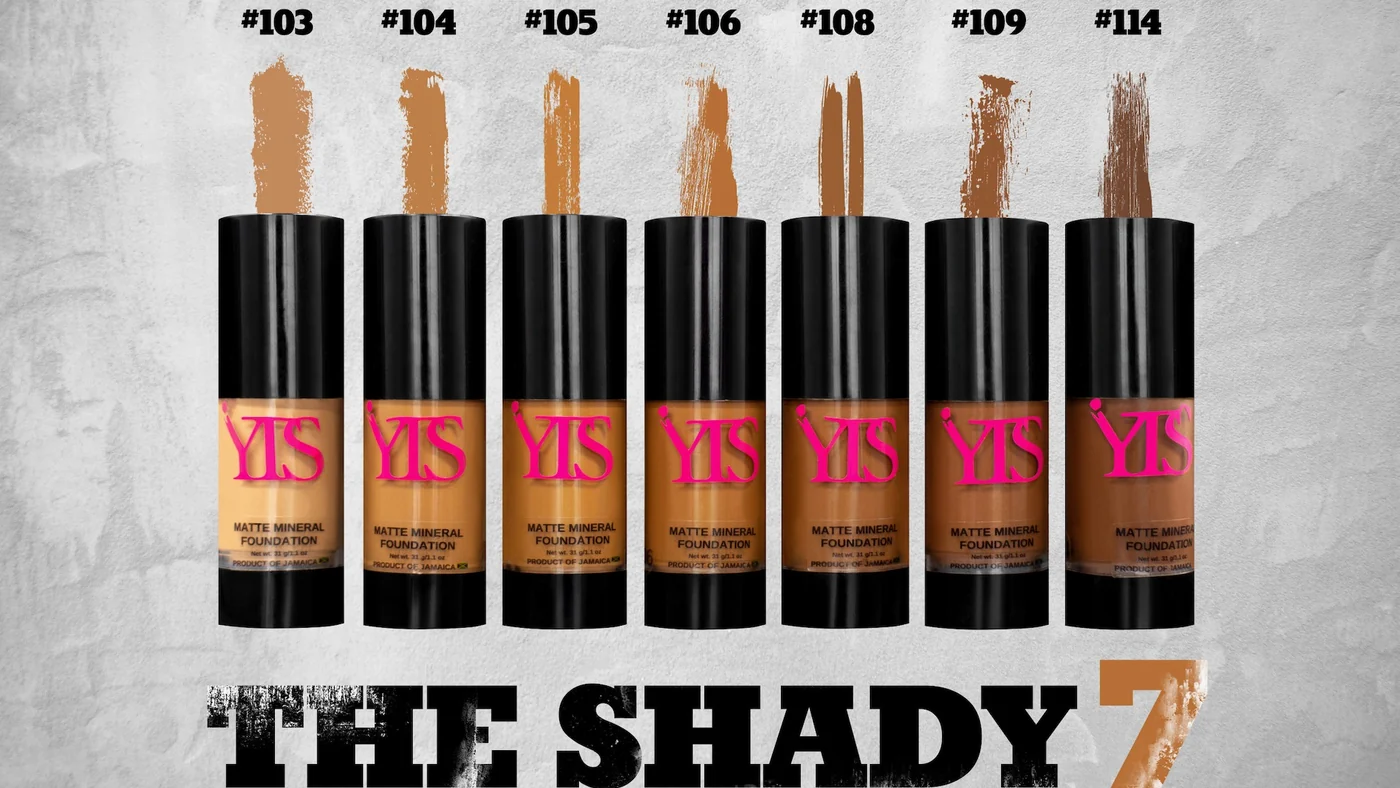
- Product-only photographs supported ecommerce listings, shade comparisons and promotional graphics
- Range images presented foundations, powders and lipstick shades as coherent collections
- Crop-flexible compositions left room for headlines, offers, buttons and platform-specific reframing
This is the foundation of efficient beauty campaign photography: decide how the content must perform before deciding how many photographs to make. It also reduces the compromises that appear when a horizontal campaign image is forced into a square post or a tightly framed portrait is expected to hold ecommerce copy.
From Still Photography To Short-Form Campaign Video
The supplied campaign archive also includes a behind-the-scenes film and two short promotional videos. This does not change the central photography strategy. Instead, it shows how the same products, models, styling and visual language could extend into motion without requiring an unrelated campaign concept.
The 70-second behind-the-scenes video documents product preparation, makeup application and the people working around the set. It gives prospective clients a useful view of the production process while turning otherwise temporary moments into an additional brand asset.
The two approximately 15-second promos are concise, platform-ready executions. The Glow video combines an application close-up, a finished beauty portrait and branded messaging. The Mascara video uses product detail, a stylised model shot and a clear brand sign-off. Together, they demonstrate how one campaign system can support still-image storytelling and short-form advertising.
Because the supplied performance evaluations include two promoted video posts alongside 21 promoted photo posts, the motion content should be treated as part of the wider distribution mix. However, the still-photo totals later in this case study remain separated from the video results to avoid overstating what the photography alone achieved.
Website: Turning Campaign Images Into Shopping Context
For the website, the image library could move from broad brand storytelling to specific product decisions. A campaign hero introduced the visual world. Product-category panels separated lipsticks, foundations and powders. Product pages could then pair an expressive shade portrait with a clean cutout of the item.
The reconstructed website applications supplied with this case study demonstrate that hierarchy using the original campaign photographs. They are presentation mockups, not screenshots of the historical live website, and show how the same production can support a homepage, a category page and a product detail page.
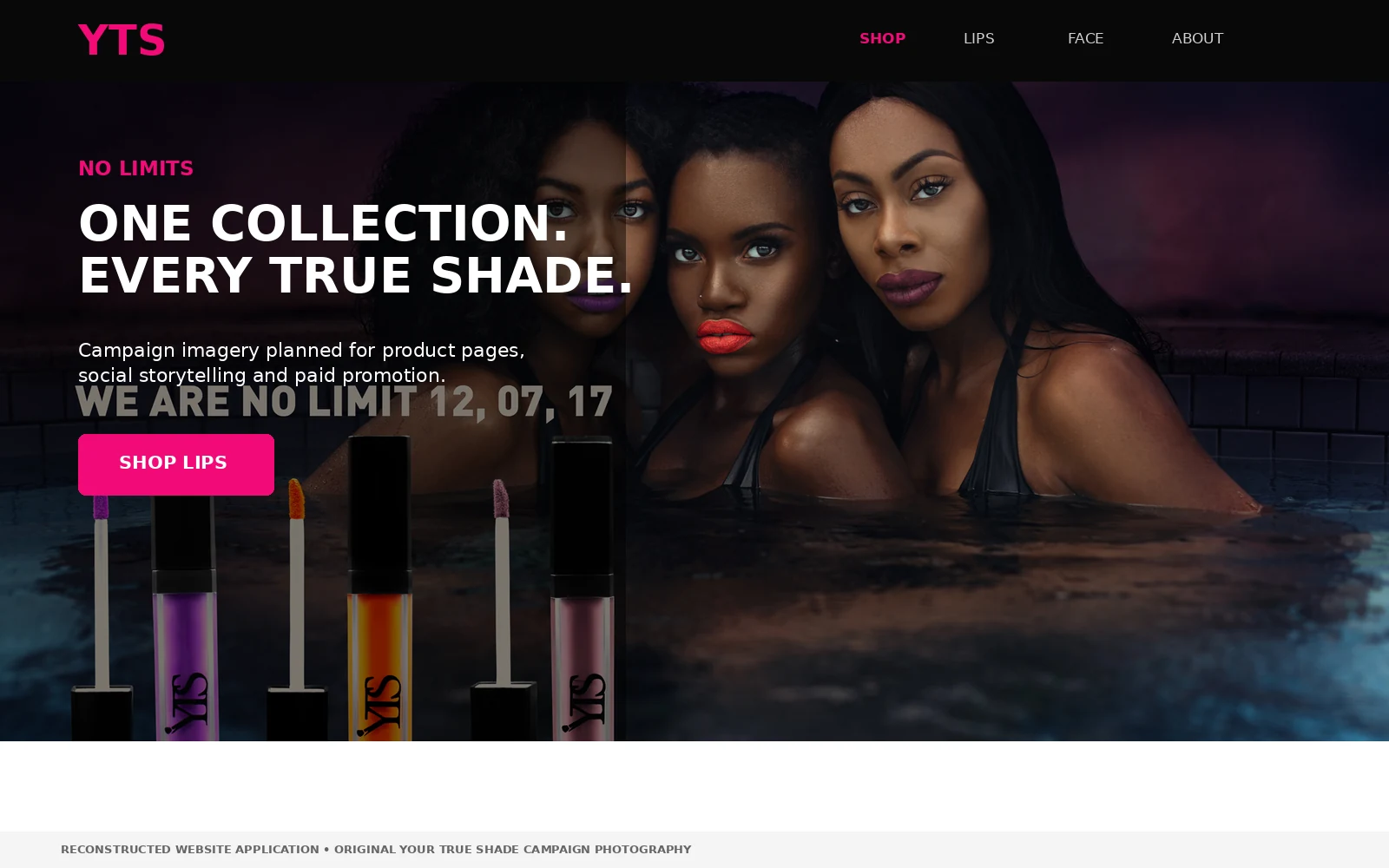
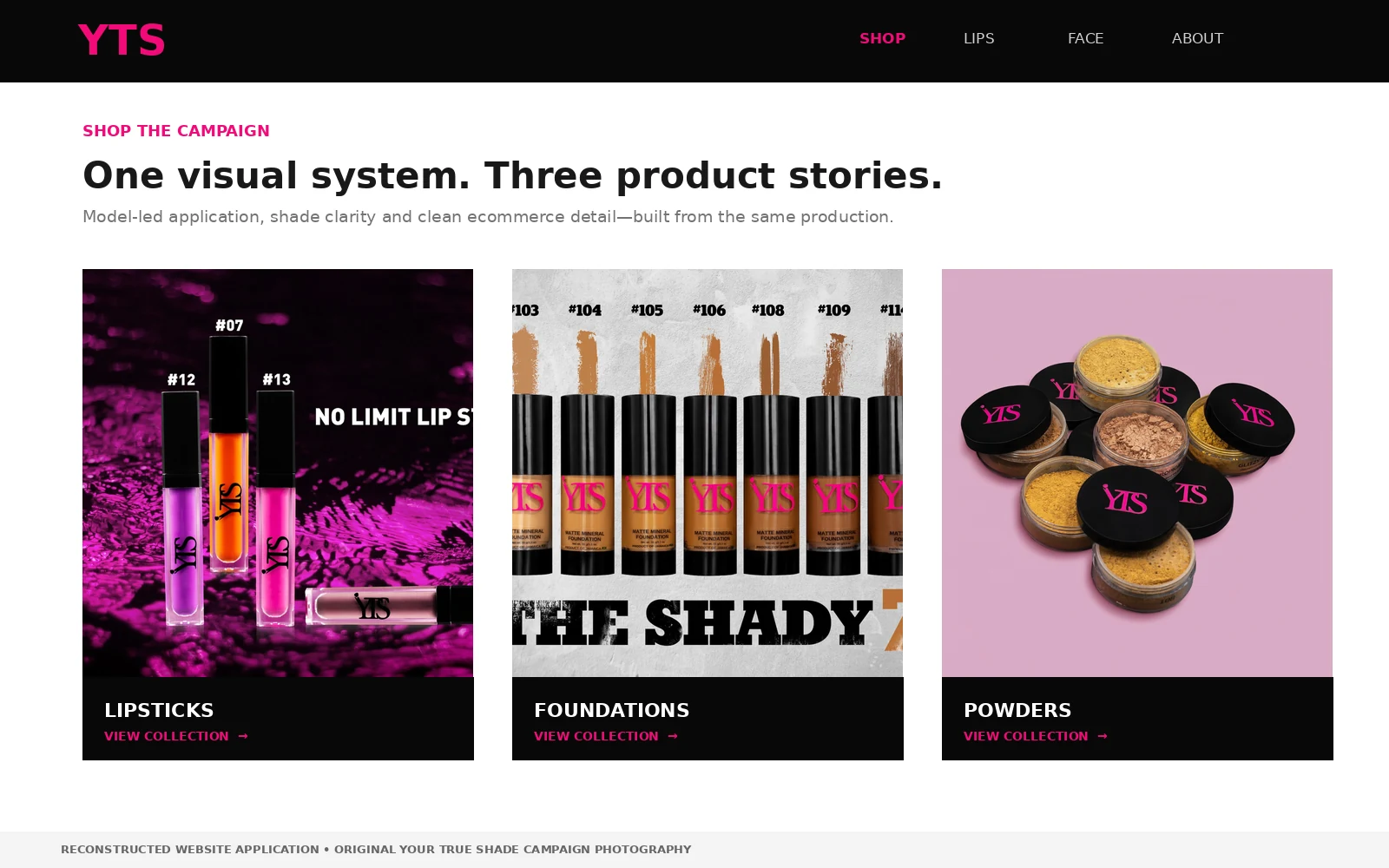
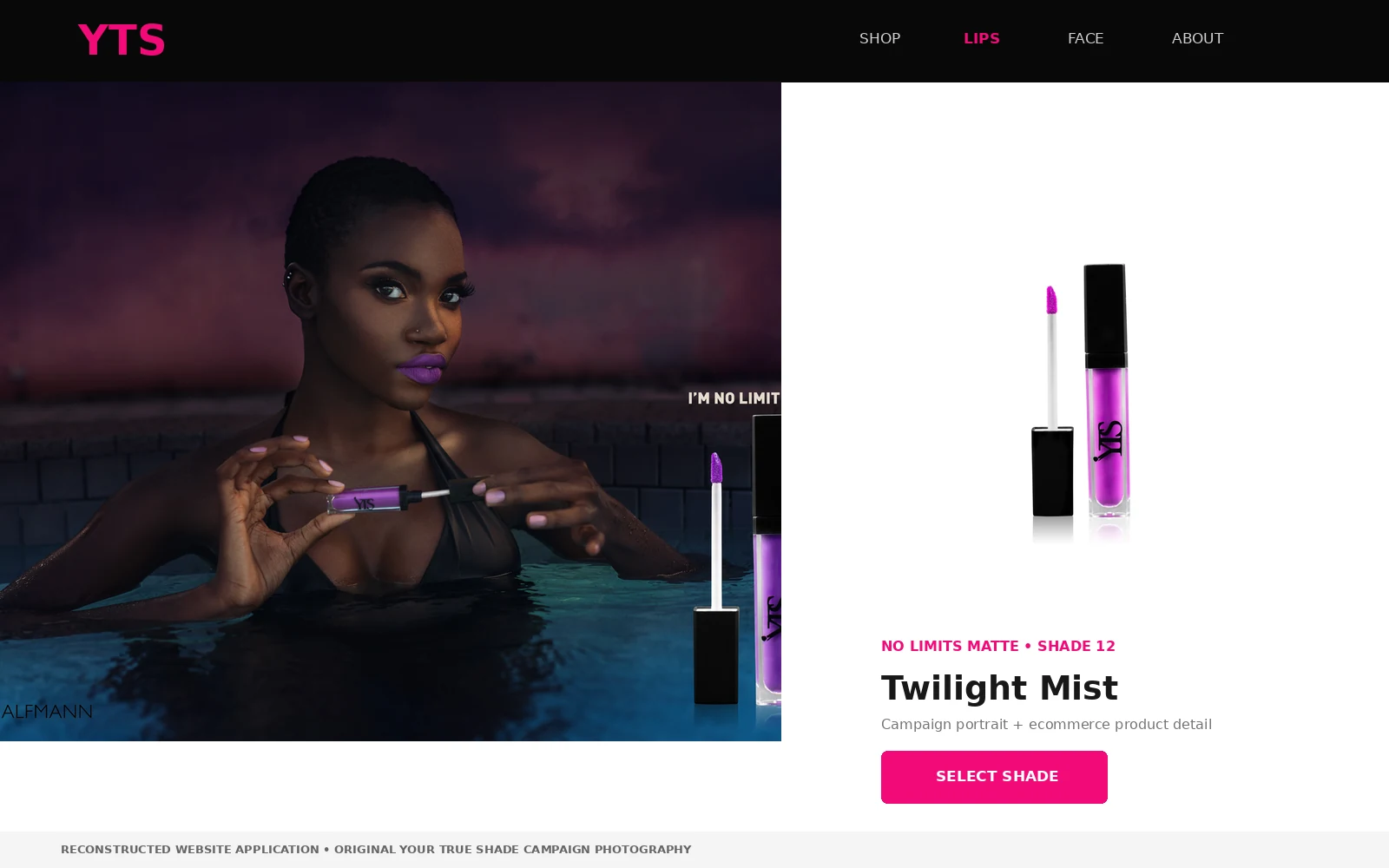
This approach gives an ecommerce team flexibility without asking every image to perform every role. It also follows the same planning logic used in a practical ecommerce photography checklist: capture context, comparison and product clarity as connected parts of one system.
Facebook: Creative Built For Reach, Engagement And Reuse
Facebook used campaign portraits, shade-led product composites, powder application images and promotional variants. The reporting shows that the photography was not confined to a launch window. Images from the production continued appearing on the brand’s Facebook page from February through November 2020—at least nine months of visible reuse.
The first two weekly reports also show improving response to photo content:
| Facebook photo-post metric | Feb. 15–21 | Feb. 22–28 | Change |
|---|---|---|---|
| Average reach | 545 | 904 | +65.9% |
| Average post clicks | 12 | 16 | +33.3% |
| Average reactions, comments and shares | 12 | 25 | +108.3% |
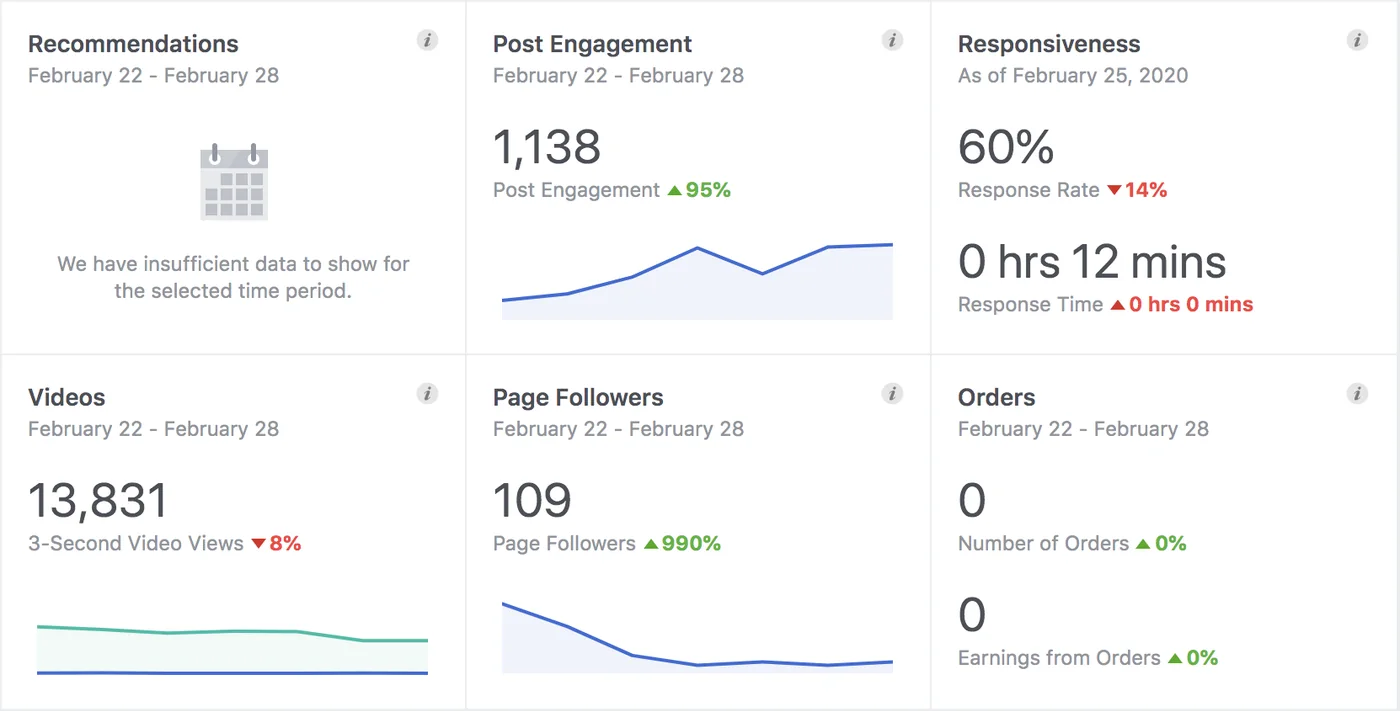
At the page level, Facebook reported 39,150 people reached and 583 post engagements in the first week. In the second week, it reported 37,814 people reached and 1,138 post engagements. Reach remained broadly stable while engagement nearly doubled week over week.
Instagram: Shade-Led Visuals For Discovery And Profile Activity
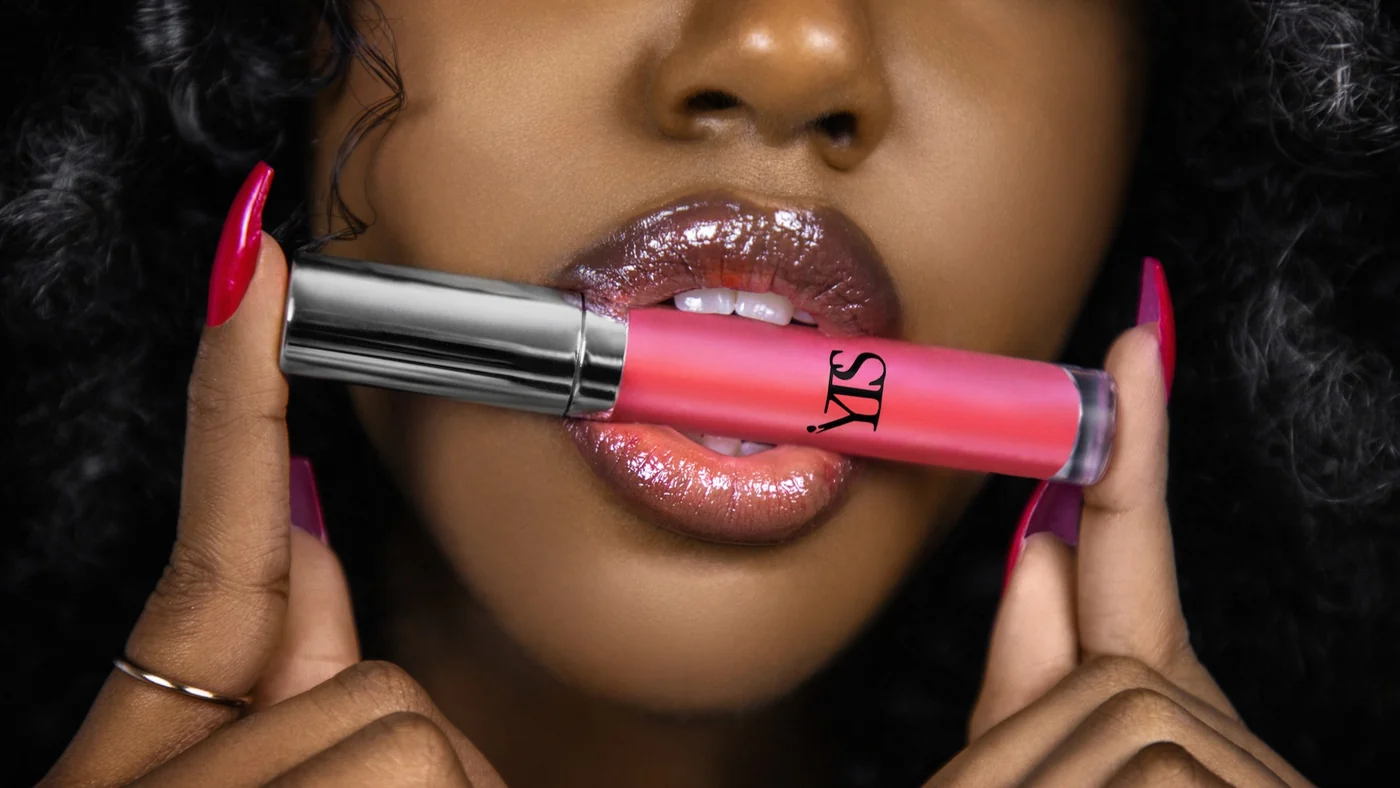
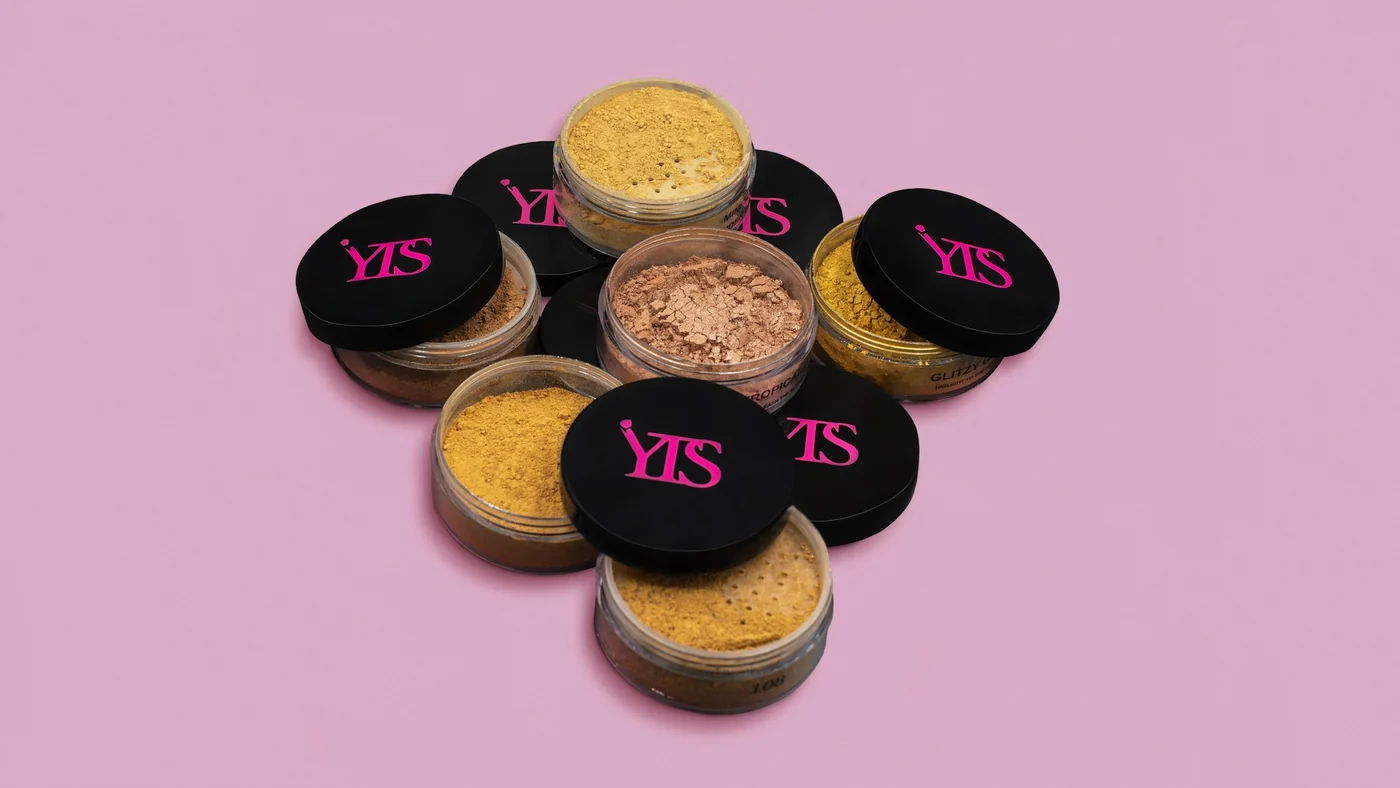
Instagram gave the same image library a different rhythm. Close beauty portraits, bold lipstick shades, powder images and tight product details became the strongest feed units. In week one, individual posts reached between 353 and 1,253 accounts in the supplied post-level screenshots. The highest-engagement image recorded 108 engagements, while the leading foundation-range image generated four website clicks.
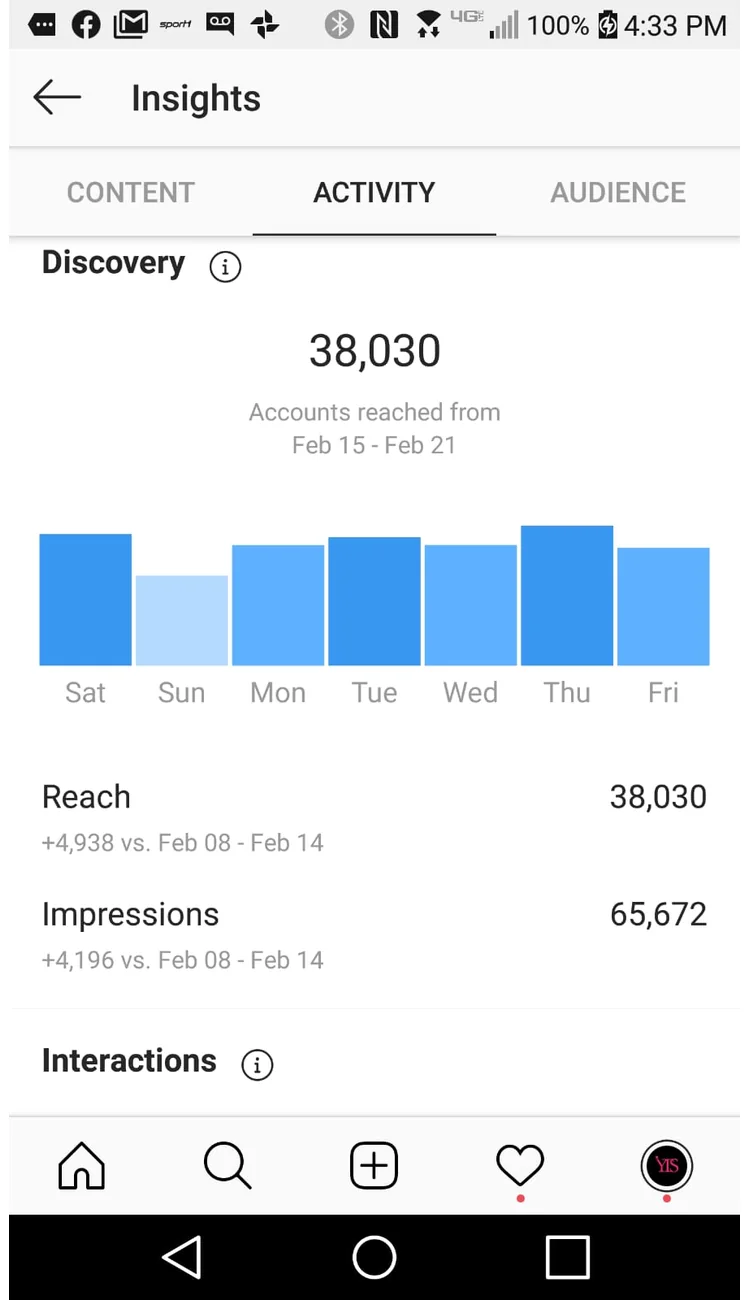
Across Feb. 15–21, Instagram reported:
- 38,030 accounts reached
- 65,672 impressions
- 442 account interactions
- 424 profile visits
- 18 website clicks
Across Feb. 22–28, it reported:
- 34,604 accounts reached
- 55,866 impressions
- 454 account interactions
- 439 profile visits
- 15 website clicks
The second week delivered fewer impressions, yet interactions and profile visits increased. That distinction matters. A campaign should not be judged by reach alone. Strong campaign performance measurement separates exposure, response and traffic instead of treating them as one result.
Results: What The Reporting Confirms
The cumulative advertising evaluations list 23 promoted posts: 21 photo posts and two video posts. Looking only at the 21 photo posts gives a direct view of how the campaign stills performed in paid distribution.
| Verified photo-post total | Result |
|---|---|
| Promoted photo posts | 21 |
| Combined reach instances | 54,533 |
| Engagements | 5,751 |
| Recorded spend | $105 |
| Engagements divided by reach | 10.55% |
| Approximate cost per engagement | $0.02 |
Across the two weekly platform overviews, the reported totals were 76,964 Facebook reach instances, 1,721 Facebook post engagements, 72,634 Instagram reach instances, 121,538 Instagram impressions, 896 Instagram interactions, 863 Instagram profile visits and 33 Instagram website clicks.
These figures demonstrate distribution and response, not unique people or sales. The supplied reports combine paid and organic activity in places, and the weekly Facebook commerce panels recorded no tracked orders. For that reason, this case study does not attribute revenue or claim a sales conversion result.
What “Zero Waste” Means In This Case Study
“Zero waste” describes the content-production principle, not an environmental certification. Every planned setup had a defined downstream role. A portrait could introduce a shade, support a Facebook promotion and become a cropped Instagram post. A clean product image could populate a category page, explain a range and anchor a paid ad. A powder application photograph could work as editorial content and as product education.
The result was a library rather than a batch of unrelated files. That distinction is what makes it possible to scale beauty content production while preserving consistency.
Why The System Worked
First, the planning began with channel requirements. Composition, negative space, orientation and product visibility were treated as production decisions, not corrections left for the design team.
Second, the shoot balanced aspiration with proof. The polished campaign scenes created brand desire, while product cutouts, shade ranges and close-ups made the products understandable.
Third, the library contained variation without losing its identity. Warm studio portraits, vivid shade stories, outdoor glow images and product still lifes all belonged to the same campaign because the styling and visual intent stayed coherent.
Finally, the reports created a feedback loop. Photo engagement increased on Facebook in week two, while Instagram’s interactions held up even as reach declined. Those signals can guide the next shot list: retain the strong portraits and shade-led images, then improve the calls to action and traffic pathway.
The Business Lesson From One Multi-Channel Beauty Product Photography Shoot
The most efficient beauty shoot is not the one that produces the largest folder. It is the one that gives the brand the right assets, in the right formats, for the full customer journey.
For Your True Shade, one strategically planned production supplied website content, Facebook campaign creative and Instagram feed assets. The photographs supported immediate publishing, paid distribution and at least nine months of visible reuse. That is the practical meaning of one shoot, three channels and zero wasted content.
If your beauty brand needs a campaign designed for ecommerce and social media from the start, explore what makes a high-performing cosmetic campaign shoot, review beauty campaign services, or request a free visual audit.
Production Credits
- Photographer: Phil Halfmann
- Creative Director: Sophia Lenore
- Lead Hair & Makeup: Sophia Lenore
- Hair & Makeup: Joanne Charles, Athaliyah Yisrael and Veronica Lopez
- Models: Hope, Gaelle, Kimonie, Ayana, Ann-neika and Sophia
- Photo Assistant: Malcolm Mayo
- Videographer: Ordell
Methodology Note
Results are drawn from the supplied Facebook and Instagram Insights screenshots and the Social Media Ads Evaluation reports covering February 2020. Reach and impression totals are platform-reported and cumulative, not deduplicated audience counts. The long-term reuse observation is based on dated posts visible on the Your True Shade Facebook page.