
Content creation vs content system is not a debate about whether brands need photography, video or social assets. They need all three. The real question is whether those assets are produced as isolated outputs or as part of a repeatable structure that supports campaigns, channels and commercial goals over time.
A brand can create excellent content and still operate reactively. Files can be beautiful but difficult to find. A campaign can look strong on Instagram but fail to supply the website, email, retail and paid-media teams. More production does not solve those problems because the constraint is not creative volume. It is the system around the work.
This guide explains the operational difference, the warning signs to look for and the practical shift from one-off asset creation to a scalable visual content system.
Prefer to watch? This video introduces the central idea: brands often need a better system before they need more content.

Content Creation vs Content System: The Essential Difference
Content creation is the production of assets. A content system is the structure that determines why those assets are needed, what must be produced, where each version will be used, how it will be stored and what the team will learn from performance.
That distinction matters because production is only one stage in the commercial life of an image or video. An asset creates value when it reaches the right audience, in the right format, with clear usage rights and enough context for the team to find and deploy it again.
| Question | Content creation | Content system |
|---|---|---|
| Starting point | “We need content.” | “What business and channel requirements must this content support?” |
| Planning horizon | One post, shoot or campaign | Campaign calendar, launches and always-on needs |
| Deliverables | A general image or video count | An asset map by channel, format, message and funnel role |
| Storage | Folders created after delivery | A searchable library with ownership, metadata and usage information |
| Distribution | Decided after production | Defined before the brief and shot list |
| Measurement | Views, likes or general campaign results | Performance by asset, placement, audience and objective |
| Next production | Starts largely from zero | Builds on reusable assets and documented learning |
If you need a deeper definition of the complete framework, read what a content system means for brands. This article focuses on the decision and operating difference.
Why More Content Does Not Fix a Missing System
When a team runs short of usable assets, commissioning another shoot feels like the obvious answer. Sometimes it is. However, repeated shortages often point to one of four underlying failures:
- The original brief did not account for every required channel and format.
- Existing assets cannot be found, understood or cleared for reuse.
- Campaign content was produced for a single moment rather than an asset lifecycle.
- No feedback loop connects past performance with the next production.
Producing more under the same conditions creates a larger version of the same problem. The team receives more files, but not necessarily more usable options. Storage becomes harder, approvals multiply and content gaps return when the next channel, crop or message variation is requested.
This is why the cost of reactive production extends beyond the shoot budget. It includes duplicate work, rushed adaptations, unused images, missed launch opportunities and time spent searching for files. The related guide on why brands need content infrastructure examines those hidden operational costs in more detail.
Seven Signs You Are Creating Content Without a System
1. Every request becomes a new production
If a homepage update, retailer request or ad test automatically triggers a new shoot, the existing library is either incomplete or unusable. A system does not eliminate production. It makes new production more deliberate by separating true creative needs from preventable asset gaps.
2. Deliverables are defined mainly by quantity
“Forty edited images” describes volume, not readiness. A useful plan identifies hero images, product detail views, vertical and horizontal compositions, paid-ad variants, email crops, PR selections and any territory or duration requirements. Quantity matters only after the team knows what the assets must do.
3. Channel requirements appear after the shoot
If the media team requests 9:16 video after production or the website team discovers that no image accommodates headline copy, the content was not planned across stakeholders. A content system translates distribution needs into the creative brief before the camera comes out.
4. Teams cannot answer what already exists
Unclear filenames, scattered drives and missing previews turn owned content into invisible inventory. A managed visual content library lets teams search by campaign, product, talent, channel, orientation, rights and status instead of relying on memory.
5. Usage rights are separated from asset management
An image is not operationally ready if nobody knows whether it is approved for organic social, paid advertising, print, retail or a specific market. Usage information must travel with the asset. Otherwise, teams either accept unnecessary legal risk or leave valuable work unused.
6. Success is measured only at campaign level
A campaign may perform well while most of its creative goes unused. Conversely, one image may continue generating value across paid media, email and retail long after the launch. Asset-level utilization and performance provide better evidence for future shot lists than a single campaign summary.
7. Each shoot starts from a blank page
New creative should evolve, but the process should retain learning. If briefs, naming rules, approval criteria, crop requirements and performance insights disappear between productions, the brand pays repeatedly to rediscover what it already knew.
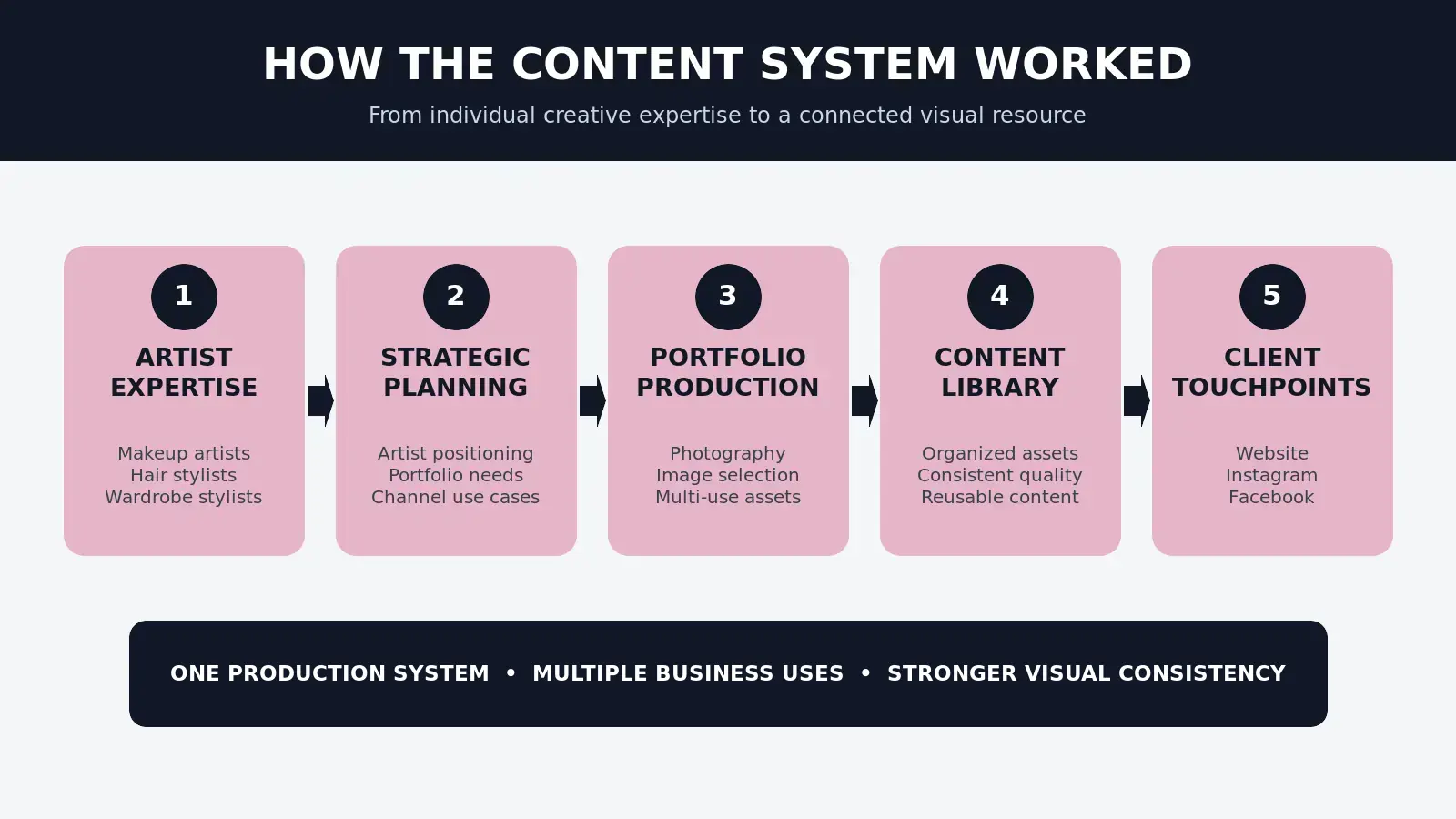
What a Working Content System Connects
A content system does not need to be complicated. It needs to connect the decisions that teams otherwise make in isolation.
Business priorities and campaign planning
Planning begins with the commercial event: a collection launch, product release, seasonal campaign, website refresh, retailer push or ongoing acquisition program. From there, the team can define audiences, messages, channels, dates and success criteria.
Channel requirements and the production brief
Every intended placement creates a production requirement. Website heroes need negative space. Product pages need clarity and consistency. Paid ads need multiple hooks and formats. PR requires publishable selects and accurate credits. These requirements should shape the concept, shot list and capture plan.
Production and asset coverage
The production then creates an intentional mix rather than a pile of visually similar files. A campaign may need brand-building hero imagery, conversion-focused product detail, human context, motion, vertical storytelling and adaptable compositions. The objective is not maximum volume. It is sufficient coverage with a clear role for each asset family.
Delivery and a searchable content library
Delivery is where many otherwise strong shoots lose value. Consistent filenames, collections, approval states and rights fields make assets reusable. The guide to marketing asset metadata explains how contextual information makes a library searchable rather than merely stored.
Distribution and performance feedback
Finally, teams need to record what was activated and what happened. That does not require perfect attribution. Start with practical signals: which assets were used, where they appeared, how long they remained active, which formats were requested again and which creative patterns supported stronger results.
The system closes when those observations inform the next brief.
A Real Example: From Portfolio Shoots to a Visual System
Prestige Artists needed portfolio photography for represented hair, makeup and wardrobe professionals. Treating each session as an isolated portfolio update would have produced attractive individual images. Instead, the planning considered how the work would function across the agency website and social channels.
That changed the role of the photography. Each portfolio still had to demonstrate the artist’s expertise, but the complete body of work also needed enough consistency to strengthen the agency’s presentation. Coordinated production, selection and organization turned separate shoots into a connected representation asset.
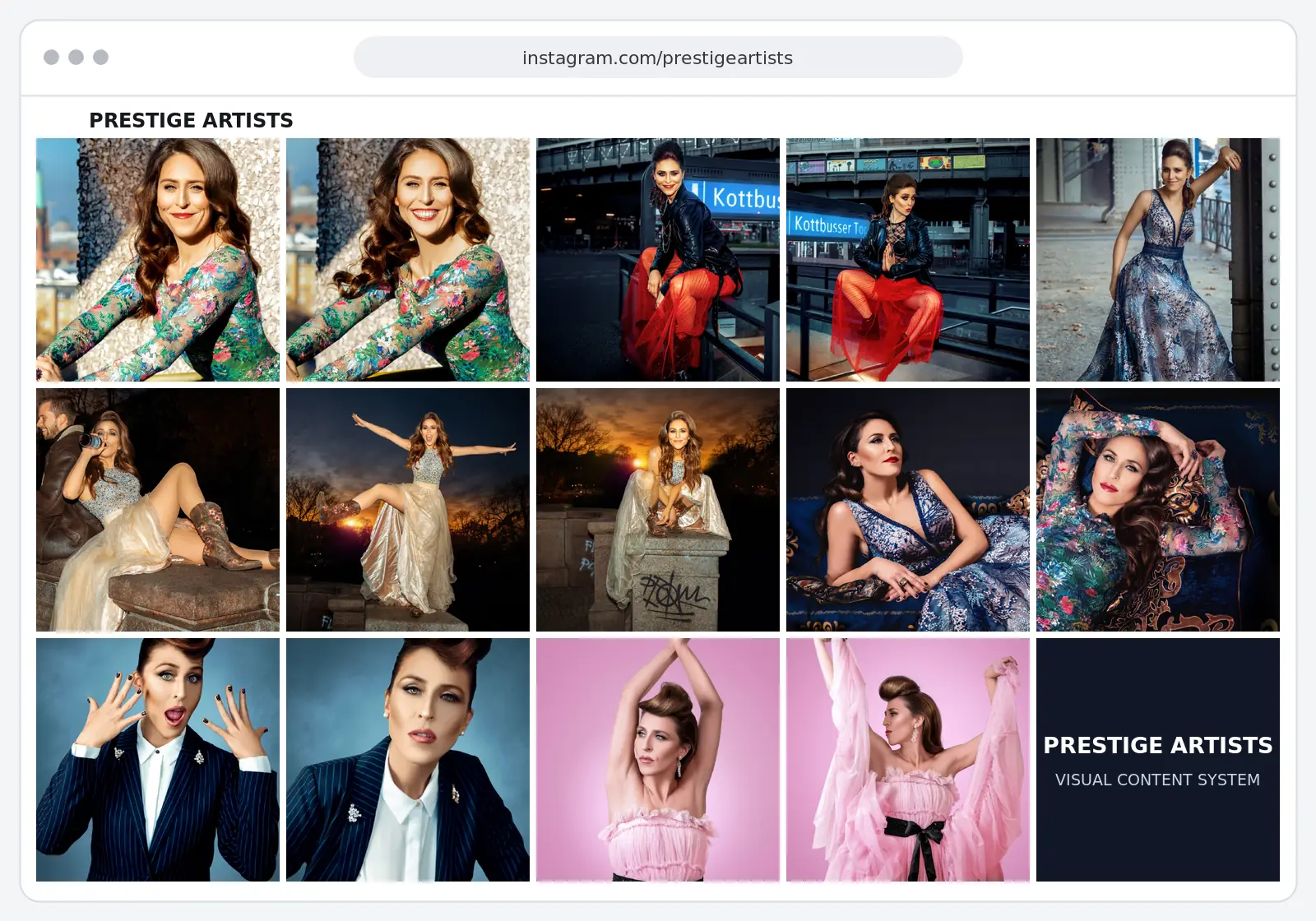
Read the complete Prestige Artists content system case study to see how planning, portfolio photography and channel use were connected in practice.
How to Move From Content Creation to a Content System
Step 1: Audit demand before commissioning supply
List the next 90 days of campaigns, launches and always-on marketing. Then identify the channels, placements and formats each initiative requires. This exposes recurring needs and prevents the next shoot from being planned around whichever request is currently loudest.
Step 2: Audit the assets you already own
Compare demand with current inventory. Mark what is usable, adaptable, missing, expired, unapproved or impossible to locate. The goal is not to keep everything. It is to know which existing assets can do more work and which gaps genuinely require production.
Step 3: Build an asset map
Translate each campaign objective into asset families and placements. Assign orientation, dimensions, message, product, audience, funnel role and usage scope. This becomes the bridge between marketing strategy and the creative brief.
Step 4: Plan modular production
Capture connected variations during the same production: wide and tight compositions, clean product views and human context, stills and motion, hero moments and flexible utility assets. Modular does not mean generic. It means the creative idea is designed to travel.
Step 5: Standardize delivery and ownership
Define where final files live, how they are named, which metadata is required, who approves them and how usage rights are recorded. A system fails when only one person knows how to operate it.
Step 6: Review utilization, not just output
After the campaign, compare planned assets with delivered and activated assets. Identify unused work, repeated requests, high-performing formats and missing variations. Feed those findings into the next planning cycle.
Watch the direct comparison:
When One-Off Content Creation Still Makes Sense
A system is not an argument against one-off work. A flagship campaign, major collaboration, rebrand or singular editorial concept may need its own production. The critical point is to make the project compatible with the wider marketing environment.
Even a one-off shoot should define intended channels, required versions, usage rights, storage and post-campaign learning. For a production-model comparison, see one-off shoot vs content system.
Brands with continuous publishing, frequent launches or paid-media demand may benefit from a recurring production model. The guide to a fashion content production retainer explains how ongoing planning and production can support that cadence.
Do You Need More Content or a Better System?
You likely need new production when the campaign introduces a new product, audience, visual direction or commercial requirement that current assets cannot support.
You likely need a better system when usable content already exists but teams cannot find it, adapt it, clear it, distribute it or learn from it efficiently.
Many brands need both. The order still matters: diagnose the system first, then commission the content that closes verified gaps. Otherwise, the next production may add volume without removing the constraint.
Turn Your Visual Assets Into a Working System
A Free Visual Audit is a focused working session for fashion and beauty brands. We review how your existing visuals support campaigns and platforms, where gaps or inconsistencies create friction, and whether future shoots are being designed for reuse and scale.
Final Perspective
The practical difference between content creation vs content system is what happens around the asset. Creation makes the work. A system gives that work a defined purpose, prepares it for real channels, preserves its context and turns performance into better future decisions.
Content does not compound simply because it exists. It compounds when a brand can find it, trust it, reuse it and learn from it. That is the system advantage.