
A strong fashion mood board guide should do more than help you collect attractive references. It should turn a campaign objective into a visual system that a photographer, stylist, model, hair and makeup team, designer and marketing lead can interpret in the same way. When that happens, the mood board becomes a production tool, not simply a collage.
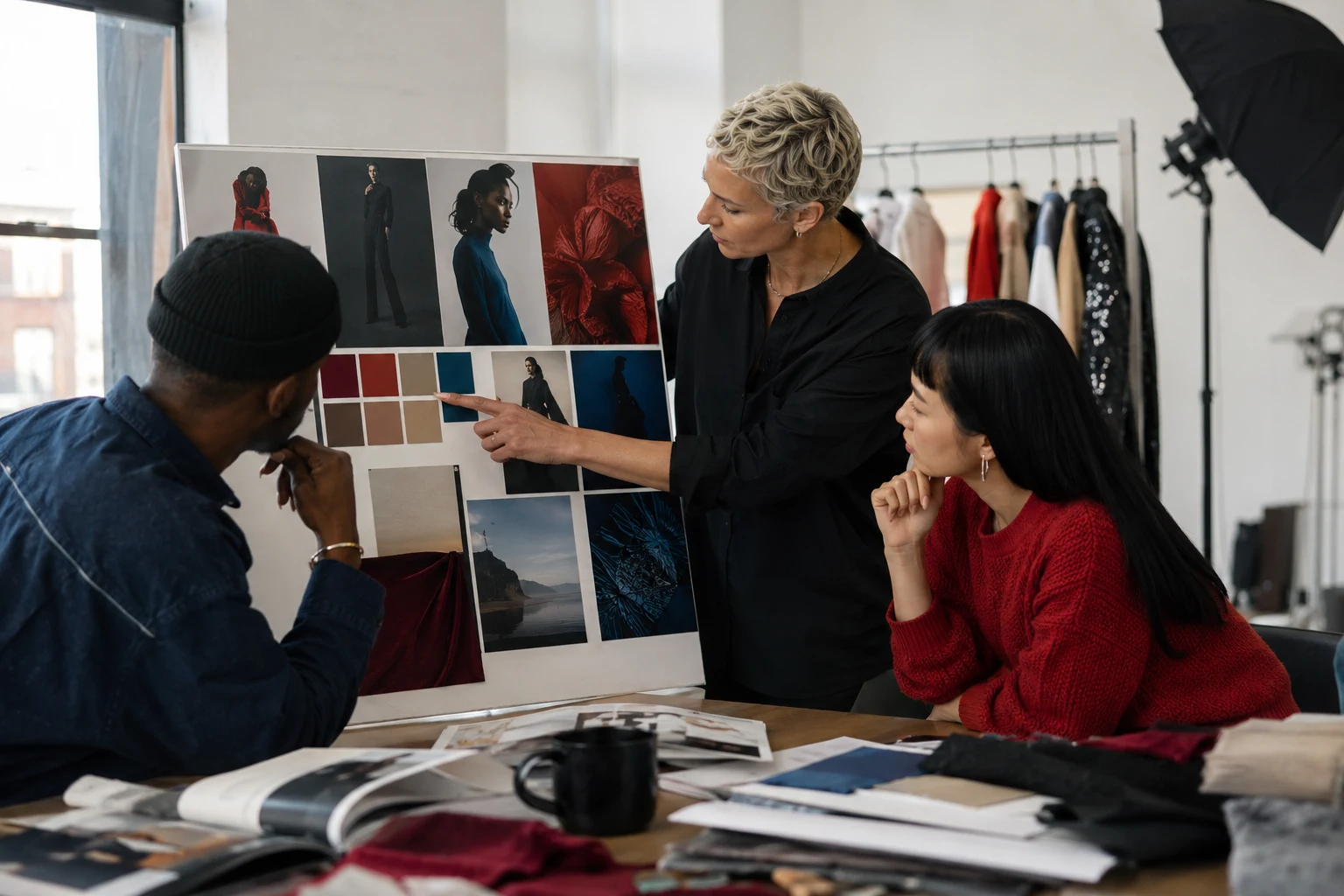
What Is a Fashion Mood Board?
A fashion mood board is a curated visual reference that defines the intended world of a collection, campaign or shoot. It may include imagery, colors, materials, silhouettes, lighting references, locations, casting direction, beauty notes, typography and layout ideas. However, its value does not come from the number of references it contains. Instead, its value comes from the decisions it makes clear.
A collection mood board can support design development, whereas a fashion campaign mood board guides how a finished product or collection will be presented to the market. Likewise, a fashion photoshoot mood board may focus more closely on lighting, posing, styling and composition. Although these boards overlap, they should not be treated as interchangeable.
Turn your mood board into an actionable art direction checklist for production.
The campaign board must also connect to the wider marketing plan. For that reason, brands should develop it alongside the fashion marketing checklist, rather than after channel requirements have already been decided.
See how a beauty mood board moved from visual references to an executed editorial story.
Before You Build a Fashion Mood Board, Define the Brief
Reference gathering is not the first step. First, define what the campaign must accomplish. Otherwise, the loudest or most fashionable image can pull the board away from the brand’s actual needs.
A mood board should define not only how a campaign looks but also the visual story the campaign needs to communicate.
The mood board should support the broader campaign brief rather than functioning as the brief itself.
Clarify the campaign objective
Is the campaign introducing a label, launching a collection, increasing product consideration or repositioning the brand? Each objective calls for a different visual emphasis. For example, a launch may require clear product recognition and a memorable brand world. By contrast, a repositioning campaign may need to signal a decisive shift in tone, casting or cultural context.
Visual references can also help communicate the model casting direction needed to support the campaign’s overall aesthetic.
Identify the audience and desired response
“Women aged 25–40” is not a sufficient audience definition. Instead, consider the customer’s tastes, aspirations, objections, media habits and existing perception of the brand. Then define what the viewer should think, feel or do after seeing the campaign.
Map the campaign deliverables
A website hero, vertical paid-social ad, wholesale lookbook and press image impose different compositional demands. Consequently, a mood board should anticipate negative space, responsive crops, product visibility, sequences and motion. This is where creative direction becomes operational. The broader framework is explained in creative direction for fashion campaigns.
Before building references, first develop the campaign concept that the mood board needs to communicate.
See how visual references can help unify multiple brands within one fashion story.
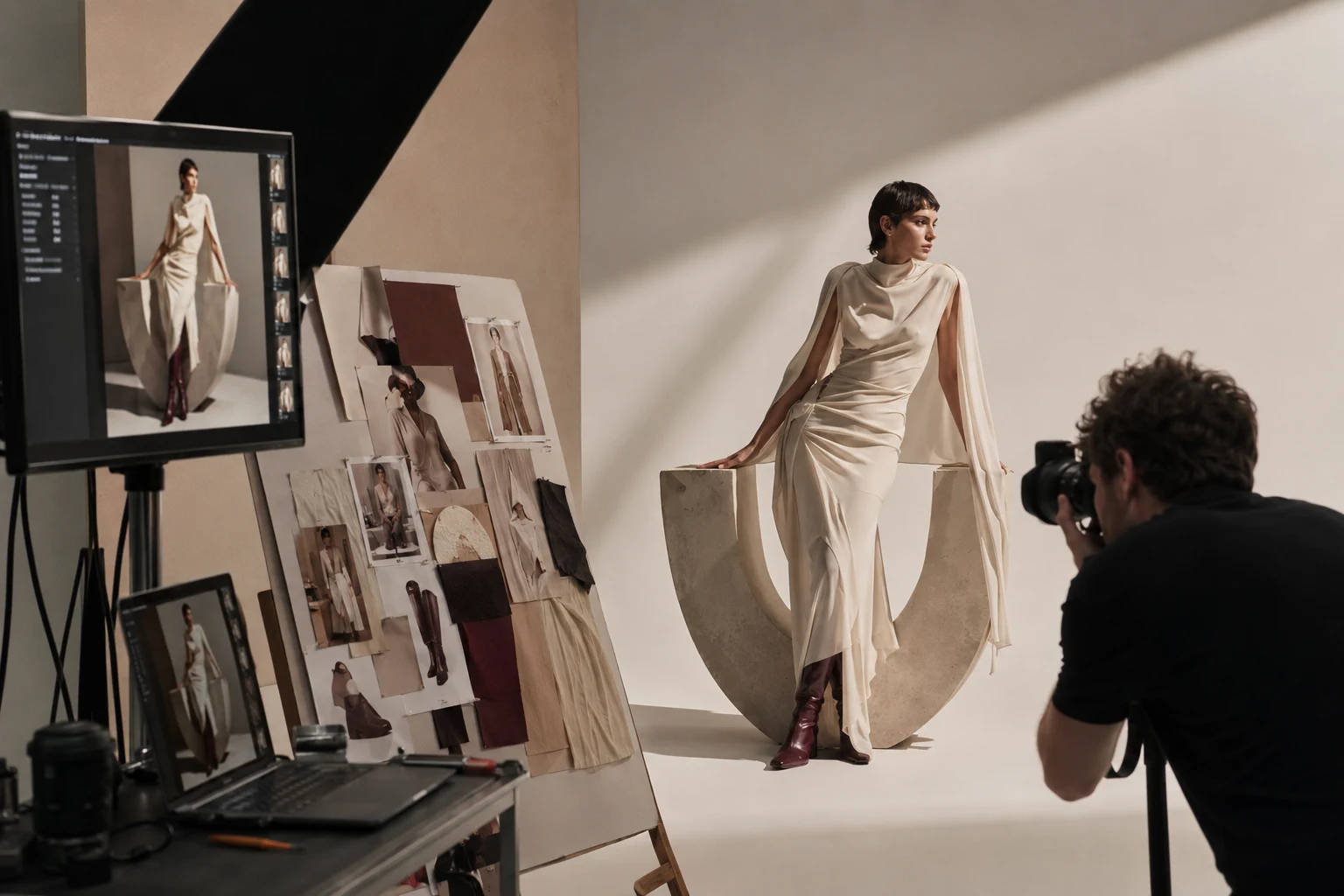
The Essential Elements of a Fashion Campaign Mood Board
1. One strategic statement
Begin with a single sentence that states the campaign’s intended meaning. It might define the audience, the product priority and the emotional promise. This sentence prevents the board from becoming a collection of unrelated tastes.
2. A controlled visual theme
Your fashion mood board ideas should express one coherent direction. If the board includes romantic softness, severe minimalism, nostalgic flash photography and glossy futurism without a deliberate relationship, it is presenting alternatives, not a direction.
See how a fashion mood board shaped the creative decisions behind an actual campaign production.
3. Color and material language
Specify dominant, supporting and accent colors. In addition, include relevant materials and surface qualities: polished metal, raw concrete, translucent fabric, weathered leather or reflective glass. These cues affect wardrobe, props, set design, grading and even lighting.
4. Lighting and photographic treatment
Separate subject matter from photographic treatment. A reference may feature the wrong garment but the right shadow quality, contrast or camera distance. Labeling that intent helps the photographer understand what should be translated rather than copied.
5. Styling, silhouette and product priority
Show how garments should be layered, shaped and moved. More importantly, state which pieces must remain legible. A campaign can be visually impressive while hiding the product customers are meant to notice.
6. Casting, pose and expression
Define presence rather than reducing casting to appearance. Consider attitude, energy, movement, gaze and relationship between subjects. Moreover, distinguish between casting inspiration and an unrealistic demand to reproduce another person’s identity.
7. Location and set design
Include the spatial qualities that support the concept: scale, architecture, texture, depth and practical restrictions. A coastal cliff, for example, communicates more than “outdoors”; it also affects wind, wardrobe control, equipment, access and timing.
Location references should communicate the environment, architecture, texture and atmosphere required by the campaign rather than simply showing attractive places.
8. Composition and deliverable formats
Add reference frames for wide, vertical, square and detail compositions. This makes the board useful for campaign asset planning and helps prevent a common failure: capturing a strong horizontal hero while leaving paid social, email and mobile placements unsupported.
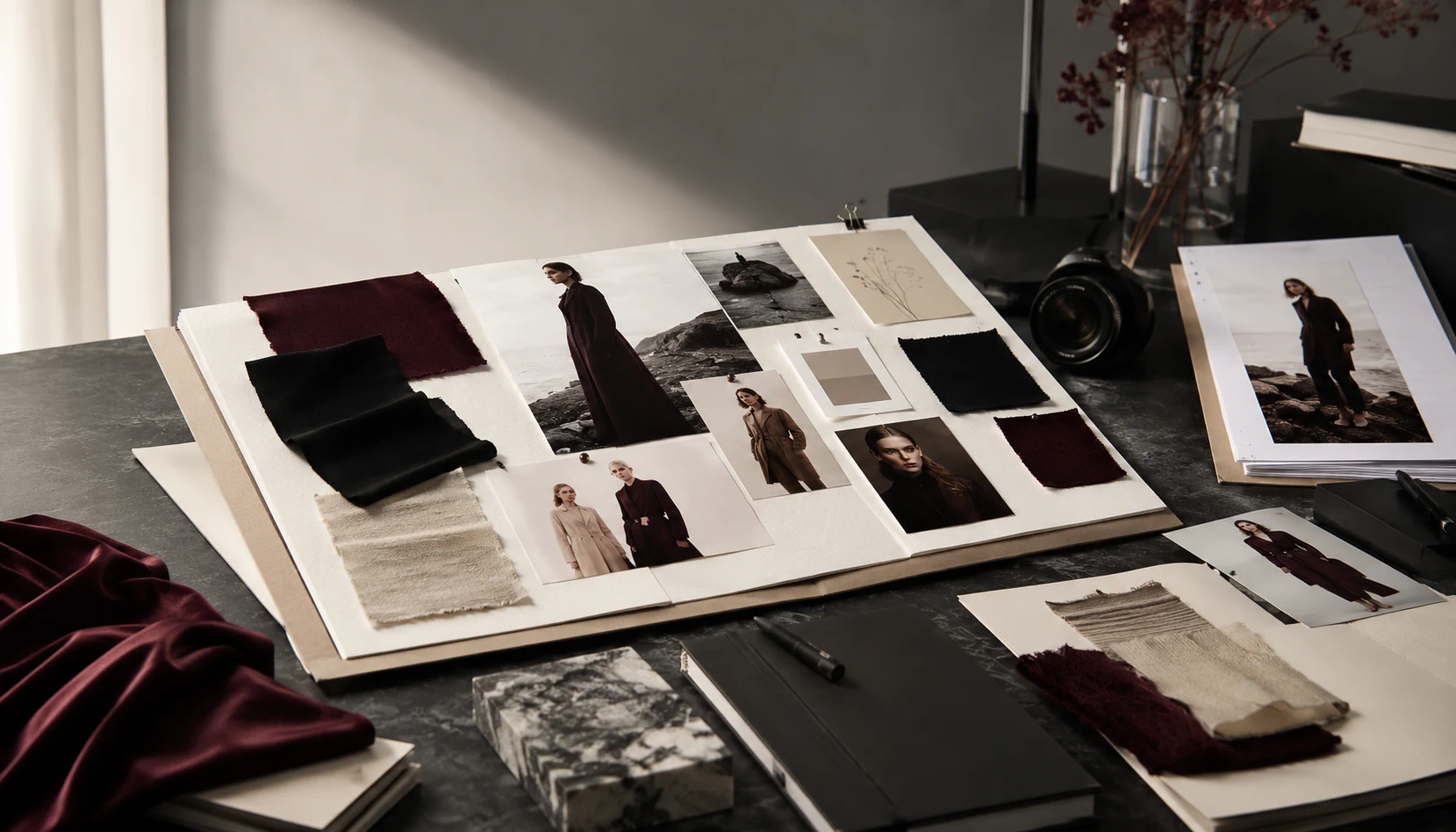
How to Create a Fashion Mood Board Step by Step
Step 1: Translate strategy into visual criteria
Write three to five criteria that every selected reference must support. For instance: architectural, intimate, tactile, product-led and adaptable to vertical media. These criteria make selection less subjective.
Step 2: Research broadly before editing tightly
Gather from photography, cinema, art, architecture, interiors, nature, material culture and the brand’s own archive. Nevertheless, research should not become imitation. References are inputs; the campaign needs its own authorship.
Step 3: Group references by function
Organize images into sections such as lighting, styling, beauty, pose, location, texture and composition. As a result, collaborators can understand why each image is present. A single undifferentiated grid forces the team to guess.
Step 4: Remove attractive contradictions
Editing is where the board becomes useful. Remove images that are individually compelling but weaken the core direction. If two approaches remain, present them as clearly labeled routes and choose one before production.
Step 5: Add annotations and non-negotiables
Brief notes such as “use the light, not the location” or “reference for movement only” reduce misinterpretation. Also identify non-negotiables, including hero products, brand colors, mandatory crops and prohibited treatments.
Step 6: Test the board against real outputs
Ask whether the direction can produce a homepage hero, product-led frames, social sequences, press assets and paid-media variations. If not, refine the board or expand the shot architecture. This approach supports the kind of reusable system described in building a content system for long-term success.
Step 7: Convert the board into production documents
A mood board does not replace the creative brief, shot list, call sheet or usage plan. Instead, it informs them. The final board should therefore lead directly into locations, casting, wardrobe pulls, lighting tests, shot priorities and deliverable specifications.
Common Fashion Mood Board Mistakes
Treating aesthetic preference as strategy
“We like this” is not the same as “this supports the campaign”. Taste matters, but every major choice should connect to brand positioning, audience response or product communication.
Using too many references
More images do not create more clarity. In fact, they often conceal indecision. A concise, annotated board usually gives the team greater freedom because its boundaries are understandable.
Copying one campaign too closely
When most references come from a single brand or photographer, the result risks becoming derivative. Instead, combine varied sources and explain the principle being extracted from each.
Ignoring feasibility
A visual direction should challenge the team, yet it must still acknowledge time, budget, location, talent, post-production and licensing. Otherwise, the board sells an expectation that production cannot responsibly deliver.
Leaving marketing stakeholders out
If the marketing team sees the board after approval, channel requirements may arrive too late. Therefore, creative and distribution planning should happen together. Your fashion campaign photographer should also understand where the assets will be used, not merely what they should look like.
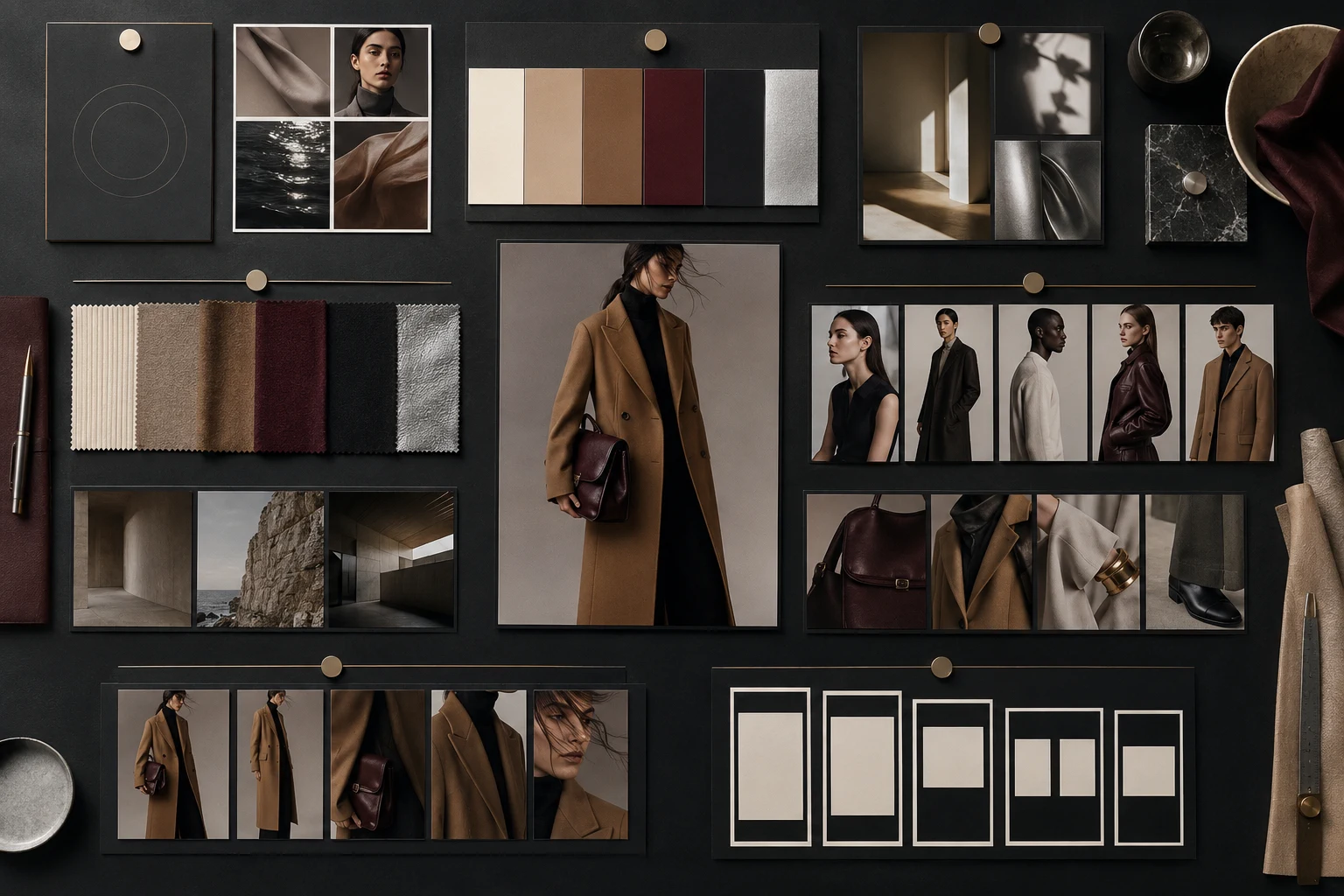
How to Use a Fashion Mood Board During Production
Before the shoot, review the board with department leads and confirm what each section means. Then use it to evaluate wardrobe, beauty tests, lighting setups, props and locations. During production, keep it visible near the set or tether station so decisions can be checked against the agreed direction.
However, do not use the board to reject every unplanned opportunity. A skilled team may discover a stronger gesture, composition or interaction on set. The question is not whether the result looks identical to a reference. Instead, ask whether it belongs to the same strategic and visual world.
After the shoot, the board can guide selects, retouching and color grading. It should also help editors build a coherent sequence across the website, social media, email, advertising and PR. Ultimately, consistency is created across the full campaign lifecycle, not only at capture.
Physical or Digital Fashion Mood Board?
Digital boards are easy to share, revise and annotate across teams. Meanwhile, physical boards communicate scale, texture and material relationships more directly. Neither format is inherently better. For most professional campaigns, a hybrid process works well: physical swatches and tests for tactile decisions, combined with a digital master board for approvals and production access.
Whichever format you choose, control the final version. Date it, name the approved direction and remove outdated routes. Otherwise, different collaborators may work from different creative assumptions.
Final Fashion Mood Board Checklist
- Does the board express one clear campaign objective?
- Is the target audience and intended response understood?
- Are color, texture, lighting and photographic treatment defined?
- Are styling, casting, beauty, pose and location addressed?
- Are hero products and visual priorities unmistakable?
- Does the direction support every required channel and crop?
- Are references annotated to prevent literal copying?
- Is the concept feasible within the approved production scope?
- Can the board translate into a brief, shot list and production plan?
A Mood Board Should Reduce Ambiguity
The central lesson of this fashion mood board guide is simple: the board succeeds when it improves decisions. It should give the team enough clarity to collaborate, enough structure to protect the campaign objective and enough flexibility to create original work.
When creative direction, production planning and media requirements are aligned early, brands avoid inconsistent assets, prevent costly reshoots and create a campaign that can work across channels. For a wider view of that process, read how fashion campaign photography supports brand performance.
Planning a fashion or beauty campaign? Use the mood board as the beginning of a production system, not the end of a creative exercise. Discuss your campaign and content requirements.
Frequently Asked Questions
What should a fashion mood board include?
It should include the campaign objective, audience mood, color palette, textures, lighting, styling, silhouettes, casting, beauty direction, posing, location or set design, composition and required output formats.
How many images should be on a fashion mood board?
There is no ideal fixed number. Use enough references to make each key decision clear, but remove repetition and contradiction. A focused board of 15–30 purposeful references is often more useful than an unedited board containing hundreds.
What is the difference between a mood board and a shot list?
A mood board defines the campaign’s visual direction. A shot list specifies what the production must capture. They should support each other but one cannot reliably replace the other.
When should the mood board be approved?
Approve it before final casting, styling, location commitments and detailed shot planning. Early approval helps each department work toward the same visual and commercial objective.