
Why Fashion Campaign Production Roles Matter
Campaign production is a chain of connected decisions. The brief shapes the concept. The concept affects casting, location, lighting, styling and set design. Those choices determine the schedule and budget. Finally, the intended media usage affects framing, deliverables, retouching and licensing.
Therefore, a weak decision early in the process rarely stays isolated. For example, if no one maps the required formats before the shoot, the photographer may create a strong hero image that cannot be cropped for vertical advertising. If no one owns sample management, a key product may be missing or unprepared. If approval authority is unclear, the team may lose valuable shooting time waiting for feedback.
This is why successful production is not simply a collection of talented freelancers. It is a system of responsibilities, handoffs and approvals. As explained in what brands get wrong about campaign production, poor coordination can make an otherwise adequate budget feel insufficient.
Job titles are not the same as decision ownership
Titles vary across markets, agencies and production sizes. On a small shoot, one person may act as photographer and creative director. On a larger campaign, an executive creative director, creative director and art director may each have distinct responsibilities.
The practical test is simpler: who recommends, who executes and who approves? Every critical task needs an answer. Combining roles can be efficient. Combining them without defining authority creates risk.
The Leadership Layer: Who Owns the Campaign?
Brand or Client Lead
The brand lead represents the commercial objective. Depending on the company, this person may be a founder, brand director, CMO, marketing manager or campaign manager. They define what the campaign must achieve and provide final client approval.
Typical responsibilities include:
- Defining the business objective, audience and offer
- Confirming budget and internal stakeholders
- Providing brand guidelines, product priorities and launch dates
- Approving the brief, concept, casting and final assets
- Confirming where and for how long the content will be used
The brand lead should not attempt to direct every specialist on set. Their role is to protect the business requirement and consolidate feedback so the production team receives one coherent direction.
Agency account or campaign lead
When an agency is involved, the account or campaign lead connects the brand and creative team. This person protects scope, manages client communication and ensures that approvals happen on time. They do not normally replace the producer or creative director. Instead, they keep commercial expectations and agency delivery aligned.
Executive Producer
The executive producer oversees the production at a high level. This role is most common on larger agency, advertising and motion-led campaigns. The executive producer may secure the production company, oversee financial exposure, negotiate major agreements and ensure that the production can deliver the approved scope.
Campaign Producer or Photo Producer
The producer turns the approved idea into an executable production. In simple terms, the creative director defines what the campaign should communicate; the producer determines how the team can deliver it within real constraints.
Producer responsibilities often include:
- Building and controlling the production budget
- Hiring crew and coordinating talent
- Sourcing locations, studios, permits, transport and catering
- Creating schedules, call sheets and contingency plans
- Managing contracts, releases, insurance and supplier logistics
- Keeping the day on schedule and escalating decisions
- Tracking deliverables and post-production handoffs
A producer is not merely an administrator. Good producers continuously balance time, cost, risk and creative ambition.
Creative Director
The creative director owns the campaign’s central idea and visual logic. They translate the business objective into a concept that can remain coherent across photography, video, design, paid media, e-commerce and social content.
The creative director typically oversees:
- Campaign concept and visual narrative
- Mood boards and reference direction
- Casting, location, styling and set recommendations
- Alignment between stills, motion, graphic design and copy
- Creative approvals before and during production
- Final asset selection and visual consistency
For a deeper breakdown, read the guide to creative direction for fashion campaigns.
Art Director
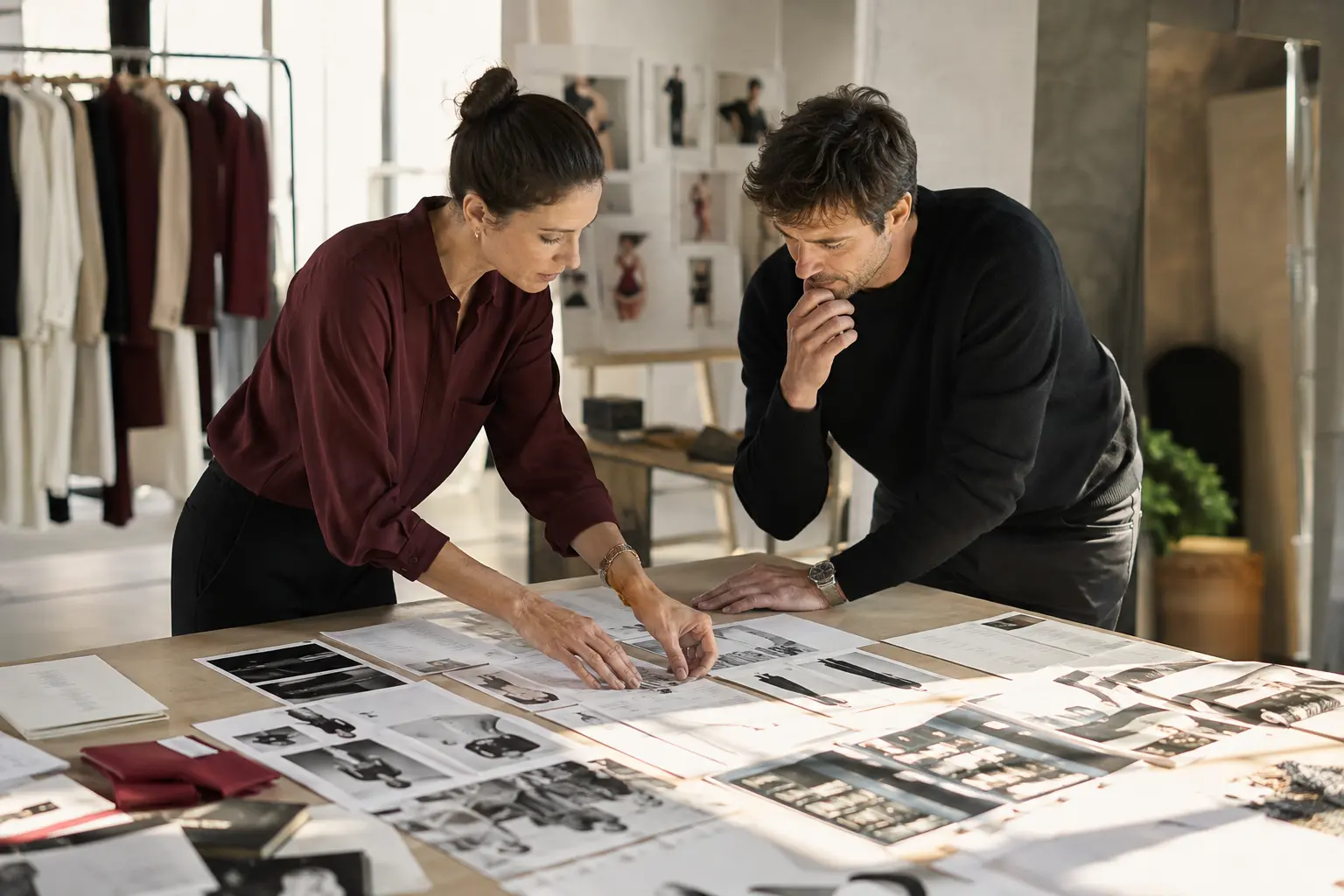
The art director develops and controls the visual execution. While the creative director protects the overarching concept, the art director often focuses on composition, references, graphic language, set details and how the final imagery will live within layouts.
On smaller projects, the creative director may also perform this function. On larger campaigns, separating the roles adds focus: one person protects the broader idea while another manages the visual details.
Creative and Image-Making Fashion Campaign Production Roles
Photographer
The photographer is responsible for translating the approved direction into compelling still images. That includes much more than operating a camera. The photographer shapes lighting, composition, lens choice, timing, performance and the visual relationship between the model, product and environment.
Depending on the project, the photographer may also contribute to concept development, shot-list design, location choices, casting and image selection. In photographer-led productions, they may serve as creative director as well. However, the proposal and call sheet should state that responsibility clearly.
Brands should evaluate a photographer not only by portfolio style, but also by their ability to plan assets around real campaign use. See what to expect from a fashion campaign photographer.
Director
When the campaign includes motion, the director leads performance, blocking, camera movement and narrative execution for video. A photographer may direct simple short-form clips, but a dedicated director becomes valuable when the motion concept includes dialogue, complex movement, multiple scenes or a detailed edit structure.
Director of Photography
The director of photography, or DP, leads the motion camera and lighting departments. They interpret the director’s vision through lensing, exposure, lighting, camera movement and technical workflow. Although photographers and DPs share visual skills, their responsibilities are not interchangeable on every production.
Set Designer or Production Designer
A production designer defines the physical visual world of a larger campaign. A set designer develops the specific environment, while prop stylists source and arrange objects within it. These roles become important when the set itself carries brand meaning or must be built rather than found.
Copywriter
The copywriter creates headlines, scripts, campaign language and calls to action. Bringing copy into pre-production helps the team leave suitable negative space, create the correct sequence for motion and ensure that the visual idea and verbal message reinforce each other.
Styling, Grooming and Talent Roles
Wardrobe or Fashion Stylist
The wardrobe stylist develops and manages the clothing story. They source garments and accessories, coordinate samples, prepare looks, maintain continuity and adjust every detail on set. For a fashion brand, the stylist must balance editorial impact with product accuracy. A visually dramatic adjustment is not useful if it misrepresents the garment being sold.
Prop Stylist
A prop stylist sources and arranges objects that support the visual concept. This role is particularly valuable for beauty, fragrance, accessories, still life and lifestyle campaigns in which surfaces, materials and small details carry much of the story.
Hair Stylist
The hair stylist designs and maintains the model’s hair across the shoot. They account for the concept, wardrobe changes, humidity, movement and continuity between stills and video. Hair may appear effortless in the final campaign, but achieving that consistency often requires continuous on-set attention.
Makeup Artist
The makeup artist develops the complexion, color and finish required for the concept and lighting. In beauty production, they also need to understand product claims and application accuracy. Their work affects how much correction is necessary later, so strong preparation can protect both quality and post-production cost.
Nail Artist and Groomer
Nail artists become essential in close-up beauty, jewelry and accessories work. Groomers prepare skin, hair and facial details, commonly for menswear, talent-led advertising and lifestyle productions. These roles may seem minor until hands, faces or product interactions dominate the frame.
Models, Actors and Featured Talent
Talent does not simply wear the product. Models and actors communicate attitude, movement, emotion and audience identity. Casting should therefore follow the campaign strategy, usage territory, production demands and brand values—not only appearance.
Casting Director and Talent Agent
A casting director identifies and evaluates talent against the creative and commercial brief. Agents represent talent and negotiate availability, fees and usage. The producer coordinates these relationships, but the brand must still approve the casting and intended usage.
Technical and On-Set Production Roles
First Photo Assistant
The first assistant helps the photographer execute the lighting and camera plan. They organize equipment, build lighting, monitor technical readiness and coordinate other assistants. A strong first assistant increases both safety and shooting speed.
Second Assistant and Production Assistants
Second assistants support equipment changes, batteries, media, set moves and general workflow. Production assistants handle practical needs across departments. They are not substitutes for specialist crew; rather, they keep small operational tasks from interrupting high-value work.
Digital Technician
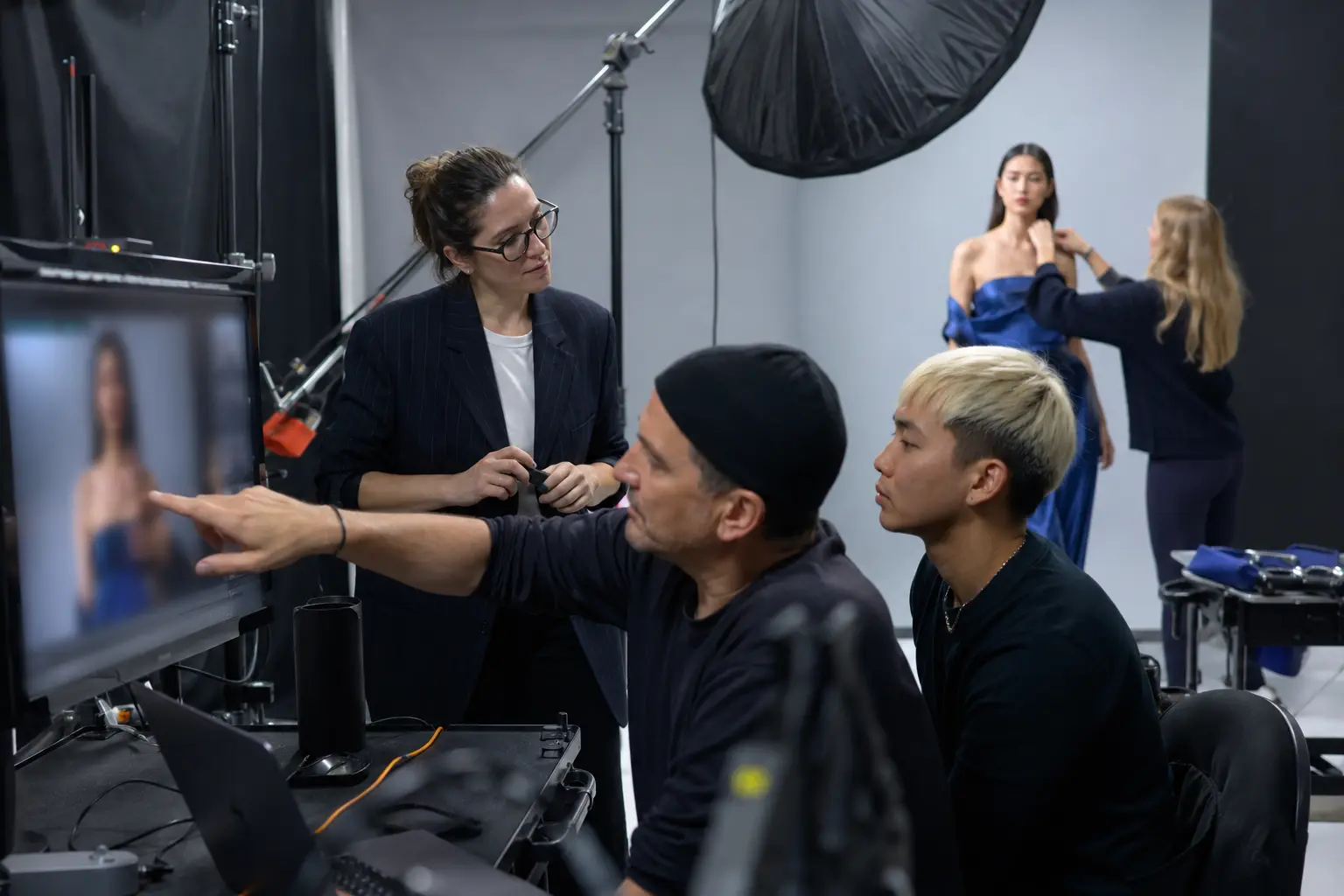
The digital technician manages tethered capture, file integrity, color workflow, backups and on-set image review. This role gives the photographer and client a reliable view of what is being captured. It also reduces the risk of discovering focus, exposure, continuity or file problems after the set has been dismantled.
Lighting Technician, Gaffer and Grip
For motion and larger stills productions, the gaffer leads the lighting crew while grips support rigging, shaping and camera movement. These departments make ambitious lighting plans safe, repeatable and efficient. Terminology and exact responsibilities vary by production type and country.
Location Manager
The location manager handles access, permits, site rules, neighbors, parking, power, facilities and restoration requirements. An attractive location can become a production liability if these practical constraints are ignored.
Studio Manager
The studio manager represents the facility and ensures that the production follows its operational and safety requirements. They may coordinate access, equipment rentals, power, set construction and overtime.
Behind-the-Scenes Photographer or Videographer
Behind-the-scenes coverage supports social media, PR, recruitment and campaign storytelling. However, it must be planned carefully. The BTS operator should not obstruct the principal camera, reveal embargoed products or capture talent beyond the agreed usage.
Post-Production Roles After the Shoot
Production does not end when the final frame is captured. The campaign still needs to move through selection, editing, retouching, color, versioning, approval and delivery.
Photo Editor
A photo editor helps evaluate and sequence images against the brief. They may create a broad edit, identify the strongest campaign narrative and separate hero assets from channel-specific supporting images. On smaller productions, the photographer and client usually complete this process together.
Retoucher
The retoucher refines the selected files while preserving the intended level of realism. Work may include color refinement, skin, fabric cleanup, product accuracy, compositing and background extensions. The retouching brief should define what may change, what must remain accurate and who approves the result.
Colorist
A colorist shapes and standardizes the look of motion footage. They balance shots across scenes, protect skin and product color, and create a coherent finish. Still-image color and motion grading should be aligned when both formats belong to the same campaign.
Video Editor, Motion Designer and Sound Specialist
The editor builds the motion story from the captured footage. Motion designers add titles, graphics or animation, while sound specialists handle dialogue, music, effects and the final mix. Deliverables should be planned for each channel rather than created as one master file and cropped as an afterthought.
Asset Manager or Digital Asset Manager
The asset manager controls naming, metadata, versions, permissions, usage dates and archive structure. This work protects the campaign’s long-term value. A useful asset that cannot be found—or is used after its license expires—is not well managed. Read the complete guide to campaign asset organization and the related marketing asset delivery workflow.
Which Fashion Campaign Production Roles Does Your Brand Need?
Not every campaign requires every specialist. The right team depends on creative complexity, number of deliverables, location risk, production length, talent count, media usage and the cost of failure.
Lean Content Production
A focused founder-led or social-first production may combine several responsibilities:
- Brand lead
- Photographer who also provides creative direction
- Producer or production coordinator
- Wardrobe stylist
- Hair and makeup artist
- Photo assistant
- Model
- Retoucher
This can work well when the concept, location and deliverables are controlled. However, “lean” should mean intentionally combined roles—not invisible work.
Standard Brand Campaign
A multi-channel launch often benefits from separate creative and operational leadership:
- Brand or agency lead
- Producer
- Creative director or art director
- Photographer
- Digital technician and assistants
- Wardrobe, hair and makeup specialists
- Models or actors
- BTS or short-form video operator
- Retoucher and asset-delivery lead
Large Integrated Campaign
A national or international advertising campaign may add an executive producer, director, DP, dedicated art department, casting director, location department, gaffer and grip team, motion post-production, legal review and specialized asset management.
Budget is only one threshold. The more platforms, markets, deliverable versions and approval layers a campaign carries, the more dangerous it becomes to compress responsibilities.
When can one person hold multiple roles?
Roles can overlap when the workload and decision pressure remain manageable. A photographer may also provide creative direction. A hair and makeup artist may cover both disciplines. A producer may coordinate asset delivery.
Yet there is a limit. One person cannot direct talent, approve wardrobe, monitor the shot list, manage the client, protect the schedule and solve logistics simultaneously without something receiving less attention. The hidden cost of excessive role compression is not always visible on the invoice. It appears in missed frames, overtime, inconsistent styling and limited campaign usability.
Before setting the team, establish the deliverables using a fashion campaign brief and a detailed photography shot list.
Fashion Campaign Production Roles: Responsibility Matrix
| Decision or task | Primary owner | Key collaborators |
|---|---|---|
| Business objective and audience | Brand lead | Agency lead, creative director |
| Campaign concept | Creative director | Brand lead, art director, photographer |
| Budget and logistics | Producer | Brand lead, executive producer |
| Visual execution for stills | Photographer | Creative director, art director, styling team |
| Motion performance and narrative | Director | Creative director, DP, talent |
| Wardrobe story and continuity | Wardrobe stylist | Creative director, photographer, talent |
| Hair and makeup execution | Hair and makeup leads | Creative director, photographer |
| Capture integrity and backup | Digital technician | Photographer, producer |
| Schedule and on-set escalation | Producer | Department leads |
| Final image selection | Defined in advance | Brand lead, creative director, photographer |
| Retouching and finishing | Retoucher / post lead | Photographer, creative director, brand lead |
| Usage rights and license tracking | Brand and producer | Photographer, talent agents, legal |
| File naming, metadata and archive | Asset manager | Producer, marketing team |
The “final image selection” row is deliberately not assigned to one universal role. That authority varies widely and must be stated before the shoot. If everyone assumes someone else owns the edit, the process slows down and subjective feedback multiplies.
Five Questions to Ask Before Hiring the Team
- Who owns the business brief? Identify one person who can consolidate client feedback and approve decisions.
- Who protects the creative idea? Name the creative lead and clarify whether that is the creative director, art director or photographer.
- Who owns time, budget and logistics? Even a small shoot needs a producer or clearly assigned production coordinator.
- Who has authority on set? Define which decisions require client approval and which belong to department leads.
- Who owns the assets after capture? Confirm selection, retouching, delivery, metadata, licensing and archive responsibilities.
These questions should appear in the production plan, not remain as informal assumptions. They also help brands understand what influences fashion campaign shoot cost.
The Real Value of a Well-Structured Production Team
The value of clearly defined fashion campaign production roles is not bureaucracy. It is leverage. Specialists can make faster decisions because they understand their authority. The brand receives fewer fragmented questions. The photographer can focus on image-making. The producer can protect the schedule. The creative director can protect the idea.
Most importantly, the team can plan beyond the hero image. It can create a coordinated asset system for launch pages, paid advertising, social media, PR, e-commerce, email and future content needs. That is how production becomes a strategic marketing investment rather than a single day of content creation.
If your brand needs recurring campaign support, explore campaign photography and ongoing content partnerships. For planning tools, visit the campaign planning resources.
Frequently Asked Questions About Fashion Campaign Production Roles
What are the main roles in a fashion campaign production?
The core roles usually include a brand lead, producer, creative director or art director, photographer, models, wardrobe stylist, hair stylist, makeup artist, photo assistants, digital technician and retoucher. Motion, complex sets or large-scale media usage may require additional specialists.
What is the difference between a creative director and a producer?
The creative director protects the campaign idea and visual direction. The producer protects feasibility, budget, timing, logistics and risk. They collaborate closely, but their primary responsibilities are different.
Can the photographer also be the creative director?
Yes. Photographer-led creative direction can be efficient for focused campaigns, especially when the photographer is involved in strategy and pre-production. However, the combined scope, approval authority and fee should be defined before production.
Does every fashion shoot need a producer?
Every shoot needs production management, but not every shoot needs a full-scale dedicated producer. On a lean production, a production coordinator or another qualified team member may handle the work. The responsibility should never be left unassigned.
Who creates the campaign shot list?
The shot list is usually developed collaboratively. The brand defines channel and product needs; the creative director protects the concept; the photographer translates those needs into executable images; and the producer checks feasibility against the schedule.
Who has final approval on set?
The brand or authorized agency representative usually holds final client approval. However, department leads should retain authority over technical execution. Approval thresholds and the person authorized to speak for the brand should be recorded before the shoot.
Which production roles are often overlooked?
Brands frequently overlook the digital technician, production assistant, location manager, nail artist, prop stylist and asset manager. Whether they are necessary depends on the concept, but their work cannot simply disappear when the title is removed.
How far in advance should production roles be booked?
Focused studio campaigns may be planned several weeks ahead. Complex locations, talent, sets, travel or integrated stills and motion often require substantially more lead time. Booking early also improves access to preferred specialists.