
Creative Direction Services for Fashion Campaigns
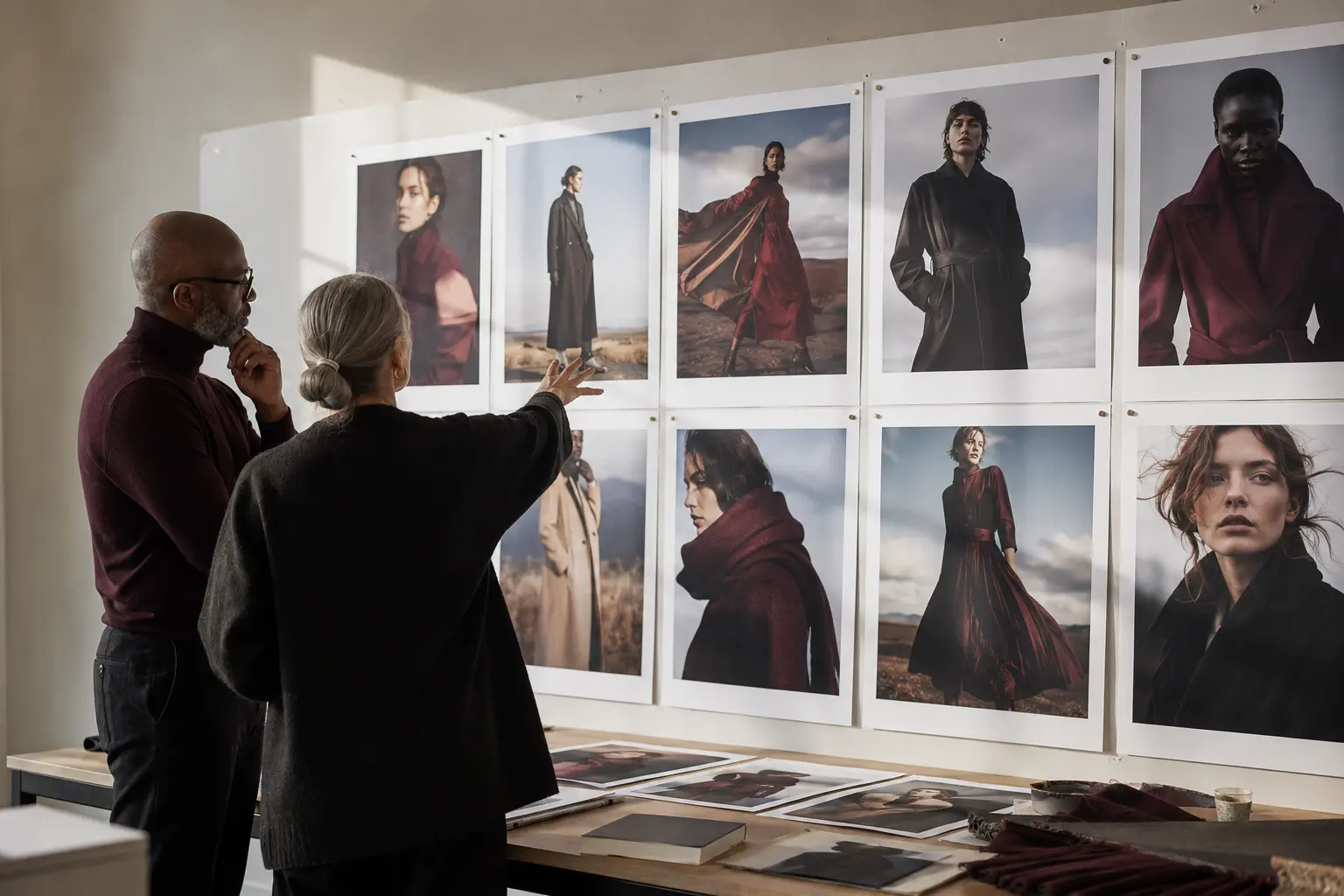
Need a campaign concept that can survive production and work across real marketing channels? I provide fashion campaign creative direction that connects brand strategy, visual concept, casting, styling, location, shot planning and final asset requirements before the shoot begins.
The service can be commissioned with campaign photography or as part of a broader production scope. The goal is a cohesive visual direction that gives every contributor clear decisions while protecting the commercial needs of the launch.
- Campaign concept and visual narrative
- Mood boards and creative references
- Casting, styling and location direction
- Shot lists and channel-specific asset planning
- On-set visual direction
- Alignment between stills, motion and licensing
See how creative planning shaped the Trippen Shoes production and explore additional campaign case studies.
Creative direction for fashion campaigns turns a business objective into a visual world that customers can recognize, understand and remember. It connects the campaign idea to casting, styling, photography, motion and every final asset. Therefore, it is not simply an aesthetic layer added before a shoot. Instead, it is the decision-making system that keeps strategy, production and distribution aligned.
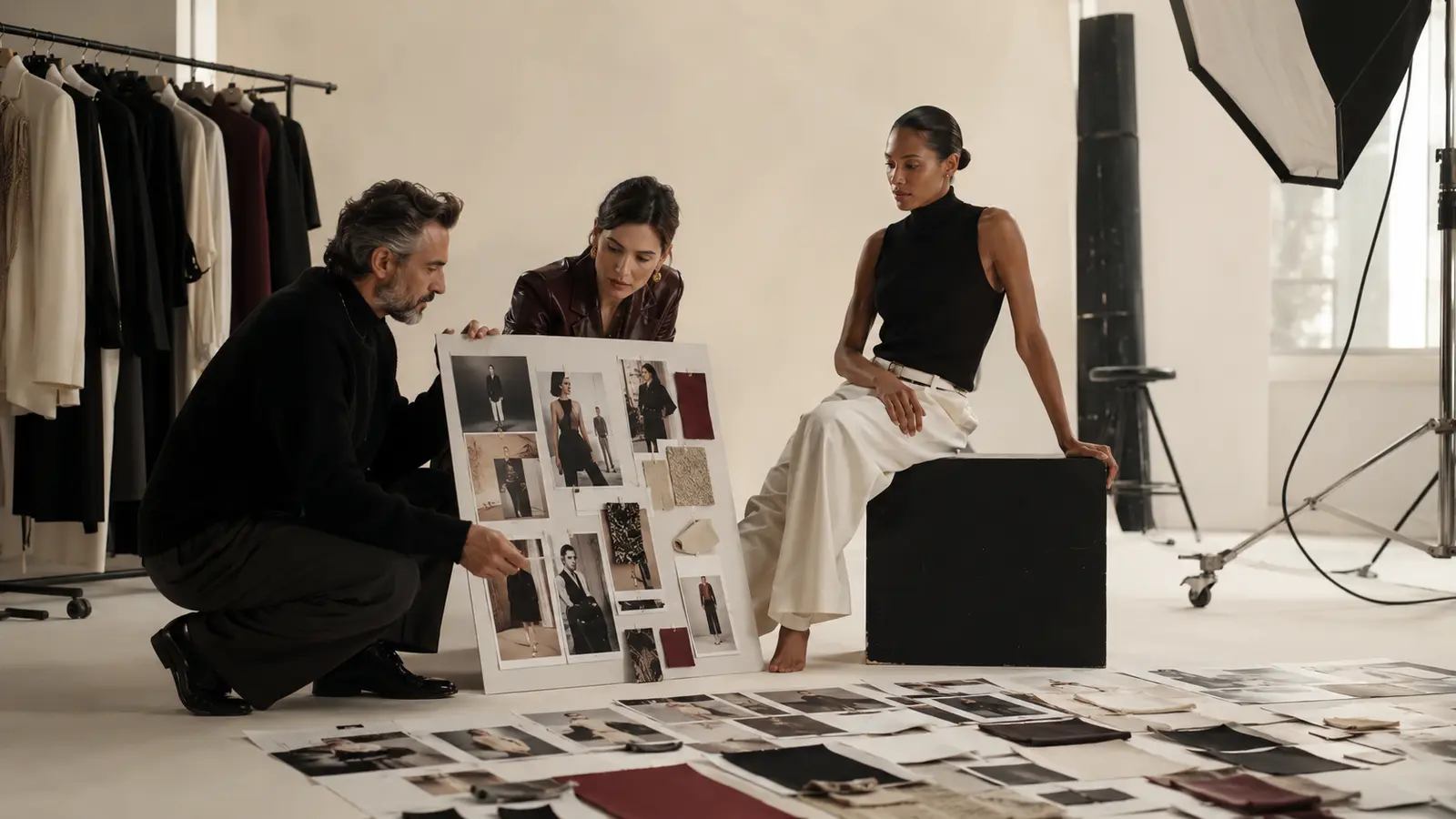
What Is Creative Direction for Fashion Campaigns?
Creative direction is the translation of brand strategy into a coherent campaign concept and a practical visual framework. In other words, it defines both the campaign’s central idea and the rules that make that idea visible. Those rules usually include narrative, tone, casting, location, set design, wardrobe, beauty, lighting, composition, movement and post-production.
Once the visual direction is established, casting models who reinforce that creative direction becomes one of the most important pre-production decisions.
Nevertheless, a strong direction does more than make these elements look consistent. It also establishes why each choice supports the audience, product and commercial objective. A muted palette may reinforce understated luxury, for example. By contrast, high-energy movement and direct flash may suit a youth-focused launch built for social discovery.
Fashion art direction is closely related, although the terms are not always interchangeable. Creative direction generally owns the larger concept, message and strategic logic. Art direction, meanwhile, governs how that concept appears in the frame through design, styling, layout and visual details. On a smaller production, one person may lead both. On a larger campaign, however, the responsibilities may be divided across several specialists.
Use an art direction checklist to keep every visual decision aligned with the campaign strategy.
See how a defined creative vision can be translated into a scalable photoshoot.
Why Fashion Campaigns Need More Than a Moodboard
A moodboard is useful because it gives the team a shared visual reference. Yet it is only one part of a complete fashion campaign concept. Without a written rationale, references can be interpreted differently by the photographer, stylist, client and retoucher. Consequently, the board may create the appearance of alignment without producing actual agreement.
Moreover, reference images can encourage imitation if the team focuses on surfaces rather than principles. The goal is not to reproduce another brand’s campaign. Instead, the direction should identify what the references reveal about light, scale, color, gesture, pace or emotional tone. Those principles can then be translated into an original visual language that belongs to the brand.
A production-ready direction should answer five questions:
- What must the campaign achieve? Define the launch, positioning or performance objective
- Who must respond? Clarify the audience, their context and the desired perception
- What is the central idea? Express the concept in one focused sentence
- How will the idea become visible? Set the rules for image, styling, beauty, casting and design
- Where must the assets work? Map the concept to website, advertising, social, email, PR and retail formats
Therefore, the creative deck should function as a decision tool rather than an inspiration archive. If a reference does not clarify a production choice, it may not belong in the deck.
Read our fashion mood board guide. Strong creative direction starts with developing a campaign concept around a clear business goal, rather than beginning with aesthetics alone.
Creative direction becomes more powerful when visual storytelling gives every creative decision a narrative purpose.
See how creative direction turned a multi-brand wardrobe pull into a coherent editorial fashion story and how a mood board was translated through creative direction into a complete published beauty editorial.
The Strategic Foundation of a Strong Fashion Campaign Concept
Effective fashion campaign planning starts before locations, models or lighting styles are discussed. First, the brand needs a precise campaign objective. A collection launch may need to build desire and explain a new design language. A paid campaign, however, may need clearer product visibility, several hooks and enough variation for testing.
Once the visual direction is established, choosing a location that reinforces the campaign concept becomes an important part of translating that direction into production.
Next, the team should define the audience insight behind the idea. Demographics alone are rarely sufficient. Instead, consider what the audience wants to feel, what currently prevents action and what visual signals communicate relevance or value. This step helps the direction move beyond taste and toward a persuasive point of view.
Finally, connect the concept to a single campaign proposition. The proposition is not necessarily public-facing copy. Rather, it is an internal statement that explains what the collection means to the customer. Because every visual choice can be tested against that statement, it becomes easier to reject ideas that are attractive but strategically irrelevant.
See how creative direction moved from visual references into an executable fashion campaign.
Creative direction becomes easier to execute when the campaign brief clearly defines objectives, audience, messaging and visual direction.
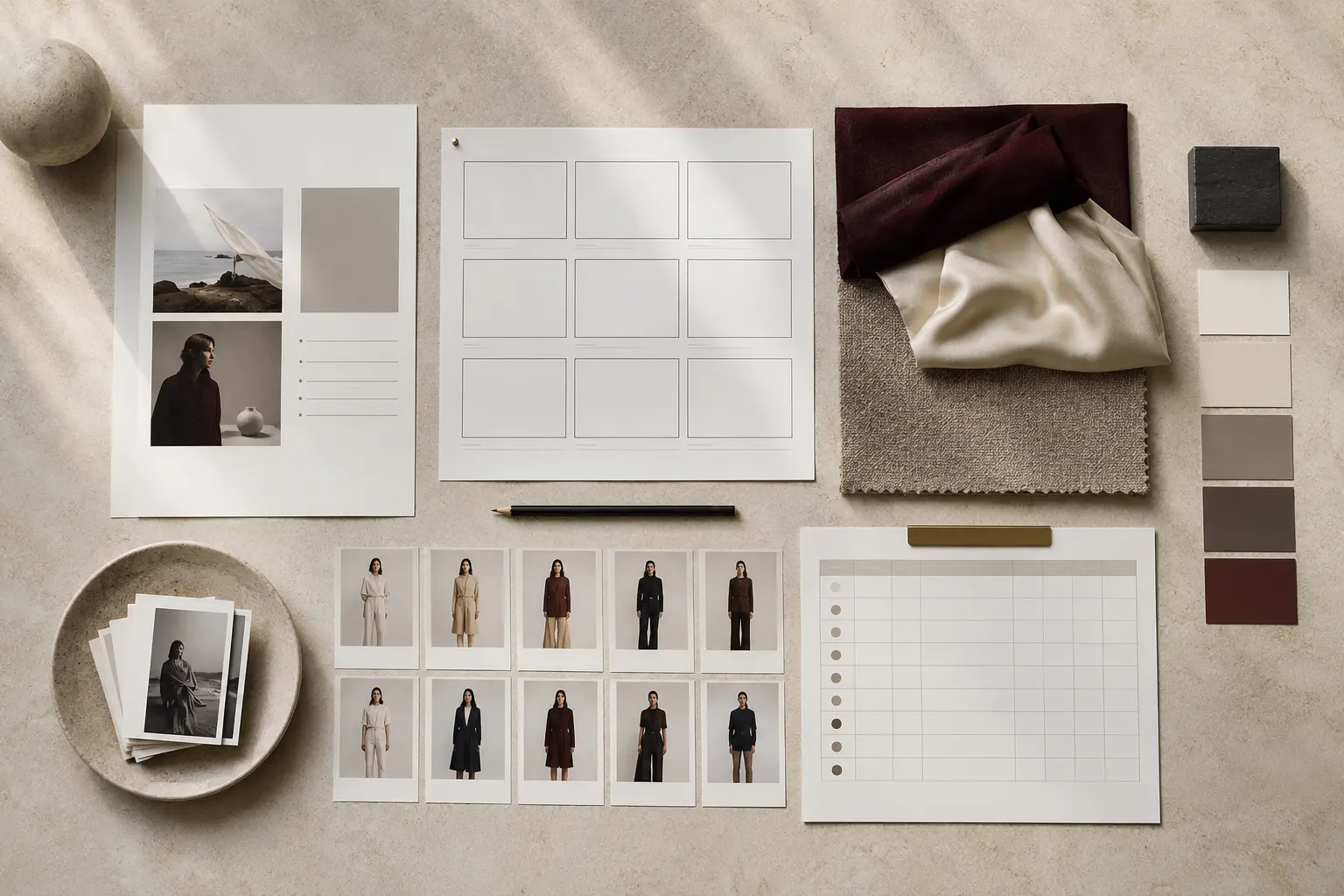
Build the creative brief before the visual deck
A concise brief gives the team the logic behind the work. Although formats vary, a useful brief should include the campaign objective, audience, product priority, proposition, key message, channels, required deliverables, timeline, budget parameters and approval structure.
In addition, it should identify non-negotiables. These may include brand colors, product details, usage territories, retailer requirements or claims that require legal approval. By defining these constraints early, the team can innovate within a realistic frame instead of discovering limitations after production.
For a broader production framework, use the guide on how to plan a fashion campaign shoot. Likewise, the fashion campaign timeline helps connect creative approval to casting, logistics, production and delivery.
Creative direction becomes easier to manage when stakeholders know which visual decisions require approval and at what stage.
How to Develop Creative Direction for Fashion Campaigns
1. Define the campaign objective
Begin with the business problem, not a visual reference. Is the brand entering a new category, launching a hero product, strengthening premium perception or generating advertising assets? Since each objective requires a different visual emphasis, this decision shapes the rest of the campaign.
2. Find the audience tension
Strong concepts often emerge from a tension the customer recognizes. For example, a collection may balance structure with freedom, performance with elegance or heritage with reinvention. However, the tension must be true to the product and brand. Otherwise, the resulting narrative will feel manufactured.
3. Write the concept in one sentence
If the campaign cannot be explained clearly, it is not ready to be produced. Therefore, write one sentence that combines the audience insight, product role and emotional promise. Then use that statement to evaluate every reference and production choice.
4. Create the visual system
Now translate the concept into visual principles. Define the palette, contrast, texture, scale, set language, model energy, composition, lens character and movement. Furthermore, clarify what the campaign should avoid. Negative direction is valuable because it protects the concept from familiar but unsuitable choices.
See how creative direction can maintain one cohesive visual language across an entire seasonal fashion story.
5. Design for every campaign channel
A campaign does not live in one hero image. Consequently, the concept must survive landscape website banners, vertical video, square social placements, email headers, retailer crops and paid-ad variations. Good fashion campaign planning accounts for these formats before the camera is placed.
6. Align the team and approval process
Share the approved deck with every department, including post-production. In addition, identify who gives consolidated feedback and who has final approval. This prevents conflicting direction on set and reduces subjective revision rounds later.
Translating the Concept Into Fashion Campaign Photography
The concept becomes real through fashion campaign photography. At this stage, the creative director and photographer should work from the same visual priorities while contributing different expertise. The creative director protects the idea and brand logic. Meanwhile, the photographer interprets those priorities through light, lens, timing and connection with the subject.
For instance, “confident” is too broad to direct a photograph. It could mean frontal symmetry, a low camera position, restrained expression and hard light. Alternatively, it could mean relaxed movement, generous space and natural daylight. Therefore, abstract adjectives should be translated into observable choices before the shoot.
The same principle applies to casting and styling. A model should not be selected only because they fit a generic luxury image. Instead, their presence, movement and point of view should reinforce the campaign idea. Similarly, styling should create the intended silhouette while protecting product priorities and maintaining enough flexibility for the shot list.
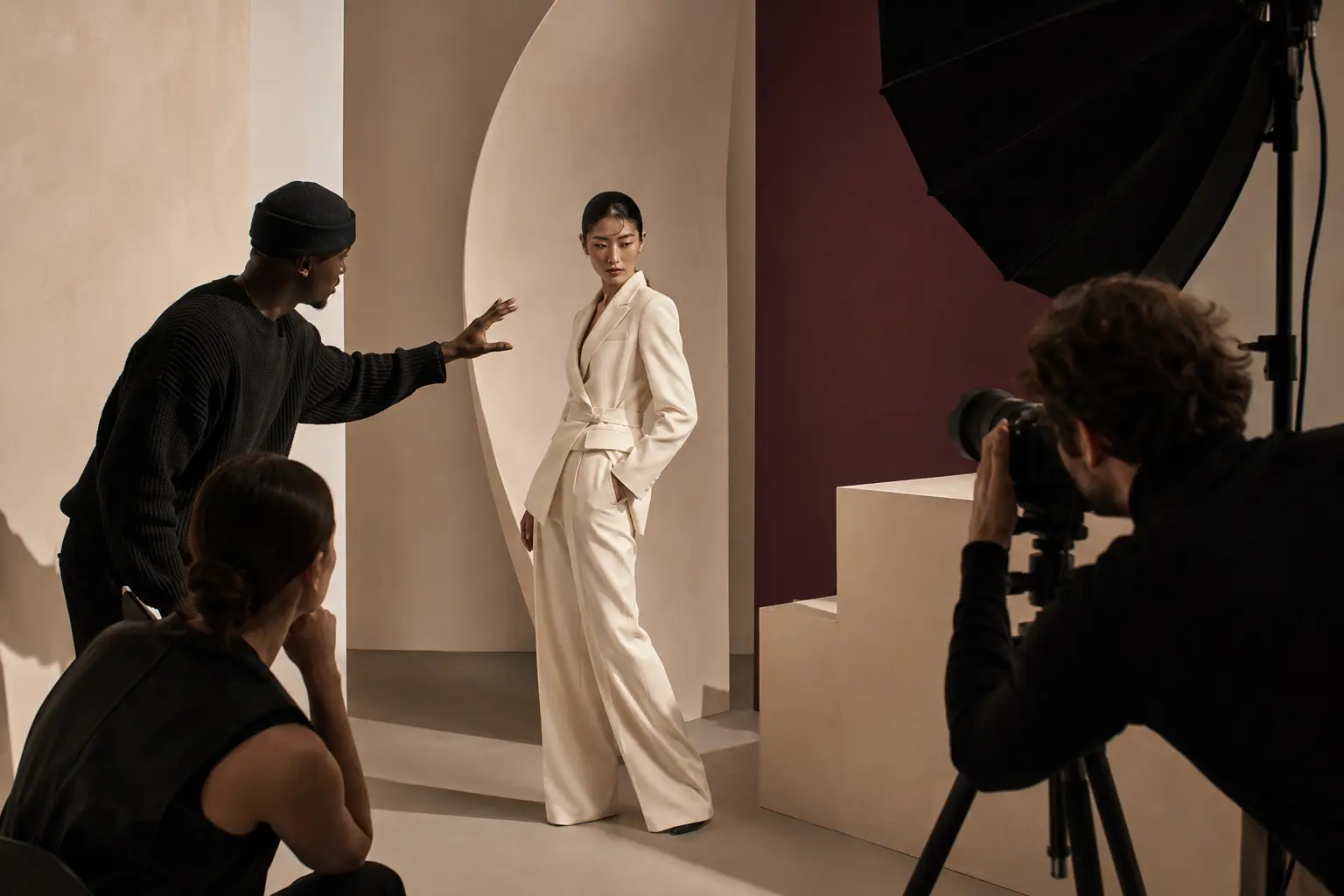
Direct the frame, not just the model
On-set direction includes far more than pose. It covers the relationship between body, garment, set, light and crop. Moreover, it should consider how the eye moves through the frame and which product information remains visible. A strong image may feel spontaneous, yet the underlying decisions are highly controlled.
At the same time, direction should leave room for discovery. If every frame is over-prescribed, the work can lose energy. Thus, the best process establishes firm visual boundaries while allowing the model, photographer and stylist to respond to what happens in front of the camera.
Read Fashion Campaign Photography: The Foundation of High-Performing Fashion Brands for a deeper explanation of how campaign images support positioning, advertising and content production.
Plan a Campaign System, Not a Single Hero Image
A memorable hero image can anchor a launch. Nevertheless, brands also need supporting assets that explain products, sustain attention and adapt to different customer touchpoints. For that reason, creative direction for fashion campaigns should define a family of images rather than one perfect frame.
A practical campaign system may include:
- hero images for the homepage, landing pages and PR
- product-led campaign images that reveal fit, construction and detail
- portrait and landscape variations for paid media
- vertical motion assets for social platforms
- detail, texture and transition shots for pacing
- email, retailer and editorial crops
- behind-the-scenes material that expands the campaign story
Although the formats differ, the visual logic should remain recognizable. Consistent light, palette, gesture and design language create cohesion. Meanwhile, variation in scale, energy and composition prevents repetition.
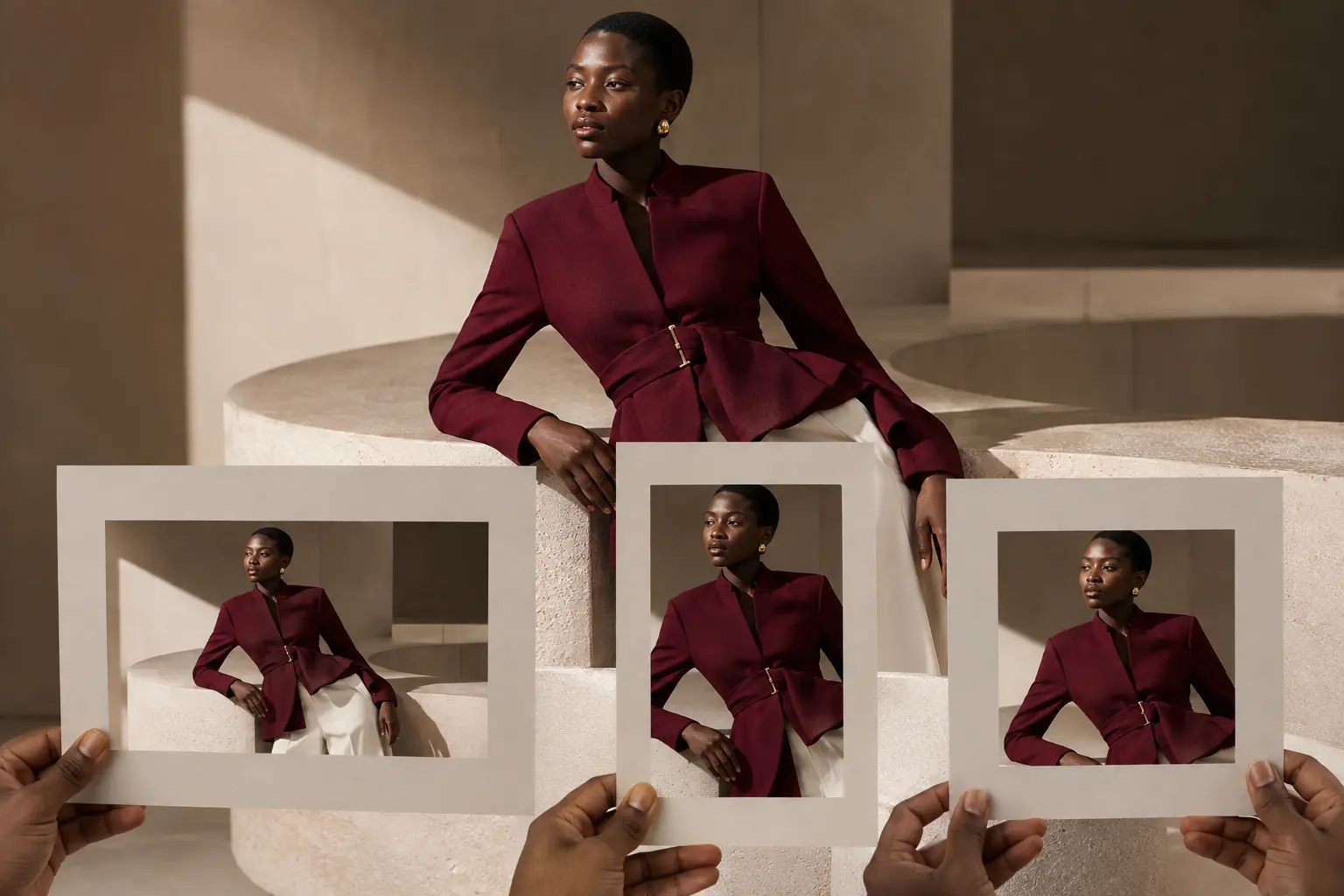
This is also where the broader fashion brand content strategy becomes essential. Furthermore, the fashion marketing campaign guide explains how strategy, content and distribution work together to support growth.
Common Creative Direction Mistakes
Starting with aesthetics instead of strategy
A beautiful reference is not a campaign idea. If the team cannot explain how the direction supports the product, audience and objective, the concept is incomplete. Therefore, strategy should narrow the creative possibilities before visual development begins.
Using too many visual ideas
Some decks contain several competing palettes, lighting styles and narratives. As a result, different team members select different signals and the final work fragments. A stronger deck makes one primary choice and uses every reference to reinforce it.
Copying references too literally
References should communicate principles, not provide a template to reproduce. Besides creating derivative work, literal copying prevents the brand from building distinctive visual equity. Instead, combine strategic insight with original casting, environment, styling and photographic interpretation.
Ignoring channel requirements
A concept may look compelling in a widescreen presentation yet fail in a vertical ad or mobile header. Consequently, format testing should happen during concept development. If the idea depends on one precise crop, it may be too fragile for a modern campaign.
Allowing approval by personal taste
Comments such as “I do not like it” provide no useful direction. Instead, feedback should refer to the brief: Does the work express the proposition? Does the product remain clear? Does the image fit the audience and channel? Because these questions share an agreed standard, they make approval faster and more objective.
Treating post-production as a repair stage
Retouching and grading should complete the visual system, not rescue unresolved production decisions. Thus, the retoucher should receive references for skin, fabric, contrast, color and finish before work begins. Early alignment also protects texture and keeps the final campaign consistent.
How to Evaluate Whether the Direction Is Working
Creative quality matters, but a campaign should also be evaluated against its intended job. Before launch, review concept clarity, product visibility, brand fit, consistency and format flexibility. After launch, compare performance by channel, image type, hook and audience segment.
However, do not reduce creative direction to click-through rate alone. A hero image may build recognition while a product-led variation drives conversion. Both can be valuable because they perform different roles in the fashion marketing funnel.
Useful evaluation questions include:
- Can the core campaign idea be understood without a long explanation?
- Does the visual world feel distinctive and credible for the brand?
- Are the priority products clear across essential assets?
- Does the campaign remain coherent across stills, motion and crops?
- Did the production deliver enough meaningful variation for testing?
- Which visual choices improved attention, engagement or conversion?
For a structured measurement framework, use the guide to fashion marketing KPIs. Then apply those insights to the next campaign rather than treating reporting as the final step.
When Should a Fashion Brand Hire a Creative Director?
A dedicated creative director becomes especially valuable when the campaign involves several channels, a new market position, multiple contributors or a meaningful production budget. Likewise, outside direction can help when a brand’s content looks polished but inconsistent, or when internal stakeholders struggle to translate strategy into a clear visual language.
Smaller brands may combine creative direction and photography in one role. This can create efficiency because the concept and photographic execution remain closely connected. Nevertheless, the scope should still be explicit. The team needs to know who owns the concept, who approves it and which deliverables are included.
Most importantly, hire for strategic judgment rather than taste alone. A strong creative partner should be able to explain why a visual choice supports the brand, how it will work across formats and what production trade-offs it creates.
Creative Direction for Fashion Campaigns Creates Commercial Clarity
The strongest campaigns do not separate creativity from commercial purpose. Instead, they use a clear idea to connect brand positioning, product value and audience emotion. Then they translate that idea into specific decisions across casting, styling, set, photography, motion and post-production.
As a result, creative direction for fashion campaigns reduces ambiguity before the shoot, improves collaboration during production and produces a more useful asset system after delivery. The work can still surprise. However, it surprises within a framework that protects the brand and supports the campaign objective.
If your next campaign needs a clearer visual direction, stronger production planning and a coordinated set of assets, explore my fashion and beauty campaign photography services. Together, we can build a campaign that feels distinctive, stays consistent and works across the channels where your customers make decisions.
Frequently Asked Questions
What does a creative director do for a fashion campaign?
A creative director turns the campaign objective into a coherent concept and visual system. They align the brief, references, casting, styling, set, photography, motion and post-production. In addition, they protect consistency while helping the team make faster decisions.
What should a fashion campaign creative deck include?
The deck should include the objective, audience insight, concept statement, visual rationale, palette, casting, styling, beauty, location or set, lighting, composition, movement, post-production and required formats. Moreover, each reference should clarify a production choice.
What is the difference between creative direction and fashion art direction?
Creative direction generally defines the campaign’s central idea, message and strategic framework. Fashion art direction focuses more closely on how that idea appears through design, styling, composition and visual detail. However, one person may handle both roles on a smaller production.
How early should creative direction begin?
For most professional campaigns, development should begin six to twelve weeks before launch, depending on scale. This allows time for strategy, approval, casting, location, production, retouching and delivery. Complex productions may require more time.
How can creative direction improve campaign performance?
Clear direction makes the message easier to recognize, strengthens visual consistency and ensures the production creates assets for each channel. Consequently, the brand can test more useful variations, reduce wasted production and build stronger recognition over time.