
What Is Fashion Campaign Photography?
Fashion campaign photography is the strategic production of images used to introduce, position or promote a fashion brand, collection or product story. Unlike a gallery of disconnected images, a campaign is organized around one central idea. Casting, styling, location, lighting, composition, product visibility and post-production all express that idea consistently.
The strongest campaigns also connect the creative idea to distribution. A website hero needs a different composition from a mobile advertisement. A lookbook must show silhouette and collection range. PR may need clean horizontal and vertical options, while social publishing requires enough visual variation to build a sequence. Consequently, the production plan should define these roles before the team begins shooting.
Campaign photography also works best when it uses fashion storytelling photography to connect individual assets into a larger, recognizable narrative.
Watch: Fashion Campaign Photography Explained
This companion video explains why strategic production creates value beyond the immediate launch.
Fashion Campaign Photography vs Editorial Photography
Campaign and editorial photography can share the same visual ambition, but they are commissioned for different reasons. Editorial work may explore an idea primarily for publication or creative expression. Fashion campaign photography is accountable to a brand, product, audience, launch and defined set of commercial placements.
| Decision | Fashion campaign photography | Editorial photography |
|---|---|---|
| Primary purpose | Support a brand or commercial objective | Express a story or editorial point of view |
| Product role | Defined by campaign priorities | May be interpretive or secondary |
| Deliverables | Planned for named channels and formats | Often planned around a publication or story |
| Approvals | Brand stakeholders approve key stages | Editorial team or publication leads decisions |
| Usage | Licensed for specific commercial applications | Governed by editorial and contributor terms |
This does not mean commercial work should be visually safe but rather the creative idea must remain useful. A dramatic location or unconventional composition can strengthen a campaign, provided the product, audience and required placements remain part of the decision.
What Assets Should Fashion Campaign Photography Produce?
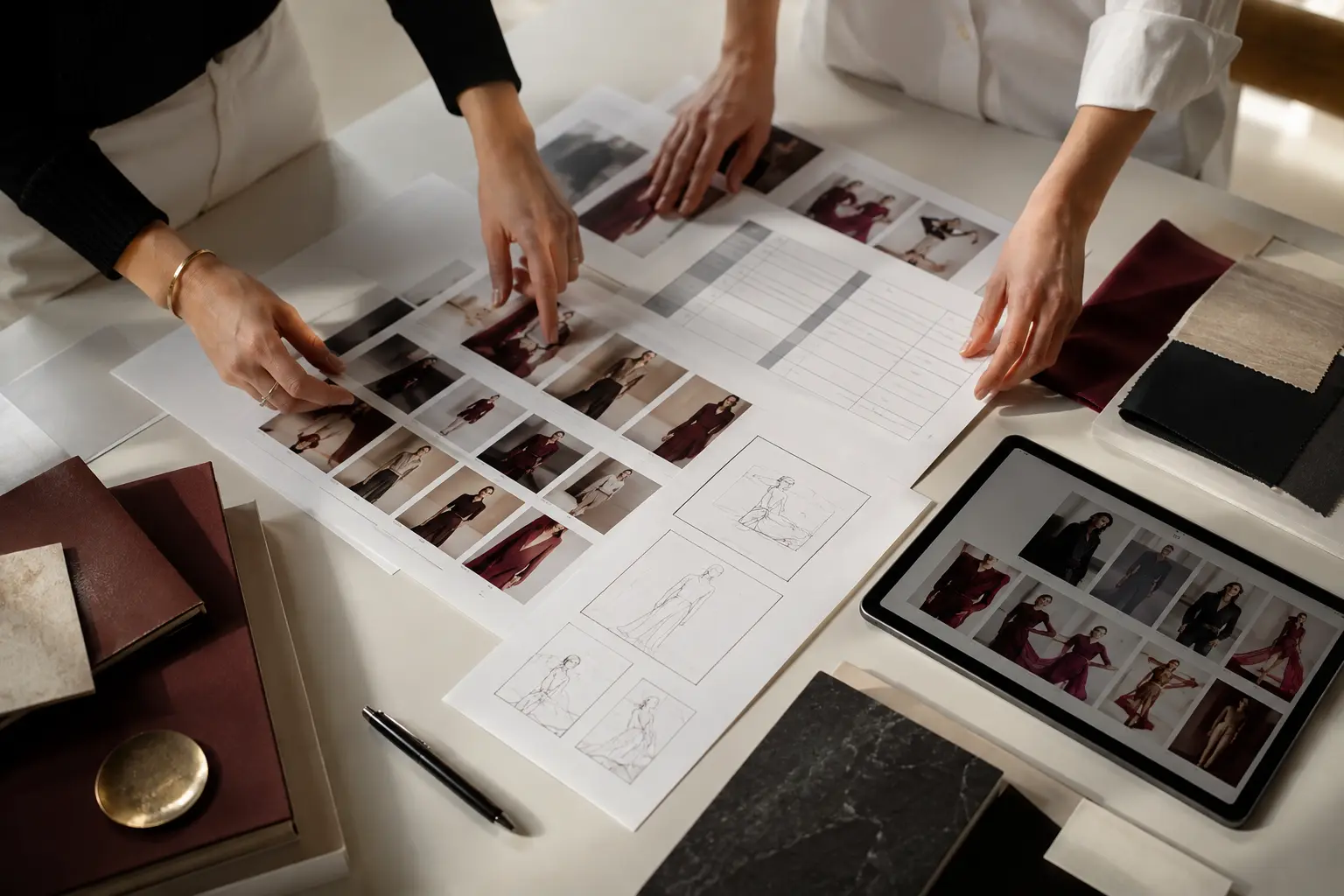
A campaign should not be judged only by the number of final images. Fifty similar portraits may offer less marketing value than a smaller, deliberately structured library. The more useful question is whether the edit contains different asset roles.
| Asset role | What it needs to do | Typical placements |
|---|---|---|
| Hero imagery | Establish the campaign world quickly | Homepage, launch page, outdoor, PR lead |
| Collection imagery | Show silhouettes, styling and range | Lookbook, collection page, wholesale |
| Product-led campaign assets | Keep priority items clearly legible | Advertising, product launches, email |
| Vertical assets | Preserve the concept in mobile-first framing | Stories, Reels covers, paid social |
| Horizontal assets | Create scale and intentional copy space | Website banners, press, email headers |
| Details and supporting frames | Reveal material, construction and visual rhythm | Carousels, product storytelling, CRM |
| Testing variations | Change crop, expression, pose or product emphasis | Paid-media creative testing |
A structured photography shot list should connect each planned frame to a product, channel, crop and commercial purpose. This is more reliable than arriving with a list of poses.
How to Plan a High-Performing Fashion Campaign Shoot
1. Define the campaign objective
Begin with the change the campaign should create. It might introduce a collection, elevate perceived value, enter a market, generate demand before launch or supply fresh advertising creative. The objective determines how quickly the product must become clear and how much room the concept has for ambiguity.
2. Develop one ownable concept
A useful concept translates the business objective into a visual proposition the brand can credibly own. The campaign concept development process should happen before references multiply. Then use a strategic fashion mood board to define rules for light, color, casting, styling, setting and composition.
3. Write a decision-ready brief
The brief should identify the audience, message, priority products, deliverables, channels, timeline, budget ownership, usage scope and approval responsibilities. Use this fashion campaign brief example and template to turn the idea into information the creative and production teams can act on.
4. Map the complete asset requirement
List every confirmed placement and its technical needs. Specify orientation, aspect ratio, copy space, product priority, safe areas, publication date and owner. Native vertical and horizontal compositions should be captured when the idea requires them; repeated cropping cannot replace intentional framing.
5. Align casting, styling and location
Every production choice should strengthen the same campaign proposition. Use a structured fashion campaign casting process, then assess whether studio or lifestyle photography best supports the concept. For location work, complete both location scouting and the required location permissions.
6. Establish approval gates
Undefined feedback can cause expensive changes after production. A fashion campaign approval workflow should identify who approves the concept, casting, styling, location, shot list, on-set direction, selects and final retouching.
7. Confirm licensing before the shoot
Web, organic social, paid advertising, print, retail and out-of-home usage do not represent the same commercial scope. Define territory, duration, media and exclusivity in advance. The photography licensing guide for brands explains the framework, while the paid-ads usage guide addresses media-backed distribution specifically.
How Fashion Campaign Photography Supports Performance
Photography does not create performance in isolation. Media strategy, offer, audience, landing-page experience, product-market fit, pricing and measurement also affect results. Therefore, claims that better images automatically increase conversion are too simplistic.
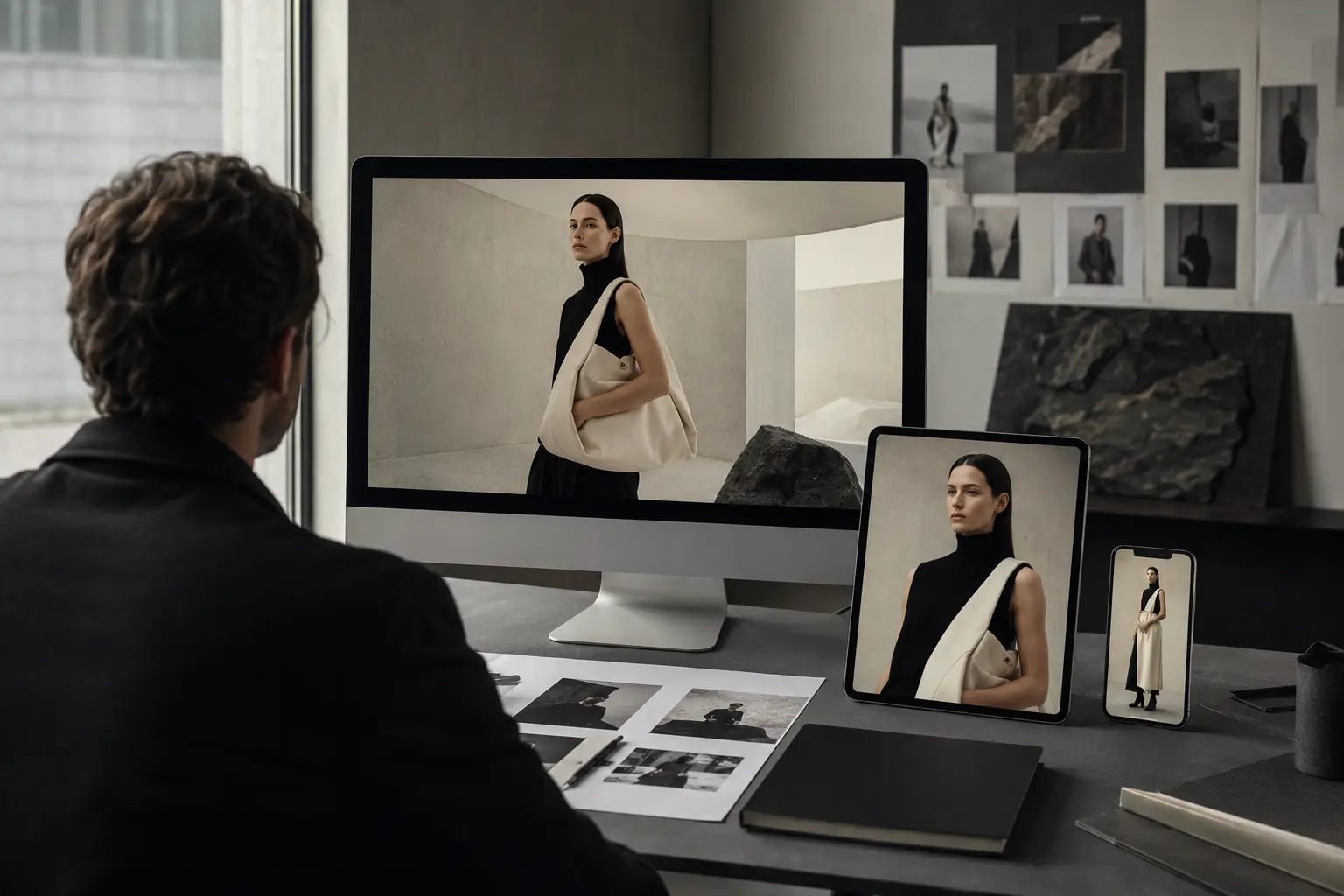
Campaign photography can, however, create the conditions for stronger execution. It can improve message clarity, strengthen perceived value, make a brand more recognizable and give marketing teams native assets for different placements. Variations also make meaningful creative testing possible.
Separate two types of evidence:
- Production evidence: the campaign delivered the required products, orientations, crops and visual roles
- Performance evidence: deployed assets changed metrics such as click-through rate, conversion rate, qualified traffic, sell-through or creative lifespan
Do not describe channel readiness as a proven commercial result. Instead, establish naming conventions and a baseline before launch, then connect each deployed asset to its placement and results. That distinction makes future case studies more credible.
From One Campaign to Content Infrastructure
A campaign becomes more valuable when it contributes to a reusable visual system. That does not mean repeating the same lighting and poses forever but documenting what should remain recognizable, brand codes, product treatment, tone and quality, while allowing each collection to introduce a new chapter.
The Tanya Marie “The Exhibitionist” production shows how one shoot created a coherent 50-image library across hero, full-length, horizontal, paired, beauty and detail roles. Read the fashion campaign content-infrastructure case study for the verified production output and the limits of what can be claimed without deployment data.
For the wider operating model, compare content systems with random shoots and explore the compounding ROI of planned content systems.
What Determines the Cost of Fashion Campaign Photography?
There is no responsible universal price range for fashion campaign photography. A local studio launch and a multi-day international production may both be called campaigns, yet their cost structures are fundamentally different. Publishing broad ranges without defining scope can mislead buyers.
Budget is shaped by creative development, photographer and crew fees, production management, casting and talent, styling, hair and makeup, studio or location, travel, equipment, set design, catering, insurance, post-production, deliverables and licensing. Contingency also matters because weather, shipping, availability and production changes create real risk.
The right comparison is not cost per image but the cost of creating the required asset system at the necessary quality and usage scope. The dedicated guide to fashion campaign shoot cost should carry the detailed costing intent, keeping this cornerstone page focused.
Common Fashion Campaign Photography Mistakes
- Starting with references instead of an objective: the campaign inherits a look without a strategic reason
- Treating every frame as a hero: the edit lacks quieter product, detail and transitional assets
- Planning only one orientation: important information disappears when images are forced into other formats
- Making the product incidental: viewers remember the set or pose but cannot understand the collection
- Leaving decisions to shoot day: unresolved casting, styling and stakeholder questions consume production time
- Ignoring usage until delivery: the brand has images but not necessarily the rights required for planned media
- Claiming performance without data: attractive outputs are presented as conversion evidence without deployment metrics
How to Evaluate a Fashion Campaign as a System
- Can the team explain the campaign idea in one sentence?
- Does that idea connect directly to the brand, audience and collection?
- Are priority products visible in the right frames?
- Do casting, styling, location, light and post-production express one point of view?
- Does the edit include hero, collection, product, vertical, horizontal and supporting roles where required?
- Are copy space and safe areas intentional rather than accidental?
- Can each asset be traced to a channel, owner and publication purpose?
- Are usage rights aligned with the media plan?
- Is performance measurement prepared before deployment?
- Can future productions build on the visual system without copying it?
If several answers are no, producing more images is unlikely to solve the problem. The campaign needs clearer decisions upstream.
Build Fashion Campaign Photography Around the Complete Asset System
Effective fashion campaign photography begins before the camera is raised. It connects the business objective to a credible creative concept, turns that concept into channel-ready assets and protects the consistency, product clarity and usage rights required for distribution.
When these decisions are made together, the shoot produces more than attractive selects. It creates a coordinated visual library that can support the immediate launch and give future marketing work a stronger foundation.
Discuss your next fashion campaign or request a visual audit to identify gaps in your current campaign asset system.