
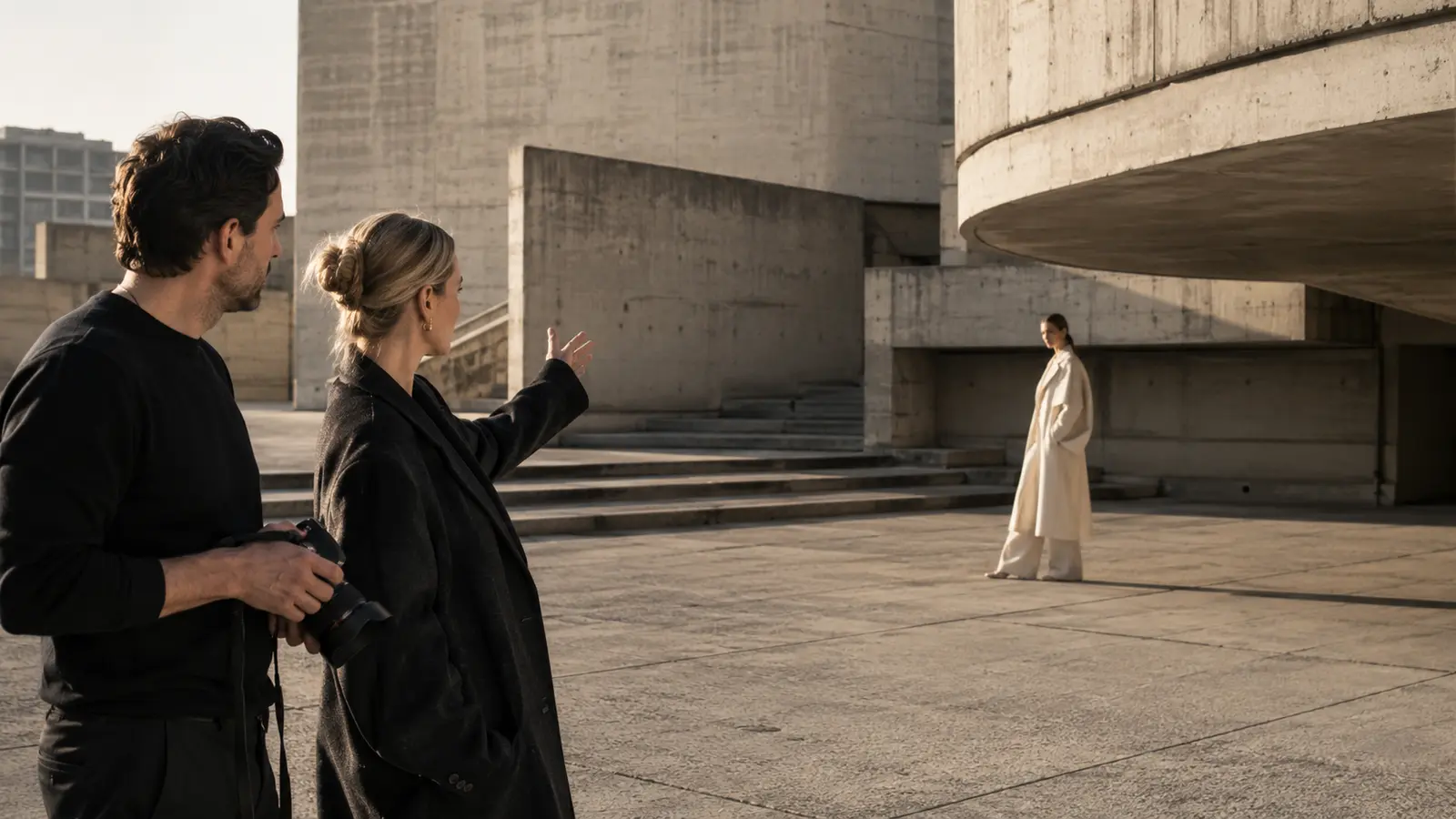
What Is Fashion Campaign Location Scouting?
Fashion campaign location scouting is the process of identifying, visiting and evaluating environments for a campaign production. It begins after the core idea and requirements are clear but before the production plan is locked. The process may cover streets, private homes, hotels, industrial buildings, landscapes, studios, constructed sets or a combination of several spaces.
However, discovering possible locations is only the first part. A professional scout also checks whether each option can deliver the approved visual direction under real production conditions. That means examining light, angles, surfaces, scale, access, safety, noise, permissions, facilities, cost and backup possibilities.
The location decision therefore sits at a precise point in the campaign architecture. Campaign concept development defines the central idea. Creative direction for fashion campaigns establishes the visual logic. The location scout then tests where that logic can become physically achievable. Afterward, the approved setting informs lighting, styling, scheduling, equipment, transport and the final photography shot list.
This is different from deciding between studio and location photography in general. The broader lifestyle-versus-studio photography comparison helps a brand choose a production mode. Location scouting begins once an environment must be selected and verified within that mode.
Why the Location Changes More Than the Background
A location introduces meaning before the model moves or the viewer examines the garment. Raw concrete can suggest restraint, modernity or institutional power. A domestic interior may communicate intimacy, status or familiarity. A coastal landscape may create freedom and scale, while a crowded street can introduce energy, immediacy and cultural context.
These meanings are not neutral. As a result, the setting becomes part of the brand message. If the campaign concept is quiet and precise, a visually noisy environment may weaken it. Conversely, if the collection depends on movement and attitude, a controlled white studio may remove the tension that makes the idea memorable.
The location affects product perception
Environment changes how color, texture, silhouette and price position are perceived. A black garment can disappear against a dark wall. Fine detailing can be lost in hard midday contrast. Reflective accessories may pick up unwanted colors from surrounding surfaces. Meanwhile, an overly distressed setting can make a premium product feel less intentional unless that contrast is clearly part of the concept.
Therefore, the test is not whether the location is beautiful by itself but rather whether it makes the product easier to understand and the brand easier to remember.
The location affects the asset system
A campaign may require a wide homepage hero, vertical paid-social assets, square posts, email banners, PR images, motion clips and clean frames for typography. One dramatic angle is not enough. The setting needs several usable zones, workable camera distances and backgrounds that can support different crops without losing the visual identity.
This reflects the broader purpose of fashion campaign photography: the production should create a connected system of marketing assets rather than a small set of isolated hero images.
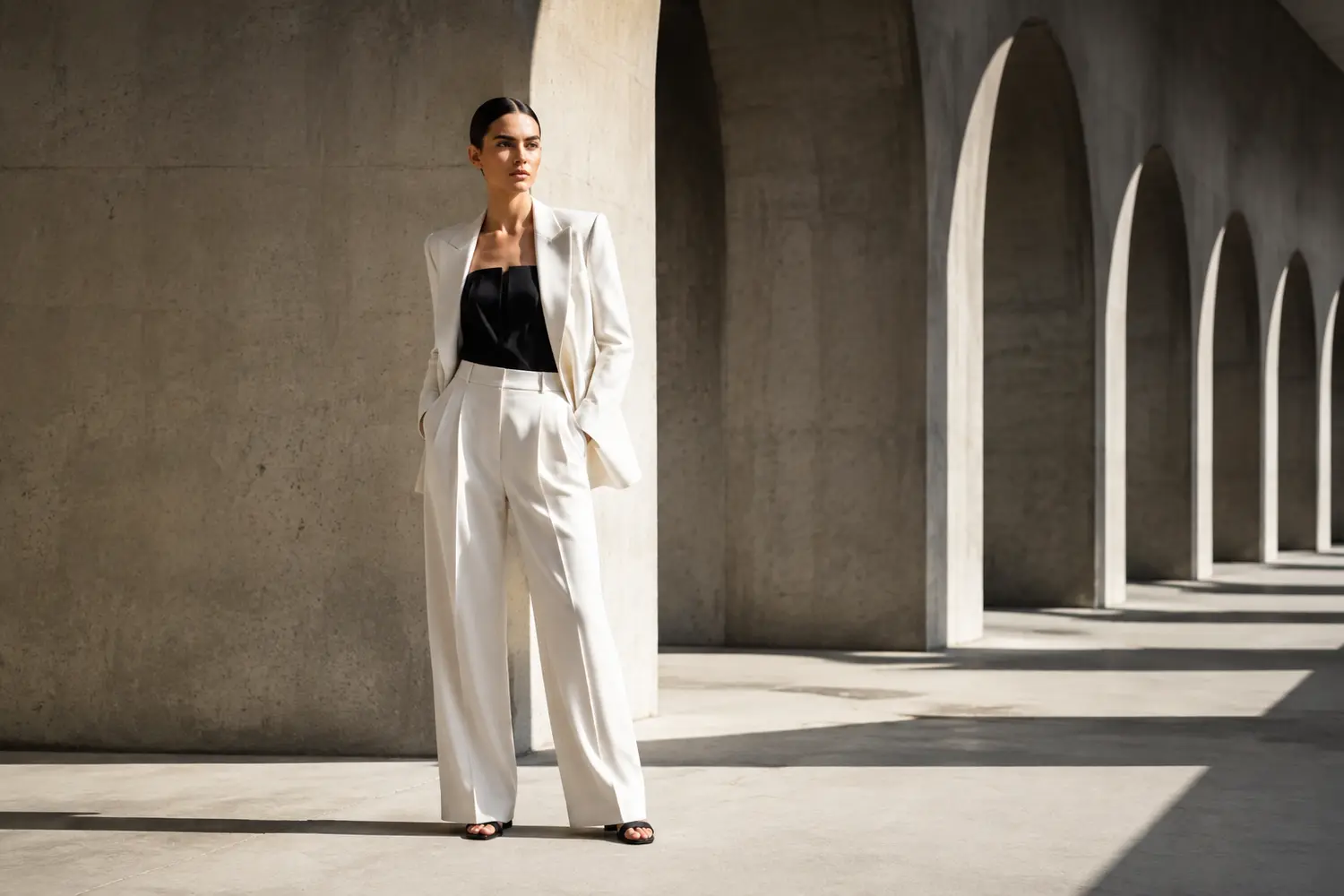
Eight Criteria for Fashion Campaign Location Scouting
The strongest location is rarely the option with the highest creative score alone. Instead, it is the environment that delivers the best combined result across concept, product, media and production. Use the following criteria before committing budget or announcing the setting to the wider team.
1. Concept and brand alignment
Begin with the campaign’s strategic statement. What should the audience feel, understand or desire? Then identify which features of the environment communicate that meaning. Consider architecture, period, color, material, scale, cultural associations and signs of use.
A useful fashion mood board should already contain location references with annotations. Nevertheless, a reference is not a specification. Separate the quality you need, such as repetition, openness, decay or polished geometry, from the exact place shown in the reference. This creates more original and feasible options.
2. Product visibility and color relationships
Bring garment swatches, sample images or the actual hero look to the scout whenever possible. Compare the product against the main surfaces in both direct light and shade. Check whether the silhouette separates from the background and whether environmental colors alter skin tones or product color.
Also consider priority. If the setting attracts more attention than the product in every test frame, the location may be serving itself rather than the campaign.
3. Light throughout the scheduled hours
Observe the direction, quality and duration of natural light. A location that works at 17:00 may be unusable at 10:00. Tall buildings can create short windows of direct light, while large interiors may appear bright to the eye but still require significant lighting equipment.
Record the scout time, date and weather. Then estimate how the sun position will change by the production date. In addition, identify shaded zones, practical interior lights, reflective surfaces and places where stands or modifiers can be positioned safely.
4. Composition and channel formats
Photograph every promising zone horizontally and vertically. Test full-length, three-quarter, detail and movement distances. Look for clean edges, background depth and negative space for copy. Then compare those tests with the required placements in the campaign brief.
If the campaign needs a website banner, a narrow corridor may prevent a wide composition. If vertical video is essential, a visually strong horizontal wall may not provide enough depth for movement. The location has to support the approved fashion campaign brief, not force marketing to redesign the plan afterward.
5. Talent movement and crew workflow
Assess how models will enter, move and reset. Long garments, heels and complex posing require stable surfaces and safe paths. Meanwhile, the crew needs space for lighting, cameras, monitors, styling, hair and makeup, wardrobe racks and equipment cases.
Map the flow between holding, changing, shooting and loading areas. A spectacular room can become inefficient if every setup requires the entire production to move through a narrow stairwell. The guide to fashion campaign production roles can help clarify who should evaluate creative, technical and logistical dependencies during the scout.
6. Sound, power and practical facilities
Sound matters whenever the production includes dialogue, interviews, synchronized motion or usable ambient audio. Listen for traffic, aircraft, ventilation, construction, crowds and reverberation. Ask whether noisy systems can be paused and whether surrounding activity changes during the day.
Next, confirm power capacity, outlet locations, Wi-Fi or mobile reception, restrooms, water, heat or cooling, waste rules and a clean area for food. These details may feel secondary during a creative scout. On production day, however, they shape speed, comfort and reliability.
7. Access, control, permissions and rights
Confirm who controls the property and who can authorize commercial photography. Ask what the agreement covers: stills, motion, behind-the-scenes content, drones, music playback, generators, smoke effects, set dressing, furniture movement and the intended publication territory and duration.
For public environments, check permits, parking restrictions, pedestrian control and whether trademarks, artwork or recognizable private property may appear in frame. Written permission is more reliable than an informal assurance. The producer should also confirm insurance requirements, deposits, overtime terms, cancellation rules and restoration obligations.
8. Cost, schedule and contingency
The headline location fee is only one cost. Include scout time, permits, insurance, security, parking, transport, power, heating, cleaning, site representation, overtime and weather protection. A remote location may have a low rental fee but create a high logistics bill.
Then assess the cost of failure. What happens if it rains, the wind becomes unsafe, a public area is unexpectedly crowded or access is delayed? A stronger location often includes a protected alternative, flexible hours or a nearby backup. Place these commitments inside a realistic fashion campaign timeline and compare the full production impact with the wider fashion campaign shoot cost.
Compare Location Types by Trade-Off, Not Prestige
No location type is automatically more creative or more professional. Each option gives the team a different balance of control, realism, flexibility and cost.
| Location type | Primary advantage | Main risk | Best suited to |
|---|---|---|---|
| Studio or constructed set | Maximum control over light, sound, schedule and set | Build costs or a world that feels less naturally embedded | Precise product, beauty, motion and multi-format productions |
| Private interior | Distinctive character with greater access control | Limited crew space, fragile surfaces and usage restrictions | Lifestyle, luxury, hospitality and narrative campaigns |
| Commercial venue | Recognizable design, facilities and established operations | Brand conflicts, public activity and narrow booking windows | Premium campaigns that need an identifiable social setting |
| Public urban space | Energy, authenticity, scale and cultural context | Permits, crowds, traffic, noise and limited control | Streetwear, active, youth and city-led narratives |
| Natural landscape | Atmosphere, movement and visual scale | Weather, access, safety and environmental restrictions | Outdoor, travel, resort and emotionally expansive concepts |
| Hybrid location | Several visual worlds plus practical interior support | More complex scheduling and continuity | Campaigns requiring varied assets from one production base |
The decision should follow the campaign’s needs. A controlled studio can be more strategically original than an iconic exterior if the concept depends on exact color and graphic composition. Likewise, a real location may produce greater credibility than an elaborate set when environmental context is central to the product story.
A Step-by-Step Fashion Campaign Location Scouting Process
Step 1: Convert the concept into location requirements
Write a short location brief before searching. Separate non-negotiable requirements from preferences. Include the campaign meaning, product priorities, visual characteristics, required zones, formats, crew size, talent needs, shoot hours, technical requirements, geographic radius and budget ceiling.
This discipline prevents a common problem: the team falls in love with an image before testing whether the place can deliver the campaign.
Step 2: Build a broad but relevant shortlist
Search location libraries, agency archives, production contacts, property platforms and direct local options. Desk research should produce a qualified shortlist, not a final decision. Request recent images, floor plans, orientation, access details, rate cards and restrictions.
Remove options that fail a non-negotiable requirement. More choice is not always better; an unfocused list slows approvals and encourages stakeholders to compare aesthetics without considering feasibility.
Step 3: Conduct the creative scout
The creative scout tests concept, angles, color, scale, texture and narrative potential. Bring the approved direction, garment references and preliminary shot requirements. Capture stills and short video clips from realistic camera positions rather than only photographing the room from a corner.
Use the same evaluation language for every option. An art direction checklist can keep location, styling, lighting and composition aligned during this stage.
Step 4: Conduct the technical scout
Once one or two options remain, return with the relevant department leads. Whenever possible, visit at the planned production time. Confirm measurements, light, power, sound, rigging limits, equipment paths, holding areas, parking, security and emergency procedures.
For a small production, the photographer and producer may cover most of this work. For a larger stills-and-motion campaign, the technical scout may also involve the director, cinematographer, first assistant director, gaffer, sound lead, production designer or location manager.
Step 5: Test the actual deliverables
Place a stand-in where the model will work. Use the intended lens range or a phone with equivalent fields of view. Then test the priority horizontal, vertical and square frames. Mark where copy, product and movement must remain visible.
Next, compare these tests with the shot list. This step reveals whether a location offers genuine coverage or only one strong viewpoint.
Step 6: Confirm permissions and commercial terms
Request a written agreement that reflects the production accurately. Confirm access windows, setup and wrap time, overtime, areas included, activities permitted, cancellation, weather, insurance, content usage and any approval rights claimed by the property.
Do not treat a location release as an administrative detail to solve later. Restrictive or unclear terms can affect where and how campaign assets may be used.
Before the location is considered production-ready, review what a fashion campaign location release should cover, including access, permitted activities, commercial usage, insurance requirements and restoration responsibilities.
Step 7: Score the finalists
Use a weighted matrix rather than an informal vote. Creative fit should carry significant weight but it should not erase a serious safety, rights or feasibility problem. Record assumptions and unresolved questions beside each score.
Step 8: Lock the location and build the production pack
After approval, circulate the address, maps, access route, parking plan, contacts, permitted areas, floor plan, scout images, sun and weather notes, power details, facilities, safety information and backup plan. Add relevant decisions to the call sheet, shot list and production schedule.
Finally, submit the location package through the fashion campaign approval workflow. This gives creative, production and marketing one documented understanding before deposits become non-refundable.

Use a Weighted Fashion Campaign Location Scouting Scorecard
A scorecard makes trade-offs visible. Rate each location from 1 to 5, multiply that rating by the assigned weight and compare the totals. Adjust the weights before scoring if the campaign has unusual priorities. For example, a sound-led film may give acoustics more weight, while a product-focused stills campaign may prioritize color control and close-detail access.
| Criterion | Suggested weight | Key question |
|---|---|---|
| Concept and brand fit | 20% | Does the environment communicate the intended campaign meaning? |
| Product and talent visibility | 15% | Will silhouette, color, texture and skin reproduce clearly? |
| Light and technical control | 15% | Can the team create consistent results during the scheduled hours? |
| Composition and format coverage | 15% | Can the location support every priority crop, angle and movement? |
| Access and workflow | 10% | Can talent, crew and equipment move safely and efficiently? |
| Permissions and rights | 10% | Are commercial use, activities and responsibilities clear in writing? |
| Budget and schedule | 10% | Does the full production impact fit the approved scope? |
| Contingency strength | 5% | Is there a credible response to weather, delay or access failure? |
A high total does not automatically approve a location. Safety, legal access and rights should operate as pass-or-fail gates. The matrix improves judgment; it does not justify accepting an unmanaged critical risk.
Compare Campaign Locations Before You Commit
Use this Fashion Campaign Location Scouting Scorecard to compare creative fit, product visibility, technical conditions, permissions, production costs and contingency strength across three shortlisted environments.
Prefer automated scoring? Download the editable Excel scorecard.
Technical Location Scout Checklist
Use this list during the final scout and attach the answers to the production record.
- Visual zones: Photograph each approved area from likely camera positions in horizontal and vertical orientation
- Measurements: Record room, doorway, lift, stair, ceiling and loading dimensions
- Light: Note orientation, direct-sun windows, shade, reflective surfaces and changes during the shoot window
- Power: Confirm outlet locations, circuit capacity, distribution rules and generator restrictions
- Sound: Record ambient sound and identify predictable noise periods or systems that cannot be disabled
- Access: Confirm load-in route, parking, permits, keys, security, stairs, lifts and accessible entry
- Working areas: Assign hair and makeup, wardrobe, steaming, catering, holding, client monitor and equipment zones
- Connectivity: Test mobile reception, Wi-Fi and any requirements for live review or remote approval
- Safety: Identify exits, trip hazards, unstable surfaces, water, traffic, height, weather and public interaction
- Restrictions: List limits on stands, rigging, smoke, drones, music, furniture, footwear, food and wall attachment
- Rights: Confirm the authorized owner, agreement scope, insurance, trademarks, artwork and neighboring property
- Restoration: Document the condition before production and define cleaning, waste and reset requirements
- Contingency: Name the weather cover, backup zone, alternate date or replacement location and decision deadline
The location record should be specific enough that someone who did not attend the scout can understand the plan. That reduces undocumented assumptions and supports faster decisions on the shoot day.
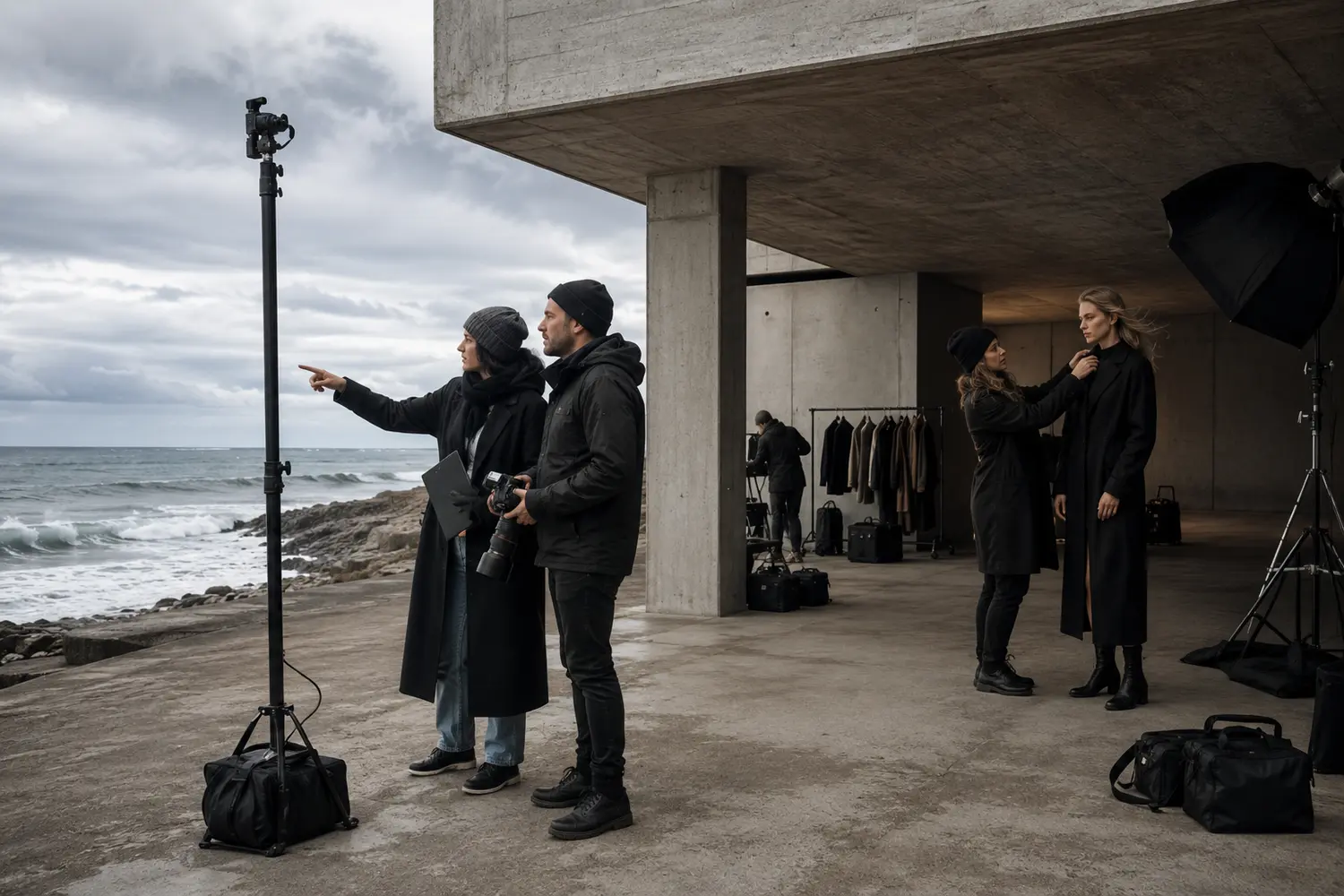
Common Fashion Campaign Location Scouting Mistakes
Choosing visual impact without testing concept fit
An iconic location can create instant excitement in an approval meeting. Yet recognition is not the same as relevance. If the environment carries stronger associations than the campaign idea, it may make the work feel borrowed or generic.
Approving from supplied images alone
Location-library images are designed to present a property attractively. They may use a different season, time of day, lens or level of access. Therefore, they are useful for shortlisting but not sufficient for final approval.
Ignoring the production date and time
A scout made months earlier or at a different hour can create false confidence. Day length, foliage, public use, construction and sun position may all change. Record those variables and revisit high-risk assumptions.
Testing only the hero frame
One impressive view can hide weak coverage. The campaign still needs alternate crops, product details, motion and a coherent sequence. Test the complete asset plan before deciding.
Leaving product samples out of the process
A surface that looks neutral may cast green, red or blue into skin and fabric. Likewise, the background may absorb the hero garment. Even a basic swatch test can expose that conflict early.
Treating permits and releases as paperwork
Permissions define what the production can do and how the final work can be used. A vague agreement creates both production and distribution risk. Confirm the terms before making the location central to the creative route.
Using weather as the only contingency trigger
Backups are also needed for illness, access failure, public events, transport disruption, unsafe wind, neighbor complaints or unexpected construction. Define who makes the decision, by what deadline and what happens next.
Allowing too many stakeholders to scout without roles
More participants do not guarantee better evaluation. Assign creative, technical, production and brand responsibilities. Then collect one consolidated recommendation rather than several unranked opinions.
Practical Example: Selecting a Location for a Tailored Collection
Imagine a fashion brand launching a monochrome tailoring collection. The concept is disciplined movement: precise silhouettes shown in an environment that feels architectural but not cold. The campaign needs a wide website hero, vertical paid-social images, close product details and several short motion sequences.
The team shortlists three options:
- A landmark plaza offers exceptional geometry, but permits limit equipment and the site becomes crowded by midday
- A private concrete residence offers strong visual alignment and control, but narrow rooms restrict full-length movement
- An industrial gallery offers modular concrete zones, a covered exterior, clean vertical sightlines and practical holding areas
The plaza produces the most dramatic single scout image. However, the gallery earns the highest weighted score because it supports the full asset architecture, provides weather cover and allows the team to control the schedule. The creative director then uses a repeated-column zone for the hero story, the exterior for movement and a neutral wall for product-led frames.
This is the central principle: location selection should optimize the whole campaign, not the most impressive isolated image. The Trippen Shoes pre-production case study shows a related process of translating an approved visual direction into executable campaign decisions: from mood board to campaign.
Frequently Asked Questions
When should fashion campaign location scouting begin?
Begin after the campaign objective, concept and essential deliverables are defined. Finalize the location before detailed scheduling, equipment planning and the call sheet are locked. Complex or permit-heavy locations may need to be investigated several weeks earlier.
Who should attend a fashion location scout?
At minimum, include the person protecting the creative idea and the person responsible for feasibility. On a small shoot, that may be the photographer and producer. Larger productions may also require the creative director, art director, location manager, cinematographer, gaffer, sound lead or production designer.
What is the difference between a creative scout and a technical scout?
A creative scout evaluates visual fit, narrative, color, angles and composition. A technical scout verifies how the production will operate, including light, power, sound, measurements, access, safety, facilities and equipment placement. They may happen together on a small project, but both sets of questions still need answers.
How many locations should a brand shortlist?
Usually, three to five qualified options are enough for meaningful comparison. A longer list is useful only if the requirements are still broad. Once non-negotiable criteria are clear, remove candidates that cannot meet them.
Should a location be selected before casting?
The two decisions often overlap. The approved concept should guide both. However, the location affects movement, safety, access and scale, while casting affects how the environment is perceived. Review the relationship before either decision becomes difficult to change. For the model-selection framework, use the guide to fashion campaign casting.
What should a fashion location agreement include?
It should identify the authorized parties, dates, access hours, areas, permitted activities, fees, deposits, overtime, cancellation, insurance, restoration, stills and motion use, restrictions and any required permits. The exact terms depend on the property and production, so the producer should resolve unclear clauses before commitment.
Can a brand scout a location remotely?
Remote research can narrow the shortlist. Recent photographs, video walkthroughs, floor plans and live calls are useful. Nevertheless, a high-risk production benefits from an in-person technical check because scale, sound, access, light and surrounding activity are difficult to verify fully through selected media.
How do you choose between a great-looking location and an easier one?
Compare how each option supports the campaign’s concept, product, required formats and production plan. Then calculate the full cost and risk. The easier location is not automatically better, but creative ambition should create value that justifies its additional complexity.
The Right Location Makes the Concept Executable
Effective fashion campaign location scouting protects both creativity and production. It turns an abstract preference into a documented decision based on brand meaning, product visibility, light, composition, access, rights, cost and contingency.
Most importantly, the process forces the team to evaluate the environment against the entire campaign. When the location supports the concept and the asset plan, the production can move faster without becoming generic. The result is not simply a better background. It is a more coherent campaign system.
If your brand is planning a fashion or beauty campaign, book a free Visual Audit. We can review whether the creative direction, production choices and planned assets are aligned before expensive decisions become fixed.